Why Tar and Gravel Roofs Are Especially Vulnerable to Weather Damage
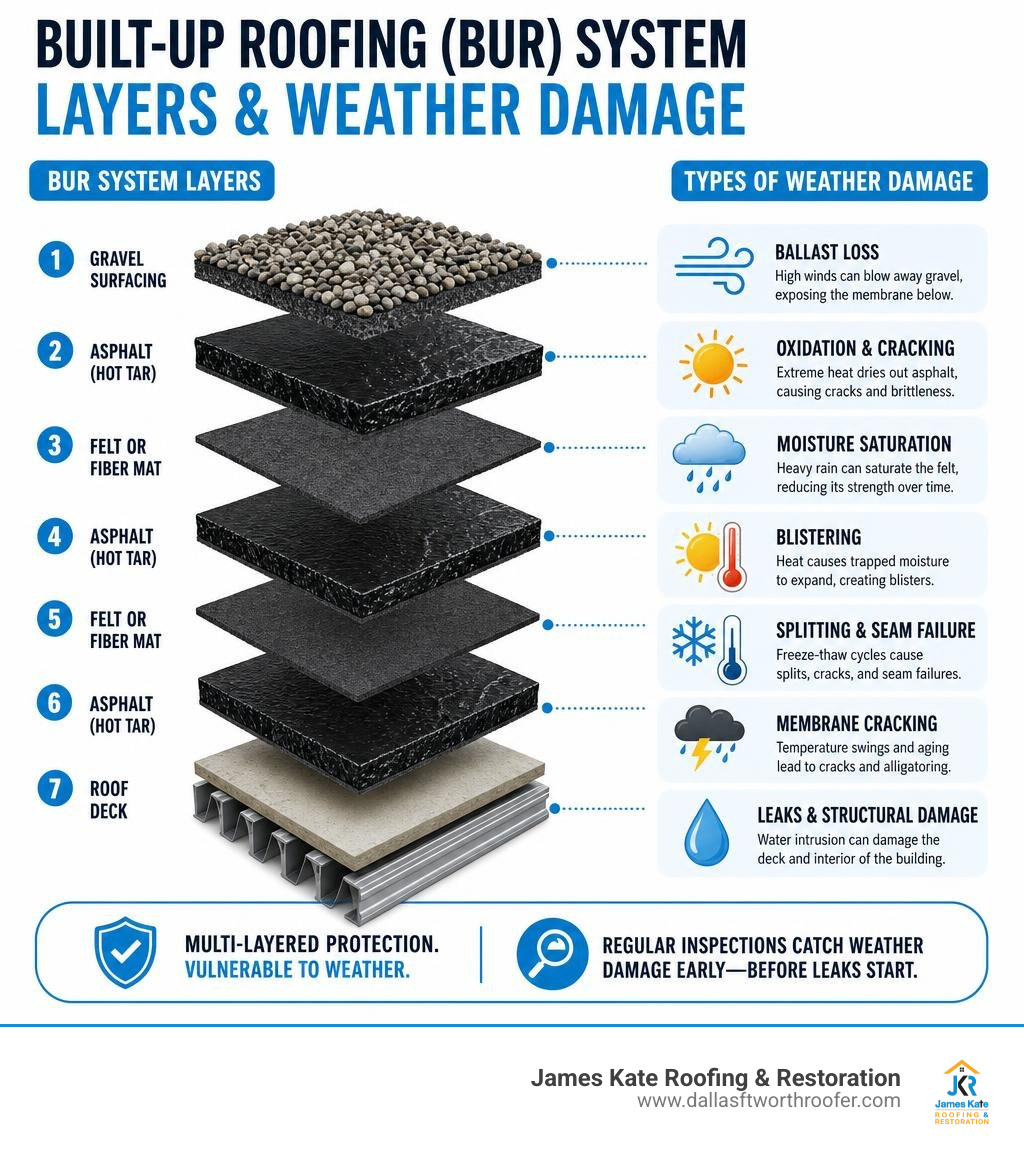
Common types of tar and gravel roof weather damage include:
| Weather Event | Damage Type |
|---|---|
| Hail | Gravel displacement, membrane puncture |
| High winds | Ballast loss, edge lifting, wind uplift |
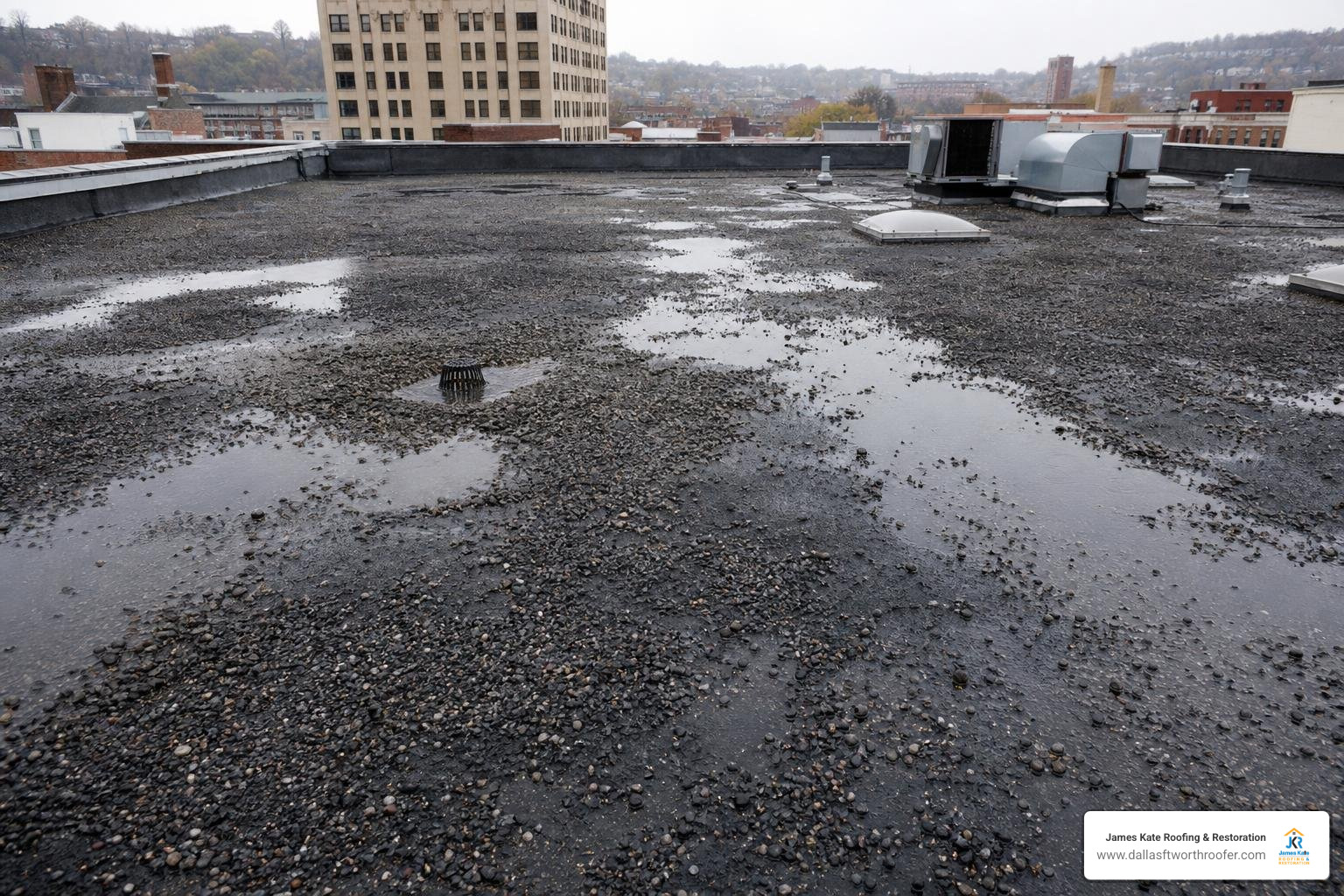
| Heavy rain | Ponding water, saturated substrate, leaks |
| Extreme heat | Alligatoring, asphalt oxidation, blistering |
| Freeze-thaw cycles | Membrane splitting, seam failures |
Tar and gravel roof weather damage is one of the most common — and most underestimated — problems facing commercial property owners in the Dallas–Fort Worth area.
These roofs, also called built-up roofing (BUR) systems, have protected flat commercial buildings for over 100 years. They’re tough. But they have real vulnerabilities that severe weather exploits fast.
The gravel layer that protects the membrane? It can shift, break down, or wash away in a storm. The multiple layers of asphalt and felt that make BUR so durable? They can crack, blister, and separate under extreme temperature swings. And because the waterproofing membrane is hidden under all that gravel, damage can go undetected for months — until you’re dealing with a ceiling stain, soaked insulation, or a mold problem.
The stakes are high. A properly maintained tar and gravel roof can last 20–25 years. Ignore weather damage, and that lifespan can drop to 12–15 years — or less.
I’m Dustin Eatman, owner of James Kate Roofing & solar, and I’ve spent years inspecting and restoring commercial BUR systems across DFW after storms, helping property owners understand exactly what tar and gravel roof weather damage looks like before it turns into a costly interior disaster. In this guide, I’ll walk you through how to identify damage early, what to do about it, and when repair isn’t enough.
Understanding Tar and Gravel Roof Weather Damage and Storm Failures
To understand why weather causes so much trouble for a built-up roof (BUR), we have to look at how these systems are put together. Think of a tar and gravel roof as a heavy-duty, multi-layered waterproofing sandwich – or, as we like to call it in the industry, the “lasagna” method.
We build these roofs by alternating layers of asphalt-saturated felt or fiberglass mats with hot, liquid tar (bitumen). This multi-ply design provides excellent built-in redundancy; if the top layer is nicked, the layers underneath keep the water out. Finally, we top the entire system with a thick layer of gravel or stone embedded directly into the hot tar. For a broader technical overview of low-slope roof assemblies, the Whole Building Design Guide’s low-slope membrane roofing resource is a useful reference.
This top gravel layer serves several crucial roles:
- UV Radiation Shield: It blocks solar rays that dry out and oxidize the underlying asphalt.
- Fire Retardant: Gravel provides a natural Class A fire rating without chemical additives.
- Wind Uplift Protection: The heavy stone ballast keeps the lighter membrane sheets secured to the deck.
- Impact Resistance: It acts as a physical buffer against hail and flying debris.
However, this classic design comes with a major trade-off: weight. Tar and gravel roofs are incredibly heavy, typically weighing 10-25 lbs per square foot. This heavy structural load means that when severe weather hits, your building is already carrying a massive amount of physical strain. If a storm dumps heavy rain or snow on top of an already heavy roof, the structural load can push older decking to its absolute limit.
Over time, UV exposure, foot traffic, and intense storms cause the protective gravel to break down into sharp, tiny fragments. When these fragments are shifted by wind or walked on by HVAC technicians, they can actually be forced downward, puncturing the underlying waterproof plies.
Because the gravel hides the membrane, finding these tiny punctures is like searching for a needle in a haystack. Left untreated, water seeps into the insulation, leading to saturated substrates and quiet mold growth long before a drip ever hits your ceiling. If you suspect your building has suffered storm damage, securing professional DFW Commercial Roofing Services is the fastest way to locate these hidden compromises before they destroy your decking.
Hail Impact and Tar Gravel Roof Weather Damage
In the Dallas-Fort Worth metroplex, hail is an annual reality. While a traditional BUR system is incredibly tough – often described as “eating hail for breakfast” compared to fragile single-ply systems – it is not completely bulletproof.
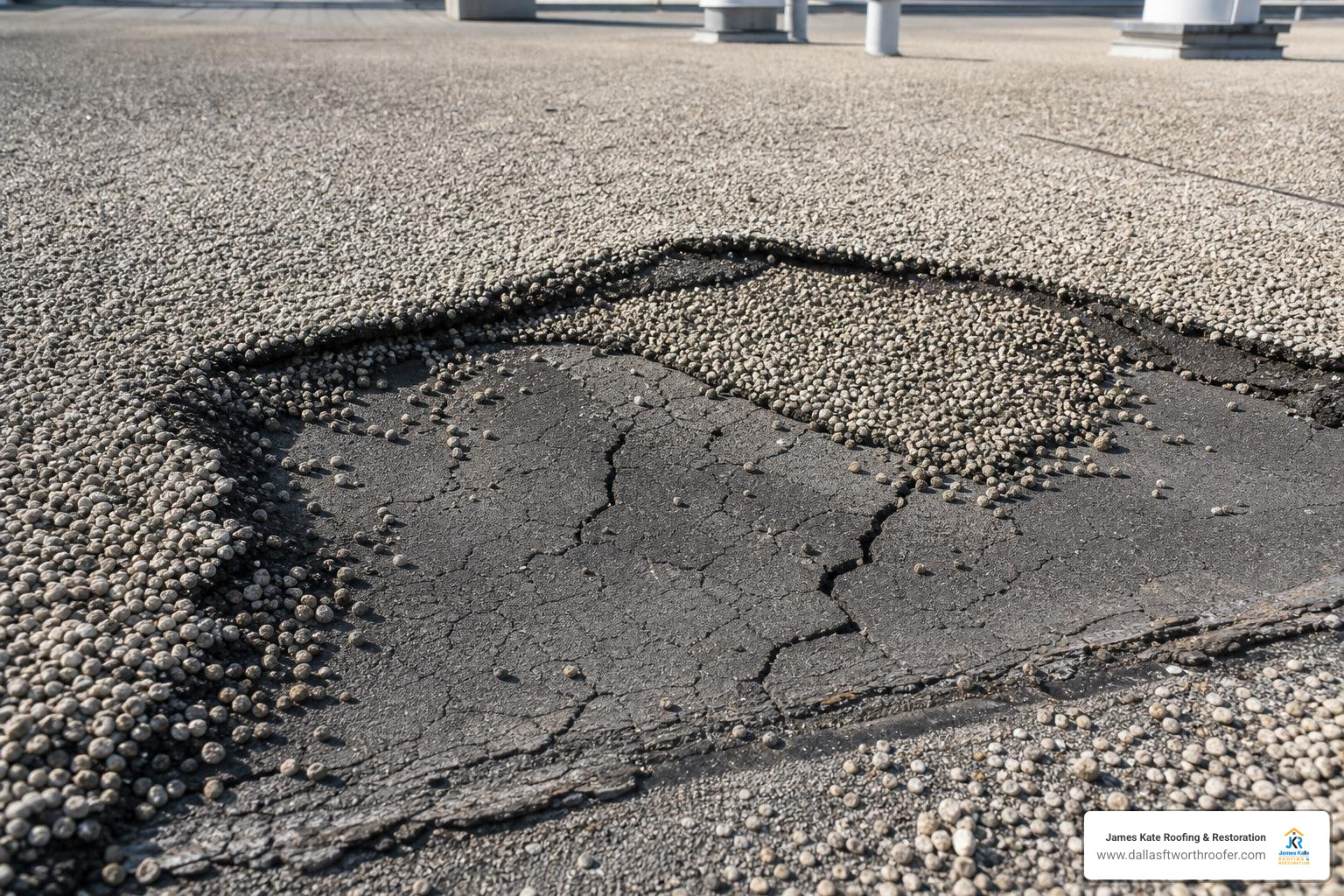
When large hailstones strike a tar and gravel roof, they cause immediate gravel displacement. The impact forces the protective stones out of the asphalt matrix, leaving localized circular patches of bare tar completely exposed to the sun. Once the gravel is gone, the UV rays begin to cook the exposed asphalt, drying it out and causing it to crack within weeks.
Furthermore, extremely large hail can crack the hardened asphalt layers underneath the gravel. Because the system is rigid, a severe impact can fracture the brittle, aged tar, creating an immediate path for water to bypass the waterproofing plies. If your property is located in Tarrant County, tracking down the extent of this impact is critical. You can learn more about how severe local storms impact commercial properties by reading our guide on Arlington TX Storm Damage.
Wind Uplift and Structural Strain
High winds pose a unique threat to flat commercial roofs. As wind sweeps over the edge of a flat building, it creates a vacuum effect known as wind uplift. If the edges or flashings of your tar and gravel roof are slightly loose, the wind can get underneath the membrane and lift it up.
Even if the wind doesn’t lift the entire membrane, it can easily scour the surface, blowing away the protective gravel ballast. This ballast loss is especially common around the corners and perimeter of the roof. When the gravel is blown off, the roof loses its wind resistance and UV shield, making those areas highly vulnerable to rapid deterioration.
Additionally, the sudden loss of ballast can cause uneven structural load across your roof deck, creating physical stress on the building’s joints. If you notice bare spots or piles of gravel near your roof drains after a windstorm, you need to act quickly. Check out these 6 Steps to Repairing Wind Damage Before Your Roof Takes Flight to understand how to stabilize your roof before the next storm hits.
Thermal Shock and Extreme Temperature Swings
Texas weather is famous for its dramatic temperature swings. We can easily experience a 40-degree drop in temperature over a single afternoon when a cold front rolls through. This rapid change causes a phenomenon known as thermal shock.
As the roof heats up under the Texas sun, the asphalt expands. When the temperature plummets, it rapidly contracts. Over time, this constant expansion and contraction causes the asphalt layers to lose their flexibility, leading to “alligatoring” – a network of fine cracks that look exactly like dried mud or alligator skin.
As the system ages, these cracks deepen, eventually causing membrane splitting and seam failures. If you’re concerned about how these temperature swings are affecting your building, read our Minor Wind Damage Advice for Concerned Homeowners and commercial property managers, which explains how temperature and wind work together to age roofing materials. For a broader look at how different storms create distinct patterns of wear, explore our breakdown of the Types of Roof Storm Damage and How to Handle Them.
Early Warning Signs of Weather-Related BUR Deterioration
Catching tar gravel roof weather damage early is the difference between a simple patch job and a multi-thousand-dollar structural repair. Because the gravel layer masks the membrane, you have to look closely to find the warning signs of failure.
If you don’t know what to look for, it’s easy to overlook minor issues until they turn into active leaks. To make sure you aren’t caught off guard by dishonest contractors or hidden damage, read our guide: Don’t Get Ripped Off: A Savvy Business Owner’s Guide to Commercial Roof Repairs.
Identifying Tar Gravel Roof Weather Damage Early
When conducting a visual inspection of your tar and gravel roof, keep a sharp eye out for these four warning signs:
- Blisters and Bubbles: These look like raised domes on the roof surface. They form when moisture or air gets trapped between the felt plies during installation or after a minor leak. In the summer heat, this trapped moisture expands, stretching the membrane. If walked on or struck by hail, these blisters will pop, creating an open hole straight through your roof.
- Deep Cracks and Splits: Alligatoring is normal for an aging roof, but deep, wide cracks that penetrate through the top ply of asphalt are a sign of severe thermal stress.
- Bare Spots: Areas where the gravel has washed away, blown off, or sunk into the tar. These bare spots leave the underlying asphalt completely defenseless against UV rays.
- Water Stains and Internal Leaks: Check your interior ceilings, especially around support beams and light fixtures. Brown water stains or peeling paint are clear signs that water has already bypassed the multi-ply membrane and saturated your roof insulation.
If you find these signs, you need to act fast to protect your business assets. We recommend reviewing The CEO Guide to Handling Property Damage to learn how to document the damage properly for your insurance company.
The Danger of Ponding Water and Poor Drainage
Flat roofs aren’t actually flat; they are designed with a slight slope (typically at least 1/4 inch per foot) to direct water toward drains, scuppers, or gutters. When heavy rains hit the DFW area, debris and loose gravel can easily wash into these drainage points, clogging them.
When drains are blocked, water begins to pool on the roof. If water stands on a flat roof for more than 48 hours, it is officially classified as “ponding water.” Ponding water is incredibly dangerous for tar and gravel roofs for several reasons:
- Accelerated Membrane Deterioration: Standing water acts like a magnifying glass, focusing UV rays and heating the asphalt underneath, which speeds up chemical breakdown.
- Structural Strain: Water weighs about 62.4 lbs per cubic foot. A large pool of ponding water can add thousands of pounds of unexpected weight to your roof, causing the deck to sag and creating even deeper pools.
- Mold and Substrate Rot: Tar and gravel roofs are highly prone to slow evaporation because the gravel retains moisture. This damp environment is the perfect breeding ground for mold, which can quickly destroy the wooden decking or gypsum board underneath the membrane.
Keeping your drainage pathways clear is the single most important maintenance step you can take. If you’re dealing with recurring pooling issues, consult our guide on Commercial Roof Repairs to see how professional drainage corrections can save your roof.
Mitigating Damage: Repair vs. Replacement Decisions
When your roof has suffered weather damage, you face a critical choice: do you patch the existing system, or is it time for a full replacement? Making the wrong decision can cost you tens of thousands of dollars in wasted repairs or premature capital expenses.
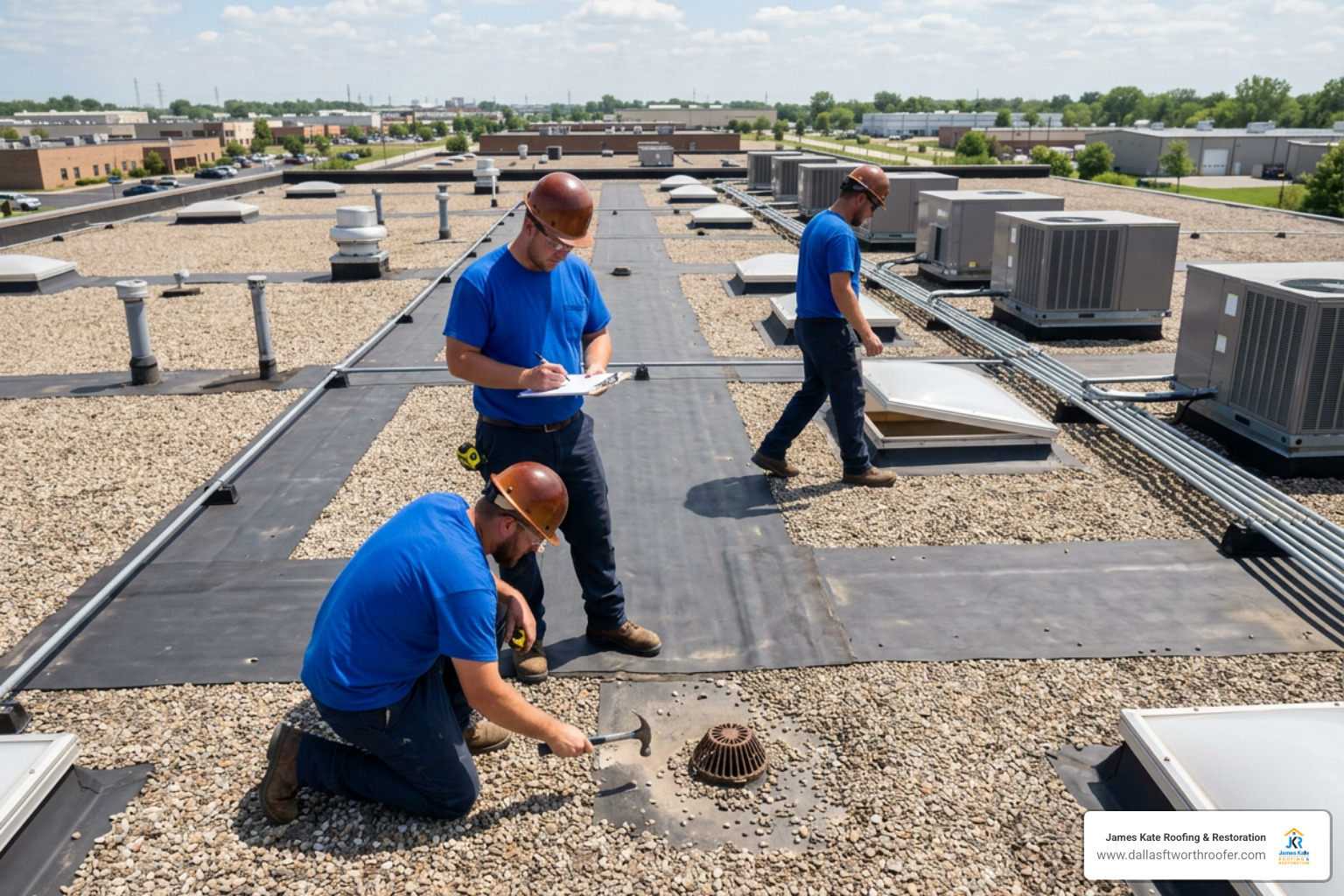
Maintenance and Repair Steps to Prevent Failure
If the weather damage is localized—affecting less than 10% to 20% of the total roof area—and your roof is under 15–20 years old, a professional repair or solar is usually the smartest, most cost-effective path.
Typical maintenance and repair steps include:
- Clear All Drains and Scuppers: Remove leaves, silt, and loose gravel from all drainage points to prevent ponding water.
- Gravel Redistribution and Rebalancing: Sweep loose gravel back over bare spots to restore UV and impact protection.
- Localized Patching: For small cracks and punctures, a professional roofer will sweep away the gravel, clean the area, apply a high-quality cold-applied asphalt sealant or plastic roofing cement, embed a layer of fiberglass mesh, and press the gravel back into the wet mastic to restore the protective shield.
- Cutting and Resealing Blisters: Pop and cut open large blisters to allow trapped moisture to escape. Once the area is completely dry, we patch it using a multi-ply repair technique.
If your roof is showing its age but the structural deck is still dry and sound, you may be an excellent candidate for a commercial solar. To learn how this process works and how it can save you up to 50% compared to a full replacement, read The Smart Business Owner’s Guide to Commercial Roof solar.
Comparing BUR to Modern Alternatives
If your tar and gravel roof is over 20 years old, has suffered widespread hail damage, or has large areas of wet, waterlogged insulation, a repair is just a temporary band-aid. You will need a full replacement.
When planning your replacement, you don’t have to stick with a traditional BUR system. Many DFW property owners are choosing modern single-ply membranes like TPO or EPDM, or updated multi-ply options like modified bitumen.
Here is how these systems compare to traditional tar and gravel (BUR) in terms of weather resistance and performance:
| Feature / Material | Built-Up Roofing (BUR) | TPO (Thermoplastic Polyolefin) | EPDM (Rubber Membrane) | Modified Bitumen (Mod-Bit) |
|---|---|---|---|---|
| Hail Resistance | Excellent (gravel absorbs impacts well) | Moderate (can puncture under large hail) | Good (flexible, but can tear) | Very Good (tough, polymer-modified layers) |
| Wind Resistance | Very Good (heavy gravel ballast) | Excellent (when fully adhered/welded) | Excellent (highly flexible) | Very Good (multi-layered strength) |
| UV & Heat Resistance | Moderate (depends on gravel coverage) | Excellent (highly reflective white surface) | Moderate (absorbs heat unless coated) | Good (often finished with mineral granules) |
| Weight (per sq. ft.) | Heavy (10–25 lbs) | Extremely Light (1–1.5 lbs) | Light (1.5–2 lbs) | Moderate (2–4 lbs) |
| Ease of Leak Detection | Very Difficult (hidden under gravel) | Very Easy (fully exposed membrane) | Easy (fully exposed membrane) | Moderate (exposed mineral surface) |
Modern single-ply membranes like TPO offer incredible energy efficiency because their bright white surfaces reflect up to 80% of solar heat, significantly lowering your summer cooling bills in places like Grand Prairie. However, they lack the heavy physical puncture resistance of a gravel-topped BUR.
If you’re trying to decide which system is right for your building’s structural capacity and budget, read our comprehensive guides on Getting Your Commercial Flat Roof Replaced and The Ultimate Guide to Commercial Roof Replacement for a detailed breakdown of the installation process.
Frequently Asked Questions about Tar and Gravel Roofs
Navigating commercial roof maintenance can be overwhelming. To help you stay informed, we’ve compiled answers to the most common questions we hear from property owners in Mansfield, Arlington, and across the DFW metroplex. For a deeper dive into all aspects of commercial flat roofing, check out our Commercial Roof Complete Guide 2026.
How long does a tar and gravel roof typically last?
A professionally installed and properly maintained tar and gravel roof typically lasts 20 to 25 years in the North Texas climate. If you conduct twice-yearly inspections, keep the drains clear, and promptly address bare spots and minor leaks, some well-built BUR systems can even push past 30 years. However, if you neglect routine maintenance and ignore storm damage, thermal shock and water infiltration can cause the system to fail in as little as 12 to 15 years.
If you want to maximize your roof’s lifespan, scheduling regular assessments with DFW Commercial Roofing Experts is the best insurance policy you can buy.
Can you walk on a tar and gravel roof after a storm?
Yes, but you must exercise extreme caution. One of the greatest benefits of a tar and gravel roof is its durability under foot traffic. The thick layers of asphalt and protective stone ballast easily resist punctures from work boots, making BUR an excellent choice for buildings that require regular access to rooftop HVAC units.
However, walking on the roof immediately after a severe storm is risky. Hail or high winds can displace the gravel, leaving slick, exposed tar patches that are incredibly slippery when wet. Furthermore, sharp, broken gravel fragments can be ground into the underlying membrane by your boots, creating new leaks. Always have a trained professional conduct post-storm inspections to protect both your safety and your roof’s integrity.
What are the long-term risks of ignoring flat roof leaks?
Ignoring a minor flat roof leak is a recipe for financial disaster. Because flat roofs rely on gravity and perfect waterproofing to shed water, a small leak will quickly saturate the surrounding insulation. This leads to several severe, long-term risks:
- Structural Rot: Trapped moisture will rot wooden decking, rust steel support beams, and degrade gypsum board, compromising the structural integrity of your entire building.
- Mold Mitigation Needs: Saturated insulation creates a dark, damp, warm environment—the perfect breeding ground for toxic mold. Once mold takes hold, it can spread through your HVAC system, creating severe indoor air quality issues that require expensive professional mitigation.
- Escalating Replacement Costs: If you catch a leak early, you can perform a localized patch. If you ignore it, the wet insulation will spread, forcing you to pay for a complete, expensive “tear-off” replacement down to the bare decking rather than a simple overlay.
Conclusion
When it comes to protecting your commercial property from the unpredictable North Texas weather, your roof is your first and most important line of defense. Tar and gravel roof weather damage may start small, but hidden under a layer of stone, it will quietly destroy your insulation and structural decking if left unchecked.
At James Kate Roofing & solar, we build our business on honesty, integrity, and Biblical principles. As a family-owned DFW company, we are proud to serve our local communities, including Mansfield, Arlington, Granbury, Grand Prairie, and Midlothian, TX.
Our commitment to quality has earned us the prestigious GAF President’s Club recognition, allowing us to back our work with up to a 25-year workmanship warranty. And if a storm does cause a major leak, we don’t just fix the roof—our full-service solar team handles water mitigation, mold mitigation, and complete build-back construction to restore your property from the inside out.
Don’t wait for a ceiling stain to tell you your roof is failing. Schedule a Commercial Roof Inspection with the trusted team at James Kate Roofing & solar today, and let us give you the honest, reliable assessment you deserve.

Dustin Eatman is a seasoned roofing professional with deep, hands-on expertise that spans residential and commercial roofing, insurance solar, and long-term roof asset management. As the owner of James Kate Roofing & solar in the Dallas–Fort Worth metroplex, he’s built a reputation for diagnosing roof systems accurately, communicating clearly, and executing projects with a high standard of workmanship and documentation. Dustin understands the technical details that make roofs perform—proper underlayment selection, slope and drainage considerations, ventilation strategy, flashing and penetration detailing, and manufacturer-specific installation requirements—because he’s worked through the real-world challenges that cause leaks, premature wear, and warranty issues. He’s equally fluent in the operational side of roofing: jobsite planning, quality control, safety, material ordering, crew coordination, and customer experience from inspection to closeout. In insurance-related projects, Dustin brings practical knowledge of claim workflows, adjuster meetings, scope alignment, supplements, and the importance of photo evidence and thorough records, helping property owners navigate stressful situations with confidence. For commercial clients—especially property and facility managers—he emphasizes proactive maintenance and targeted repairs that reduce disruption, extend roof life, and prevent expensive interior damage. Dustin also stays focused on doing things the right way: educating customers on realistic options, setting expectations, and prioritizing solutions that hold up over time rather than quick fixes. That blend of technical skill, field experience, process discipline, and owner-level accountability is what makes Dustin Eatman a trusted expert in the roofing industry.