Why Tile Roof Replacement Matters for Your Home
Tile roof replacement is one of the biggest investments you’ll make as a homeowner, but knowing when to act can save you thousands in interior damage and protect your property value for decades to come.
Quick Answer: When to Replace Your Tile Roof
- Age indicators: Clay tiles 75-100+ years, concrete 30-50 years
- Visible damage: Cracked, broken, or missing tiles
- Performance issues: Recurring leaks, attic moisture, or sagging
- Underlayment failure: Even if tiles look good, the waterproof layer beneath may be failing
- Cost range: $7-$15 per square foot nationally; resetting existing tiles costs 40-60% less
When you think of tile roofs, you probably picture those beautiful Mediterranean-style homes scattered across North Texas—timeless curb appeal that lasts generations. But even the toughest clay or concrete tiles need attention eventually. The tiles themselves might outlive your house, but the underlayment, flashing, and structural components beneath them wear out much faster, especially in DFW’s extreme heat, hail storms, and occasional freeze-thaw cycles.
Most homeowners wait too long because tiles look fine from the ground. You might not notice the spider cracks spreading across individual tiles, the subtle sagging near chimneys, or the efflorescence (white mineral deposits) that signal water intrusion. By the time you see stains on your ceiling or smell mold in the attic, you’re already dealing with expensive secondary damage.
The good news? A properly executed tile roof replacement protects your home for 50 to 100+ years, boosts property value by up to 70% of the project cost, and often qualifies for lower insurance premiums. The key is understanding when repair isn’t enough, what materials fit your budget and climate, and how to choose a contractor who won’t cut corners on the hidden components that actually keep water out.
As Dustin Eatman, owner of James Kate Roofing & Solar, I’ve inspected hundreds of tile roofs across the DFW metroplex and guided homeowners through tile roof replacement decisions that balance longevity, cost, and curb appeal. My experience with insurance claims, structural assessments, and manufacturer specs means I know exactly where tile roof systems fail—and how to prevent it.
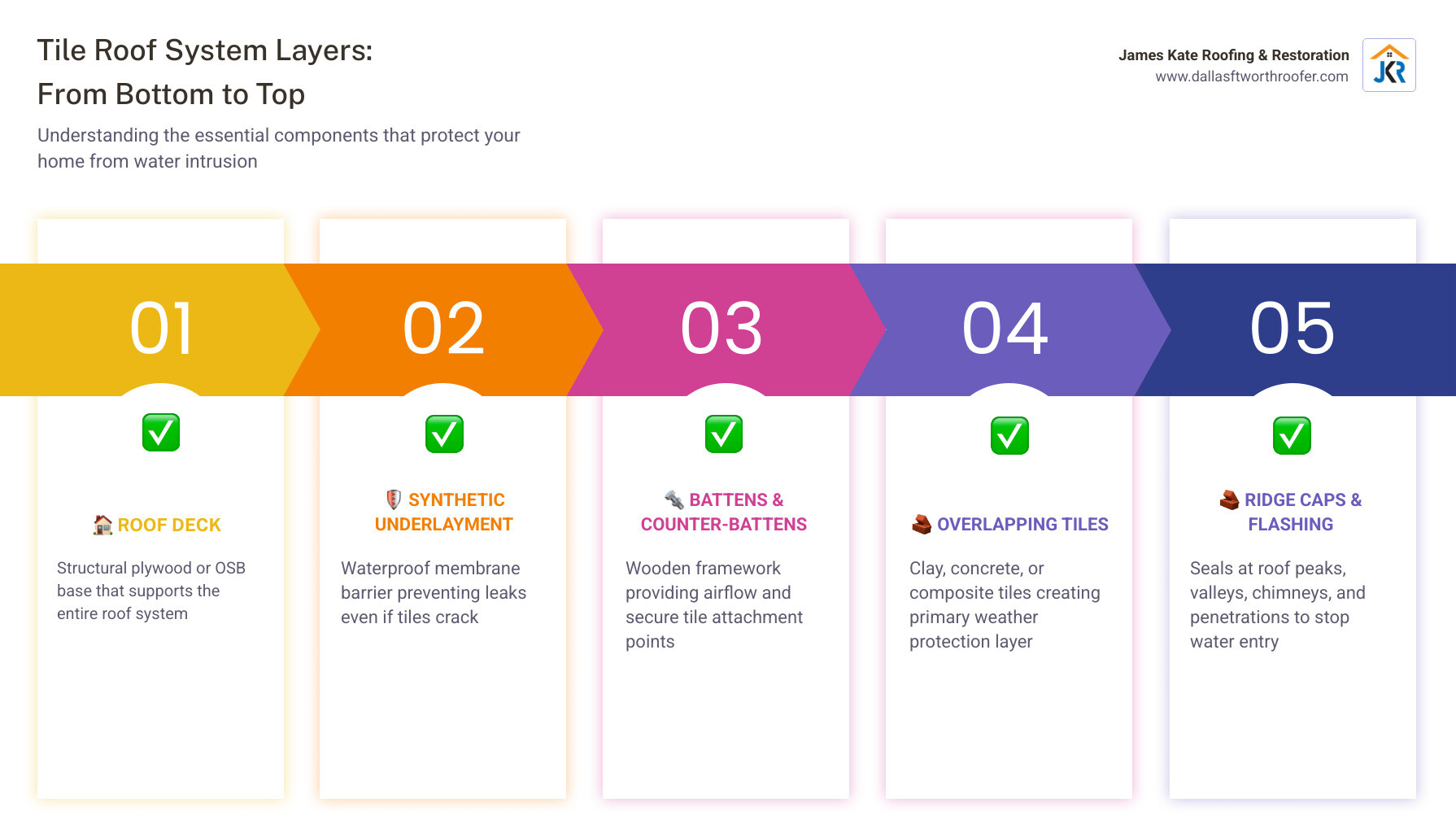
Tile roof replacement terms explained:
Recognizing the Signs: When to Evaluate Your Roof
It’s a common misconception that a tile roof is a “forever” roof. While the tiles themselves are incredibly durable, the system as a whole is vulnerable. In places like Mansfield, TX and Arlington, the relentless Texas sun can bake the underlayment until it becomes brittle, even if the tiles on top look perfect.
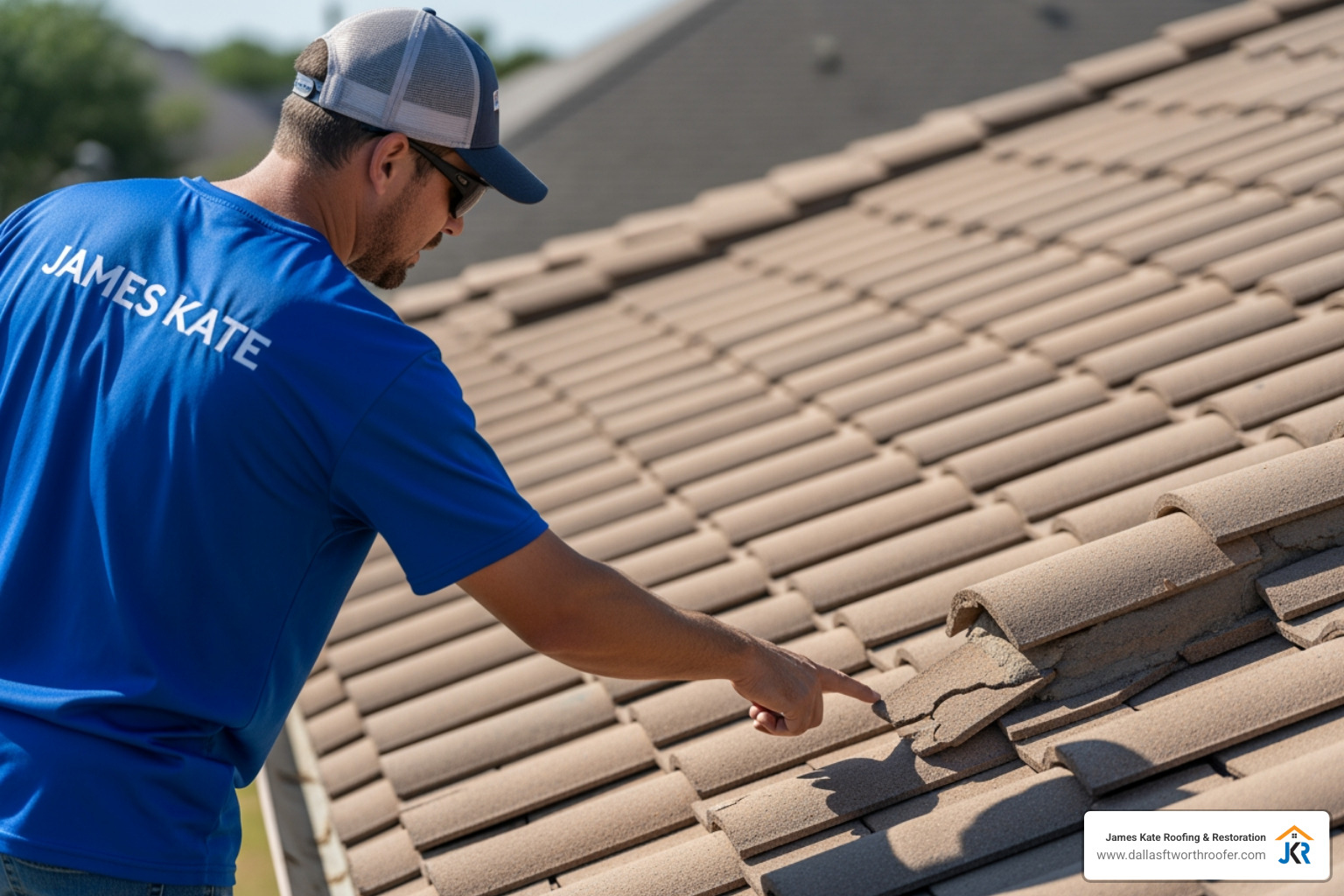
When we perform inspections, we look for several key red flags:
- Cracked or Missing Tiles: A single broken tile might seem like a cosmetic issue, but it exposes the underlayment to UV rays and direct water. If you see widespread cracking, it’s often a sign of age or hail damage.
- Interior Leaks and Attic Mold: If you see water spots on your ceiling, the waterproof barrier under your tiles has likely failed. Check your attic for damp insulation or the musty smell of mold.
- Sagging Roofline: Tile is heavy (between 750 to 1,200 lbs per square). If the structural decking or rafters are rotting due to a slow leak, the roof may begin to sag.
- Efflorescence and Moss: White, chalky streaks (efflorescence) on the tiles indicate that water is soaking into the material rather than shedding off. Moss and algae growth also suggest trapped moisture, which is a death sentence for roof longevity.
- Loose Tiles: If tiles are slipping out of place, the fasteners may have rusted away, or the battens they hook onto may be rotting.
- The 25% Rule: In many jurisdictions, if more than 25% of the roof is damaged, building codes require a full tile roof replacement rather than a patch.
Comparing Materials: Clay, Concrete, and Synthetic Options
Choosing the right material for your tile roof replacement depends on your home’s structural capacity and your budget. In the DFW area, we deal with extreme heat and the occasional deep freeze, so material performance is critical.
| Feature | Clay Tiles | Concrete Tiles | Natural Slate | Composite/Synthetic |
|---|---|---|---|---|
| Lifespan | 75-100+ Years | 30-50 Years | 100+ Years | 50 Years |
| Weight | Very Heavy | Heavy | Extremely Heavy | Lightweight |
| Cost | $$$ | $$ | $$$$ | $$$ |
| Maintenance | Low | Moderate | Moderate | Very Low |
Clay Tiles
Clay is the gold standard. It’s made from natural earth and fired in a kiln, making it colorfast and incredibly resistant to fire. For a Mediterranean or Spanish look in Grand Prairie or Midlothian, nothing beats the aesthetic of clay. However, it is brittle and can crack if walked on improperly.
Concrete Tiles
Concrete is a versatile and more affordable alternative to clay. Modern concrete tiles can mimic the look of wood shakes or even slate. They are incredibly durable but can be porous, meaning they might absorb water over decades, leading to moss growth if not maintained.
Natural Slate
Slate is the pinnacle of luxury. It can last for centuries but requires a massive structural investment because of its weight. If you’re considering slate, we must ensure your home in Arlington or Mansfield can handle the load.
Composite and Synthetic Options
For homeowners who love the look of tile but have structural limitations, synthetic tiles are a fantastic choice. They are made from recycled materials, offer high impact resistance against DFW hail, and are much lighter than traditional masonry.
For more information on the various materials available, check out our guide on different roof types. We also recommend checking the Cool Roof Rating Council to see which tile colors and materials offer the best energy efficiency for our Texas climate.
Factors Influencing Tile Roof Replacement Costs
The price of a tile roof replacement isn’t just about the tiles. Several factors drive the final estimate:
- Roof Pitch: Steeper roofs require more safety equipment and labor.
- Structural Reinforcement: If you are switching from shingles to tile, we may need to reinforce your rafters to handle the weight.
- Tear-off Fees: Removing and disposing of old, heavy tile is labor-intensive.
- Profile Choice: Whether you choose Spanish S-tiles, Barrel tiles, or flat French profiles affects the labor cost and the number of tiles needed per square.
The Financials: Repair, Resetting, or Full Replacement
One of the most frequent questions we get is: “Do I really need to replace the whole thing?”
Spot Repairs: If your roof is relatively young and a stray branch broke a few tiles, a spot repair is the way to go. We carefully lift the surrounding tiles and replace the broken ones for about $40 to $200 per tile depending on the material.
Tile Resetting (The “Lift and Reset”): This is a unique option for tile roofs. If your tiles are in great shape but the underlayment is failing, we can remove the existing tiles, stack them, replace the underlayment and flashing, and then reinstall the original tiles. This can save you 40% to 60% compared to a full replacement.
Full Replacement: If the tiles are deteriorating or the cost of a reset is nearly as high as new tiles, a full replacement is the smartest move. This ensures a 50-year system and provides the highest Return on Investment (ROI).
ROI and Insurance: A new tile roof can increase your home’s value significantly, with many homeowners seeing a 70% return. Furthermore, because tile is fire-resistant and durable, many insurance companies in Texas offer premium discounts for tile roof replacement.
The Step-by-Step Tile Roof Replacement Process
At James Kate Roofing & solar, we treat every jobsite with the respect it deserves. We don’t just “slap on” new tiles; we build a system.
- Professional Inspection: We start by assessing the structural integrity of your deck and rafters.
- Permitting: We handle all the paperwork with your local city office (whether in Mansfield, Granbury, or Arlington).
- Tear-off: We remove the old materials down to the wood deck.
- Deck Repair: Any rotted wood is replaced to ensure a solid foundation.
- Underlayment Installation: This is the most important step. We use high-quality synthetic underlayment or high-temp self-adhered membranes that act as a secondary water barrier.
- Flashing and Battens: We install new metal flashing in valleys and around chimneys. Then, we install the batten system (the wooden strips the tiles hang on) to allow for proper airflow.
- Tile Layout and Fastening: Tiles are laid out in a precise grid and secured with stainless steel or copper fasteners to prevent rust.
- Ridge Capping: We seal the peak of the roof with specialized ridge tiles.
- Final Inspection: We perform a 50-point quality check to ensure everything meets our high standards.
Learn more about our residential roofing services to see how we handle these complex projects.
Preparing for Your Tile Roof Replacement Project
A tile roof replacement is a major construction project. It typically takes 1 to 3 weeks. Here is how we help you prepare:
- Site Protection: We use tarps and boards to protect your landscaping and driveway.
- Neighbor Notification: It’s a loud process! We recommend letting your neighbors know about the upcoming work.
- Interior Vibrations: The weight and movement on the roof can cause vibrations. We suggest taking down fragile wall hangings or mirrors before we start.
- Dumpster Placement: We’ll coordinate exactly where the debris container will sit to minimize inconvenience.
Hiring the Right Professional and Maintenance Tips
Not every roofer is a tile expert. In fact, many asphalt shingle contractors don’t have the specialized tools or knowledge to handle heavy masonry. When vetting a contractor, ask about their experience with specific tile profiles and their workmanship warranties. At James Kate, we offer up to a 25-year workmanship warranty, backed by our GAF President’s Club recognition.
To keep your new roof in top shape:
- Gutter Cleaning: Keep gutters clear to prevent water from backing up under the eave tiles.
- Debris Removal: Remove leaves and branches that can trap moisture against the tiles.
- Annual Inspections: Have a pro walk the roof once a year to check for slipped tiles or cracked mortar.
- Avoid Walking on It: Unless you are trained, stay off the roof. Walking on the wrong part of a tile will cause it to snap instantly.
Check out more info about our service areas to see if we’re currently working in your neighborhood. You can also Find Local Pros to compare quotes, though we’re confident our commitment to Biblical principles and integrity sets us apart.
Frequently Asked Questions about Tile Roofs
How long does a tile roof replacement typically take?
While a shingle roof might take two days, a tile roof replacement usually takes 1 to 3 weeks. The process is much more meticulous—from the structural checks to the precise alignment of hundreds of heavy tiles. Weather delays in the DFW area (like spring thunderstorms) can occasionally extend this timeline, but we always ensure the roof is dried-in and waterproofed at the end of every workday.
Can you walk on a tile roof safely?
Yes, but you shouldn’t! Professionals use specific techniques, like stepping only on the “lower third” of the tile where it overlaps the one beneath it, which provides more support. We also use walk boards or soft-soled shoes to distribute weight. Walking in the center of a tile will almost certainly break it. If you must have a technician up there (for solar or HVAC), make sure they are wearing a royal blue James Kate shirt and are trained in tile safety.
Do tile roofs increase home value?
Absolutely. A tile roof is a premium feature that screams “quality” to potential buyers. It offers incredible curb appeal and the promise of longevity. Statistically, homeowners can expect a 70% ROI. Additionally, because tile is non-combustible, your insurance premiums may decrease, making the home more affordable to own in the long run.
Conclusion
At James Kate Roofing & solar, we believe that your home is your sanctuary. We are a family-owned DFW company built on honesty, integrity, and Biblical principles. We don’t just want to be your roofer; we want to be your partner in protecting your investment. Whether you are in Mansfield, Arlington, or anywhere else in the Metroplex, our team is ready to provide the top-tier service you deserve.
From the first inspection to the final walkthrough, we stand by our work with a 25-year workmanship warranty. Don’t wait for a small crack to become a major flood.
Get a free estimate for your tile roof replacement today and let us show you why James Kate is the most trusted name in North Texas roofing.

Dustin Eatman is a seasoned roofing professional with deep, hands-on expertise that spans residential and commercial roofing, insurance solar, and long-term roof asset management. As the owner of James Kate Roofing & solar in the Dallas–Fort Worth metroplex, he’s built a reputation for diagnosing roof systems accurately, communicating clearly, and executing projects with a high standard of workmanship and documentation. Dustin understands the technical details that make roofs perform—proper underlayment selection, slope and drainage considerations, ventilation strategy, flashing and penetration detailing, and manufacturer-specific installation requirements—because he’s worked through the real-world challenges that cause leaks, premature wear, and warranty issues. He’s equally fluent in the operational side of roofing: jobsite planning, quality control, safety, material ordering, crew coordination, and customer experience from inspection to closeout. In insurance-related projects, Dustin brings practical knowledge of claim workflows, adjuster meetings, scope alignment, supplements, and the importance of photo evidence and thorough records, helping property owners navigate stressful situations with confidence. For commercial clients—especially property and facility managers—he emphasizes proactive maintenance and targeted repairs that reduce disruption, extend roof life, and prevent expensive interior damage. Dustin also stays focused on doing things the right way: educating customers on realistic options, setting expectations, and prioritizing solutions that hold up over time rather than quick fixes. That blend of technical skill, field experience, process discipline, and owner-level accountability is what makes Dustin Eatman a trusted expert in the roofing industry.