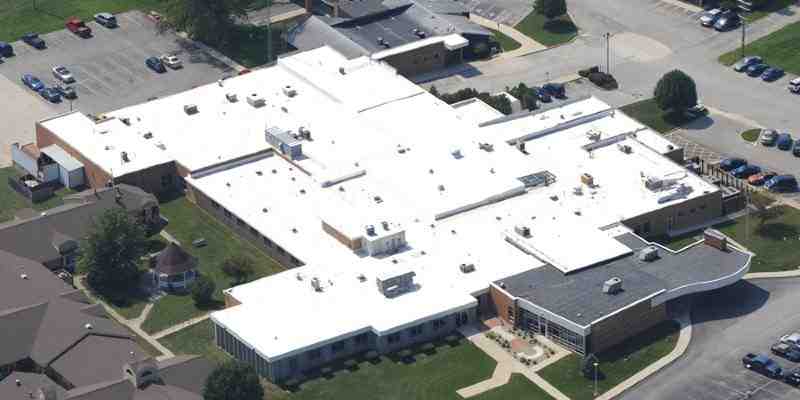
Why Commercial Roof Replacement Is One of the Most Important Decisions You’ll Make for Your Building
Commercial roof replacement is the complete removal of your existing roofing system and the installation of a new one — and knowing when and how to do it right can save your business tens of thousands of dollars.
Here’s what you need to know at a glance:
| Question | Quick Answer |
|---|---|
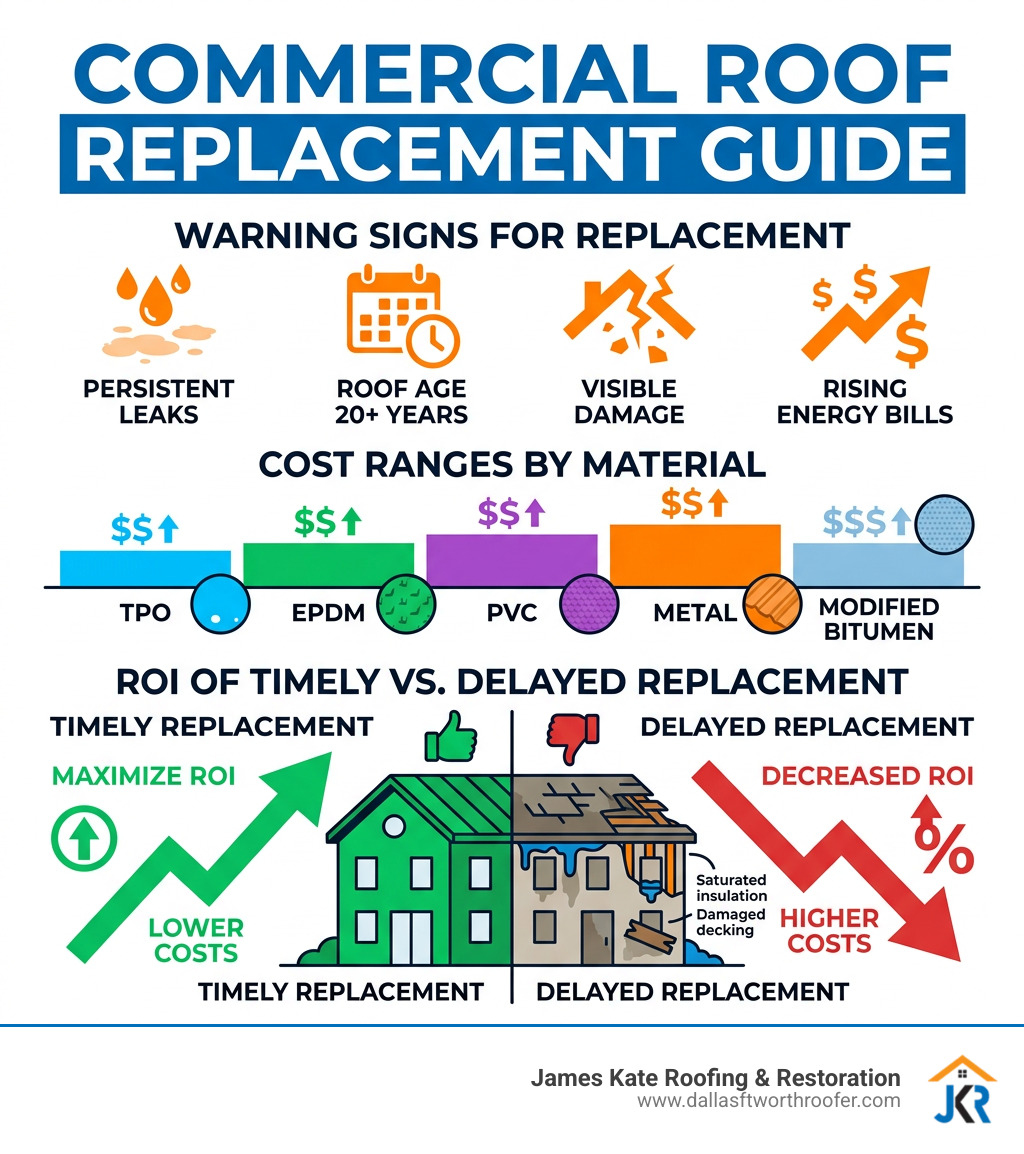
| When do you need it? | Persistent leaks, roof age 20+ years, visible damage, rising energy bills |
| How much does it cost? | $6.50–$12.00 per sq. ft. in DFW (varies by material) |
| How long does it take? | A few days to several weeks depending on size |
| Most common materials | TPO, EPDM, PVC, metal, modified bitumen |
| Can you stay open? | Yes, in most cases |
| Risk of delaying? | Replacement costs can increase by up to 50% |
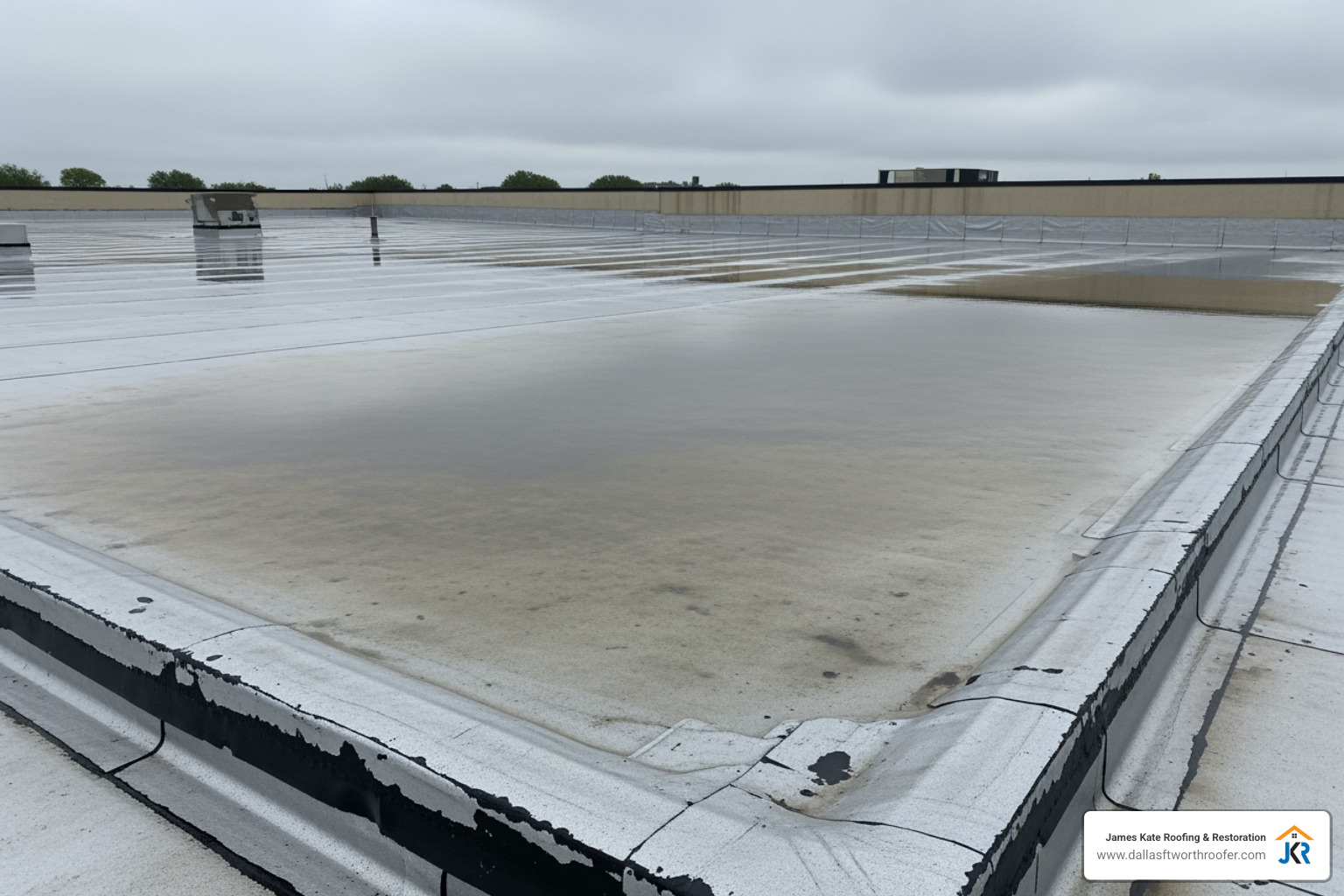
Your commercial roof does more than keep the rain out. It protects your equipment, your employees, your inventory, and the structural integrity of your entire building. When it starts to fail — whether from age, storm damage, or years of deferred maintenance — the consequences compound fast. A small leak ignored today can mean saturated insulation, rotted decking, interior mold, and a much larger bill tomorrow.
That’s the hard truth most property owners don’t hear until it’s too late.
I’m Dustin Eatman, owner of James Kate Roofing & solar in the Dallas–Fort Worth area, and I’ve spent years helping commercial property owners navigate commercial roof replacement — from accurate diagnosis and material selection to project execution and long-term maintenance planning. In this guide, I’ll walk you through everything you need to make a confident, informed decision about your roof.
Simple guide to Commercial roof replacement:
When to Prioritize Commercial Roof Replacement
Deciding to pull the trigger on a commercial roof replacement isn’t usually something property owners look forward to. It’s a significant capital expense. However, there comes a point where “just one more patch” becomes a financial black hole.
We often tell our clients in Mansfield and Arlington that a roof is like a car: eventually, the cost of the repairs exceeds the value of the vehicle. In the roofing world, commercial roofing systems last around 20 to 30 years on average. If your roof is celebrating its 25th birthday, it’s likely time to start looking at replacement options before a major North Texas storm makes the decision for you.
Warning Signs You Can’t Ignore
- Persistent Leaks: If you’re calling us every time it rains in Grand Prairie, the internal structure is likely compromised.
- Membrane Blistering: Bubbles or blisters indicate that moisture is trapped under the membrane. When the sun hits it, that water turns to steam and expands, stretching the material until it fails.
- Sagging Decks: This is a major red flag. It suggests structural rot or saturated insulation that has become too heavy for the deck to support.
- Rising Energy Bills: If your HVAC is working overtime, your roof’s insulation might be saturated. Wet insulation has the R-value of a wet towel—which is to say, zero.
- Mold and Odors: If your tenants are complaining about a “musty” smell, water is likely sitting in the ceiling assemblies.
Repair vs. Commercial Roof Replacement
How do we decide if a repair is enough? We generally follow the 25% Rule. If more than 25% of the roof surface is damaged or if moisture has saturated more than a quarter of the insulation, a full commercial roof replacement is almost always the more cost-effective long-term move.
Chronic moisture is a “silent killer” for buildings. It doesn’t just damage the ceiling tiles; it eats away at the metal or wood decking. By choosing a full replacement over a temporary patch, you’re preventing the next ten problems rather than just fixing the current one. You can find More info about commercial roofing services on our dedicated service page if you’re weighing these options.
Estimating Your Commercial Roof Replacement Cost
In the DFW market, costs can fluctuate based on material availability and local demand. Generally, you can expect to pay between $6.50 and $12.00 per square foot for a standard replacement. However, “standard” is a loose term in commercial real estate.
| Material Type | Estimated Cost (Per Sq. Ft.) | Expected Lifespan |
|---|---|---|
| TPO (Single-Ply) | $6.50 – $10.00 | 20–30 Years |
| PVC (Single-Ply) | $8.00 – $13.00 | 20–30 Years |
| EPDM (Rubber) | $6.00 – $9.00 | 20–35 Years |
| Metal Roofing | $10.00 – $18.00 | 40–60 Years |
| Modified Bitumen | $7.00 – $11.00 | 20–25 Years |
Several factors influence these numbers:
- Tear-off Expenses: Removing two layers of old roofing is more labor-intensive (and expensive) than removing one.
- Labor Complexity: A flat warehouse in Midlothian is easier to roof than a multi-story office building in downtown Arlington with limited access.
- Local Building Codes: DFW cities have specific requirements for wind uplift and energy efficiency that must be met.
- Disposal Fees: Hauling away tons of old debris adds to the bottom line.
For a deeper dive into how we calculate these figures, check out More info about roof replacement and installation.
Common Types of Commercial Roofing Systems
Choosing the right material is the most critical part of the commercial roof replacement process. You aren’t just buying a “cover”; you’re selecting a performance system tailored to your building’s specific needs.
TPO (Thermoplastic Olefin)
TPO is the “King of the Hill” in DFW. It’s a white, reflective single-ply membrane that is fantastic for our hot Texas summers. It’s cost-effective, energy-efficient, and the seams are heat-welded, making them incredibly strong.
PVC (Polyvinyl Chloride)
If you own a restaurant in Granbury or a manufacturing plant, PVC is likely your best bet. It is highly resistant to chemicals, grease, and fire. Like TPO, it’s reflective and heat-welded, but it offers a higher level of durability against harsh substances.
EPDM (Ethylene Propylene Diene Monomer)
Often called “rubber roofing,” EPDM is a durable black membrane. While it’s great for colder climates because it absorbs heat, it’s less common in Texas unless it’s coated with a reflective top layer. It’s known for its incredible flexibility and resistance to hail.
Metal Roofing
For those looking for a “forever roof,” metal is the answer. It can last 50 years or more. While the upfront cost is higher, the maintenance is lower, and it provides a classic aesthetic for churches and high-end retail centers. You can learn more about the different commercial roofing systems to see how they compare to residential options.
Selecting the Right Material for Your Commercial Roof Replacement
When we sit down with property owners in Grand Prairie, we look at three main factors:
- Reflectivity: In Texas, a “cool roof” is a must. High cool-roof reflectivity can slash your summer cooling costs by 30% or more.
- Foot Traffic: If your roof is home to heavy HVAC equipment that requires monthly servicing, you need a thicker membrane or designated walk pads to prevent punctures.
- Regulatory Standards: While California Title 24 is a West Coast standard, many DFW developers use it as a benchmark for high-performance insulation and reflectivity to future-proof their buildings.
The Step-by-Step Replacement Process
We believe in transparency. A commercial roof replacement is a big project, but it shouldn’t be a mystery. Here is our typical workflow to ensure your project goes off without a hitch.
1. Initial Inspection and Assessment
We don’t just look at the surface. We use thermal imaging and moisture probes to see what’s happening underneath the membrane.
2. Project Planning and Permitting
We coordinate with local officials in Mansfield or Midlothian to secure all necessary permits. We also plan the staging area to ensure your business stays accessible.
3. Site Preparation and Safety
Safety is our top priority. We set up perimeter flags, safety rails, and debris chutes. All our projects strictly adhere to OSHA regulations to protect our workers and your staff.
4. The Tear-Off
We remove the old roofing system down to the structural deck. This is the messiest part of the job, but we manage it with daily cleanup and dedicated disposal teams.
5. Deck Inspection and Repair
Once the deck is exposed, we inspect it for rot or rust. Installing a new roof on a bad deck is like building a house on sand—we don’t do it.
6. Insulation Installation
We install high-R-value polyiso insulation. This is your building’s “blanket” that keeps the heat out and the AC in.
7. Membrane Installation
Whether it’s TPO, PVC, or EPDM, we install the main waterproofing layer according to manufacturer specifications.
8. Flashing and Detailing
90% of leaks happen at the edges and penetrations (pipes, vents, HVAC units). We pay extra attention to these “critical zones.”
9. Final Walkthrough and Warranty
Once we’re done, we do a final inspection with you. We then activate your warranties and provide you with a full documentation package.
Navigating Building Codes and Warranties
In the DFW area, your roof must comply with the International Building Code (IBC). This isn’t just red tape; it’s about making sure your roof can handle a 70-mph wind gust or a torrential downpour.
Understanding Your Warranty
Not all warranties are created equal. You’ll hear a lot about “Material Warranties,” but those only cover the product itself. If the roofer installed it wrong, a material warranty won’t help you.
That’s why we recommend a No Dollar Limit (NDL) warranty. This is a “total system” warranty backed by the manufacturer that covers both materials and labor. At James Kate, we also provide our own workmanship guarantees, backed by our status in the GAF President’s Club. We always ensure our work meets or exceeds local building codes to keep your insurance company happy.
Maximizing ROI and Business Continuity
A new roof is an investment, not just an expense. When you opt for a commercial roof replacement, you are immediately increasing the market value of your property.
Energy Efficiency and Tax Advantages
By installing a reflective “cool roof,” you can significantly reduce your building’s carbon footprint and utility bills. Additionally, many commercial property owners can take advantage of Section 179 tax deductions, allowing you to deduct the full cost of the roof in the year it was installed (consult your CPA for details!).
Minimizing Disruption
We know you have a business to run. We don’t expect you to shut down for two weeks.
- Staging Areas: We coordinate with you to place our materials and dumpsters in “low-traffic” zones.
- Noise Management: We can schedule the loudest parts of the job (like deck repairs) during your off-hours.
- Phased Scheduling: We work on one section of the building at a time to keep the rest of the facility operational.
Once the new roof is on, the best way to protect your ROI is through More info about roof maintenance. A little bit of cleaning twice a year can add a decade to your roof’s life.
Frequently Asked Questions about Commercial Roofing
How long does a commercial roof replacement take?
On average, a project takes 2 to 4 weeks. However, this depends heavily on the size of the building and the weather. A 50,000-square-foot warehouse takes longer than a 5,000-square-foot retail strip. We also have to account for “Texas weather”—we won’t open up your roof if there’s a 40% chance of rain.
Can my business stay open during the replacement?
Absolutely. In 95% of our projects, the business stays fully operational. we use safety barriers and clear signage to protect your customers and employees. If your business is particularly sensitive to noise (like a recording studio or a medical clinic), we can discuss evening or weekend work options.
What are the hidden costs of delaying a roof replacement?
If you wait until the roof is failing, you aren’t just paying for a new membrane. You’re paying for:
- Structural Rot: Replacing rotted steel or wood decking.
- Mold Remediation: Cleaning up interior air quality issues.
- Interior Damage: Replacing ruined inventory, electronics, or drywall.
- 50% Cost Increase: Industry data shows that delaying a necessary replacement can increase the final bill by up to 50% due to these secondary damages.
Conclusion
At James Kate Roofing & solar, we don’t just install roofs; we build relationships based on honesty, integrity, and Biblical principles. We understand that your commercial property is a massive part of your livelihood. That’s why we bring our GAF President’s Club expertise and our 25-year workmanship warranty to every single job site in Mansfield, Arlington, and across the DFW metroplex.
Whether you need a TPO membrane for a warehouse or a full build-back after a major storm, we have the resources to handle it all—including water, fire, and mold mitigation. Don’t wait for the next big storm to find out your roof is failing. Schedule your professional commercial roof assessment today and let us give you the peace of mind you deserve.
