What Does It Cost to Fix a Small Roof Leak in 2026?
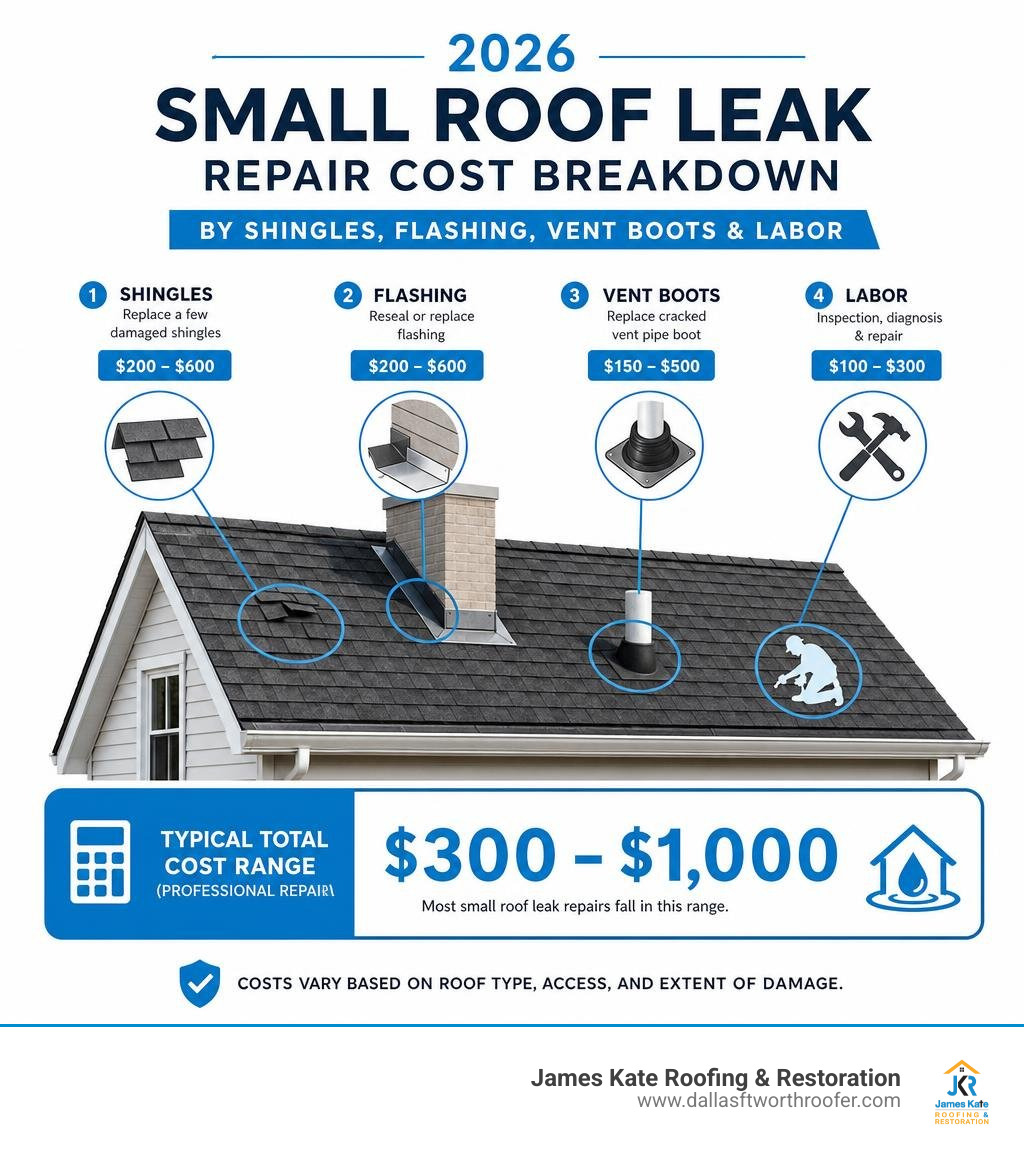
The cost to fix a small roof leak is usually $300 to $1,000 in 2026 when the problem is limited to a few damaged shingles, a small flashing gap, or a cracked vent pipe boot. Most homeowners pay a roofer’s minimum service charge plus labor to find the true entry point, which is why even a small repair can cost more than the materials alone.
Common starting ranges include:
| Leak source | Typical professional repair cost |
|---|---|
| A few missing or damaged shingles | $200 to $600 |
| Vent pipe boot or pipe collar | $150 to $500 |
| Minor flashing reseal | $200 to $600 |
| Small skylight or valley leak | $300 to $1,500 |
The price rises quickly if the leak has reached the roof deck, insulation, or ceiling drywall. Water can travel along rafters before it shows up indoors, so the stain on the ceiling is not always directly below the roof damage. A prompt inspection can help prevent a manageable roof repair from becoming a much larger water-damage project.
I’m Dustin Eatman, owner of James Kate Roofing & solar, with hands-on experience diagnosing residential and commercial roof systems, storm damage, and insurance solar across DFW. I help property owners understand the real cost to fix small roof leak issues by separating a temporary patch from a repair that addresses the failed roofing component.
Simple cost to fix small roof leak word guide:
Average Cost to Fix Small Roof Leak Issues in 2026
When budgeting for roof maintenance, understanding the broader pricing spectrum helps you evaluate contractor estimates fairly. Across the United States in 2026, the national average for a standard residential roof repair hovers around $1,150, with most minor to moderate leak repairs landing neatly between $350 and $1,500. For isolated issues—such as resealing a single flashing joint, fastening loose tabs, or securing a plumbing sleeve—the overall average cost to fix small roof leak scenarios settles between $300 and $1,000.
Why does a small repair cost several hundred dollars even if the replacement component only costs $25 at a supply house? The answer lies in contractor trip minimums, diagnostic labor, and setup overhead. Most reputable roofing companies maintain a minimum service dispatch fee ranging from $150 to $350. This base cost ensures a fully equipped truck, safety equipment, ladders, and two trained technicians arrive safely on-site to inspect, diagnose, and execute the fix according to local building codes.
The table below outlines standard 2026 price expectations across common damage categories and material types based on current 2026 roof repair pricing data:
| Repair Scope / Material Type | Minor Repair Cost Range | Moderate Repair Cost Range | Notes & Common Causes |
|---|---|---|---|
| Asphalt Shingle Field (3-Tab/Architectural) | $200 – $500 | $500 – $1,200 | Blown-off shingles, lifted tabs, minor nail pops |
| Plumbing Vent Pipe Boot | $150 – $400 | $400 – $700 | UV-cracked neoprene collar or slipped metal base |
| Metal Flashing (Step, Wall, Headwall) | $200 – $600 | $600 – $1,400 | Loose fasteners, dried caulk, reversed flashing |
| Chimney Flashing Rebuild | $500 – $1,200 | $1,200 – $2,500 | Failed counterflashing, mortar joint leaks, cricket issues |
| Roof Valley Repair | $500 – $1,500 | $1,500 – $3,200 | High water volume washouts, torn valley liners |
| Standing Seam / R-Panel Metal Roof | $300 – $750 | $750 – $1,800 | Backed-out gasket screws, failed seam sealants |
| Concrete / Clay Tile Roof | $400 – $900 | $900 – $2,200 | Cracked tiles, displaced underlayment batten leaks |
| Flat Roof / Low-Slope Membrane | $300 – $800 | $800 – $1,900 | Punctures, split laps, perimeter termination gaps |
Pricing by Damage Source and Roof Material
Roofing material plays a massive role in both the complexity and final expense of a repair. Standard asphalt shingles remain the most cost-effective roofing system to service. A minor shingle repair typically runs $3 to $7 per square foot of touched area, or roughly $200 to $500 for an isolated section. Architectural shingles require careful unsealing and gentler handling than standard 3-tab shingles to prevent damage to surrounding courses, slightly increasing labor requirements.
Specialty materials demand higher craftsmanship and safety protocols:
- Metal Roofing: Metal roofs expand and contract significantly during temperature swings. Repairing minor leaks on standing seam or screw-down metal panels typically costs 20% to 25% more than asphalt shingles, averaging $300 to $750 for loose screw replacement, specialized gasket upgrades, or seam resealing.
- Clay and Concrete Tile: Tiles are heavy and fragile. Walking on a tile roof requires special weight distribution boards to prevent breaking adjacent tiles. Consequently, tile repairs run roughly 40% higher than asphalt shingles, often ranging from $400 to $900 for localized adjustments.
- Low-Slope and Flat Membranes: Commercial and residential flat roofs (such as TPO, PVC, or modified bitumen) require specialized heat-welding equipment or chemical bonding adhesives. Locating a pinhole leak on a flat surface can be tricky because water often travels horizontally between membrane layers before dripping into the building.
Labor Rates vs Material Expenses for Small Leak Repairs
A common surprise for property owners is the ratio of labor costs to material expenses. On a minor leak job, materials represent only 10% to 25% of the total invoice, while skilled labor and setup account for 75% to 90%.
Professional roofing labor rates generally range between $50 and $120 per hour per technician, with small repair crews billing half-day rates from $300 to $600. This labor investment covers critical tasks beyond fastening a component:
- Safety Staging and Fall Protection: Rigging ladders, securing roof harnesses, and adhering to strict OSHA standards.
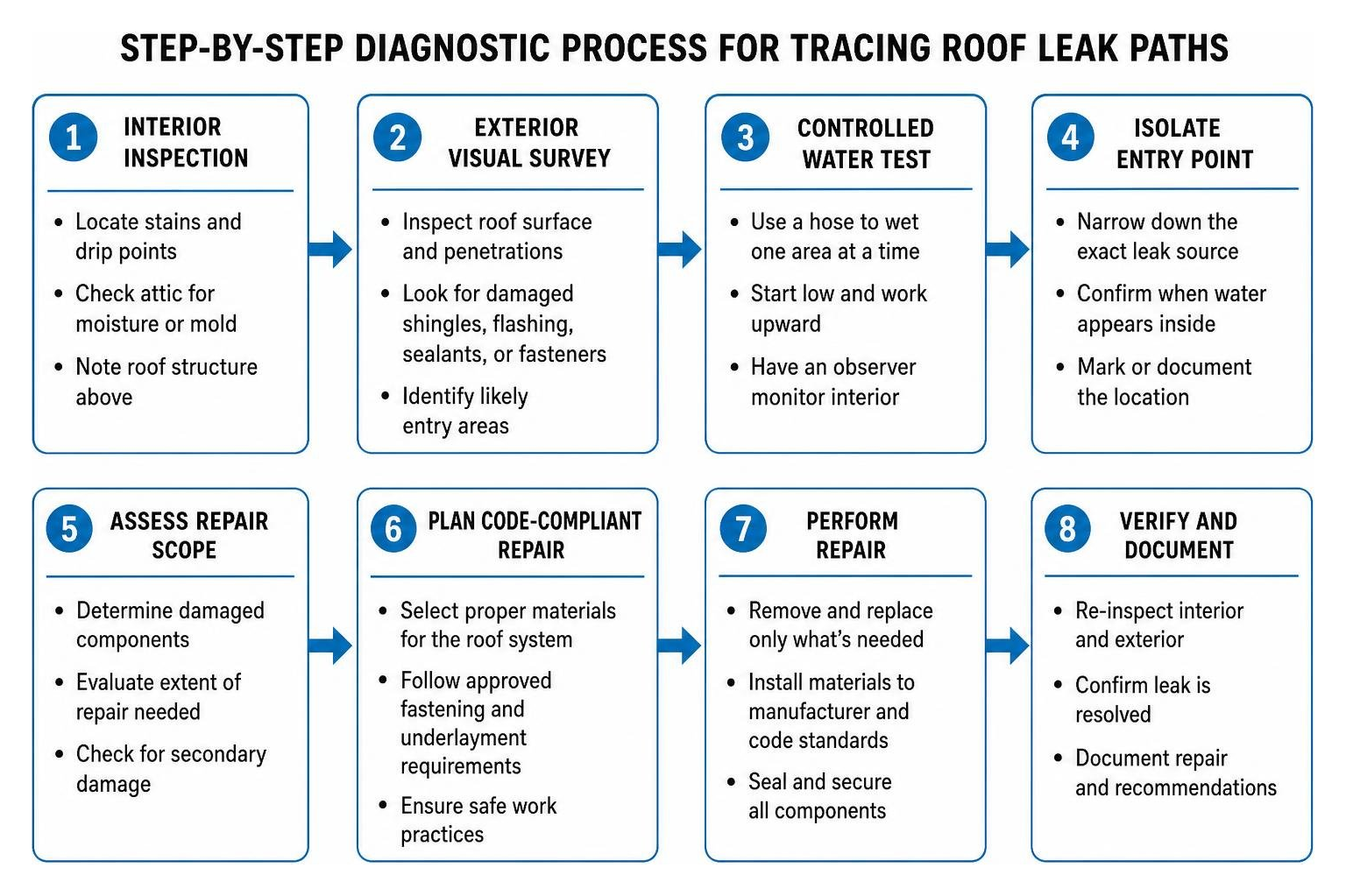
- Diagnostic Tracing: Performing attic inspections, checking rafter moisture, or running a controlled water hose isolation test.
- Surgical Tear-Off: Carefully removing surrounding components without breaking adjacent brittle shingles or bending adjoining metal flashing.
- Code-Compliant Fastening: Installing approved fasteners, high-grade ice-and-water membranes, and UV-resistant polyurethanes.
Common Causes of Minor Roof Leaks and Specific Repair Costs
Water is persistent and always takes the path of least resistance. Roof leaks rarely happen in the middle of a solid, undisturbed roof plane unless storm debris punctures the surface. Instead, the vast majority of minor leaks originate around penetrations, roof transitions, and intersections where metal, rubber, and shingles join together.
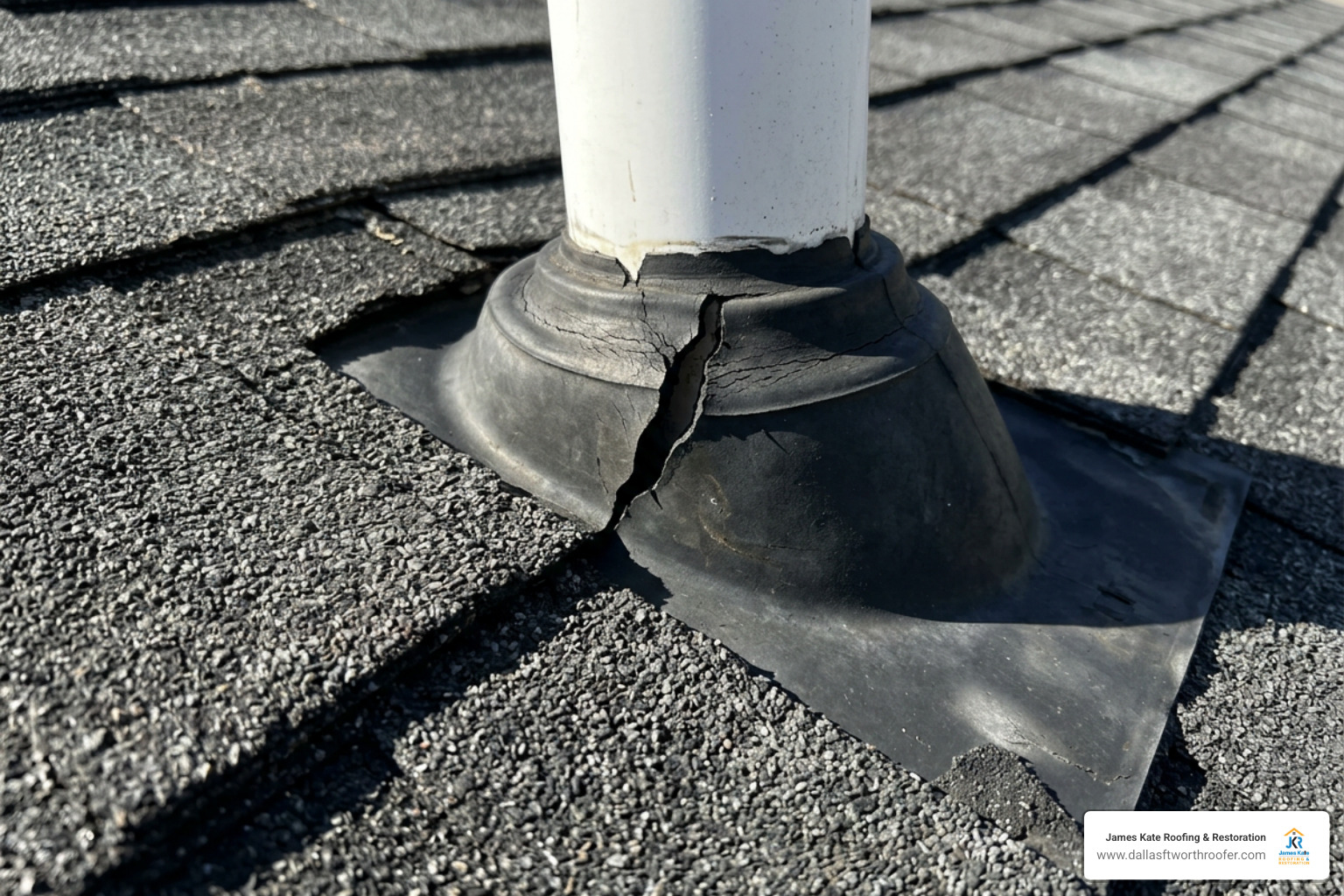
How Flashing and Vent Boot Failures Affect the Cost to Fix Small Roof Leak
According to national roofing data, flashing and penetration failures account for roughly 40% to 50% of all residential roof leak service calls.
- Plumbing Vent Pipe Boots: The rubber collar (neoprene boot) surrounding your plumbing stack pipe is subjected to intense UV rays and extreme summer heat. Over 8 to 12 years, the rubber dries out, loses elasticity, and splits. Once cracked, rainwater runs directly down the plumbing pipe into your attic insulation and ceiling drywall. A professional vent boot repair or retrofit sleeve installation typically runs $150 to $400. We often discuss how addressing this is one simple way to fix a roof leak before ceiling damage starts.
- Step and Counter Flashing: Step flashing protects the vertical junction where your roof slope meets an exterior wall or dormer. Counter flashing is mortared or attached above it to seal the joint. When caulking dries out or nails work loose, driving rain slips behind the metal. Repairing step and counter flashing costs between $300 and $950.
- Chimney Flashing and Crickets: Chimneys are notorious leak culprits. If a chimney is wider than 30 inches, building codes mandate a small peaked roof diversion called a “cricket” or “saddle” behind it. Rebuilding chimney step flashing, re-cutting mortar reglets, and sealing the chimney throat typically ranges from $500 to $1,800.
Shingle Damage, Valley Gaps, and Hidden Structural Water Intrusion
Beyond roof penetrations, several other localized issues can compromise your moisture barrier:
- Missing or Wind-Damaged Shingles: High winds can break the adhesive thermal sealant strip on shingles, lifting them up or tearing them away completely. If a few shingles blow off during a storm, replacing them costs roughly $200 to $500. Understanding how to replace damaged shingles like a pro requires lifting the overlapping course above, pulling old nails with a flat pry bar, sliding a fresh shingle into position, and hand-sealing each tab.
- Valley Leaks: Roof valleys carry massive volumes of water—a standard 1,000-square-foot roof plane can channel hundreds of gallons through a single valley during an intense downpour. If valley underlayment tears or shingles are cut incorrectly, water finds its way beneath the valley flashing. Repairing a valley leak runs between $500 and $1,500.
- Sub-Deck Rot and Plywood Degradation: When a minor leak drips unnoticed for months, moisture softens the underlying OSB or plywood decking. Once wood moisture levels climb above 19%, structural rot sets in. Replacing rotted decking adds $150 to $300 per sheet of plywood on top of exterior shingle and underlayment labor.
DIY vs Professional Repair: When to Call an Expert
When a ceiling stain appears, many homeowners consider grabbing a ladder and a tube of sealant to fix the issue themselves. While handling a basic repair can save on upfront labor costs, working at heights comes with serious safety considerations, specialized tools, and diagnostic challenges.
For detailed industry research on repair methodologies and professional trade standards, homeowners can review this roof leak repair industry analysis.
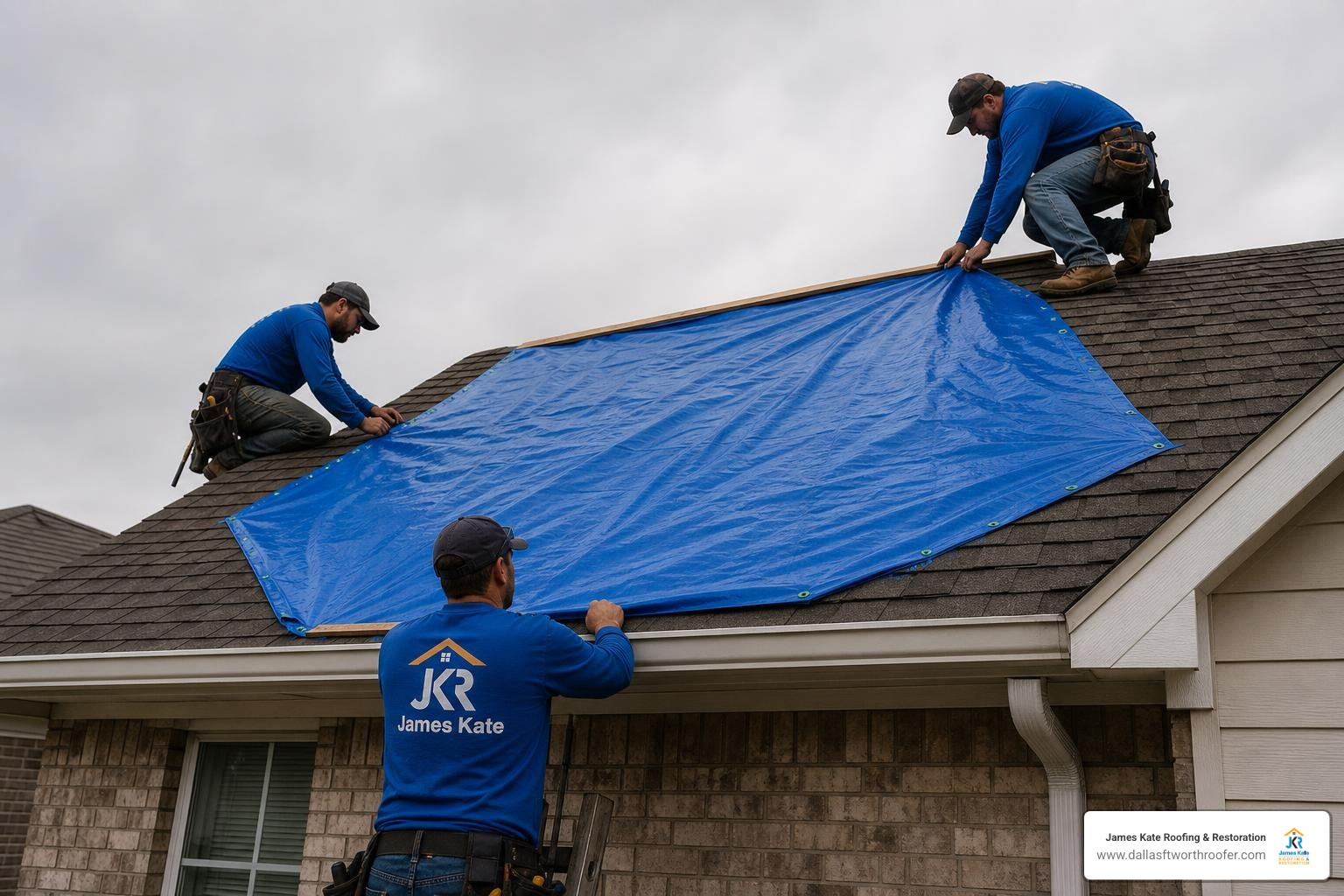
Temporary Emergency Patches vs Permanent Leak Solutions
It is critical to distinguish between a temporary patch and a permanent component repair. A temporary patch is designed to stop water entry for a short window during an active storm until permanent repairs can be completed safely. A permanent repair removes the failed component, inspects the underlying roof deck, and integrates new underlayment, metal flashing, and shingles into the water-shedding system.
If an active storm hits, deploying temporary emergency protection prevents thousands of dollars in interior drywall damage:
- Emergency Tarping: A heavy-duty polyethylene tarp secured with wood furring strips nailed through the tarp edges provides reliable short-term protection. Rolling the top edge of the tarp around a 2×4 and tucking it beneath an upper course of shingles prevents wind from catching underneath.
- Roof Patch Sealants: For minor shingle splits during wet weather, applying asphalt plastic cement or specialized wet patch provides a quick seal. For comprehensive material comparisons on temporary sealers, check out our essential roof patch buying guide.
- Polyurethane and Tripolymer Sealants: Avoid generic hardware-store silicone caulks on asphalt shingles. Silicone fails to bond effectively with mineral granules and breaks down quickly under direct UV exposure. Professionals rely on high-grade polyurethane sealants or tripolymer formulations that maintain elasticity through years of thermal expansion.
Evaluating DIY Risks and the True Cost to Fix Small Roof Leak at Home
Before heading up a ladder, consider the balance between DIY material costs and long-term risks:
| Factor | DIY Roof Leak Repair | Professional Contractor Repair |
|---|---|---|
| Upfront Out-of-Pocket Cost | $30 – $150 (materials & sealants) | $300 – $1,000 (parts, labor & warranty) |
| Personal Safety & Fall Risk | High (ladder falls, steep roof pitches) | Low (trained crew, harnesses & OSHA gear) |
| Diagnostic Accuracy | Moderate (often patches symptoms, not root cause) | High (hose testing, moisture meters, attic checks) |
| Expected Lifespan of Fix | 6 months – 2 years (surface sealants) | 10 – 20+ years (full component replacement) |
| Roof Warranty Protection | May void manufacturer shingle warranties | Preserves manufacturer & workmanship warranties |
The most common DIY pitfall is misdiagnosing the leak path. Water often enters a roof penetration ten feet up the slope, travels down the top of a rafter, runs across horizontal ceiling joists, and eventually drips through a drywall seam far from the actual breach. Slapping surface caulk directly over the nearest shingle leaves the true leak active, allowing moisture to rot framing hidden out of sight. When you need peace of mind, contacting an experienced contractor for roof repair ensures the root problem is solved right the first time.
Additional Factors That Increase Roof Leak Expenses
While simple leaks fall into the $300 to $1,000 range, several secondary factors can push project costs higher. Understanding these variables helps you anticipate potential estimate adjustments:
Roof Slope, Access, and Secondary Interior Drywall Damage
- Roof Pitch and Height: Standard walkable roofs (pitches from 4/12 to 6/12) are easy to navigate safely. Steep roofs (8/12 pitch and higher) or multi-story structures require specialized scaffolding, roof jacks, and harness systems. Two-story homes often add 10% to 15% to labor costs, while three-story properties or steep mansard roofs can add 25% or more.
- Interior solar & Water Mitigation: A small roof leak is rarely just an exterior roofing issue if it has dripped undetected for days or weeks. Roofing contractors specialize in exterior weatherproofing, but water entering the building envelope requires drying and cosmetic repair:
- Ceiling Drywall Patching: $200 to $600 per damaged section.
- Attic Insulation Replacement: $150 to $450 to remove saturated fiberglass or cellulose and blow in fresh insulation.
- Interior Priming and Painting: $200 to $500 for stain-blocking primer and matching ceiling paint.
- Mold Mitigation: If slow leaks go unnoticed for weeks, microbial growth can develop in warm, damp attics. Professional mold remediation can add $500 to $2,500+ depending on the affected square footage.
- Emergency Surcharges: Calling for immediate dispatch during an overnight thunderstorm or holiday weekend typically incurs an emergency surcharge of $200 to $500 for immediate temporary tarping and stabilization. When severe weather strikes, our team provides dedicated emergency roof repair in Arlington and surrounding communities to protect homes before storm damage spreads. For a comprehensive overview of long-term maintenance costs, consult our 2026 roof repair guide.
Insurance Coverage Rules for Sudden Perils vs Wear and Tear
Homeowners frequently ask whether they should file an insurance claim for a minor roof leak. Standard HO-3 homeowner insurance policies operate under very specific guidelines:
- Covered Perils: Insurance covers roof leaks caused by sudden, accidental events—such as severe windstorms tearing off shingles, hail puncturing membrane surfaces, or a fallen tree branch cracking a rafter.
- Exclusions: Policies explicitly exclude damage resulting from wear and tear, gradual deterioration, age, or lack of routine maintenance. If a 15-year-old pipe boot cracks from sun exposure or old flashing caulk dries out, insurance will not pay for the repair.
- The Deductible Reality: Most homeowner policies carry deductibles ranging from $1,000 to $2,500 (or a 1% to 2% named storm deductible). Because a small leak repair generally costs between $300 and $1,000, filing a claim makes little financial sense. Paying out of pocket for minor maintenance preserves your claims history and prevents potential rate increases.
Frequently Asked Questions About Roof Leak Repairs
How quickly should I repair a small roof leak to prevent water damage?
You should address a small roof leak immediately. Even a minor trickle can saturate ceiling drywall, soak attic insulation, and encourage wood rot in structural rafters. Within 24 to 48 hours of ongoing moisture exposure, mold spores can begin colonizing damp drywall and framing. Delaying a repair by a few weeks can easily transform a $350 pipe boot fix into a $3,000+ water mitigation and interior solar project.
How do I know if a small roof leak requires a full roof replacement?
A small roof leak can usually be repaired without replacing the entire roof if the roof covering is relatively new (under 12 to 15 years old) and the underlying decking is solid. However, replacement is recommended if:
- The asphalt shingles are near the end of their 20- to 25-year lifespan and exhibit widespread granule loss, curling, or brittleness.
- You are dealing with 3 or more separate active leaks across multiple roof planes.
- Cumulative repair estimates exceed 25% to 30% of the total cost of a new roof installation.
- Extensive structural decking rot or sagging trusses are present beneath the shingles.
Does homeowners insurance cover minor roof leak repairs?
Homeowners insurance only covers leak repairs if the water penetration was triggered directly by a sudden, covered peril, such as hail impact or storm winds. General wear and tear, age-related sealant failure, and deferred homeowner maintenance are excluded. Furthermore, because minor repairs ($300 to $1,000) typically cost less than your policy deductible ($1,000 to $2,500), small leak repairs are almost always handled as standard out-of-pocket home maintenance.
Conclusion
A small roof leak is one of the most manageable home maintenance challenges when caught early. While the average cost to fix small roof leak problems ranges from $300 to $1,000, acting quickly prevents water from traveling into your attic framing, soaking insulation, and destroying interior drywall. Rather than relying on temporary caulk patches that degrade after a single season, investing in a proper component repair ensures lasting protection for your property.
At James Kate Roofing & solar, we are a family-owned DFW company providing top-tier residential roofing, commercial roofing, and comprehensive solar services across Mansfield, TX, Arlington, TX, Granbury, TX, Grand Prairie, TX, and Midlothian, TX. Our commitment to honesty, integrity, and Biblical principles is reflected in our GAF President’s Club recognition and industry-leading workmanship warranties of up to 25 years. Beyond structural roofing repairs, our certified solar team handles end-to-end water mitigation, mold remediation, fire solar, and complete build-back construction.
If you suspect a leak, contact the trusted team at James Kate Roofing & solar today to schedule a thorough roof inspection and protect your home for years to come.

Dustin Eatman is a seasoned roofing professional with deep, hands-on expertise that spans residential and commercial roofing, insurance solar, and long-term roof asset management. As the owner of James Kate Roofing & solar in the Dallas–Fort Worth metroplex, he’s built a reputation for diagnosing roof systems accurately, communicating clearly, and executing projects with a high standard of workmanship and documentation. Dustin understands the technical details that make roofs perform—proper underlayment selection, slope and drainage considerations, ventilation strategy, flashing and penetration detailing, and manufacturer-specific installation requirements—because he’s worked through the real-world challenges that cause leaks, premature wear, and warranty issues. He’s equally fluent in the operational side of roofing: jobsite planning, quality control, safety, material ordering, crew coordination, and customer experience from inspection to closeout. In insurance-related projects, Dustin brings practical knowledge of claim workflows, adjuster meetings, scope alignment, supplements, and the importance of photo evidence and thorough records, helping property owners navigate stressful situations with confidence. For commercial clients—especially property and facility managers—he emphasizes proactive maintenance and targeted repairs that reduce disruption, extend roof life, and prevent expensive interior damage. Dustin also stays focused on doing things the right way: educating customers on realistic options, setting expectations, and prioritizing solutions that hold up over time rather than quick fixes. That blend of technical skill, field experience, process discipline, and owner-level accountability is what makes Dustin Eatman a trusted expert in the roofing industry.