Start Mold Testing and Mitigation by Stopping the Moisture
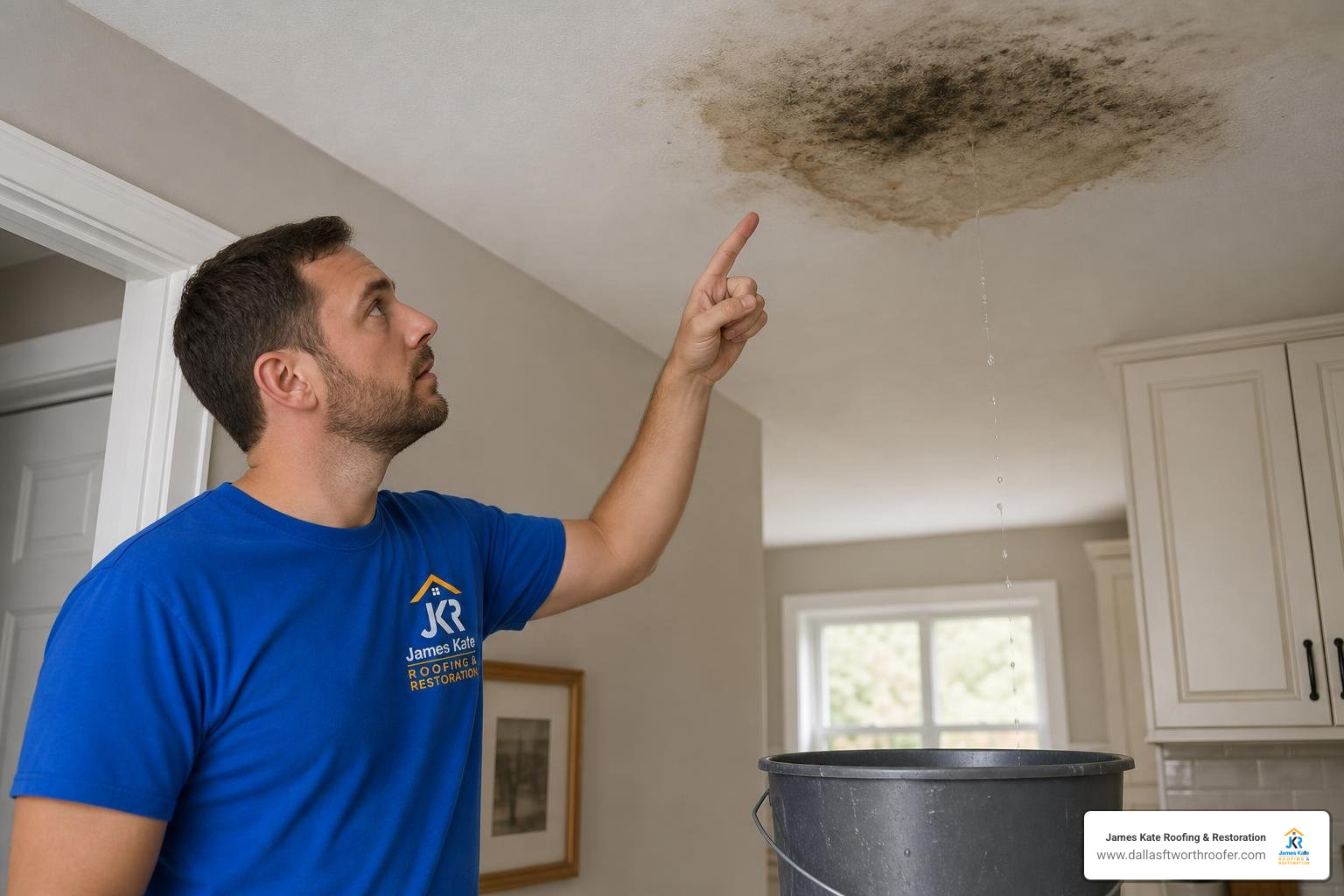
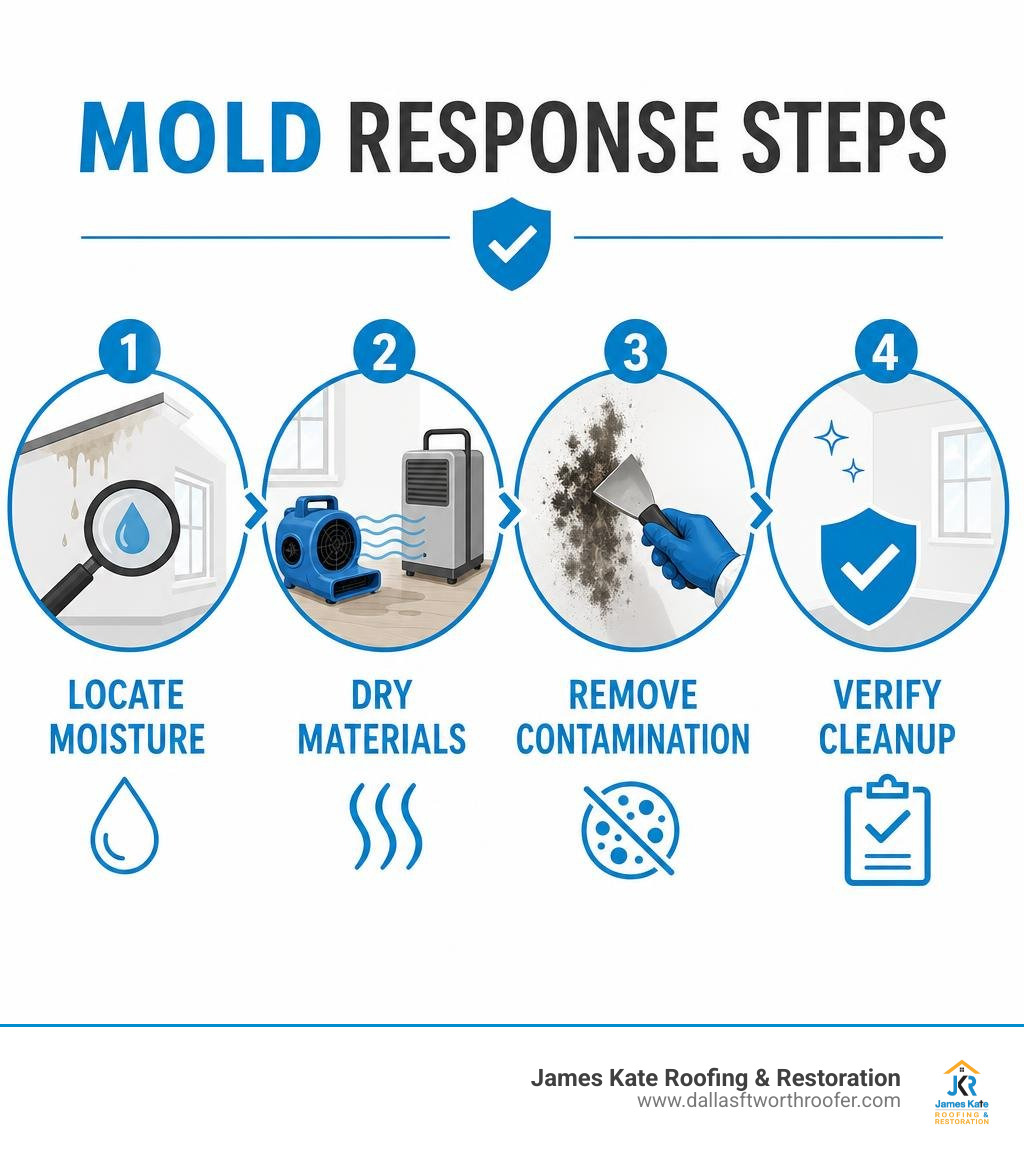
If you suspect mold, do not start with a routine air test. First, find and stop the moisture source, such as a roof leak, plumbing leak, condensation issue, flood damage, or high indoor humidity. Then dry wet materials within 48 hours when possible, remove visible mold safely, and bring in qualified help when growth is widespread, hidden, or connected to structural damage.
Mold spores are always present indoors and outdoors. The problem begins when moisture lets them grow on materials like drywall paper, wood, insulation, or fabric. A musty odor, water stains, peeling paint, warped surfaces, or recurring dampness are often more useful warning signs than a single air sample.
Routine mold testing has limits. There are no federal health-based standards for a “safe” indoor mold level, and air samples capture only one place at one moment. A negative test does not rule out hidden moisture or mold. Testing can still help with complex investigations, insurance documentation, or independent post-remediation clearance.
I’m Dustin Eatman, owner of James Kate Roofing & solar. My experience finding roof-related water intrusion, documenting damage, and coordinating repairs helps property owners approach mold testing and mitigation with a clear focus: fix the water problem first, then complete the cleanup correctly.
Must-know mold testing and mitigation terms:
- mold mitigation vs remediation
- mold and water damage solar
- does mold remediation include replacing drywall
The Science of Indoor Spores and Moisture Intrusion
Mold is a natural, multi-cellular fungus that plays an essential role outdoors by breaking down organic matter. Indoors, however, active fungal colonization poses serious threats to structural integrity and indoor environmental quality. Fungi reproduce by releasing microscopic spores that drift through indoor and outdoor air currents constantly. Because spores are ubiquitous, achieving an indoor environment with absolute zero mold spores is impossible.
For indoor spores to transition from harmless, dormant particles into expanding colonies, they require specific environmental conditions: oxygen, a favorable temperature range, an organic carbon food source, and—most importantly—uncontrolled moisture. Modern construction materials provide abundant food sources. Cellulose found in paper-faced drywall, timber wall studs, subflooring, wood trim, ceiling tiles, and carpet backing offers an ideal feast for microbial life. When these organic substrates absorb water or endure relative humidity levels consistently above 60%, fungal spores germinate, produce hyphae (root-like structures), and rapidly digest the materials. Understanding the fundamental difference between mold removal and remediation ensures property owners treat both the visible contamination and the underlying moisture dynamics driving the growth.
Understanding Fungal Ecology and Colonization
Indoor fungal ecology depends entirely on moisture availability. Fungi do not manufacture their own food through photosynthesis; instead, they release digestive enzymes directly into damp porous surfaces, breaking down complex structural polymers into simple sugars. As colonies mature, they develop microscopic fruiting bodies that release millions of new spores into surrounding air pathways.
When airflow disturbances occur, these spores travel through hallway corridors, wall cavities, and HVAC duct systems, settling onto other surfaces throughout the property. If secondary areas suffer from elevated indoor humidity or condensation, those settled spores initiate new fungal colonies. This continuous reproductive cycle compromises indoor air quality, degrades building framing, and triggers persistent musty odors that linger until physical removal and source-moisture corrections take place.
The 48-Hour Critical Moisture Window
In the solar industry, time is your most valuable asset. Scientific consensus across public health agencies and structural drying standards confirms that wetted organic building materials must be thoroughly dried within 24 to 48 hours to prevent microbial proliferation.
When plumbing pipe breaks, roof penetrations fail, or flash flooding introduces bulk water indoors, dormant fungal spores begin absorbing water and swelling immediately. If structural drying, dehumidification, and moisture extraction do not return building materials to normal equilibrium moisture content within this critical two-day window, active fungal colonization begins behind baseboards, under flooring, and inside insulated wall cavities. Knowing how to handle mold after a leak with swift water extraction and aggressive air movement stops structural rot before invasive remediation becomes necessary.
Limitations of Routine Sampling and Smarter Assessment Alternatives
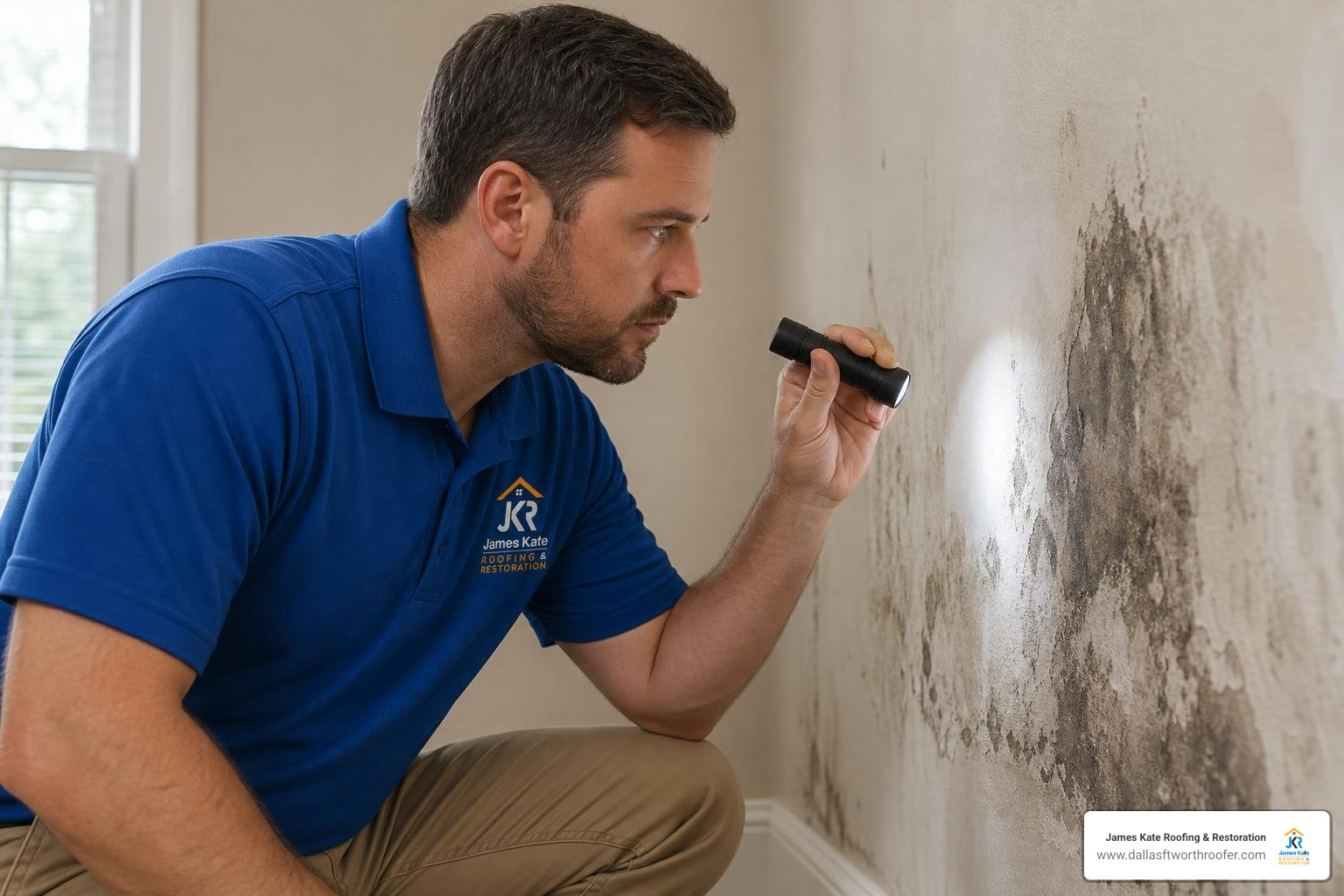
When property owners suspect fungal growth, their first instinct is often to order commercial air testing kits or hire consultants to sample indoor air. However, public health organizations like the Centers for Disease Control and Prevention (CDC), the National Institute for Occupational Safety and Health (NIOSH), and state health departments generally advise against routine air sampling for initial evaluations.
The fundamental limitation of mold testing lies in the absence of federal exposure thresholds. There are currently no regulatory numbers defining what constitutes a “safe” or “toxic” count of airborne spores for human health. Because individual biological sensitivity varies dramatically, a spore concentration that causes severe upper respiratory symptoms in one occupant might cause no discernible reaction in another. Before spending hundreds or thousands of dollars on preliminary sampling, property owners should review the best mold inspection rules to follow to focus resources on discovering the water source and fixing the problem.
Why Air Testing Falls Short for Initial Assessments
Air testing captures a single “snapshot” in time and space. Indoor airborne spore concentrations fluctuate wildly over hours based on natural air currents, outdoor weather, HVAC cycling, open windows, and physical occupant movement. A short-term cassette air sample pulled over five minutes can easily yield a false negative if spores are contained behind a wall assembly, or an artificially elevated count if someone recently dusted a nearby bookshelf.
Furthermore, laboratory sample analysis has distinct technical blind spots:
- Culturable (Viable) Sampling: Requires spores to grow on agar plates in a laboratory. Many indoor fungal species do not grow well on common culture media, and viable sampling completely ignores nonviable (dead) spores that still contain intact allergenic proteins and irritants.
- Spore Trap (Nonviable) Analysis: Counts both living and dead spores under a microscope, but optical microscopy often cannot distinguish between distinct fungal genera (such as grouping Aspergillus and Penicillium together) and provides no data on whether mycotoxins are being produced.
- Mycotoxin Misconceptions: Testing for the physical presence of a toxigenic species (such as Stachybotrys chartarum) does not prove that chemical mycotoxins are actively being produced or released into the breathing zone. Conversely, common “non-toxic” molds can cause significant allergic and respiratory irritation.
Because physical mitigation protocols remain identical regardless of the specific fungal species identified, paying for preliminary identification rarely changes the scope of structural repairs.
Actionable Detection: Visual Dampness and Odor Tracing
Health organizations prioritize thorough visual inspections and olfactory detection over routine air sampling. If you can see visible mold growth or detect an unmistakable earthy, musty odor, an indoor fungal problem exists.
solar professionals rely on proven diagnostic tools to evaluate building dampness:
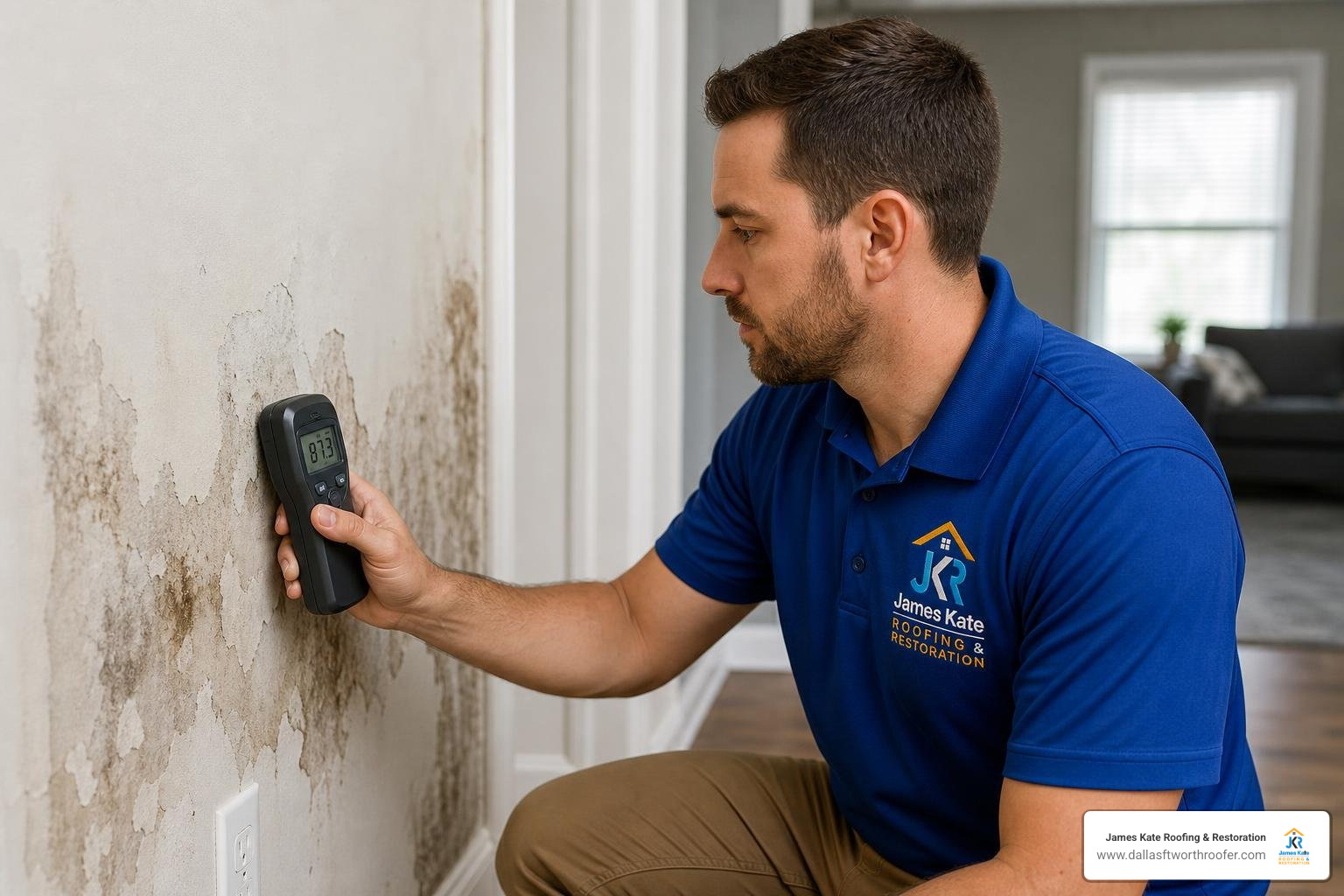
- Calibrated Moisture Meters: Pin-type and non-invasive pinless meters track moisture gradients deep within gypsum board, framing studs, and masonry.
- Infrared Thermal Imaging: Thermal cameras detect evaporative cooling patterns behind walls, revealing hidden plumbing leaks and wet insulation without invasive demolition.
- Digital Hygrometers: Measure ambient relative humidity and dew point temperatures across living zones to pinpoint condensation risks.
- Microbial VOC Tracking: Investigating microbial volatile organic compounds (mVOCs)—the chemical gases released during active fungal digestion—allows technicians to follow scents directly to concealed moisture cavities.
Eliminating the source of dampness and following proven steps for eliminating musty odors resolves indoor air quality complaints far more effectively than air testing reports.
Best Practices for Professional Mold Testing and Mitigation
When professional intervention is required, modern mitigation avoids arbitrary rules of thumb based merely on square footage. Instead, the industry adheres to the standard of care outlined in the ANSI/IICRC S520 Standard and R520 Reference Guide for Professional Mold Remediation.
The IICRC framework classifies indoor environments into three distinct ecological states to determine appropriate engineering controls and remediation responses:
| IICRC Condition Category | Ecological Definition | Typical Environmental Characteristics | Required Mitigation Action |
|---|---|---|---|
| Condition 1 (Normal Ecology) | Normal fungal ecology | Spore types and concentrations reflect normal outdoor levels; no abnormal growth. | Routine structural maintenance and standard housekeeping. |
| Condition 2 (Settled Spores) | Settled spores / contamination | Indoor surfaces or air contain settled spores dispersed from an active colony elsewhere. | HEPA vacuuming, damp wiping, and air scrubbing without major demolition. |
| Condition 3 (Active Growth) | Active fungal growth | Visible or concealed active fungal colonies growing directly on building substrates. | Full physical containment, source repair, controlled removal, and HEPA cleaning. |
Integrating Mold Testing and Mitigation into a Phased Plan
A compliant, effective remediation project follows a disciplined three-phase lifecycle: Assessment, Physical Mitigation, and Post-Remediation Verification (Clearance).
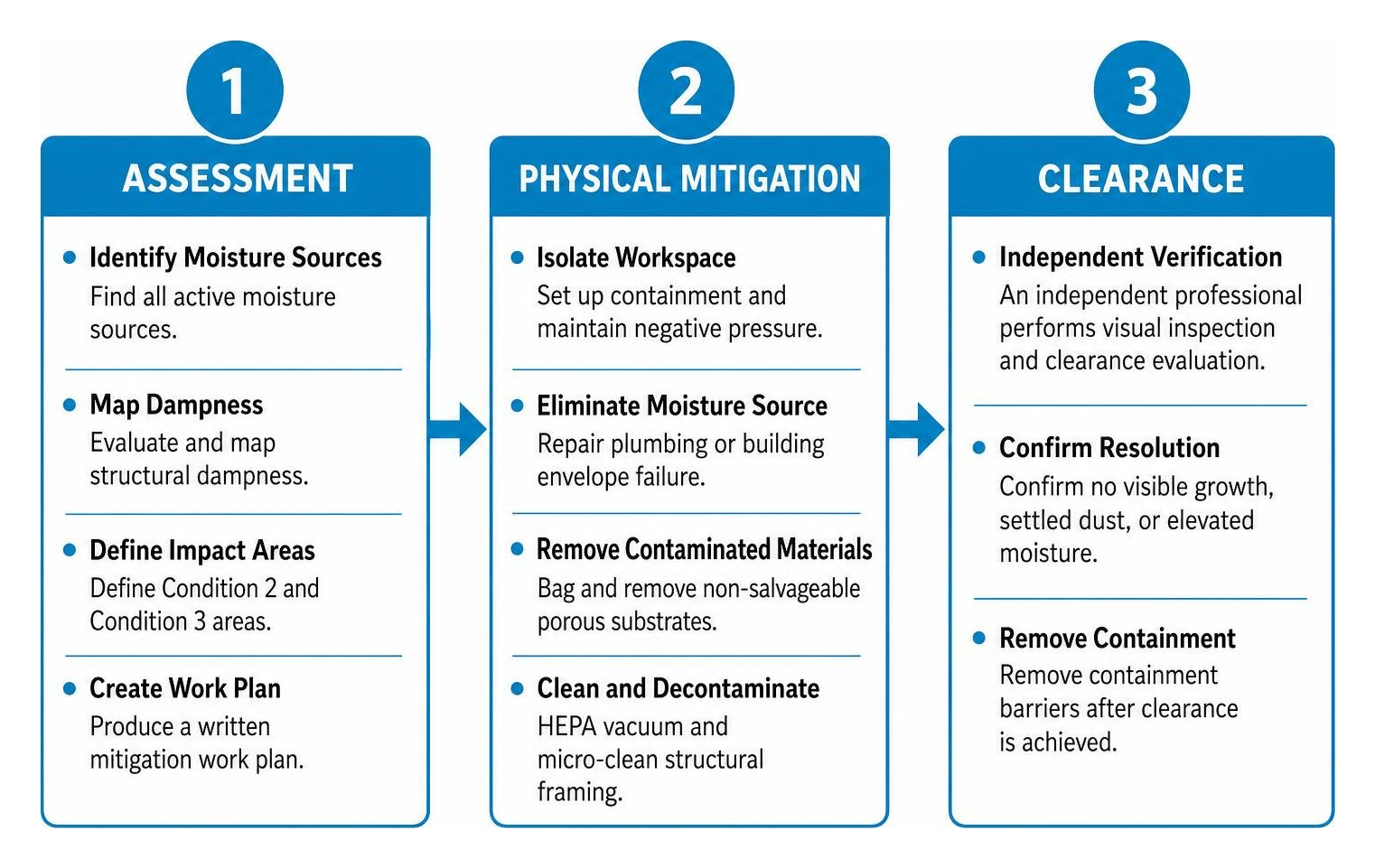
- Phase 1: Initial Assessment & Scoping: A qualified assessor identifies all active moisture sources, maps structural dampness, defines the boundary of Condition 2 and Condition 3 areas, and produces a written mitigation work plan.
- Phase 2: Source Elimination & Physical Removal: Contractors isolate the workspace under negative pressure, correct the plumbing or building envelope failure, bag and remove non-salvageable porous substrates according to standard drywall cleaning and remediation procedures, and micro-clean structural framing.
- Phase 3: Post-Remediation Verification: An independent professional performs a visual inspection and clearance evaluation to confirm all visible growth, settled dust, and elevated moisture levels are resolved before containment barriers are taken down.
Essential Physical Containment and Remediation Protocols
Remediating fungal contamination safely requires rigorous engineering controls to avoid cross-contaminating clean living areas:
- Critical Polyethylene Containment: Establishing airtight 6-mil polyethylene plastic barriers and isolation airlocks between affected zones and occupied living areas.
- Negative Air Pressure Systems: Utilizing industrial negative air machines equipped with true HEPA filtration to vent air outside, ensuring dust and disturbed spores cannot escape into adjacent rooms.
- Controlled Material Demolition: Carefully cutting and double-bagging heavily contaminated porous materials (like moldy drywall and wet fiberglass insulation) inside containment before transport.
- HEPA Vacuuming and Mechanical Abrasion: Cleaning framing lumber using wire brushing, sanding, or dry ice blasting paired with continuous contact HEPA vacuuming.
- EPA-Registered Antimicrobial Treatments: Applying specialized biocides or fungistatic coatings to clean structural lumber to inhibit future microbial colonization.
- No Ineffective Paint Encapsulation: Never painting over water-damaged or moldy surfaces. Cosmetic paint applied over damp or moldy drywall traps moisture within the assembly, promotes hidden rot, and leads to rapid coating failure.
Executing comprehensive containment and removal ensures property owners eliminate severe black mold contamination safely at the root source.
Industry Regulations, Assessor Independence, and Professional Vetting
Navigating the mold industry requires understanding the regulatory landscape. The U.S. Environmental Protection Agency (EPA) does not certify mold inspectors or remediation contractors, nor does it maintain a registry of approved mitigation firms. Instead, professional standards, state licensing statutes, and industry certifications govern contractor performance.
When hiring a company for inspection or cleanup, property owners should review the guide to finding trusted local mold experts to ensure prospective contractors carry comprehensive pollution liability insurance, follow ANSI/IICRC S520 guidelines, and demonstrate proven experience in structural water solar.
Navigating Mold Testing and Mitigation with Certified IEPs
An Indoor Environmental Professional (IEP) is an expert trained in building science, environmental assessment, and fungal sampling methodologies. The primary role of an IEP is to perform objective assessments, write protocol specifications, and conduct final clearance testing.
To protect property owners from predatory sales tactics and manufactured conflicts of interest, ethical industry practice—and legal statute in regulated states—mandates a strict separation of roles:
- The Assessment Firm (IEP): Assesses the building, writes the remediation scope, and performs post-mitigation clearance testing. This firm must have no financial stake in the cleanup labor.
- The Remediation Contractor: Executes the containment, moisture drying, physical demolition, HEPA cleaning, and structural build-back based on the IEP’s protocol.
A single company should never assess a property, perform the paid mitigation work, and then conduct its own final clearance testing. Independent verification ensures that clearance passes because the building is truly clean, not because a contractor is eager to collect final payment.
Budgeting and Project Scope Considerations
Every professional mold project must be guided by a clear, written remediation work plan detailing containment boundaries, drying goals, and material disposal practices. Clear documentation is essential when filing insurance claims, resolving property transactions, or planning structural reconstruction.
Understanding the factors influencing project scope helps property owners manage realistic mold remediation costs and expectations without running into unexpected financial surprises.
Frequently Asked Questions About Mold Testing and Mitigation
Does the color of indoor mold indicate how dangerous it is?
No. The color of indoor mold (whether it appears black, green, white, gray, or orange) does not indicate its potential toxicity or health hazard level. While media attention often focuses on “toxic black mold” (Stachybotrys chartarum), many common molds produce dark pigmentation without releasing potent mycotoxins. Conversely, light-colored molds can trigger significant respiratory allergies, asthma attacks, and mucous membrane irritation. Public health authorities advise that all indoor fungal growth should be treated with the exact same safety precautions, physical containment, and removal protocols regardless of species or color.
When is environmental mold testing actually necessary?
While routine testing is unnecessary for visible mold, targeted environmental testing is valuable in specific circumstances:
- Locating Hidden Contamination: When occupants experience persistent respiratory symptoms or detect strong musty odors, but visual inspections show no obvious water damage.
- Insurance and Legal Claims: When detailed third-party documentation is needed to substantiate property loss claims or resolve tenant-landlord disputes.
- Real Estate Verification: Providing objective assessment data during complex property transactions.
- Post-Remediation Clearance: Verifying that containment areas have returned to a Condition 1 (normal fungal ecology) state before taking down plastic barriers and rebuilding drywall.
Does the EPA license or certify mold remediation contractors?
No. The EPA does not offer licensing programs, issue federal certifications, or maintain approved contractor registries for mold inspection or remediation companies. Licensing requirements vary by state. Property owners should verify that contractors maintain active state-mandated licenses where applicable, hold third-party industry credentials (such as IICRC Master Water Restorer or Applied Microbial Remediation Technician certifications), carry specialized pollution liability insurance, and provide verifiable client references.
Conclusion
Stopping indoor spores and maintaining a healthy living environment always comes down to disciplined moisture control. Because fungal spores exist naturally in every indoor space, spending significant sums on routine air testing before fixing known leaks is an inefficient use of resources. Prioritizing thorough visual dampness assessments, repairing roof and plumbing failures immediately, drying wet materials within the critical 48-hour window, and executing proper physical containment resolves fungal issues at the source.
When severe water intrusion or extensive fungal contamination threatens your property, our team at James Kate Roofing & solar is ready to help. Serving Arlington, TX, Mansfield, TX, Grand Prairie, TX, Midlothian, TX, and Granbury, TX, we deliver complete water damage mitigation, professional mold mitigation, and seamless build-back construction. Built on a foundation of honesty, integrity, and Biblical principles, we fix the root moisture problem, clean your home safely, and restore your peace of mind.

Dustin Eatman is a seasoned roofing professional with deep, hands-on expertise that spans residential and commercial roofing, insurance solar, and long-term roof asset management. As the owner of James Kate Roofing & solar in the Dallas–Fort Worth metroplex, he’s built a reputation for diagnosing roof systems accurately, communicating clearly, and executing projects with a high standard of workmanship and documentation. Dustin understands the technical details that make roofs perform—proper underlayment selection, slope and drainage considerations, ventilation strategy, flashing and penetration detailing, and manufacturer-specific installation requirements—because he’s worked through the real-world challenges that cause leaks, premature wear, and warranty issues. He’s equally fluent in the operational side of roofing: jobsite planning, quality control, safety, material ordering, crew coordination, and customer experience from inspection to closeout. In insurance-related projects, Dustin brings practical knowledge of claim workflows, adjuster meetings, scope alignment, supplements, and the importance of photo evidence and thorough records, helping property owners navigate stressful situations with confidence. For commercial clients—especially property and facility managers—he emphasizes proactive maintenance and targeted repairs that reduce disruption, extend roof life, and prevent expensive interior damage. Dustin also stays focused on doing things the right way: educating customers on realistic options, setting expectations, and prioritizing solutions that hold up over time rather than quick fixes. That blend of technical skill, field experience, process discipline, and owner-level accountability is what makes Dustin Eatman a trusted expert in the roofing industry.