Does Mold Remediation Include Replacing Drywall?
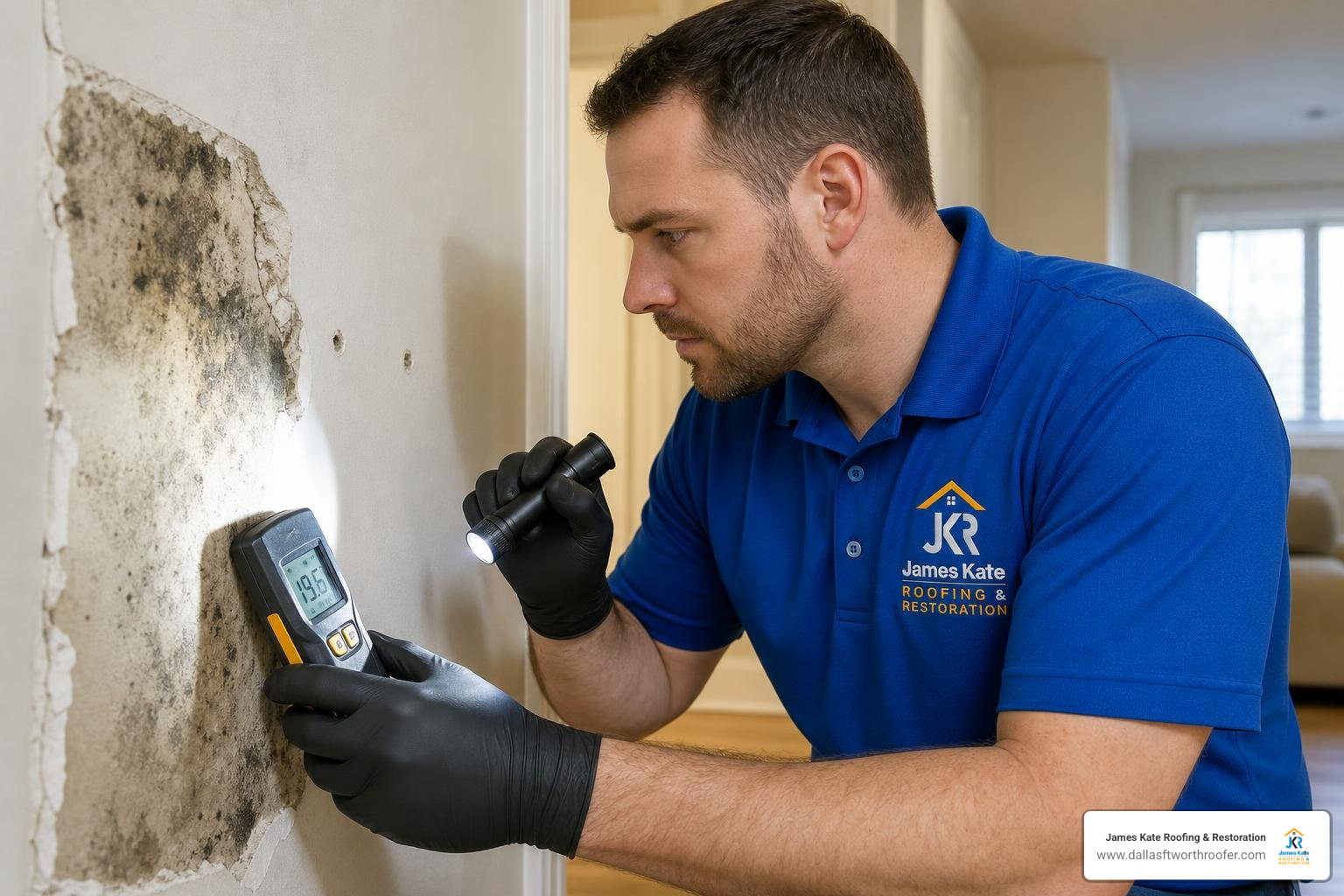
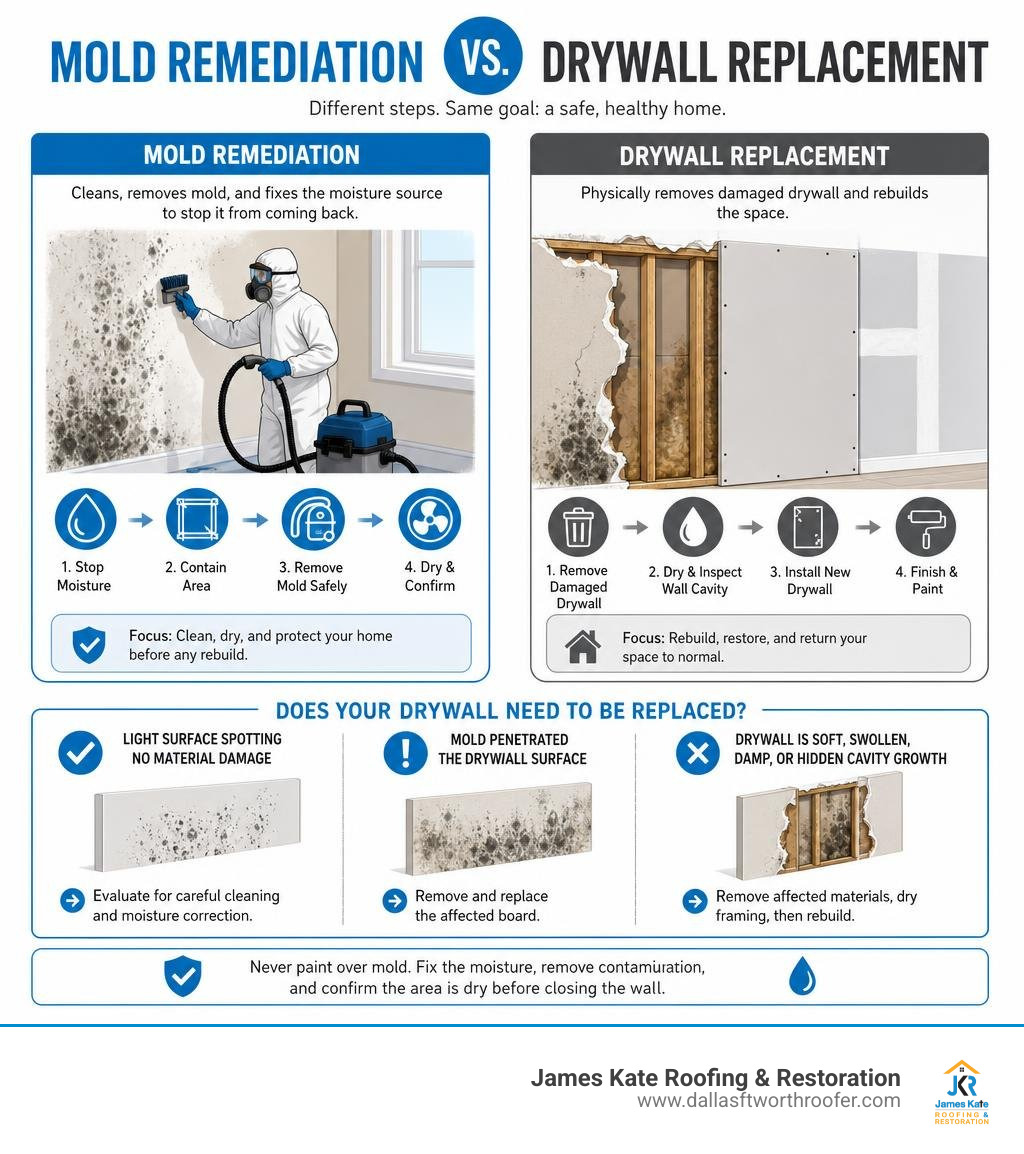
Does mold remediation include replacing drywall? Often, yes. When mold has grown into paper-faced drywall or the board is wet, soft, damaged, or contaminated inside the wall, professional remediation commonly includes removing it. However, the rebuild – installing, finishing, and painting new drywall – may be listed as a separate service in the contractor’s scope of work.
| Drywall condition | Typical next step |
|---|---|
| Light surface spotting with no material damage | Evaluate for careful cleaning and moisture correction |
| Mold has penetrated the drywall surface | Remove and replace the affected board |
| Drywall is soft, swollen, damp, or has hidden cavity growth | Remove affected materials, dry framing, then rebuild |
This distinction matters because drywall has a paper facing that can feed mold. Painting over active or embedded growth does not correct the moisture source or remove contamination. Industry guidance generally supports removing porous materials when mold has colonized them, then confirming the wall cavity is dry before new drywall closes it back in.
I’m Dustin Eatman, owner of James Kate Roofing & solar, with hands-on experience diagnosing roof and water problems that can lead to mold-damaged interiors and coordinating insurance solar work. In this guide, I will explain when does mold remediation include replacing drywall has a clear answer, what belongs in remediation versus reconstruction, and how to choose the right contractor for the work.
Does mold remediation include replacing drywall terms simplified:
Does Mold Remediation Include Replacing Drywall? Industry Standards Explained
When homeowners in Mansfield, Arlington, or Grand Prairie discover mold on their walls, their first question is almost always: does mold remediation include replacing drywall, or can we simply clean and paint over the spots?
To answer this clearly, we must look at how professional remediation is divided into phases. Mold remediation specifically refers to the cleanup, containment, and removal of active fungal growth and contaminated materials to restore an indoor environment to a normal, healthy state (known in the industry as Condition 1).
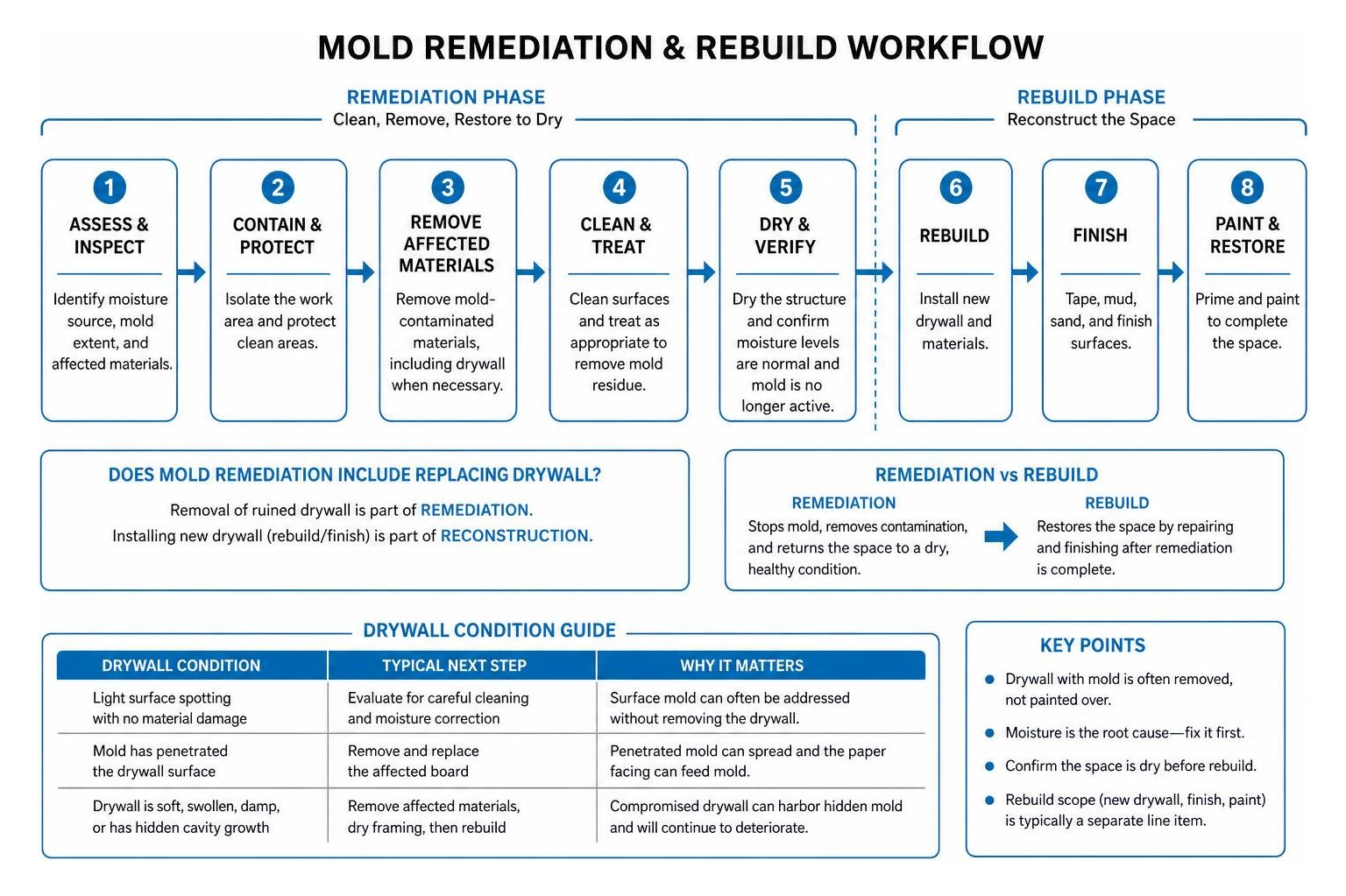
While the removal (demolition) of ruined drywall is almost always part of the initial remediation phase, putting up brand-new drywall—hanging sheetrock, taping, mudding, sanding, and painting—is part of the reconstruction or build-back phase. Understanding the difference between mold removal and remediation helps prevent surprises when reviewing a solar contract.
Why Does Mold Remediation Include Replacing Drywall Instead of Painting Over It?
Drywall (gypsum board) is composed of a non-combustible gypsum core sandwiched between sheets of heavy paper facing. While gypsum itself is a mineral, the paper facing is made of pure cellulose. Cellulose, when combined with moisture, provides the ultimate high-energy carbon food source for mold spores.
When mold spores land on damp drywall, fungal hyphae penetrate deep into the cellulose fibers and gypsum matrix. Industry standards define this active growth as Condition 3 contamination. Once fungal mycelia colonize porous materials like drywall, no chemical spray or surface scrubbing can fully extract the roots embedded within the wall.
Attempting to paint over active growth simply seals moisture inside the wall cavity, creating a pressure cooker for hidden decay. Knowing what mold mitigation is clarifies why removing the contaminated food source is mandatory for lasting air quality.
When Does Mold Remediation Include Replacing Drywall Versus Surface Cleaning?
Not every spot of mold automatically means tearing down walls. The decision to remove versus clean depends on whether the mold is localized surface dust (Condition 2 settled spores) or deeply rooted growth (Condition 3 actual growth), as well as the moisture history of the substrate.
| Assessment Factor | Surface Cleaning & Preservation | Complete Material Removal & Replacement |
|---|---|---|
| Growth Type | Condition 2: Settled spores or light surface dust from high humidity | Condition 3: Active colonization with visible hyphae/mycelia |
| Material Porosity | Non-porous metal, glass, or sealed semi-porous finished wood | Porous paper-backed gypsum board, ceiling tiles, fiberglass insulation |
| Moisture Exposure | Short duration condensation with non-saturated drywall core | Prolonged exposure, active plumbing leak, roof intrusion, or flooding |
| Structural Integrity | Board remains firm, structurally sound, and completely dry | Board is soft, spongy, crumbling, swollen, or sagging |
If light condensation from a window briefly creates surface mildew on paint without penetrating the paper backing, the surface can often be HEPA-vacuumed and cleaned with appropriate solutions. However, if water has entered the cavity behind the wall, the drywall core rapidly absorbs moisture like a sponge, necessitating immediate tear-out.
IICRC S520 and NYC Health Department Guidelines for Drywall Removal
Professional remediation in North Texas follows strict, science-backed protocols. The primary standards governing our work are the ANSI/IICRC S520 Standard and Reference Guide for Professional Mold Remediation and guidelines established by public health entities such as the NYC Department of Health. Homeowners can review the official standard principles via the IICRC S520 Standard Reference Guide to see how industry protocols shape property solar.
These standards emphasize that visible square footage alone should not dictate remediation procedures; hidden growth within wall cavities must be treated with equal rigor.
The One-Foot Rule and Stud Cavity Removal Guidelines
A common question homeowners ask us when we set up plastic containment barriers is: “Why are you cutting out so much good drywall around the mold?”
According to both the IICRC S520 Standard and building science technical reports like the Building Science RR-0210 Report, mold micro-hyphae spread far beyond the visible stain. Industry standards require remediators to cut away the visibly contaminated drywall plus approximately one foot of uninvolved board in all directions.
In practice, this standard means:
- Cutting back to the center of the nearest unimpacted wood framing stud on each side.
- Removing drywall at least 12 inches above the highest line of visible contamination or water staining.
- Removing drywall at least 12 inches below the lowest line of contamination (or down to the floor plate).
Removing material out to the stud cavity ensures no microscopic fungal roots remain trapped behind adjacent trim or structural members.
Moisture Content Thresholds Before Rebuilding Drywall
Tearing out moldy drywall is only half the battle. If a contractor installs fresh sheetrock over damp wall studs, mold will return within 24 to 48 hours.
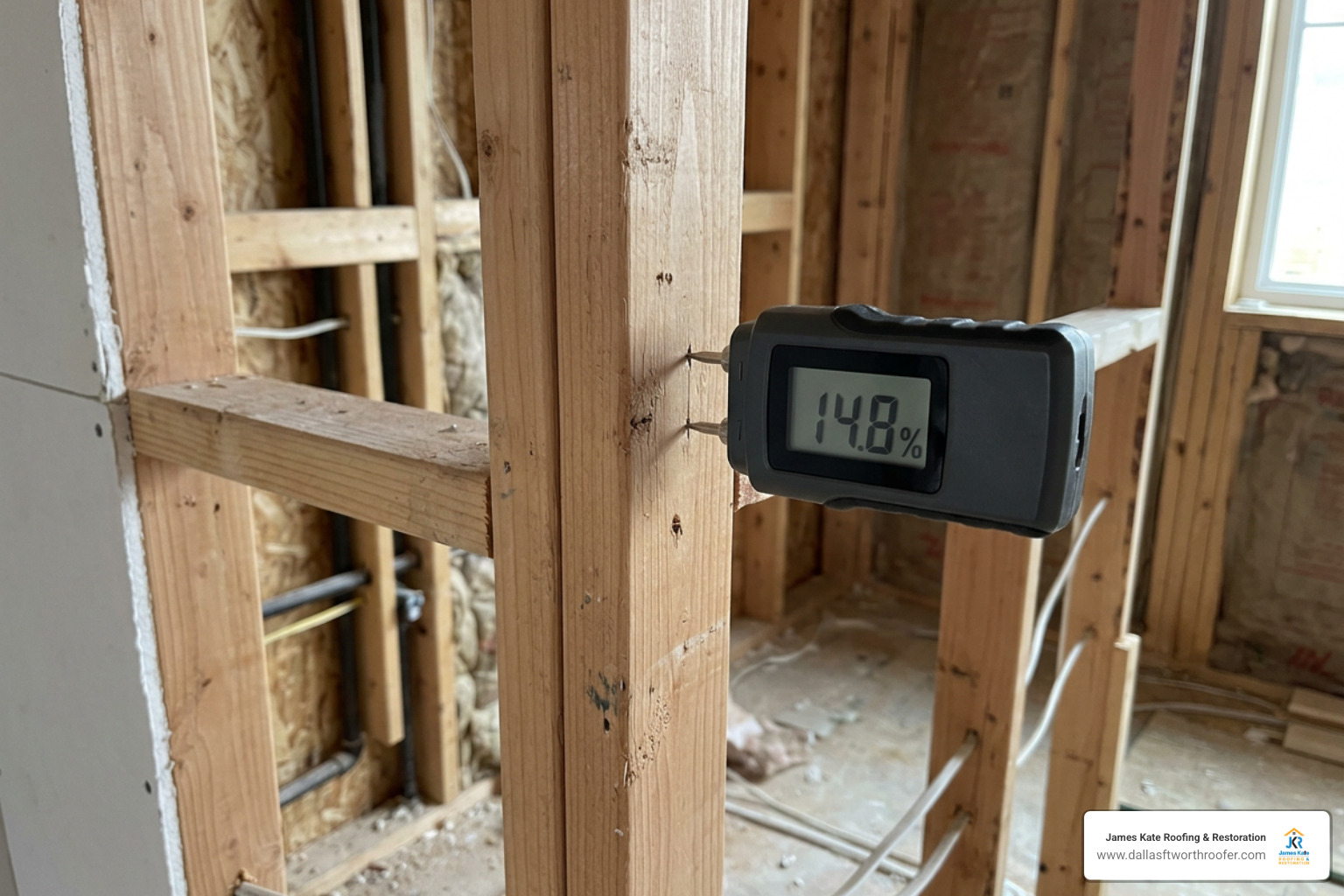
Before any new drywall is attached, framing materials must undergo structural drying and HEPA vacuuming. We use calibrated pin-type moisture meters to test wood framing studs. According to building science standards, wood framing must reach a moisture content below 15% by weight (and concrete or masonry below 4%) before closing up wall cavities.
Taking these measurements prevents moisture entrapment, which is vital when handling mold after a leak from a damaged roof or burst pipe.
The Risks of Cleaning vs. Replacing Moldy Gypsum Board
It can be tempting to seek shortcut solutions, like scrubbing moldy drywall with bleach and applying a coat of heavy primer. However, attempting to clean deeply contaminated drywall presents severe structural and health risks.
Structural Integrity and Hidden Mold Spores Behind Walls
Drywall that has absorbed water loses its structural density. The inner gypsum core breaks down, causing screws to pop, seams to split, and wall panels to sag or collapse.
More importantly, visible mold on the living-room side of a wall is usually just the tip of the iceberg. Moisture typically enters from behind—via a roof leak, window flashing failure, or leaking plumbing line. The wall cavity provides an unventilated dark space where mold flourishes rapidly across paper-backed drywall and structural wall insulation.
Leaving impacted drywall intact guarantees that millions of microscopic fungal spores will stay trapped within the wall cavity, waiting to reactivate whenever indoor humidity rises. Exploring our ultimate guide to indoor mold remediation illustrates how hidden cavity mold compromises indoor environments over time.
Health Hazards of Painting Over Contaminated Drywall
Bleach and surface primers are designed for non-porous surfaces. When applied to drywall:
- Bleach fails to penetrate: Water in chlorine bleach stays on the surface while chlorine gas dissipates, actually adding moisture deeper into the porous paper backing.
- Biocide risks: Chemical sprays can release volatile organic compounds (VOCs) that are often more hazardous to respiratory health than the mold itself.
- Encapsulation failure: Paint layer caps trap moisture beneath the surface. As fungal colonies continue growing underneath, they release gas and spores that crack paint films, spreading contaminants back into living spaces.
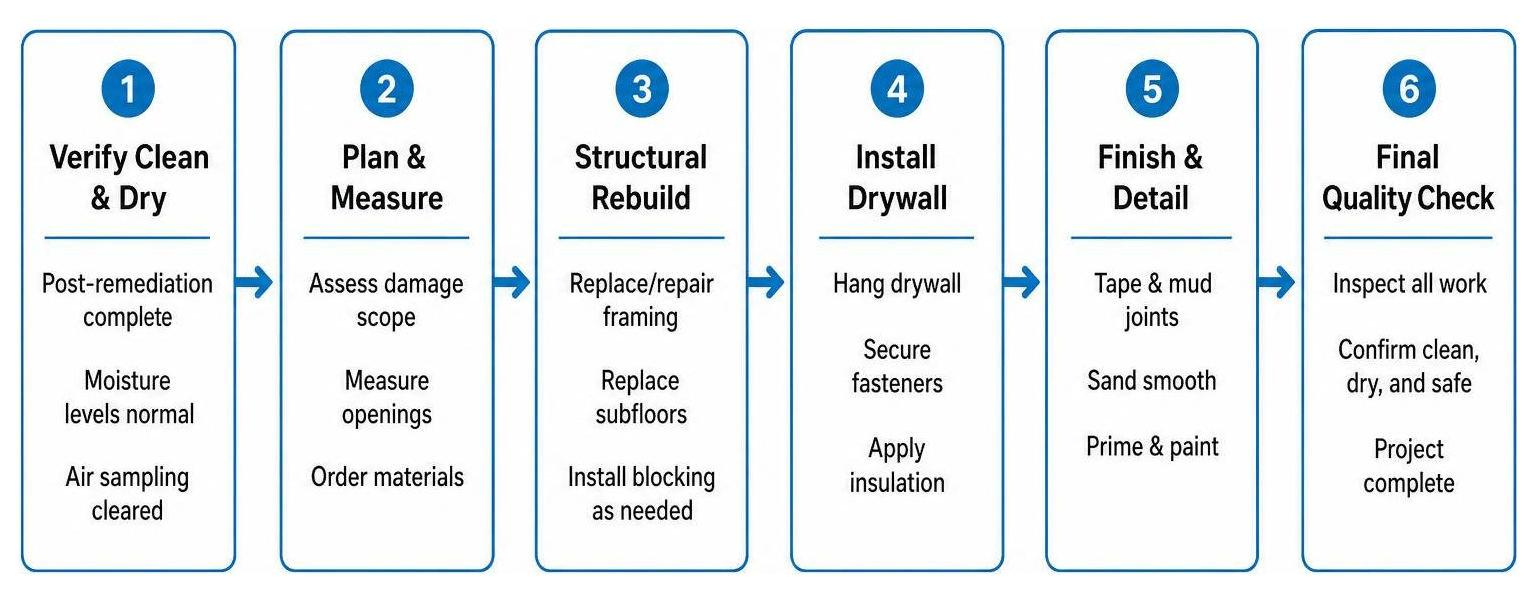
Post-Remediation Reconstruction: Who Replaces Drywall and Subfloors?
Once remediation is finished, your home is clean, dry, and verified safe by air sampling, but you are left with cut-out walls and exposed framing. This brings up an important logistical question: who actually rebuilds your home?
General Contractors vs. Specialized solar Trades
When deciding how to manage post-remediation build-back, property owners generally choose between two pathways:
- Hiring Multiple Independent Trades: You can personally act as the project manager, hiring separate drywall mechanics, finish carpenters for subflooring, tile installers, and painters. While this can work for minor repairs, coordinating trade schedules, building codes, and insurance billing requires substantial time and construction expertise.
- Hiring a Full-Service solar & General Contractor: Working with a full-service general contractor gives you a single point of contact for both the cleanup and the reconstruction phase.
At James Kate Roofing & solar, we handle the entire process under one roof—from initial roof leak repair and water mitigation to complete interior mold cleanup and full build-back construction. As a family-owned North Texas business serving Midlothian, Granbury, Arlington, and surrounding areas, our commitment to honesty, integrity, and Biblical principles means we guide you transparently through every stage of solar.
Whether your project requires subfloor replacement, structural framing repair, new sheetrock installation, or custom finish painting, working with a single team ensures seamless project sequencing. To better plan your budget, consult our understanding water damage mold repair guide and review our detailed breakdown on water damage repair costs guide.
How to Verify Contractor Qualifications and Licensing
Whether you are hiring a team for drywall teardown or full reconstruction, verifying contractor credentials protects your home investment and keeps your insurance claim on track.
Always confirm that your contractor meets these criteria:
- Proper Licensing & Registrations: Ensure your contractor holds required trade licenses and maintains active registration with local municipal building departments across Mansfield, Arlington, and Grand Prairie.
- Comprehensive Insurance: Require proof of General Liability insurance and Workers’ Compensation coverage so you are never held liable for job-site injuries.
- Industry Standards Compliance: Look for contractors well-versed in industry guidelines. You can read more about operational rules via the IICRC S520 Guidelines Overview.
- Itemized Written Estimates: Avoid contractors who offer quick verbal quotes. Demand line-item estimates detailing scope of work, material grades, containment measures, and clear build-back timelines.
Frequently Asked Questions About Drywall Mold Remediation
Does mold remediation automatically include putting up new drywall?
Not automatically. Mold remediation focuses specifically on containment, physical removal of damaged materials, cleaning, and structural drying. While demolition of damaged drywall is part of remediation, installing brand-new sheetrock (build-back) is classified as reconstruction. Always check your contract scope to ensure build-back services are explicitly included or managed under a unified solar agreement.
What moisture level must wood studs reach before installing new drywall?
Wood framing studs must dry to less than 15% moisture content by weight before new drywall can be hung. In concrete or subfloor assemblies, moisture levels should drop below 4%. Installing sheetrock before reaching these verified thresholds traps residual moisture inside wall cavities, inviting rapid mold recurrence.
Can bleach safely remove mold from drywall?
No. Chlorine bleach should never be used to clean mold on porous drywall or wooden wall framing. Bleach cannot penetrate porous substrates to kill fungal roots; instead, its high water content feeds underlying mold hyphae. Industry standard protocols mandate physically removing contaminated porous materials and scrubbing structural framing with specialized surfactants, followed by thorough drying and HEPA vacuuming.
Conclusion
So, does mold remediation include replacing drywall? The answer is clear: while remediation protocols require cutting away contaminated, wet, or mold-colonized sheetrock to clean your home safely, completing the job requires proper reconstruction to make your living space whole again. Skipping drywall replacement or trying to paint over moldy wallboard puts your property’s structure and your family’s health at risk.
At James Kate Roofing & solar, we simplify the recovery process by managing every step under one roof. From fixing leaky roofs and executing precision water and mold mitigation to completing high-quality build-back construction backed by our GAF President’s Club recognition and up to 25-year workmanship warranties, we treat your home with the care and integrity it deserves.
If you suspect mold in your home or need expert assistance restoring water-damaged walls in Mansfield, Arlington, Grand Prairie, Midlothian, or Granbury, don’t wait for hidden damage to spread. Reach out to our team today to explore our expert solar services and schedule your professional property assessment.

Dustin Eatman is a seasoned roofing professional with deep, hands-on expertise that spans residential and commercial roofing, insurance solar, and long-term roof asset management. As the owner of James Kate Roofing & solar in the Dallas–Fort Worth metroplex, he’s built a reputation for diagnosing roof systems accurately, communicating clearly, and executing projects with a high standard of workmanship and documentation. Dustin understands the technical details that make roofs perform—proper underlayment selection, slope and drainage considerations, ventilation strategy, flashing and penetration detailing, and manufacturer-specific installation requirements—because he’s worked through the real-world challenges that cause leaks, premature wear, and warranty issues. He’s equally fluent in the operational side of roofing: jobsite planning, quality control, safety, material ordering, crew coordination, and customer experience from inspection to closeout. In insurance-related projects, Dustin brings practical knowledge of claim workflows, adjuster meetings, scope alignment, supplements, and the importance of photo evidence and thorough records, helping property owners navigate stressful situations with confidence. For commercial clients—especially property and facility managers—he emphasizes proactive maintenance and targeted repairs that reduce disruption, extend roof life, and prevent expensive interior damage. Dustin also stays focused on doing things the right way: educating customers on realistic options, setting expectations, and prioritizing solutions that hold up over time rather than quick fixes. That blend of technical skill, field experience, process discipline, and owner-level accountability is what makes Dustin Eatman a trusted expert in the roofing industry.