Find Reliable Home Mold Removal Near Me Before the Damage Spreads
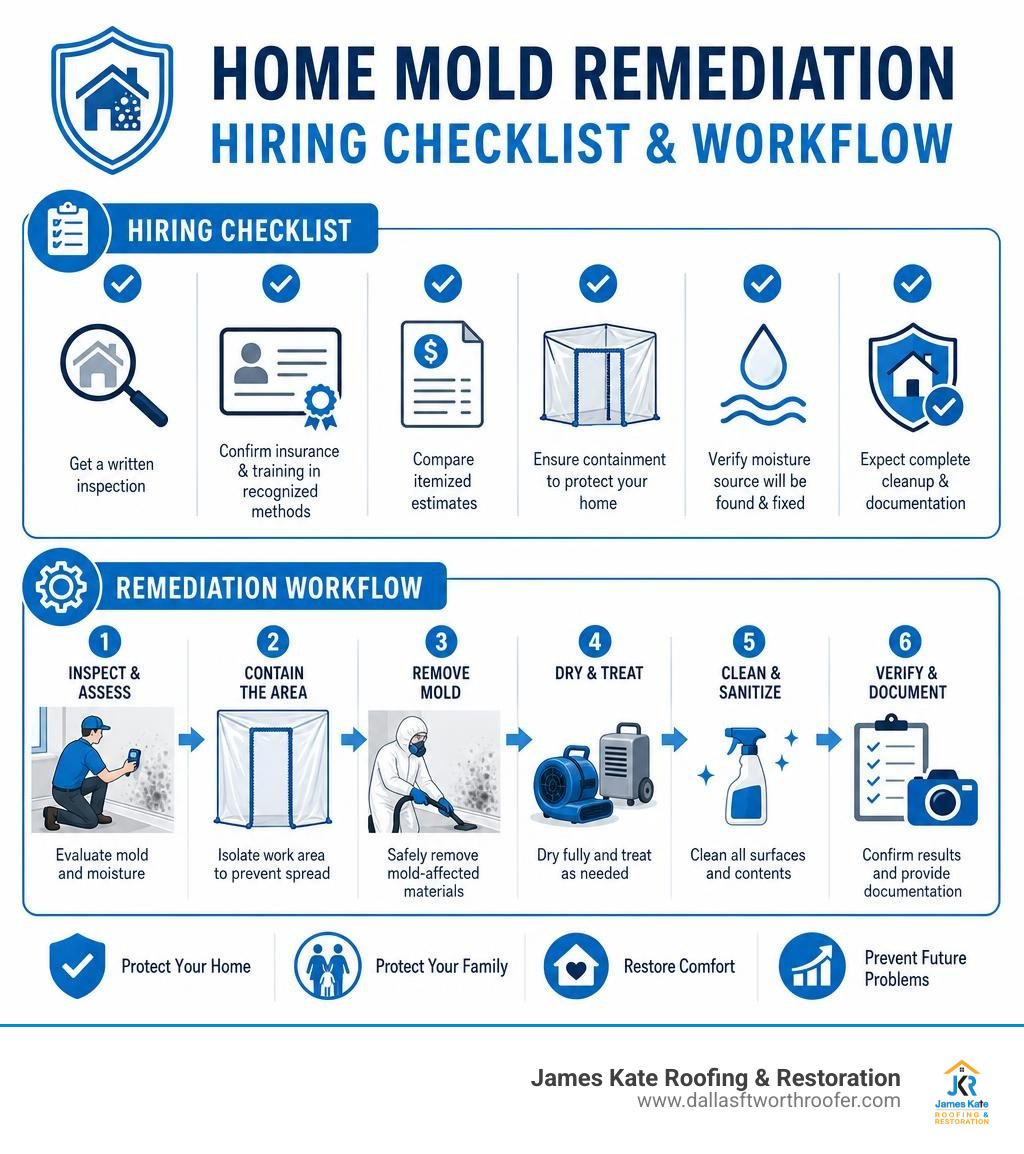
For home mold removal near me, hire a local remediation company when mold covers more than about 10 square feet, follows major water damage, affects HVAC equipment, or may be hidden inside walls or other building materials. Get a written inspection, confirm the contractor is insured and trained in recognized remediation methods, and compare itemized estimates that explain containment, drying, removal, and cleanup – not just surface treatment.
A small patch on a hard, nonporous surface can often be cleaned safely with detergent, water, proper protective gear, and complete drying. But mold is usually a moisture problem first. A quality professional should find and correct the leak, condensation, or humidity issue so the growth does not return.
Do not paint or caulk over mold. It can hide the damage while moisture and mold continue affecting the material underneath.
I’m Dustin Eatman, owner of James Kate Roofing & solar in DFW. My work in roofing, water solar, and insurance-related damage has taught me that finding dependable home mold removal near me starts with accurate moisture diagnosis, clear documentation, and a repair plan that protects the property for the long term.
Important home mold removal near me terms:
How to Choose the Best Home Mold Removal Near Me
Finding honest, capable contractors to handle microbial growth requires looking past flashy advertising. True remediation follows strict industry science, specifically the ANSI/IICRC S520 Standard for Professional Mold Remediation. This standard outlines the exact protocols necessary to remove fungal contamination while preventing cross-contamination to unaffected living spaces.
When evaluating local contractors across Arlington, Grand Prairie, and Mansfield, TX, ensure they carry dedicated pollution liability insurance along with standard general liability. General contractor insurance often has specific exclusions for microbial hazards, leaving property owners vulnerable if spores are dispersed during an amateur cleanup attempt. Checking local references and community reputation ensures the team has a proven track record. For a deeper breakdown on vetting local specialists, review The Ultimate Guide to Finding Trusted Local Mold Experts.
A transparent quote should never be a single lump-sum figure. Reputable companies provide itemized scopes covering containment construction, air scrubber deployment, selective demolition of unsalvageable porous elements, antimicrobial treatments, and structural drying.
Crucial Questions for Home Mold Removal Near Me Contractors
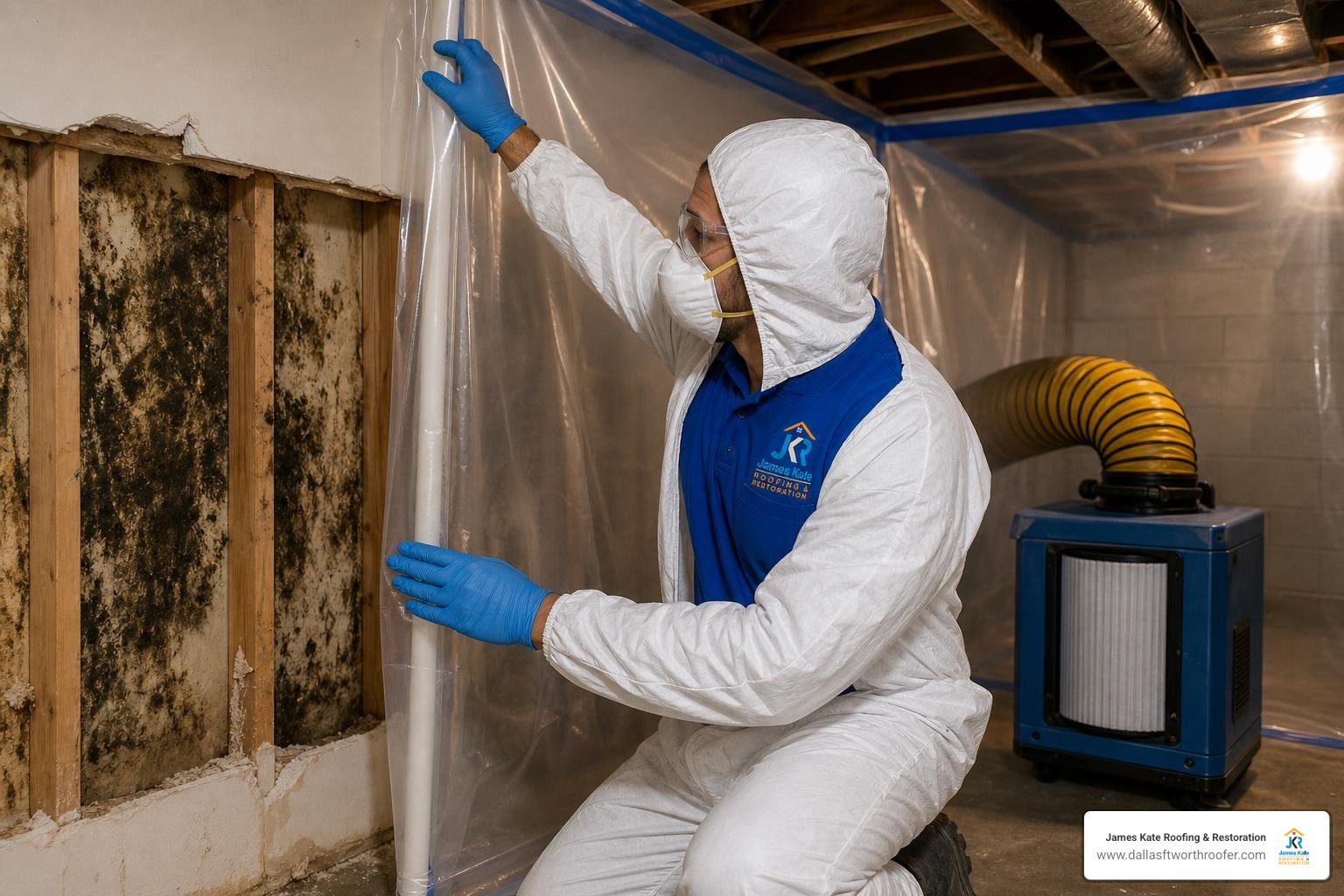
Before signing an agreement, ask targeted technical questions to verify the team’s methodology. Ask how they establish containment. A professional crew uses 6-mil poly sheeting under continuous negative pressure generated by HEPA-filtered air machines. This ensures that when contaminated drywall or trim is detached, microscopic spores cannot travel into your living room or bedrooms.
Inquire about diagnostic standards by reviewing the Best Mold Inspection Near Me Rules You Must Follow. Most importantly, ask if they require independent post-remediation clearance testing (PRV). An ethical firm welcomes third-party clearance air testing because it objectively proves that indoor spore concentrations are back to normal ecological baselines before containment barriers come down.
Red Flags When Searching for Home Mold Removal Near Me
Be cautious of estimates that seem unusually low compared to regional averages. Lowball pricing frequently indicates that the contractor intends to spray bleach on visible surfaces and skip physical containment, HEPA air scrubbing, or contaminated material removal. Bleach adds water to porous framing and drywall, feeding hyphae growth deep within cellulose materials once the chlorine evaporates.
Watch out for companies that operate without industry certifications or refuse to provide a written scope of work with clear warranties. If a contractor claims they can fog a house in two hours and call it complete without setting containment or fixing active moisture intrusion, walk away. You can explore standard industry protocols through X-Top Mold Remediation Services to ensure your contractor adheres to verified practices.
Signs You Need Professional Remediation vs. DIY Cleanup
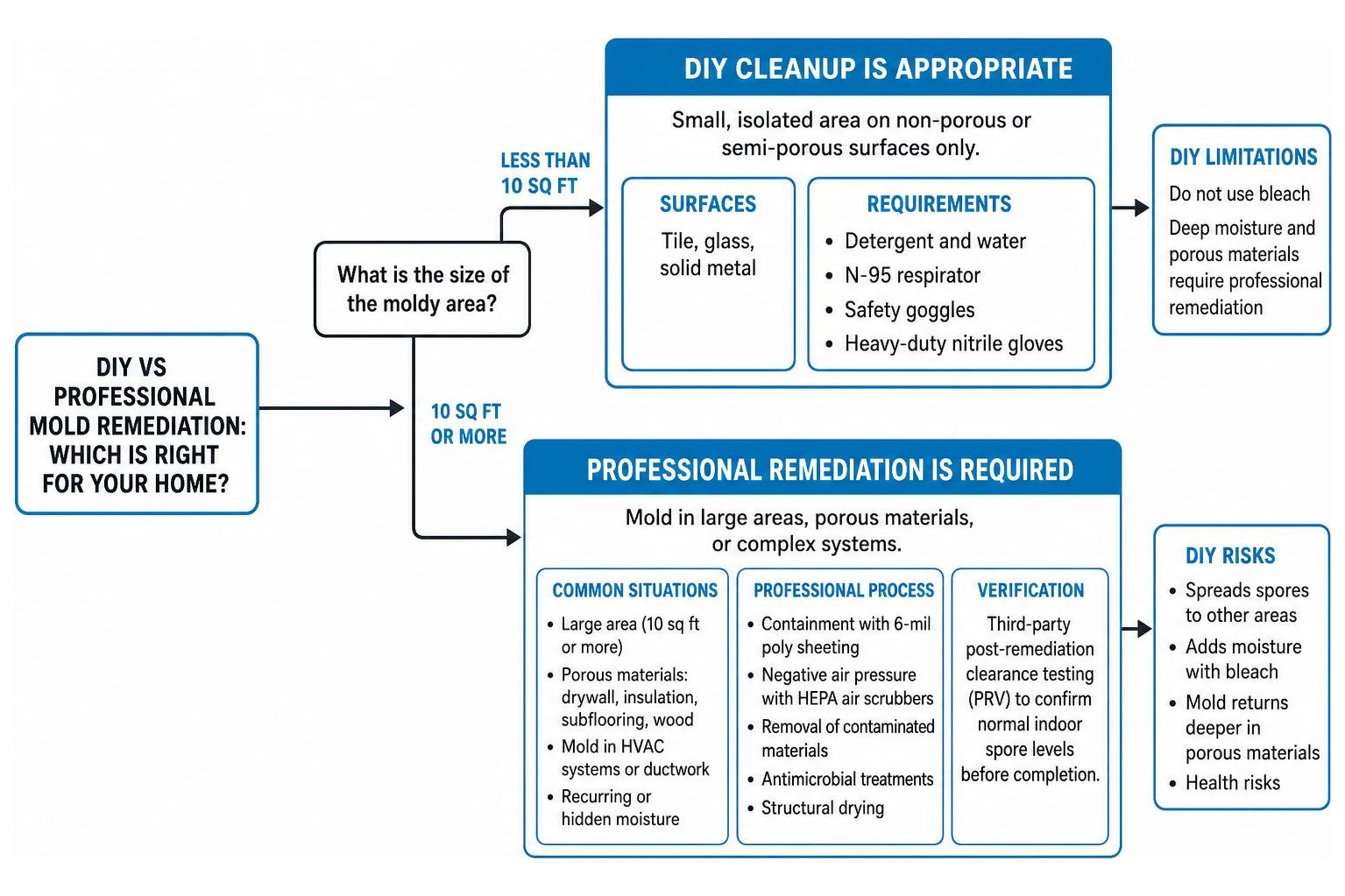
Homeowners often wonder whether a mold outbreak warrants professional intervention or a weekend DIY approach. The Environmental Protection Agency (EPA) provides a clear rule of thumb: if the contiguous affected area is less than roughly 10 square feet (about a 3-foot by 3-foot section), and it resides on non-porous or semi-porous surfaces like tile, glass, or solid metal, you can generally clean it yourself using proper safety equipment.
For small, isolated surface patches, homeowners can learn How to Remove Mold in 5 Simple Steps using detergent, water, an N-95 respirator, safety goggles, and heavy-duty nitrile gloves. However, when moisture deeply saturates drywall, subflooring, or structural timber, surface scrubbing is insufficient. Understanding What is Mold Mitigation and How Does It Compare to Remediation helps clarify why deep structural fungal colonies require specialized containment and extraction.
When Household Mold Requires Certified Specialists
Professional intervention is required when microbial growth penetrates porous materials or involves complex indoor systems. Common indoor molds include:
- Cladosporium (often found on fiberglass duct liners and damp framing)
- Aspergillus and Penicillium (common on moist drywall, wallpaper, and insulation)
- Stachybotrys chartarum (the notorious “black mold” that colonizes water-logged cellulose materials)
- Alternaria (frequent in damp window frames and carpet backing)
If mold has penetrated the HVAC system, never run the system. Operating a contaminated furnace or air handler blows millions of fungal spores through your ductwork, seeding every room in the home. Structural stud bays and soaked wall cavities require controlled deconstruction outlined in our Drywall Mold Remediation Guide and Standard Cleaning Procedures.
Tackling Attics, Crawlspaces, and Walls After Leaks
Attics and crawlspaces are vulnerable to severe mold outbreaks due to poor ventilation, hidden plumbing runs, and roof degradation. When a severe roof leak or pipe burst occurs, moisture migrates into insulation and timber framing. If addressed late, structural decking quickly fosters widespread fungal colonies.
Homeowners dealing with roof-related moisture issues can learn How to Safely Evict Mold from Your Attic for Good. Similarly, prompt action following indoor plumbing failures is crucial—read Don’t Let It Fester How to Handle Mold After a Leak to prevent hidden colonies from multiplying inside wall cavities across Midlothian and Granbury properties.
The Complete Mold Remediation Process and Timeline
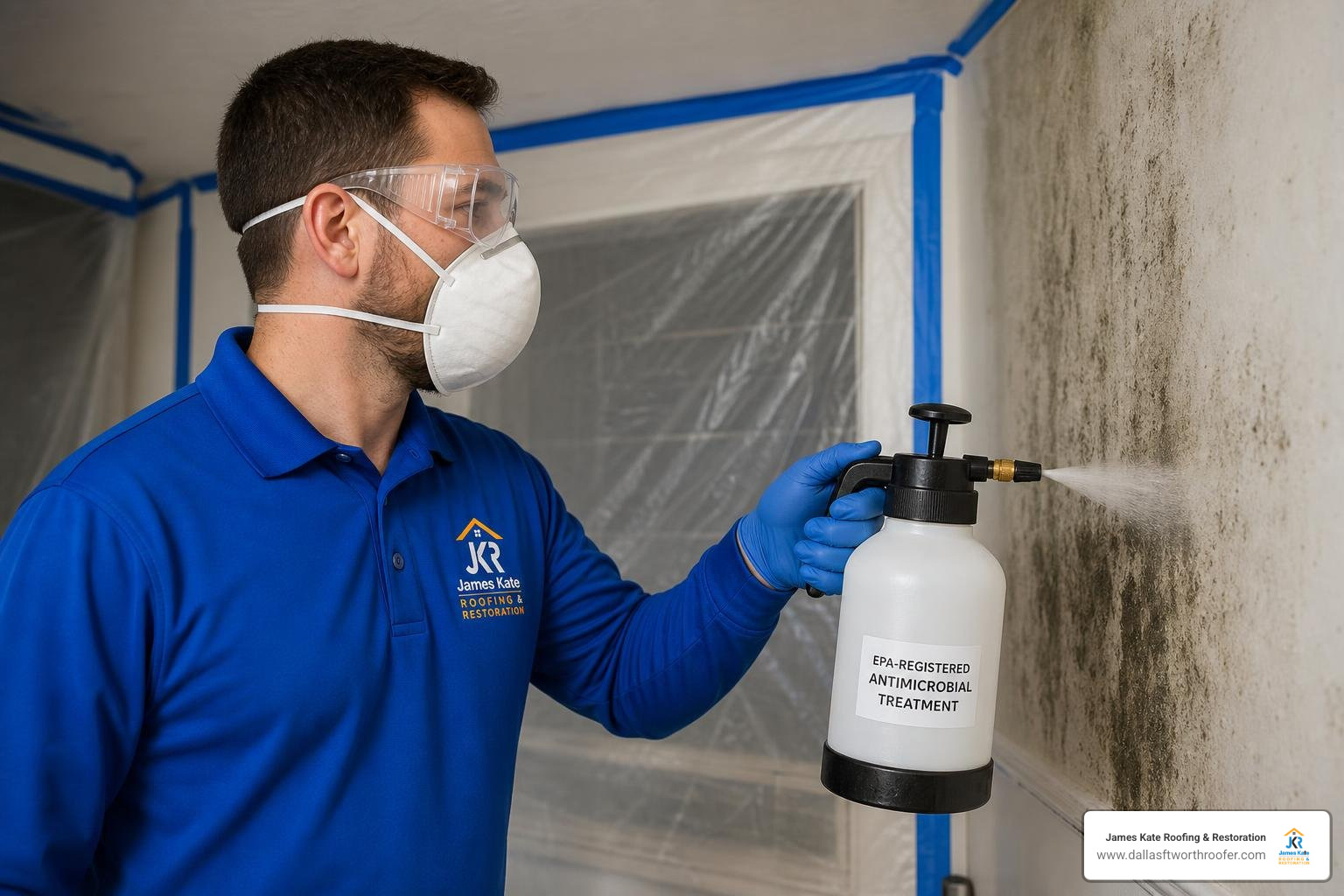
A comprehensive mold remediation follows a systematic engineering process rather than simple cleaning. When executed correctly, a standard residential project typically takes between 1 to 5 days from initial setup to final clearance testing, depending on the square footage and moisture profile.
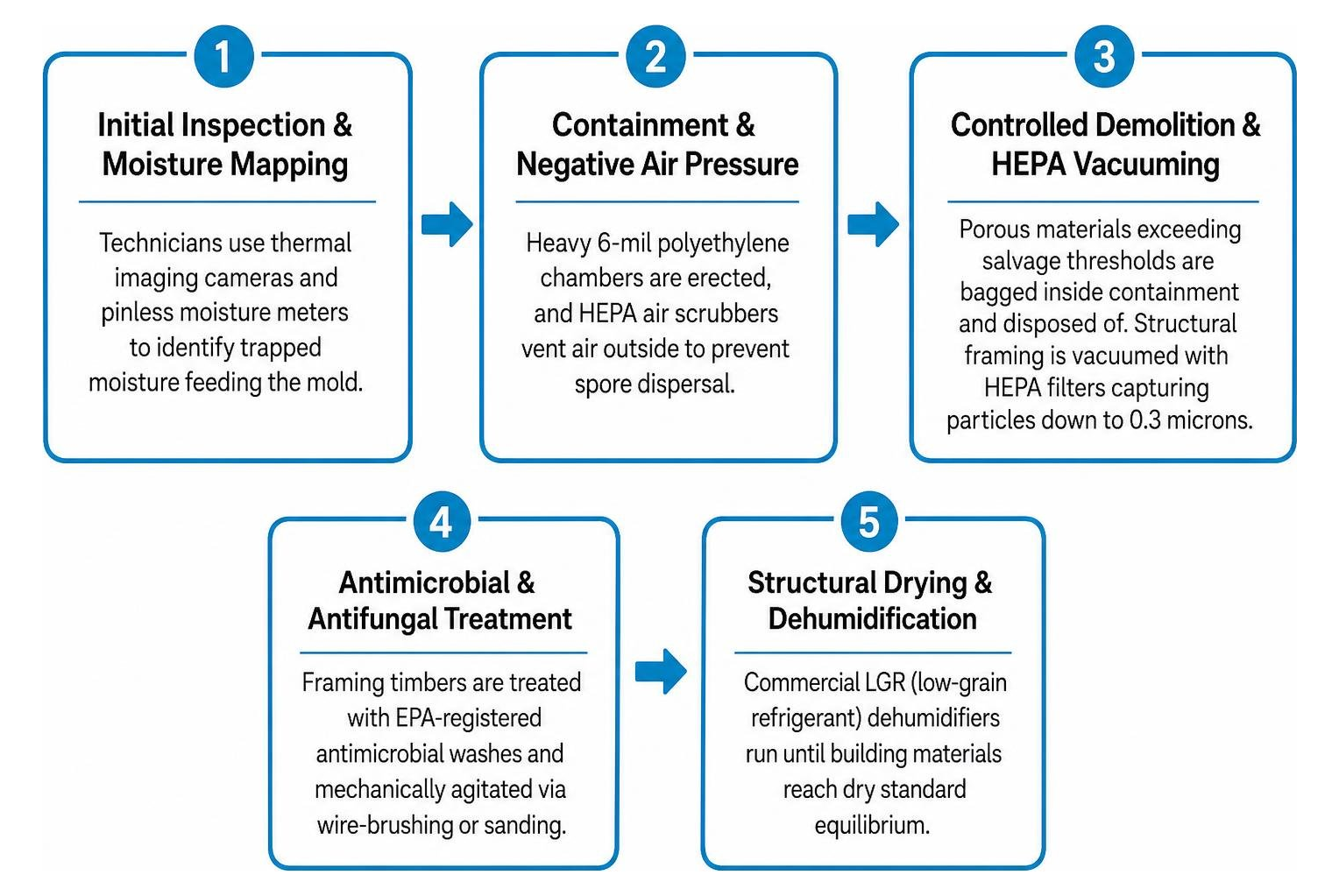
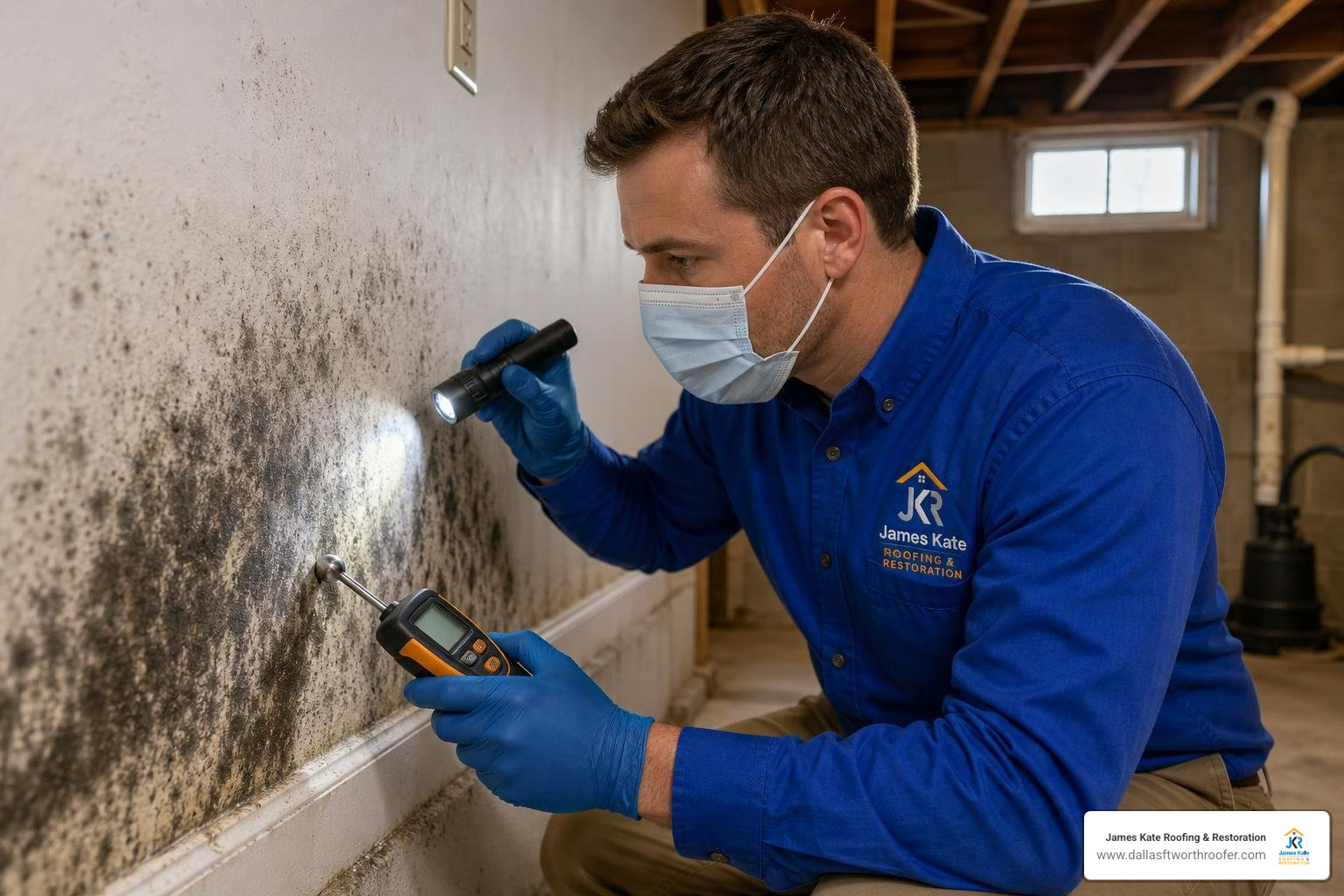
- Initial Inspection & Moisture Mapping: Technicians use thermal imaging cameras and pinless moisture meters to identify every pocket of trapped water feeding the mold.
- Containment & Negative Air Pressure: Heavy 6-mil polyethylene chambers are erected, and HEPA air scrubbers vent air outside to prevent spore dispersal.
- Controlled Demolition & HEPA Vacuuming: Porous materials exceeding salvage thresholds are bagged inside containment and disposed of. Structural framing is vacuumed with HEPA filters capturing particles down to 0.3 microns.
- Antimicrobial & Antifungal Treatment: Framing timbers are treated with EPA-registered antimicrobial washes and mechanically agitated via wire-brushing or sanding.
- Structural Drying & Dehumidification: Commercial LGR (low-grain refrigerant) dehumidifiers run until building materials reach dry standard equilibrium.
- Post-Remediation Verification (PRV): An independent inspector tests indoor air to ensure spore counts reflect clean outdoor baselines.
Homeowners can review What to Expect When You’re Expecting Mold Abatement Services and The Ultimate Guide to Indoor Mold Remediation and Cleanup for a complete walk-through of the operational stages.
Understanding the Difference Between Removal and Full Remediation
The distinction between basic removal and true remediation is substantial. “Removal” simply refers to wiping, scraping, or tearing out visible fungal growth. If the ambient relative humidity remains above 60% or a hidden plumbing leak continues to seep, mold will recolonize the area within 48 to 72 hours.
Remediation is an ecological correction. It encompasses identifying the moisture intrusion source, stabilizing indoor humidity, capturing airborne particulate matter, extracting embedded root structures (hyphae), and applying protective barriers. For a breakdown of these methodologies, see Damp and Dangerous The Difference Between Mold Removal and Remediation.
Post-Remediation Verification and Preventing Recurrence
Achieving a successful clearance test confirms the immediate crisis is resolved, but ongoing prevention is essential. Indoor relative humidity should consistently stay between 30% and 50%. This can be achieved through dedicated whole-home dehumidifiers, properly sized air conditioning units, and exhaust fans in kitchens, laundry areas, and bathrooms.
Ensuring regular roof inspections prevents attic dampness, while crawlspace vapor barriers stop ground moisture from rising through structural subfloors. You can explore modern diagnostic monitoring via Stop Indoor Spores with Smarter Mold Testing and Mitigation.
Remediation Costs and Insurance Claims Breakdown
Remediation investments vary based on accessibility, containment size, structural tear-out requirements, and drying duration. The table below outlines standard regional investment ranges for residential projects.
| Remediation Project Scope | Typical Size / Area | Average Cost Range | Primary Work Involved |
|---|---|---|---|
| Small Isolated Containment | Under 25 sq. ft. (Single closet/wall) | $500 – $1,500 | Surface treatment, localized containment, minimal drywall removal, HEPA scrubbing. |
| Moderate Room Remediation | 25 – 100 sq. ft. (Bathroom/Kitchen) | $1,500 – $3,500 | Full room containment, cabinet/drywall demo, subfloor treatment, 48hr drying. |
| Extensive Structural Project | 100 – 300+ sq. ft. (Multiple rooms/Attic) | $3,500 – $7,500+ | Large-scale containment, heavy timber sanding, HVAC decontamination, extensive rebuild. |
| Whole-Home / Complex Crisis | Full property contamination | $7,500 – $15,000+ | Multi-zone negative air, complete duct cleaning, structural framing remediation, total rebuild. |
Understanding cost variables helps prevent unexpected expenses during water damage solar. For additional guidance on financial planning after water intrusion, consult Understanding Water Damage Mold Repair for Homeowners.
Navigating Homeowners Insurance for Mold Damage
Insurance coverage for mold remediation depends on the root cause of the moisture intrusion. Standard homeowners insurance policies generally cover remediation if the mold stems directly from a “sudden and accidental” covered peril, such as an unexpected supply line burst, a water heater rupture, or storm-driven roof damage.
Coverage is usually denied if the mold is deemed the result of long-term deferred maintenance, chronic humidity, or gradual seepage over months. When filing a claim, document everything immediately with high-resolution photos, date-stamped moisture readings, and itemized solar logs. Working with a solar partner experienced in insurance claims ensures clear communication with your adjuster. For safety and compliance procedures regarding heavy fungal growth, review Get Rid of the Grime with Expert Black Mold Remediation.
Frequently Asked Questions About Home Mold Removal
How long does a typical professional mold remediation project take?
Most professional remediation projects take between 1 to 5 days. A localized, single-containment project in a bathroom or utility closet often wraps up within 24 to 48 hours. Larger projects involving multi-room containment, deep attic framing sanitization, structural timber sanding, and multi-day industrial dehumidification take 3 to 5 days to reach clearance standards.
What health symptoms indicate it is time to consult a doctor regarding mold exposure?
Inhaling mold spores and mycotoxins can trigger immune and upper respiratory reactions. Common warning signs include:
- Persistent sneezing, runny nose, and red, itchy eyes
- Chronic coughing, wheezing, and chest tightness
- Frequent sinus infections and nasal congestion
- Unexplained skin rashes and hives
- Headaches, brain fog, and chronic fatigue
Individuals with asthma, compromised immune systems, chronic obstructive pulmonary disease (COPD), or mold allergies are especially vulnerable. If symptoms persist indoors and improve when away from the home, consult a medical physician or allergist promptly.
Can I simply paint or caulk over moldy surfaces to save money?
No. Painting or caulking over mold does not kill the colony beneath. Fungal mycelium continues to consume cellulose framing, drywall backing, and wood fibers under the paint layer. Trapping moisture under paint often accelerates decay, leading to wood rot, paint bubbling, and structural compromise.
Before applying primer or paint, all mold must be physically removed, treated with an EPA-registered antimicrobial, and completely dried. For techniques to address underlying moisture and smells, read Smells Like Teen Spirit No That’s Mold Best Ways to Eliminate Musty Odors.
Conclusion
Prompt remediation stops indoor fungal growth from degrading structural framing, damaging subfloors, and compromising indoor air quality. By understanding IICRC protocols, knowing when to transition from DIY cleaning to certified professionals, and insisting on negative air containment with post-remediation verification, you can protect both your home and your budget.
At James Kate Roofing & solar, our family-owned team serves homeowners across Arlington, Mansfield, Grand Prairie, Midlothian, and Granbury, TX. Guided by honesty, integrity, and Biblical principles, we provide end-to-end water extraction, structural drying, certified mold mitigation, and full build-back reconstruction. Whether recovering from a severe roof leak or hidden pipe burst, contact our team today for professional mold remediation services you can trust.
Dustin Eatman is a seasoned roofing professional with deep, hands-on expertise that spans residential and commercial roofing, insurance solar, and long-term roof asset management. As the owner of James Kate Roofing & solar in the Dallas–Fort Worth metroplex, he’s built a reputation for diagnosing roof systems accurately, communicating clearly, and executing projects with a high standard of workmanship and documentation. Dustin understands the technical details that make roofs perform—proper underlayment selection, slope and drainage considerations, ventilation strategy, flashing and penetration detailing, and manufacturer-specific installation requirements—because he’s worked through the real-world challenges that cause leaks, premature wear, and warranty issues. He’s equally fluent in the operational side of roofing: jobsite planning, quality control, safety, material ordering, crew coordination, and customer experience from inspection to closeout. In insurance-related projects, Dustin brings practical knowledge of claim workflows, adjuster meetings, scope alignment, supplements, and the importance of photo evidence and thorough records, helping property owners navigate stressful situations with confidence. For commercial clients—especially property and facility managers—he emphasizes proactive maintenance and targeted repairs that reduce disruption, extend roof life, and prevent expensive interior damage. Dustin also stays focused on doing things the right way: educating customers on realistic options, setting expectations, and prioritizing solutions that hold up over time rather than quick fixes. That blend of technical skill, field experience, process discipline, and owner-level accountability is what makes Dustin Eatman a trusted expert in the roofing industry.