
The Most Popular Roofing Material in North America – Explained
Composition shingles are the most common roofing material on homes across the U.S. – covering an estimated 70-80% of all residential roofs. If you’ve ever looked up while walking through a neighborhood, you’ve almost certainly seen them.
Here’s what you need to know at a glance:
| Feature | Details |
|---|---|
| What they are | Shingles made from multiple materials: fiberglass mat, asphalt, and ceramic granules |
| Main types | 3-tab, architectural (dimensional), and luxury |
| Typical lifespan | 15-20 years (3-tab) / 25-30 years (architectural) / 30-50 years (luxury) |
| Installed cost | ~$3.50-$7.00+ per square foot depending on type |
| Fire rating | Class A (highest available) for fiberglass-based shingles |
| Wind resistance | Up to 110-130 mph for quality architectural shingles |
| Best for | Most residential homes – strong balance of cost, durability, and curb appeal |
The term “composition” simply means the shingle is made of more than one material compressed together – as opposed to a single raw material like wood, clay, or stone. That layered construction is exactly what makes them so durable and versatile.
They go by many names – asphalt shingles, architectural shingles, laminate shingles, dimensional shingles – but they’re largely referring to the same product family. The terminology can get confusing, and this guide cuts through all of it.
I’m Dustin Eatman, owner of James Kate Roofing & Solar in the Dallas-Fort Worth area, and I’ve installed and inspected thousands of composition shingle roofs across North Texas, giving me an understanding of how they perform in real-world conditions. In this guide, I’ll walk you through everything – from how they’re made to which type is right for your home and climate.
What are Composition Shingles and How are They Made?
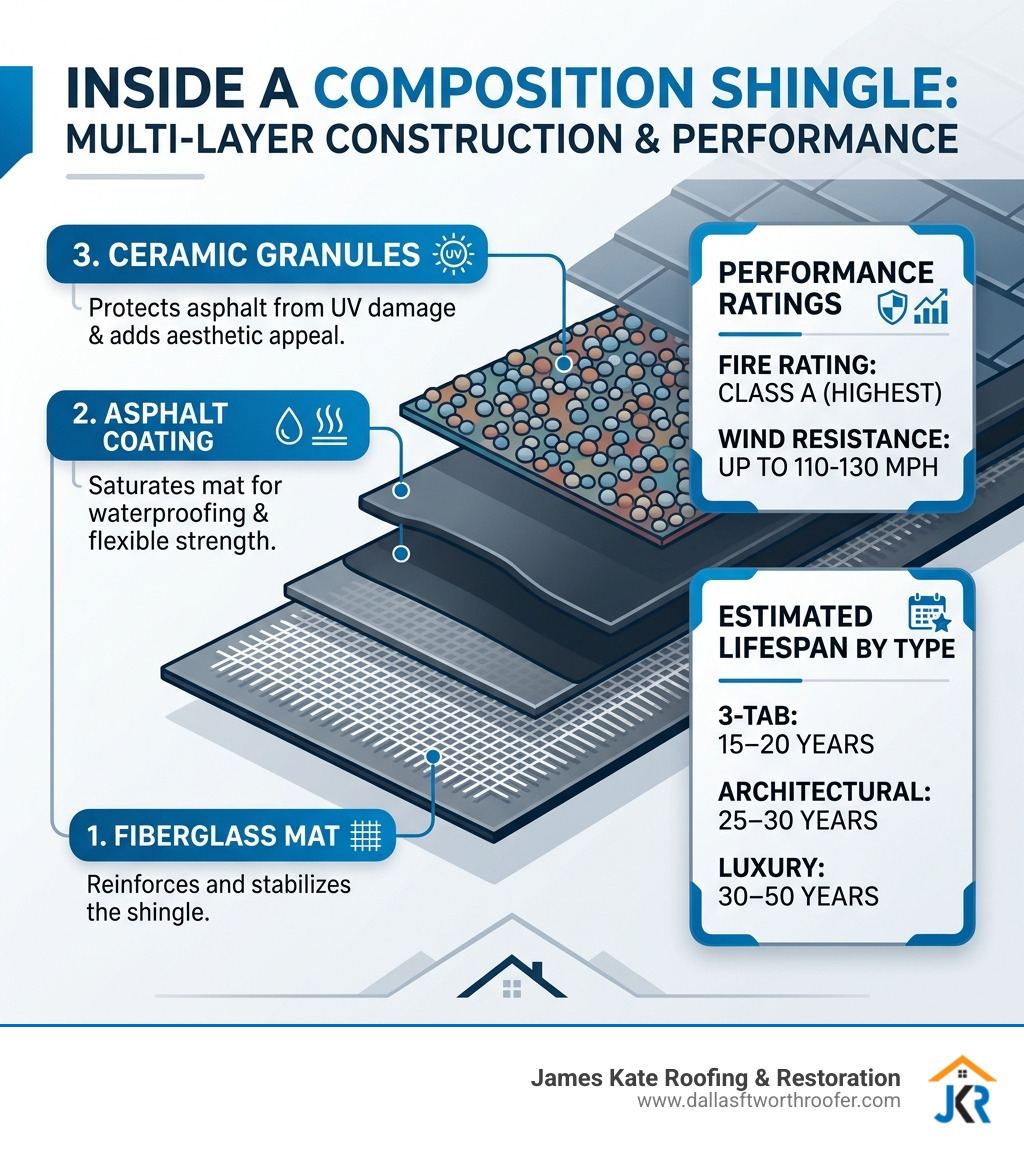
When we talk about composition shingles, we are essentially describing an engineered “sandwich” of high-performance materials. Unlike the old-school shingles of the early 20th century, modern shingles are high-tech products designed to survive everything from the baking Texas sun to sudden North Texas thunderstorms.
The manufacturing process begins with a base mat, which is then saturated with a waterproof asphalt coating. According to the Asphalt Roofing Manufacturers Association, this asphalt is “weathering grade,” meaning it has been specially processed to remain flexible and durable under extreme temperature swings. Finally, a layer of ceramic granules is embedded into the top surface. These granules aren’t just for show — they provide the critical UV protection that prevents the asphalt from drying out and cracking.
At James Kate Roofing & solar, we emphasize that Everything You Need To Know About Asphalt Composite Shingles starts with understanding this material bond. If the bond between the mat, the asphalt, and the granules is weak, the roof won’t last. That is why we partner with manufacturers who maintain the highest production standards.
The Anatomy of a Shingle
To understand why composition shingles are so effective, you have to look at the layers:
- The Base Mat: Most modern shingles use a fiberglass mat. This provides the structural framework and gives the shingle its fire resistance and tear strength.
- Weathering Grade Asphalt: This provides the primary waterproofing. It’s the “glue” that holds everything together.
- Ceramic Granules: These protect the asphalt from UV rays and provide the color and texture you see from the street.
- Self-Sealing Strips: These are heat-activated adhesive strips on the back of the shingle. Once the sun hits them after installation, they bond the shingles together to resist wind uplift.
Evolution of Shingle Materials
Roofing has come a long way since the days of organic felt and cellulose. In the past, shingles were made with a paper or wood pulp base (organic shingles). While they were thick, they absorbed moisture and were prone to rot.
The industry eventually transitioned to fiberglass mats, which are thinner, lighter, and far more fire-resistant. Today, we even see polymer-modified asphalt, which uses rubber-like additives to make the shingle more impact-resistant — a huge plus for homeowners in Mansfield or Arlington who deal with frequent hail.
The Different Types of Composition Shingles
Not all composition shingles are created equal. Depending on your budget and the look you want for your home, you have three primary categories to choose from.

3-Tab vs. Architectural Composition Shingles
The 3 Tab Composition Shingle was the industry standard for decades. These are “strip shingles” that are flat and have three uniform cutouts (tabs) along the bottom edge. While they are the most affordable option, they have a lower wind resistance (usually around 60–70 mph) and a shorter lifespan.
In contrast, architectural shingles (also called dimensional or laminate shingles) are made of two or more layers of material laminated together. This creates a multi-dimensional look with “shadow bands” that mimic the appearance of wood shakes. Beyond aesthetics, they are much heavier and tougher, often carrying wind ratings of 110–130 mph. For a detailed breakdown of these differences, check out our Composition Shingle Types Ultimate Guide.
Luxury and Designer Options
For homeowners who want the absolute best curb appeal, luxury shingles are the way to go. These are “triple-laminate” shingles that are significantly thicker and heavier than standard architectural options. They are expertly designed to mimic natural slate or hand-split wood shakes.
While they come at a premium price, they offer maximum protection and can drastically increase the value of a home in a high-end Mansfield neighborhood. You can learn more about these premium choices in The Ultimate Guide To Picking Composition Roof Shingles.
Performance, Durability, and Lifespan
In May 2026, the standard for roofing performance is higher than ever. Homeowners are no longer satisfied with a roof that just looks good; it has to perform under pressure.

Weather Resistance in May 2026
Modern composition shingles are engineered for extreme weather. High-quality architectural shingles now come with wind warranties covering speeds up to 130 mph. Furthermore, advances in granule technology, such as StainGuard, help prevent the growth of black algae streaks, keeping your roof looking new for longer.
The Composite Shingle Lifespan What To Expect From Your Roof is largely determined by how well it handles thermal shock—the rapid expansion and contraction caused by our volatile Texas weather.
Choosing the Right Composition Shingles for Your Climate
In the DFW Metroplex, our biggest enemies are the sun and the hail. We highly recommend looking for shingles with a Class 4 impact rating. Not only do these shingles provide superior protection against hail, but many insurance companies in Texas offer premium discounts of 5% to 35% for homes with Class 4 roofs.
If you are looking for the best brands to protect your home, our Invest In The Best Our Guide To Top Composite Roof Shingle Brands highlights the manufacturers we trust to stand up to the North Texas heat.
Cost and Installation in Mansfield, TX
The cost of a new roof can vary based on several factors, including the pitch of your roof, the number of layers to be removed, and local labor rates. In Mansfield and surrounding areas, you can generally expect to pay between $3.50 and $7.00 per square foot for a professional installation.
The Installation Process
A roof is only as good as its installation. At James Kate Roofing, we don’t just “slap on” shingles. Our Composition Shingle Installation process includes:
- Tear-off: Removing old materials to inspect the wood decking for rot.
- Synthetic Underlayment: A high-tech moisture barrier that is much stronger than old-fashioned felt paper.
- Leak Barriers: Installed in valleys and around chimneys to prevent water intrusion in vulnerable spots.
- Starter Strips: Specialized shingles installed at the eaves to prevent wind from catching the edges.
- Ventilation: Ensuring proper intake (soffit) and exhaust (ridge) vents to prevent the attic from “cooking” your shingles from the inside out.
Maintenance and Warranty Considerations
To get the most out of your investment, basic maintenance like gutter cleaning and debris removal is essential. We are proud to offer a 25-year workmanship warranty on our installations, which pairs with the manufacturer’s limited lifetime warranties to give you total peace of mind. For more details on what we offer, visit our page with More info about roofing services.
Composition Shingles vs. Alternative Materials
How do composition shingles stack up against other options like metal or slate? For most homeowners, it comes down to the cost-to-value ratio.
| Material | Initial Cost | Lifespan | Maintenance |
|---|---|---|---|
| Composition Shingles | Low – Moderate | 25–50 Years | Low |
| Metal Roofing | High | 40–70 Years | Low |
| Natural Slate | Very High | 100+ Years | High |
| Wood Shakes | Moderate – High | 20–30 Years | Very High |
While metal and slate last longer, they can cost three to five times as much as a high-quality composition roof. For most families in Granbury or Midlothian, the Key Differences Between Asphalt And Composite Roofing make shingles the more practical choice.
Sustainability and Environmental Impact
Many people are surprised to learn that composition shingles can be eco-friendly. Modern manufacturers are increasingly using recycled materials in their production. Furthermore, old shingles are often recycled into road paving materials rather than being sent to a landfill.
If you’re interested in a “green” roof, we can discuss cool roof technology that reflects sunlight and reduces your energy bills. You can find more details in Choosing Your Roof A Comprehensive Guide To Asphalt And Composite Shingles.
Why Asphalt Composition Remains the Top Choice
The reason Leading The Pack Discover Top Composite Shingle Brands continue to dominate the market is versatility. Whether your home is a traditional ranch or a modern custom build, there is a shingle color and style that will look perfect. They are easy to repair, cost-effective, and provide excellent fire protection.
Frequently Asked Questions about Composition Shingles
Can composition shingles be installed over an existing roof?
While building codes in some areas (including parts of Mansfield) may allow for a “recover” or “layover,” we almost always recommend a full tear-off. Installing new shingles over old ones traps heat, hides potential deck rot, and can often void the manufacturer’s warranty.
How long do architectural composition shingles typically last?
In the North Texas climate, a well-installed architectural roof typically lasts 25 to 30 years. However, factors like attic ventilation and regular maintenance play a huge role. Without proper ventilation, the heat can significantly shorten that lifespan.
What is the difference between composite and composition shingles?
In the roofing industry, these terms are often used interchangeably. “Composition” generally refers to traditional asphalt-based shingles with a fiberglass mat. “Composite” is sometimes used to describe synthetic shingles made from recycled rubber or plastics, but in casual conversation, most people are referring to the same high-quality asphalt products.
Conclusion
Choosing a new roof is a big decision, but it doesn’t have to be a stressful one. At James Kate Roofing & solar, we’ve built our reputation in Mansfield, Arlington, and across the DFW Metroplex on a foundation of honesty, integrity, and Biblical principles.
As a GAF President’s Club member, we provide the highest level of craftsmanship, backed by an industry-leading 25-year workmanship warranty. Whether you need a simple repair or a full “build back” after a storm, our family is here to protect yours.
For a free inspection or More info about roofing services, reach out to us today. Let’s make sure your home is covered by the best.

Dustin Eatman is a seasoned roofing professional with deep, hands-on expertise that spans residential and commercial roofing, insurance solar, and long-term roof asset management. As the owner of James Kate Roofing & solar in the Dallas–Fort Worth metroplex, he’s built a reputation for diagnosing roof systems accurately, communicating clearly, and executing projects with a high standard of workmanship and documentation. Dustin understands the technical details that make roofs perform—proper underlayment selection, slope and drainage considerations, ventilation strategy, flashing and penetration detailing, and manufacturer-specific installation requirements—because he’s worked through the real-world challenges that cause leaks, premature wear, and warranty issues. He’s equally fluent in the operational side of roofing: jobsite planning, quality control, safety, material ordering, crew coordination, and customer experience from inspection to closeout. In insurance-related projects, Dustin brings practical knowledge of claim workflows, adjuster meetings, scope alignment, supplements, and the importance of photo evidence and thorough records, helping property owners navigate stressful situations with confidence. For commercial clients—especially property and facility managers—he emphasizes proactive maintenance and targeted repairs that reduce disruption, extend roof life, and prevent expensive interior damage. Dustin also stays focused on doing things the right way: educating customers on realistic options, setting expectations, and prioritizing solutions that hold up over time rather than quick fixes. That blend of technical skill, field experience, process discipline, and owner-level accountability is what makes Dustin Eatman a trusted expert in the roofing industry.