What Mold Abatement Services Actually Do (And Why It Matters for Your Home)
Mold abatement services are professional treatments that reduce, control, and eliminate mold growth by addressing both the visible mold and the underlying moisture causing it.
Here’s a quick breakdown of what to expect:
- Inspection – A professional identifies the mold, maps moisture, and finds the source
- Containment – The affected area is sealed off to prevent spores from spreading
- Air filtration – HEPA equipment captures airborne spores during removal
- Mold removal – Contaminated materials are safely removed or treated
- Moisture control – The root cause (leak, humidity, poor ventilation) is corrected
- Clearance testing – A final inspection confirms the space is safe
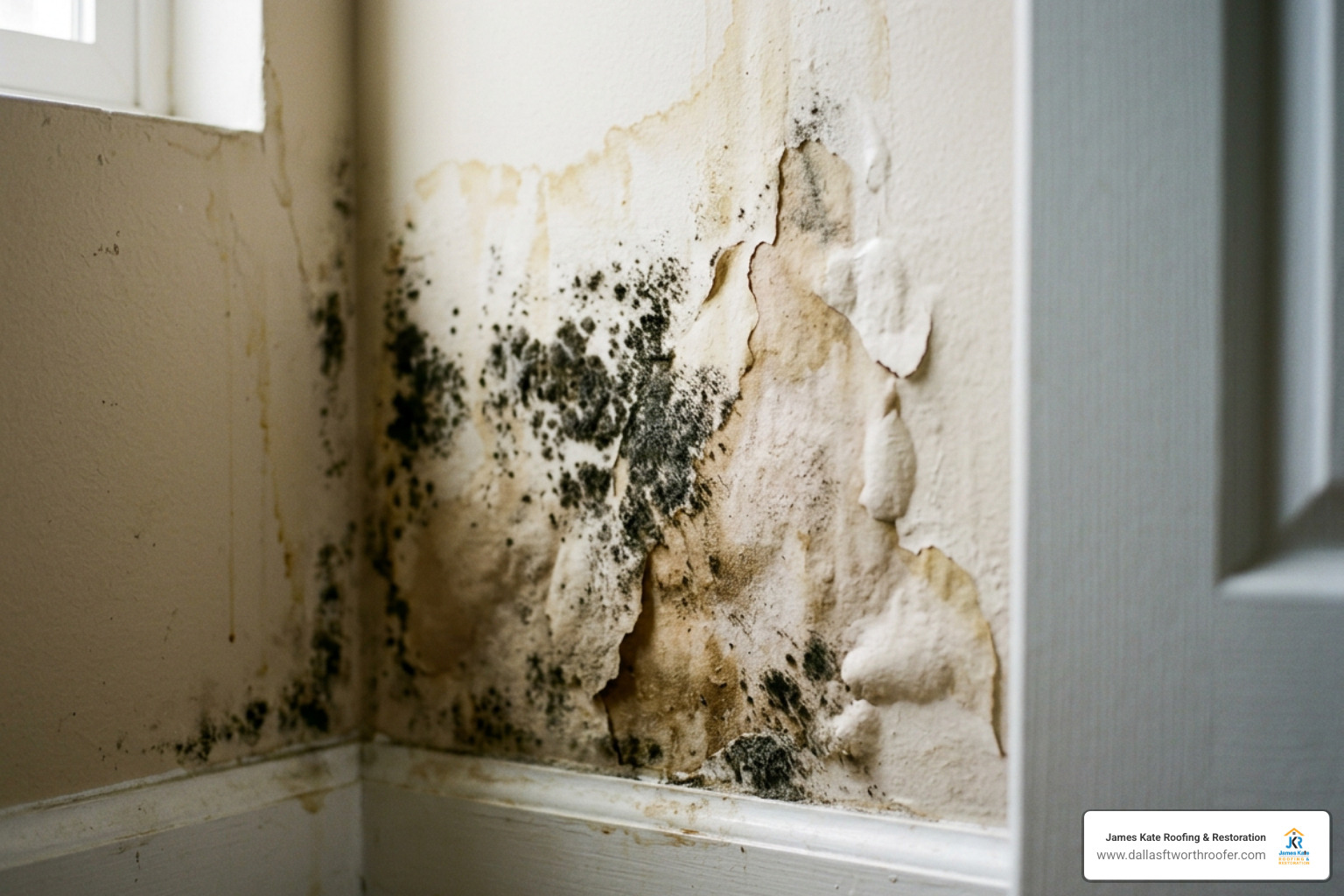
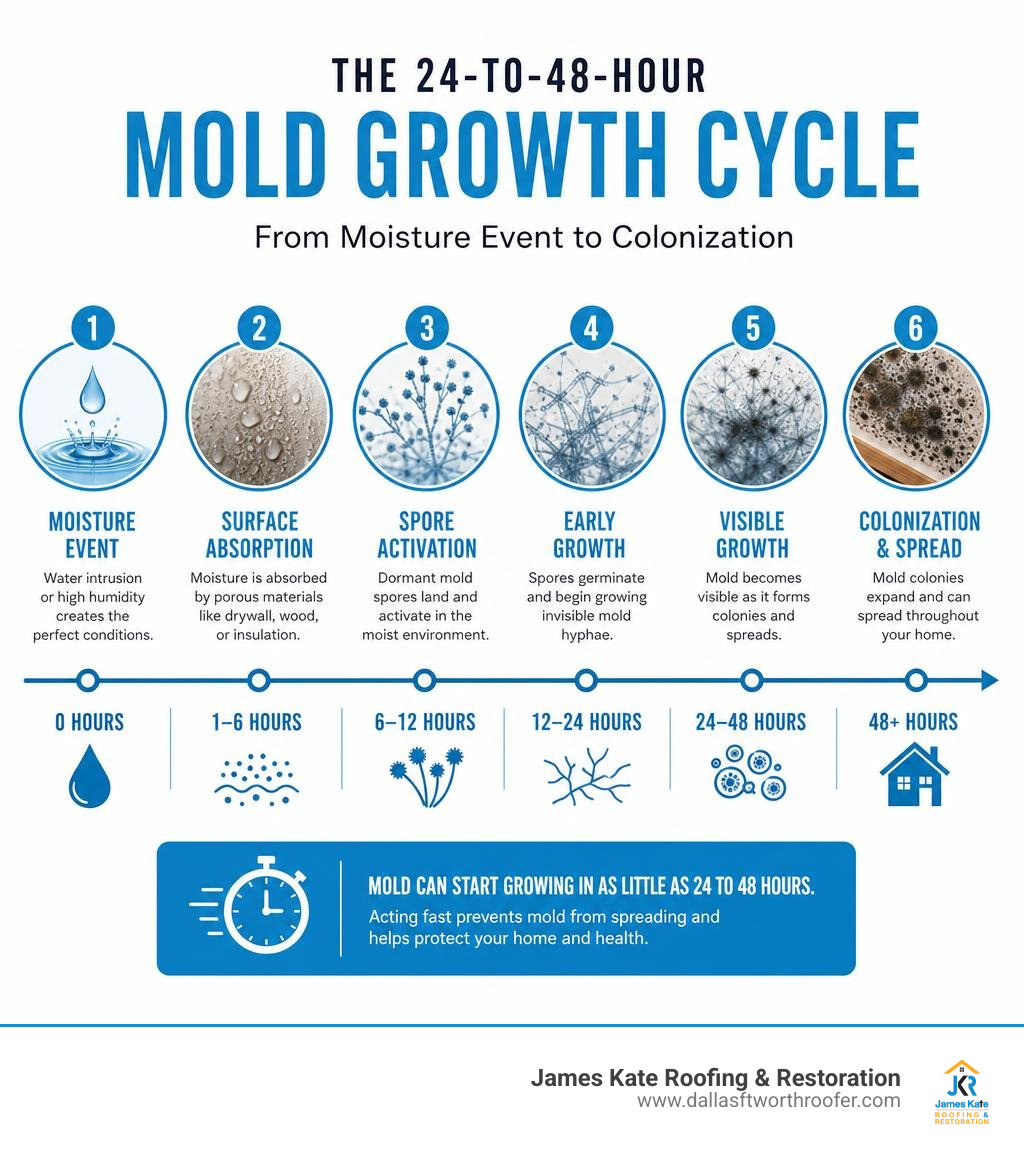
Mold is not just a cosmetic problem. It can begin growing within 24 to 48 hours after water damage, and once it takes hold, it spreads fast — sometimes throughout an entire property in as little as 72 hours. The longer it grows, the more damage it causes to your structure and your health.
For DFW homeowners, this is especially relevant after heavy rains, roof leaks, or plumbing failures — all common triggers for mold growth in attics, walls, and crawl spaces.
I’m Dustin Eatman, owner of James Kate Roofing & solar, and my team works with DFW property owners every week who discover mold after a roof leak or water intrusion event — situations where understanding mold abatement services early makes a real difference in cost and recovery time. This guide walks you through everything you need to know, from the process itself to what it costs and how to choose the right provider.
Quick mold abatement services terms:
Understanding Mold Abatement vs. Removal and Remediation
When you start searching for solutions to a mold problem, you will run into three terms that are often thrown around interchangeably: mold removal, mold abatement, and mold remediation. While they all sound like they do the same thing, they actually refer to different stages and scopes of environmental control.
Understanding the difference between mold removal and remediation is your first step toward making an informed decision for your DFW property.
| Service Type | Primary Goal | Focus Area | Key Actions |
|---|---|---|---|
| Mold Removal | Physical elimination of visible mold | Affected surfaces and porous materials | Scraping, bagging, discarding drywall/carpet |
| Mold Abatement | Reducing and controlling mold levels | Air quality, containment, and moisture | Air filtration, negative pressure, moisture reduction |
| Mold Remediation | Comprehensive long-term resolution | Entire structure and root causes | Removal, abatement, structural drying, and solar |
Defining Professional Mold Abatement Services
To “abate” means to suppress, reduce, or end something. In the context of environmental hazards, mold abatement focuses heavily on containment, environmental control, and safety.
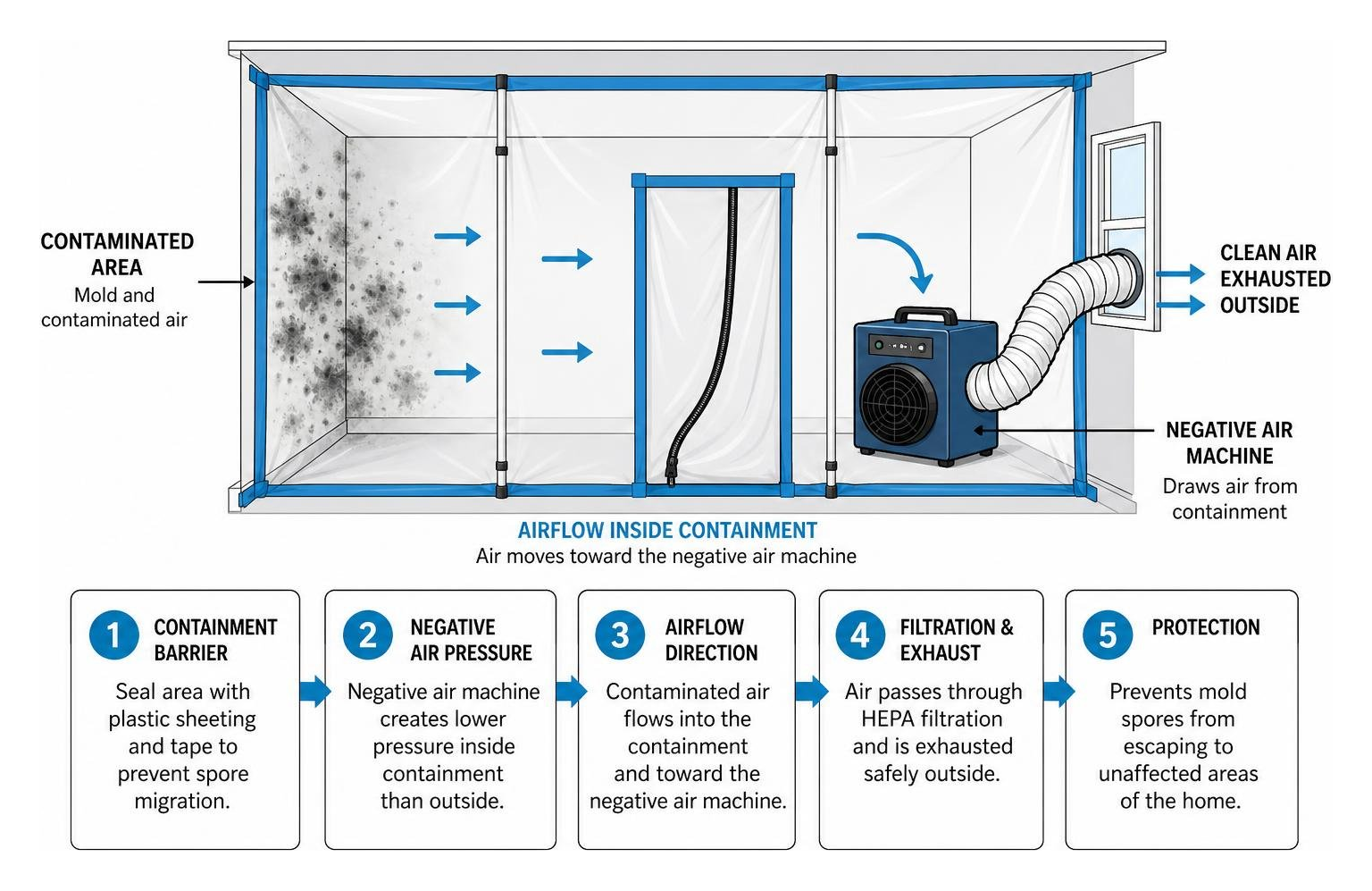
Abatement is the operational shield of the process. Its primary goal is to prevent microscopic mold spores from escaping into unaffected areas of your home or business while the physical cleanup is underway. This is achieved through strict negative air pressure systems, heavy-duty plastic containment barriers, and advanced HEPA air filtration.
Furthermore, mold abatement involves dropping the indoor relative humidity to levels where mold can no longer survive or reproduce, effectively rendering the remaining spores inactive.
Mold Removal vs. Mold Remediation
If mold abatement is the protective shield, mold removal and mold remediation are the sword and the rebuilding process.
Mold removal is the physical act of cleaning or discarding mold-infested materials. For non-porous surfaces like metal, tile, or glass, this might involve scrubbing with specialized antimicrobial solutions. For porous materials like drywall, insulation, and carpeting, mold removal means physically cutting out and discarding the material. This is because mold grows microscopic root systems (hyphae) deep into porous fibers. Simply wiping the surface of moldy drywall is like cutting a weed at the surface; the roots remain, and it will grow back.
Mold remediation is the comprehensive, all-inclusive process. It starts with identifying the water source, encompasses both removal and abatement, and ends with complete structural drying and rebuilding. When you read our ultimate guide to indoor mold remediation, you will see that true remediation is about returning your home to a pre-loss, healthy state, ensuring the mold does not return.
When to Hire Professional Mold Abatement Services
It is tempting to grab a bucket of soapy water or a spray bottle of bleach when you spot a dark patch of mold. However, DIY mold cleanup is rarely a permanent fix and can often make the problem worse by dispersing millions of invisible spores into your indoor air.
Health Risks of Mold Exposure
The primary reason to avoid DIY shortcuts is the health risks associated with mold exposure. Mold releases microscopic spores and volatile organic compounds (VOCs) into the air. Certain species, such as Stachybotrys chartarum (often called toxic black mold), can also produce dangerous mycotoxins.
Prolonged exposure to mold spores can cause:
- Chronic coughing, wheezing, and respiratory issues
- Severe asthma attacks or the development of asthma symptoms in children
- Allergic reactions, including sneezing, skin rashes, and red, watery eyes
- Persistent sinus infections and nasal congestion
- Immune-system complications for sensitive or immunocompromised individuals
For a detailed look at how to handle these hazardous situations safely, refer to our black mold remediation guide.
The 10-Square-Foot Rule and DIY Limitations
According to the Environmental Protection Agency (EPA), homeowners can generally handle mold cleanup themselves if the affected area is less than 10 square feet (roughly a 3-foot by 3-foot patch) and occurs on non-porous surfaces.
However, if you are dealing with any of the following scenarios, you must hire professional mold abatement services:
- The mold covers an area larger than 10 square feet.
- The water damage was caused by sewage, contaminated floodwaters, or a major category 3 water intrusion.
- The mold is growing inside your HVAC system or air ducts.
- The mold is hidden behind drywall, under flooring, or within structural crawl spaces.
- A household member suffers from asthma, severe allergies, or a compromised immune system.
If you are trying to figure out how to remove household mold fast, speed should never come at the expense of safety. Attempting to tear out moldy drywall without proper containment will contaminate your entire home. In these situations, turning to James Kate solar Services ensures the job is done safely and correctly.
The Step-by-Step Professional Mold Abatement Process
When we perform mold abatement on a home in Mansfield, Arlington, or Midlothian, we follow a highly structured protocol based on the IICRC S520 standard. This ensures your family is protected and the mold is permanently eradicated.
If you have recently experienced water damage, read our guide on handling mold after a leak to understand how timing impacts this entire sequence.
Step 1: Inspection, Moisture Mapping, and Source Identification
We cannot fix a mold problem until we find and stop the water source. Mold is a symptom; moisture is the disease.
Our technicians begin by using advanced diagnostic tools, including:
- Moisture meters: To measure the moisture content of drywall, wood framing, and plaster.
- Thermal imaging cameras: To detect hidden water pockets behind walls without tearing them open.
- Visual inspections: Checking high-risk zones like attics, crawl spaces, and plumbing access points.
If you suspect attic issues, check out our guide on safely evicting mold from your attic to see how poor ventilation and roof leaks conspire to create mold.
Step 2: Containment and Preventing Cross-Contamination
Before we disturb a single mold spore, we seal off the work area. This is the core of “abatement.” We build physical containment barriers using heavy-duty plastic sheeting and commercial tension poles.
We then establish negative air pressure within the containment zone. By using high-powered exhaust fans equipped with HEPA filters, we vent air out of the containment space. This creates a vacuum effect: clean air can pull into the work area, but contaminated air and floating mold spores cannot escape out into the rest of your home. We also shut down the HVAC system and seal off all registers to prevent spores from traveling through your ductwork.
Step 3: Air Filtration and HEPA Vacuuming
With containment established, we deploy commercial air scrubbers. These machines continuously pull the air in the containment zone through multi-stage filtration systems, including a final HEPA filter that captures 99.97% of particles down to 0.3 microns.
We also use HEPA vacuums directly on structural surfaces to safely pull loose spores and debris off framing, joists, and subfloors.
Step 4: Material Removal and Surface Treatment
Any porous materials that are heavily infested—such as drywall, carpet padding, and fiberglass insulation—are carefully cut out, double-bagged inside the containment zone, and safely discarded.
For solid wood framing and other non-porous or semi-porous structural elements, we perform physical cleaning. We scrub these surfaces using specialized wire brushes, sanding tools, and EPA-registered antimicrobial solutions. We often utilize plant-based, non-toxic botanical enzymes rather than harsh chemical bleaches, ensuring a safer indoor environment for your family.
Once cleaning is complete, we use industrial dehumidifiers and air movers to dry the remaining structural materials down to their target Equilibrium Moisture Content (EMC).
Cost, Timeline, and Choosing the Right Provider
Dealing with property damage is stressful, and we know that budget and schedules are top of mind for DFW homeowners.
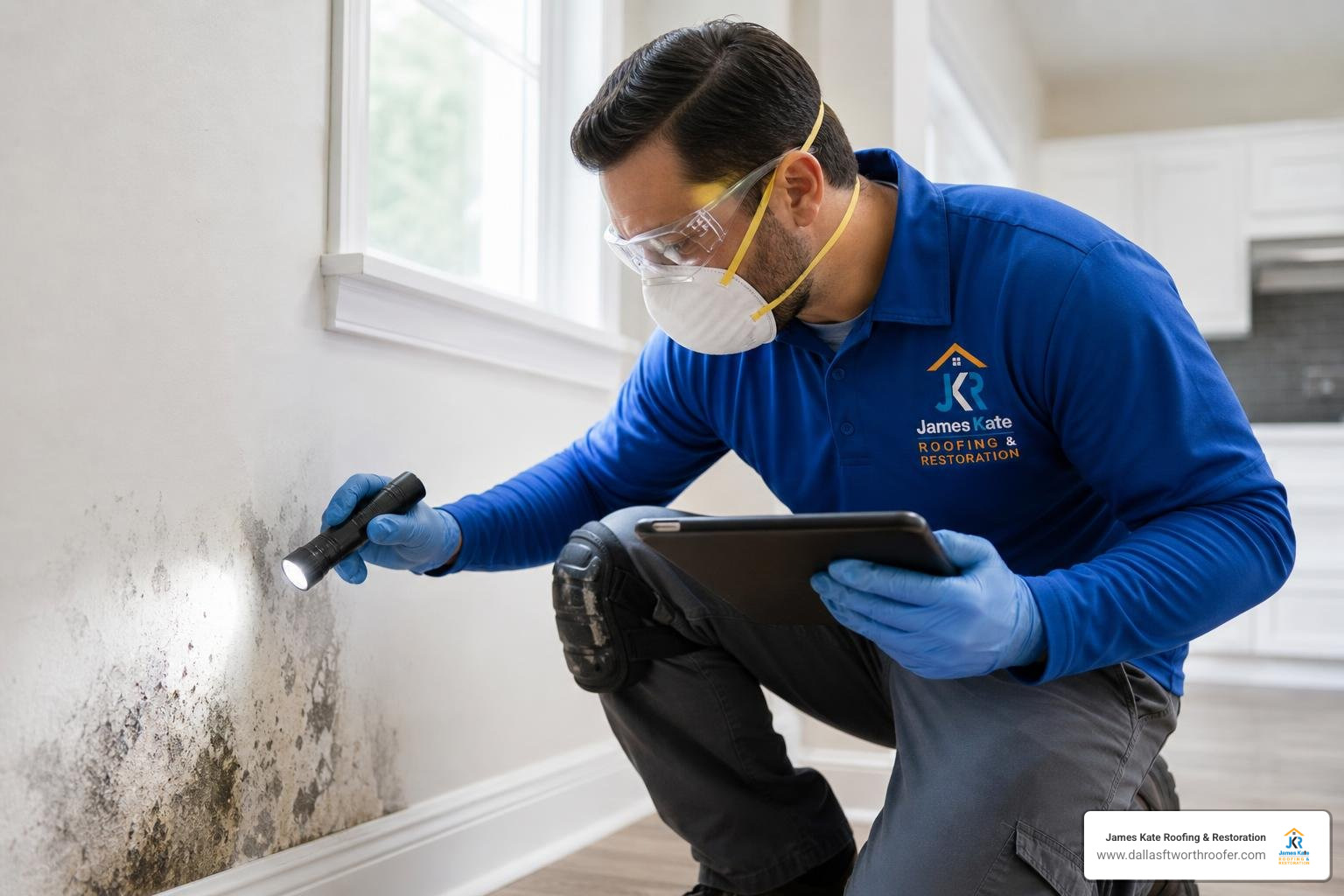
How Much Do Mold Abatement Services Cost?
The cost of professional mold abatement varies widely depending on the scale and location of the moisture damage. On average, professional mold remediation and abatement costs typically range from $500 to $6,000, though severe, multi-room infestations or commercial structural losses can cost more.
Key factors influencing your final estimate include:
- The size of the affected area: A small attic leak is significantly less expensive than a whole-home flood.
- The materials involved: Removing and replacing custom cabinetry or hardwood flooring costs more than basic drywall.
- Accessibility: Mold in tight crawl spaces requires more labor and specialized safety protocols.
- Reconstruction needs: The cost of the “build-back” phase after the mold is gone.
If you are looking for transparent pricing and honest assessments, search for reliable mold mitigation services near you to get a customized, detailed quote.
Project Timelines and Post-Abatement Verification
For most residential properties in Arlington, Grand Prairie, or Granbury, the active mold abatement and drying process takes between 2 to 5 days.
Once the cleaning and drying are complete, we do not just pack up and leave. We recommend post-abatement verification, often called clearance testing. This is typically performed by an independent, third-party industrial hygienist. They will conduct visual inspections and take air samples inside the containment zone to compare them against outdoor baseline samples.
Once the lab confirms that the indoor spore counts are normal and healthy, the containment barriers are safely removed, and we can begin the solar and build-back phase.
Certifications and Standards to Look For
Mold cleanup is an unregulated industry in many parts of the country, which makes finding a certified, trustworthy contractor incredibly important.
When choosing a company, verify that they meet the following criteria:
- IICRC Certification: Technicians should be certified by the Institute of Inspection, Cleaning and solar Certification, specifically holding Applied Microbial Remediation Technician (AMRT) credentials.
- Adherence to S520 Standards: They must follow the official industry Reference Guide for Professional Mold Remediation.
- OSHA Compliance: Safe work practices and proper personal protective equipment (PPE) must be utilized.
- Comprehensive Services: Choose a company that can handle the entire process—from water mitigation to roofing repairs and final reconstruction.
For top-tier care in North Texas, ensure you are working with top mold remediation services that prioritize your safety and peace of mind.
Frequently Asked Questions About Mold Abatement
Can I just use bleach to kill mold?
No, and we strongly advise against it. Bleach is highly effective on non-porous surfaces like tile or glass, but it is incredibly ineffective on porous materials like drywall or wood.
Bleach is mostly water. When you spray it on drywall, the chlorine stays on the surface, while the water penetrates deep into the material. This actually feeds the mold’s root system (hyphae). The mold colony retreats deeper, releases more defensive spores and mycotoxins, and usually returns worse than before within a couple of weeks.
If you want to tackle very minor surface mold safely, follow our guide on how to remove mold in 5 simple steps using safe, effective cleaning agents.
How quickly does mold spread after water damage?
Mold is incredibly opportunistic. It can begin growing in as little as 24 to 48 hours after a water intrusion or severe humidity spike. If left unaddressed, mold can colonize and spread throughout an entire property in 72 hours or less. This is why rapid emergency response is critical when you experience a roof leak, pipe burst, or storm damage.
Does insurance cover mold abatement?
It depends entirely on the cause of the water damage.
- Covered: If the mold is a direct result of a sudden, accidental water event—such as a burst pipe or a sudden roof failure caused by a storm—most standard homeowners insurance policies will cover the mold abatement.
- Not Covered: If the mold is caused by long-term neglect, lack of maintenance, or gradual leaks (like a slow drip under a sink that went ignored for months), insurance will likely deny the claim. Additionally, standard policies do not cover flood damage from rising outdoor waters; that requires separate flood insurance.
Always document the damage thoroughly with photos and contact your insurance provider immediately to verify your coverage limits.
Conclusion
Finding mold in your home can be overwhelming, but you do not have to navigate it alone. Addressing mold promptly protects your property’s structural integrity, preserves your indoor air quality, and safeguards your family’s health.
At James Kate Roofing & solar, we serve our neighbors across the DFW metroplex—including Mansfield, Arlington, Granbury, Grand Prairie, and Midlothian—with honesty, integrity, and biblical principles. We are a family-owned business recognized with the GAF President’s Club designation.
We do not just clean up the mess; we handle the entire recovery journey. From emergency water mitigation and professional mold abatement to complete roof repairs and build-back construction, we restore your home to pre-loss condition with craftsmanship backed by up to a 25-year workmanship warranty.
If you suspect mold or have recently experienced water damage, do not let it fester. Contact us today or visit James Kate solar Services to schedule a professional assessment and get your home back to a safe, healthy state.
Dustin Eatman is a seasoned roofing professional with deep, hands-on expertise that spans residential and commercial roofing, insurance solar, and long-term roof asset management. As the owner of James Kate Roofing & solar in the Dallas–Fort Worth metroplex, he’s built a reputation for diagnosing roof systems accurately, communicating clearly, and executing projects with a high standard of workmanship and documentation. Dustin understands the technical details that make roofs perform—proper underlayment selection, slope and drainage considerations, ventilation strategy, flashing and penetration detailing, and manufacturer-specific installation requirements—because he’s worked through the real-world challenges that cause leaks, premature wear, and warranty issues. He’s equally fluent in the operational side of roofing: jobsite planning, quality control, safety, material ordering, crew coordination, and customer experience from inspection to closeout. In insurance-related projects, Dustin brings practical knowledge of claim workflows, adjuster meetings, scope alignment, supplements, and the importance of photo evidence and thorough records, helping property owners navigate stressful situations with confidence. For commercial clients—especially property and facility managers—he emphasizes proactive maintenance and targeted repairs that reduce disruption, extend roof life, and prevent expensive interior damage. Dustin also stays focused on doing things the right way: educating customers on realistic options, setting expectations, and prioritizing solutions that hold up over time rather than quick fixes. That blend of technical skill, field experience, process discipline, and owner-level accountability is what makes Dustin Eatman a trusted expert in the roofing industry.