How Much Do Hail Affected Cars Really Lose in Resale Value?
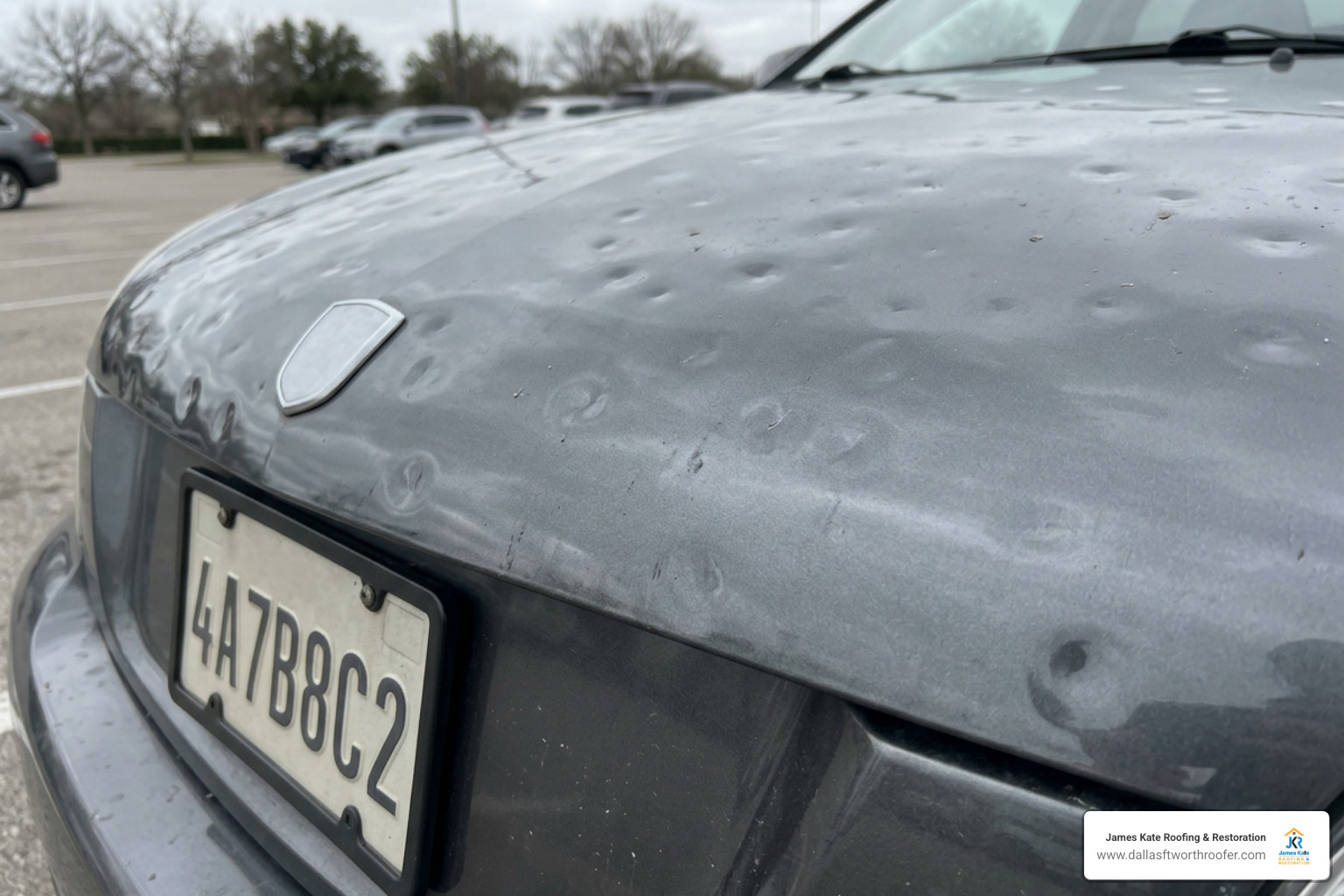
Hail affected cars can lose anywhere from 10% to 30% of their market value — even when the engine runs perfectly and nothing mechanical is wrong.
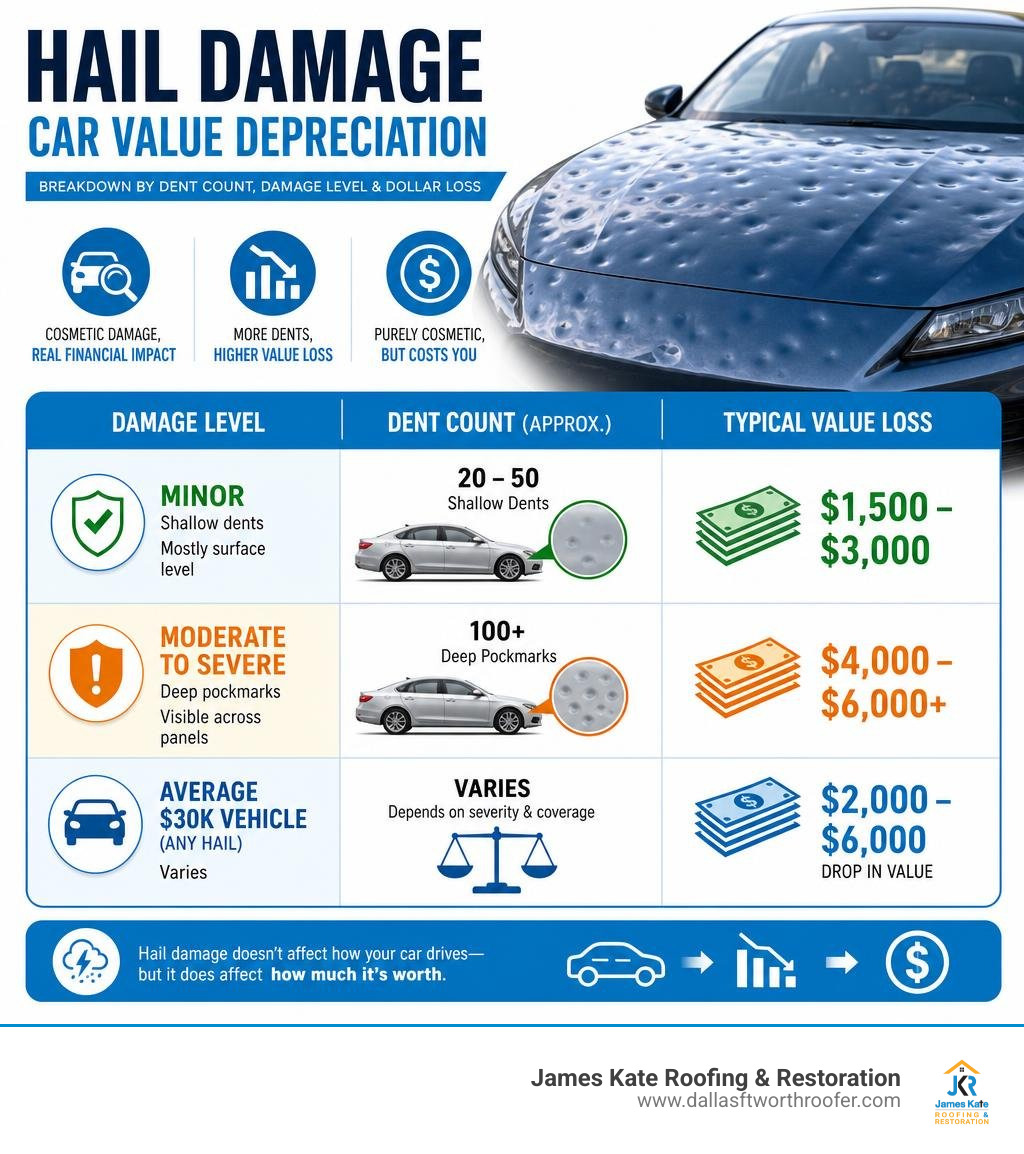
Here’s a quick breakdown of what that means in real numbers:
| Damage Level | Dent Count | Typical Value Loss |
|---|---|---|
| Minor | 20–50 shallow dents | $1,500 – $3,000 |
| Moderate to Severe | 100+ deep pockmarks | $4,000 – $6,000+ |
| Average $30K vehicle (any hail) | Varies | $2,000 – $6,000 drop |
The damage is usually purely cosmetic — but dealers, appraisers, and private buyers don’t see it that way. They see reconditioning costs, auction risk, and a car that looks neglected. That perception hits your wallet hard.
This guide breaks down exactly how hail damage affects what your car is worth, what your repair options are, and how to protect your investment before the next storm rolls through North Texas.
I’m Dustin Eatman, owner of James Kate Roofing & solar in the Dallas–Fort Worth area, and I’ve spent years helping property owners navigate storm damage — including the ripple effects hail has on hail affected cars parked in driveways and lots when severe weather strikes. Understanding how hail impacts value is the first step to making smart decisions after a storm.
Financial Impact: How Hail Damage Alters Vehicle Resale and Trade-In Value
When a severe thunderstorm rolls across Arlington, TX or Mansfield, TX, ice pellets falling from 8,000 to 10,000 feet can reach speeds of 25 to 72 mph—and sometimes over 100 mph for massive stones. When those ice chunks hit sheet metal, the visual damage is immediate. But the real financial bite comes later when you attempt to trade in or sell the vehicle.
The market value of any pre-owned vehicle relies on perception, condition, and marketability. Even if a car’s engine, transmission, and electronics are working flawlessly, visible dimples on the hood, roof, or trunk alter its appraisal profile.
| Vehicle Valuation Status | Physical Condition | Trade-In / Resale Value Impact | Expected Dealer Action |
|---|---|---|---|
| Clean Title (No Hail) | Pristine factory finish, no pockmarks | 100% Market Equity Value | Retail lot resale ready |
| Unrepaired Hail Damage | 20 to 100+ dents across upper panels | 10% to 30% Value Deduction (-$1,500 to -$6,000+) | Sent straight to wholesale auction |
| PDR-Repaired Vehicle | Dents massaged out, original factory paint preserved | 95% to 100% Retained Value | Standard retail appraisal |
When evaluating hail affected cars, dealership appraisers do not treat storm dimples as minor blemishes like a small parking lot door ding. Instead, they tally up panel solar costs and deduct manual labor reconditioning expenses directly from their cash trade-in offers.
If the repair cost estimate exceeds what the dealership wants to invest, they won’t even sell the car on their main lot. They mark it down aggressively and ship it to a wholesale auto auction, passing that financial hit straight to you.
For a complete look at evaluating storm damage on your broader property after a major severe weather event, check out our ultimate checklist for assessing roof damage severity.
Trade-In Deductions vs Private Resale
Why is the trade-in penalty so severe? It comes down to basic appraisal math. Dealerships exist to turn a profit on re-selling pre-owned inventory. When a car with 30 shallow roof dents and a dimpled hood enters the drive, an appraiser calculates the labor needed to return that vehicle to front-line condition.
- Minor Hail Damage (20–50 shallow dents): Causes an immediate deduction of $1,500 to $3,000 off clean trade-in values.
- Moderate to Severe Hail Damage (100+ pockmarks): Slashes trade-in offers by $4,000 to $6,000 or more depending on vehicle make and original equity.
- Overall Market Deduction: Unrepaired storm dings typically slice 10% to 30% off total market valuation. On a $30,000 SUV, that equates to a sudden $3,000 to $9,000 loss in equity!
Selling directly to a private buyer might seem like a clever way to bypass dealer trade-in deductions, but private buyers introduce a different obstacle: the “stress discount.”
When prospective individual buyers inspect dimpled sheet metal, they often assume exterior cosmetic neglect signals mechanical neglect. Buyers worry the vehicle sat uncovered during destructive weather, potentially taking on water through damaged seals or suffering neglected oil changes and brake maintenance. Understanding these market dynamics is critical, as detailed in this analysis on Does Hail Damage Affect Car Value? Trade-in & Resale Truths.
Preserving Equity Through Paintless Dent Repair
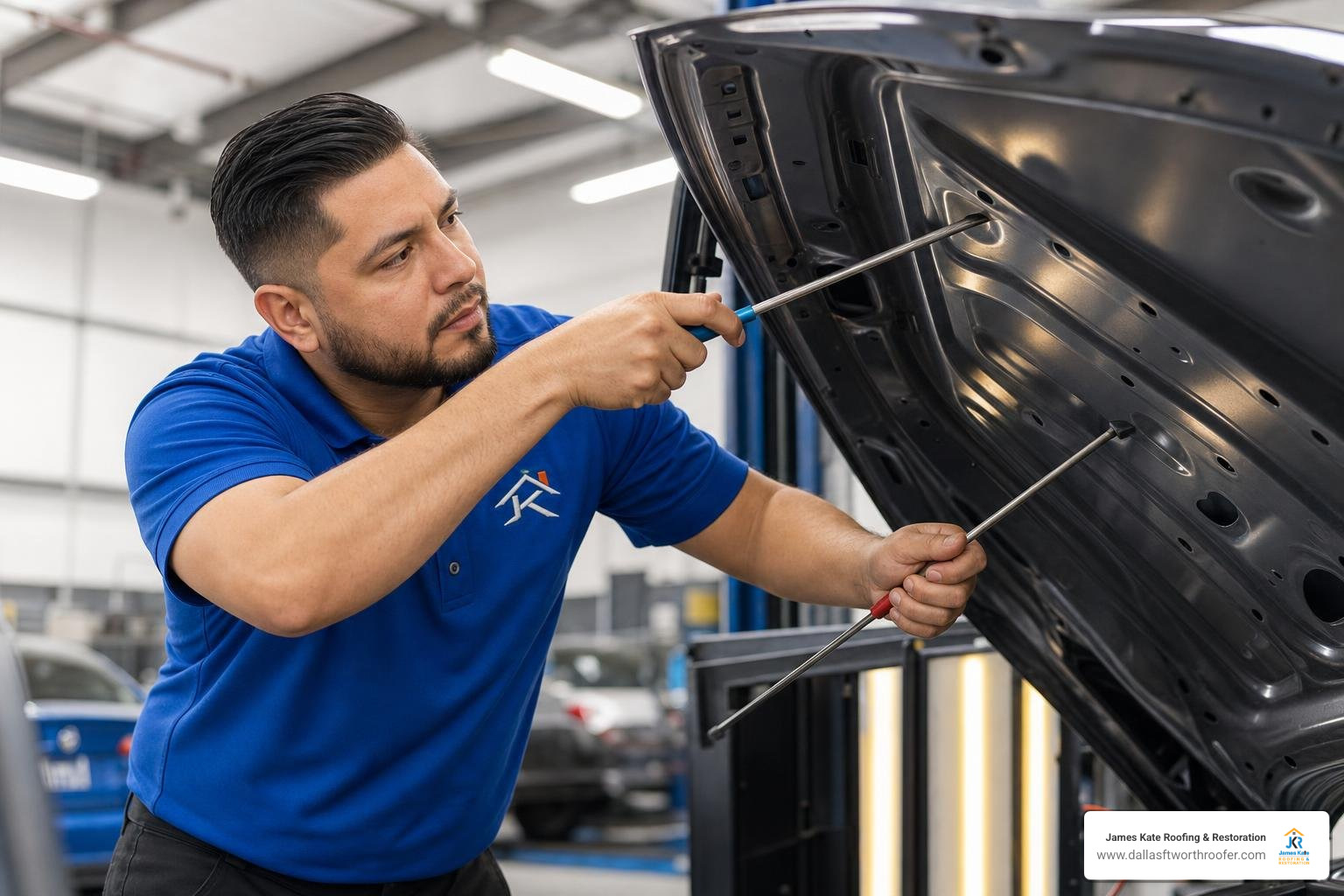
The most effective way to eliminate appraisal penalties is restoring metal contours using Paintless Dent Repair (PDR). Unlike traditional body repair—which sands down clear coat layers, fills indentations with synthetic plastic putty, and sprays non-factory paint—PDR works non-invasively. Skilled technicians use specialized long-reach tools behind body panels to massage metal back into its exact factory position.
Preserving your vehicle’s factory paint finish is vital for maintaining long-term resale value. Dealership appraisers routinely use digital paint-depth gauges to measure clear coat thickness. When a digital gauge reveals non-standard paint depth across a hood or quarter panel, appraisers instantly know aftermarket bodywork took place. Non-factory paint degrades faster under the intense DFW summer sun, increasing future risk of clear coat peeling and color fading.
By utilizing PDR:
- Original Factory Clear Coat Remains Intact: Maintaining original factory paint preserves full weatherproofing and OEM warranties.
- Vehicle Equity Is Restored: Removing panel dimples eliminates auto appraiser trade-in penalties.
- Private Records Stay Clean: Non-invasive repairs completed promptly keep your car looking like new, preventing lowball offers from private buyers.
Evaluating the True Value of Hail Affected Cars vs Other Storm Damage
Not all storm-damaged vehicles are created equal. When shopping pre-owned inventory or evaluating post-storm options, understanding how hail affected cars compare to other categories of storm-impacted vehicles can save you thousands of dollars and endless headaches.
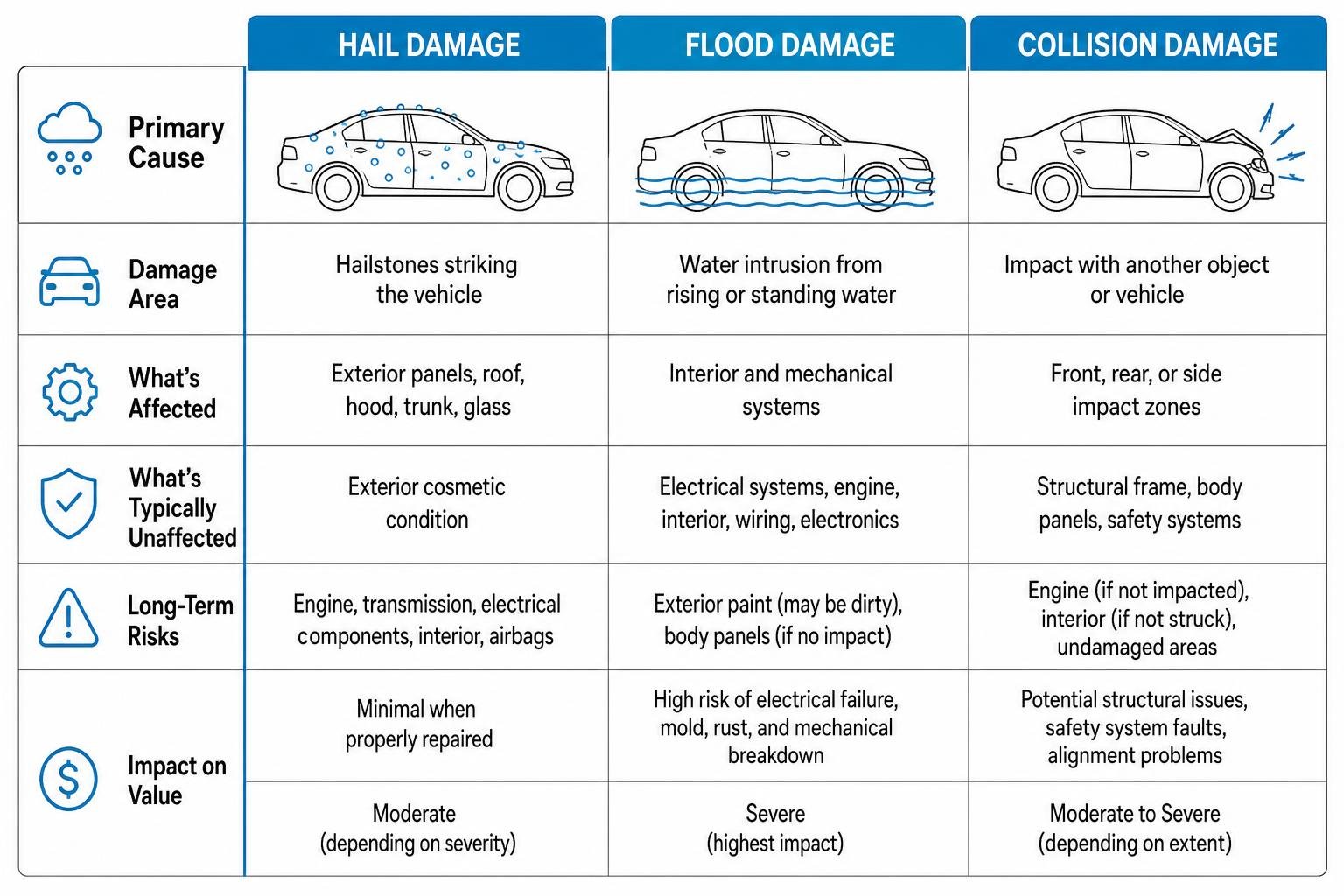
A vehicle impacted strictly by hail is fundamentally different from a flood-damaged or collision-damaged car:
- Hail-Damaged Cars: Damage is primarily exterior and cosmetic. Sheet metal, body panels, and occasionally glass take the brunt of the impact. The engine, transmission, electrical wiring, safety airbags, and interior cabin remain completely untouched and clean.
- Flood-Damaged Cars: Water submerges sensitive electronics, wiring harnesses, engine blocks, and cabin carpeting. Flood damage leads to progressive electrical shorts, hidden mold, structural rust, and mechanical failure over time.
- Accident-Damaged Cars: Kinetic collisions twist structural frames, compromise crumple zones, deploy safety airbags, and strain mechanical suspension systems.
Financial Pros and Cons of Buying Hail Affected Cars
For budget-conscious drivers in places like Midlothian, TX or Grand Prairie, TX, purchasing a hail-impacted pre-owned vehicle can be a brilliant financial move—provided you understand the trade-offs.
The Financial Pros:
- Massive Upfront Savings: Buyers can acquire late-model, low-mileage SUVs, trucks, or sedans at discounts ranging from 15% to 30% below standard market retail.
- Pristine Mechanical Reliability: Because hail strikes from above, the drivetrain, engine, suspension, brakes, and cabin tech operate in factory-new condition.
- Ideal Daily Commuter Value: If you want a reliable vehicle to park at train stations or drive daily without worrying about minor parking lot dings, cosmetic hail damage offers unbeatable utility per dollar spent.
- Full Utility at Reduced Cost: You enjoy modern safety tech and comfortable transportation while leaving thousands of dollars in your savings account.
The Financial Cons:
- Future Resale Constraints: When it comes time for you to sell or trade the car down the road, buyers will apply the same cosmetic price discounts to you.
- Potential Insurance Coverage Limitations: Some comprehensive auto insurance policies restrict future physical damage coverage on vehicles with pre-existing, unrepaired hail damage.
- Financing Hurdles: Some auto lenders cap financing amounts on cars with severe cosmetic damage or branded titles.
Before purchasing any storm-impacted vehicle, take time to learn Car hail damage: what to do, insurance cover and repair options | RACV to understand how auto insurers evaluate total loss math and coverage limits.
How Title Classifications Impact Hail Affected Cars
Understanding vehicle title status is mandatory when shopping for hail affected cars. A storm-damaged vehicle usually falls under one of two title categories:
- Clean Title Hail Cars: In many cases, insurance companies issue payout claims for cosmetic damage, but the vehicle retains a completely clean title. This happens when repair costs remain below state total-loss thresholds or when vehicle history regulations do not force title re-branding for cosmetic-only claims. A clean-title hail car offers the best financial upside because it is easier to finance, insure, and resell.
- Branded Title (Salvage or Rebuilt) Hail Cars: If the cost to repair cosmetic hail dents across every panel exceeds a specific percentage of the car’s pre-storm market value (typically 75% to 90%), the insurance company writes the vehicle off as a total financial loss. The state then issues a salvage title. Once repaired and state-inspected, it receives a “Rebuilt Title.”
It is vital to recognize that an insurance total loss on a hail-damaged car is driven by repair math, not structural ruin. Replacing eight panels and repainting a luxury vehicle can easily total $12,000 in shop labor—surpassing the car’s cash value—even though the vehicle drives perfectly. However, branded titles permanently drop vehicle market value by 20% to 40% and require specialized auto insurance policies.
Repair Methods, Timelines, and Preserving Factory Value
When restoring hail affected cars, choosing the right repair methodology directly determines how long your car stays in the shop, how much value you recover, and whether your factory warranty stays valid.
PDR vs Traditional Body Shop Methods
There are two primary ways to fix hail damage on vehicle body panels: Paintless Dent Repair (PDR) and traditional collision bodywork.
Roughly 85% of standard auto hail damage falls firmly within the “PDR Zone”—meaning the clear coat paint layer remains unbroken and the underlying steel panel is not severely stretched.
- Paintless Dent Repair (PDR): Technicians use specialized LED lighting and high-tensile steel rods to gently massage metal back into place from beneath the panel. It costs approximately $75 to $150 per dent, takes just days to complete, requires no body filler, and preserves 100% of your original factory finish.
- Traditional Collision Bodywork: If hail was large enough to crack vehicle paint, or if panels are made of work-hardened aluminum or plastic composite (like bumper covers), PDR may not be possible. Body shops must grind off clear coat, apply polyester filler (Bondo), sand panels smooth, apply primer, and respray non-factory paint. Traditional bodywork costs $600 to $1,800 per panel and can void manufacturer anti-corrosion warranties if performed incorrectly.
Repair Timelines and Modern ADAS Considerations
How long will your vehicle spend in the repair bay? Turnaround times vary significantly depending on damage severity and modern vehicle technology:
- Light Hail Damage (20–50 shallow dents, intact paint): 1 to 3 business days using specialized PDR.
- Moderate Hail Damage (Multiple panels, moderate depth): 3 to 5 business days.
- Severe Hail Damage (Panel replacement, paint resprays, glass work): 7 to 15+ business days.
For a comprehensive timeline analysis on shop workflows and processing phases, review this detailed breakdown on Hail Damage Repair Timeline: How Long It Really Takes to Fix Your Car.
Modern vehicles equipped with Advanced Driver Assistance Systems (ADAS)—including forward-facing radar behind front grilles, lane-departure cameras embedded in windshield glass, and blind-spot sensors behind rear quarter panels—introduce additional timeline factors.
If hail cracks a panoramic glass sunroof or windshield, or if quarter panels require full panel removal, technicians must recalibrate ADAS sensors after reassembly. Skipping sensor recalibration can render automatic emergency braking and lane-keep assistance non-functional, creating serious safety risks.
Insurance Claims, Inspection Guidelines, and Smart Prevention
Handling auto hail damage efficiently requires acting fast after a storm passes. In North Texas weather hotspots like Granbury, TX or Arlington, TX, repair shop appointment slots fill up rapidly following severe hail storms.
Post-Storm Inspection and Filing Process
If a thunderstorm brings hail across your neighborhood, execute this 48-hour action plan to protect your claim rights:
- Prioritize Personal Safety: Never venture outside during an active hailstorm to cover a vehicle. Wait until severe weather warnings expire completely.
- Move Vehicle to Bright Daylight: Inspect sheet metal during daylight hours. To capture shallow panel dimples on camera, position your smartphone camera at a low grazing angle (roughly 30 to 45 degrees relative to the panel) rather than pointing straight down.
- Log Weather Details: Document the date, exact time, geographical location, and estimated size of fallen hailstones (e.g., nickel, quarter, or golf-ball size).
- File Comprehensive Insurance Claim: Hail damage falls exclusively under comprehensive auto insurance coverage—not collision. Because hail is categorized as an “Act of Nature,” filing a single comprehensive hail claim generally does not raise your personal actuarial premium rates like an at-fault collision claim would.
- Request Independent PDR Assessment: Before signing off on an initial drive-by insurance adjuster estimate, obtain an independent estimate from a reputable PDR specialist. Adjusters routinely miss subtle roof dimples during quick field evaluations.
For extra guidance on post-storm protocols and documentation strategies, explore the Post-Hail Playbook Calgary: The First 48 Hours (2026) | Calgary PPF Pros or read our local breakdown on managing arlington tx storm damage.
Roadworthiness and Effective Prevention Methods
Are hail affected cars legal and safe to drive immediately after a storm?
Cosmetic panel dents alone do not render a car unroadworthy. However, if falling ice cracks your front windshield, smashes side mirrors, or fractures headlight covers, driving the vehicle becomes illegal and unsafe under Texas transport codes until glass and lighting components are replaced.
Smart Prevention Methods:
- Track Hyperlocal Weather Alerts: Download reliable radar apps and sign up for severe thunderstorm alerts so you can move vehicles before storms strike.
- Identify Covered Parking Early: If traveling, locate nearby parking garages, gas station awnings, or covered carports when severe weather approaches.
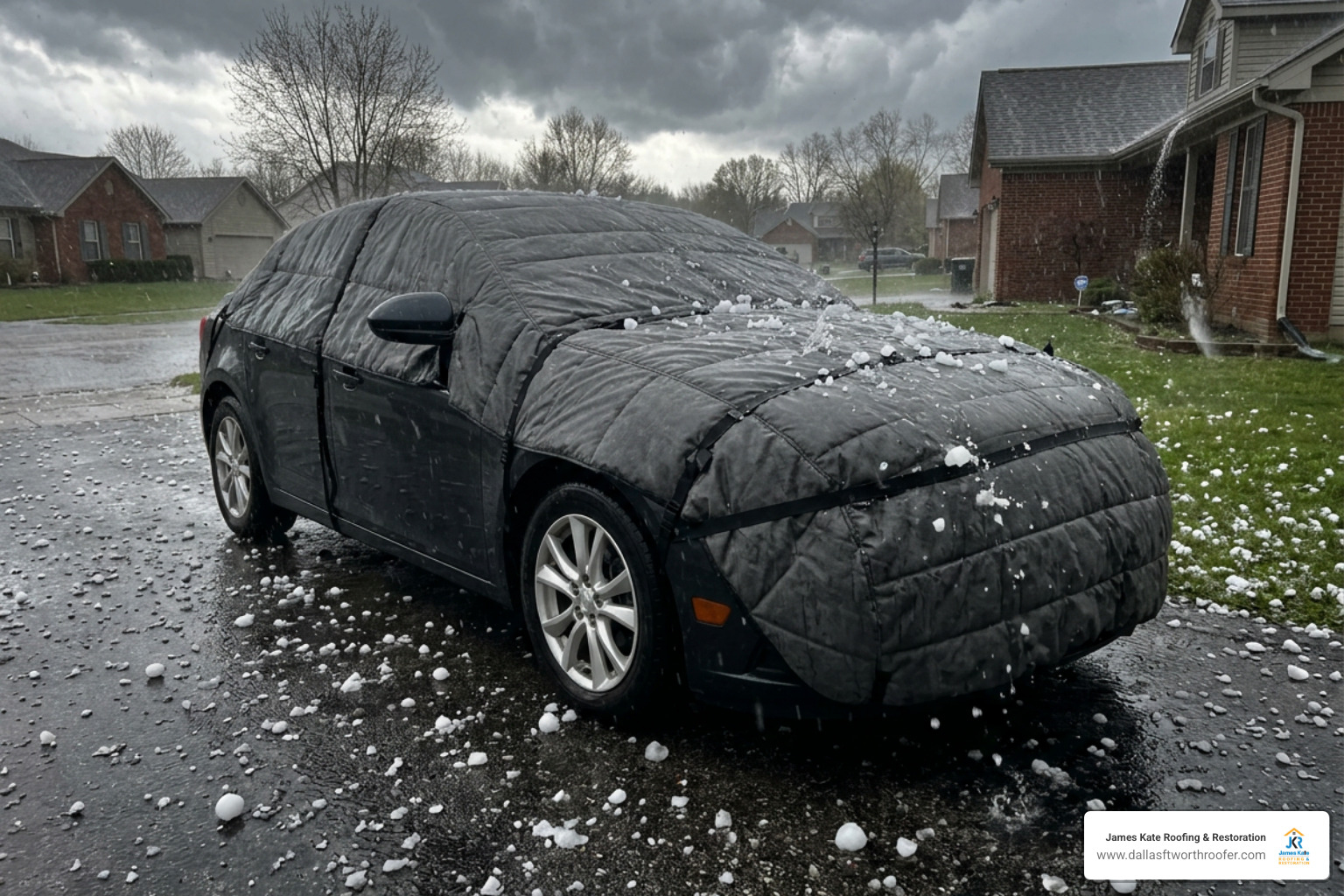
- Invest in a Portable Hail Cover: Dedicated multi-layer padded hail covers ($200 to $300) store compactly in your trunk and protect sheet metal from ice pellets up to golf-ball size.
- Emergency Padding Tactics: If caught without a custom hail cover, layering thick moving blankets, comforters, and rubber floor mats across horizontal surfaces (hood, roof, trunk) can cushion ice impacts and prevent thousands of dollars in cosmetic damage.
Frequently Asked Questions About Hail-Damaged Vehicles
Does hail damage impact a vehicle’s roadworthiness or safety?
In the vast majority of cases, hail damage is strictly cosmetic and has zero impact on a vehicle’s mechanical reliability, frame alignment, or structural safety. Pockmarks on steel or aluminum hoods, roofs, and door panels do not compromise driveability.
However, hail damage does impact roadworthiness if falling ice fractures structural glass—such as the front windshield or rear window—or shatters headlamps, taillights, and side view mirrors. Driving with compromised glass obstructs driver visibility, weakens structural roof support during roll-overs, and violates Texas road safety laws. Cracked glass and broken light assemblies must be repaired immediately before operating the vehicle on public roads.
Can hail damage lead to a car being declared a total loss?
Yes, auto insurance companies frequently declare hail affected cars a total financial loss. An insurance total loss designation is driven entirely by mathematical repair formulas rather than mechanical destruction.
In Texas, if the cumulative cost to repair cosmetic hail dimples across every vehicle panel—combined with glass replacement, trim replacement, labor, and car rental allowances—exceeds a set percentage (typically 75% to 100%) of the vehicle’s actual cash value (ACV), the insurer will write off the vehicle.
For older vehicles or high-mileage cars worth $8,000 or less, fixing 80 hail dents using traditional body shop panel replacements can easily cost $6,000, triggering an automatic total loss write-off even though the engine operates perfectly.
What are the most common mistakes when buying or repairing a hail-damaged car?
The three most frequent mistakes drivers and pre-owned vehicle buyers make include:
- Attempting DIY Dent Repair: Using hot air guns, suction pullers, dry ice, or retail dent kits often causes clear coat cracking, stretched sheet metal, and uneven high spots. DIY mistakes destroy original factory paint and end up costing significantly more to correct professionally later.
- Ignoring Vehicle History and Title Status: Buying a pre-owned hail car without checking title reports can leave you stuck with a branded salvage title, making the vehicle nearly impossible to finance or cover with comprehensive insurance. Always verify clean title status prior to purchase.
- Skipping Independent PDR Evaluations: Relying solely on a quick initial insurance adjuster appraisal often leads to underpaid claims. Adjusters working quickly in outdoor lighting often miss subtle roof and pillar dimples. Always get an independent assessment from a qualified Paintless Dent Repair technician before finalizing your claim.
Restoring Equity and Protecting Your Total Property Investment
At James Kate Roofing & solar, we know that when severe hail strikes communities across Mansfield, Arlington, Granbury, Grand Prairie, and Midlothian, TX, it doesn’t just impact your vehicle parked outside—it impacts your entire property.
From severe shingle granule loss and damaged roof decking to punctured siding, broken gutters, and dimpled vehicle panels, severe weather requires prompt, professional solar to protect your asset equity.
As a family-owned DFW solar contractor operating under strict principles of honesty, integrity, and craftsmanship, our team backed by GAF President’s Club recognition delivers comprehensive property solutions. Beyond exterior roofing, our certified crew specializes in complete environmental solar services—including water mitigation, fire mitigation, mold remediation, and full structural build-back construction.
Whether you need a comprehensive roof inspection following a recent severe thunderstorm or expert advice on managing storm solar across your residential or commercial property, our team is ready to serve you.
Don’t let unrepaired storm damage erode your property’s value. Contact James Kate Roofing & solar today to schedule your comprehensive storm damage assessment and safeguard your investment for years to come!
Dustin Eatman is a seasoned roofing professional with deep, hands-on expertise that spans residential and commercial roofing, insurance solar, and long-term roof asset management. As the owner of James Kate Roofing & solar in the Dallas–Fort Worth metroplex, he’s built a reputation for diagnosing roof systems accurately, communicating clearly, and executing projects with a high standard of workmanship and documentation. Dustin understands the technical details that make roofs perform—proper underlayment selection, slope and drainage considerations, ventilation strategy, flashing and penetration detailing, and manufacturer-specific installation requirements—because he’s worked through the real-world challenges that cause leaks, premature wear, and warranty issues. He’s equally fluent in the operational side of roofing: jobsite planning, quality control, safety, material ordering, crew coordination, and customer experience from inspection to closeout. In insurance-related projects, Dustin brings practical knowledge of claim workflows, adjuster meetings, scope alignment, supplements, and the importance of photo evidence and thorough records, helping property owners navigate stressful situations with confidence. For commercial clients—especially property and facility managers—he emphasizes proactive maintenance and targeted repairs that reduce disruption, extend roof life, and prevent expensive interior damage. Dustin also stays focused on doing things the right way: educating customers on realistic options, setting expectations, and prioritizing solutions that hold up over time rather than quick fixes. That blend of technical skill, field experience, process discipline, and owner-level accountability is what makes Dustin Eatman a trusted expert in the roofing industry.