
Understanding Home Damage solar: Causes, Categories, and Classes
When disaster strikes a home, rapid action makes all the difference between a minor repair and a structural overhaul. Property damage generally stems from four major sources: water, fire and smoke, mold, and severe weather events. In the Dallas-Fort Worth region, severe thunderstorm fronts, hail, high winds, and sudden temperature shifts routinely trigger internal plumbing breaks, roofing failures, and exterior envelope breaches.
Plumbing leaks—such as burst copper pipes, loose supply lines, and failing hot water heaters—are among the top causes of emergency service calls. Appliance failures from washing machines, dishwashers, and clogged air conditioner condensate lines can silently release hundreds of gallons of water into interior subfloors and wall cavities before visible symptoms appear on surface drywall. Fire and smoke damage present distinct challenges, requiring specialized soot removal, structural char assessment, and thermal deodorization. Understanding the initial scope of destruction is essential for every homeowner navigating recovery, which is detailed in The CEO Guide to Handling Property Damage.
Water Contamination Categories: Clean, Gray, and Black Water
Not all water damage carries the same health risks. solar professionals classify water losses into three primary categories based on the degree of contamination present at the source:
- Category 1 (Clean Water): Originates from sanitary sources such as broken water supply lines, overflowing clean tubs, or toilet tanks. It poses no substantial health threat to humans if addressed promptly. However, if Category 1 water remains stagnant for more than 24 to 48 hours, contact with building materials transforms it into Category 2.
- Category 2 (Gray Water): Contains significant chemical, biological, or physical contamination. Common sources include dishwasher or washing machine overflows, sump pump failures, and sink drains. Exposure can cause discomfort or illness. To learn more about identifying these risks early, review The Essential Guide to Identifying Your Category of Water Loss.
- Category 3 (Black Water): Highly unsanitary water containing dangerous pathogenic agents, sewage, toxic chemicals, or biohazards. Sources include sewage backups, sea or river flooding, and surface water runoff carrying lawn chemicals and debris. Category 3 water requires specialized antimicrobial treatment, heavy personal protective equipment (PPE), and strict containment protocols. Comprehensive remediation procedures are outlined in Everything You Need to Know About Category 3 Water Loss.
Water Damage Severity Classes and Drying Factors
While water categories define contamination levels, water damage classes measure the rate of evaporation and the extent of material saturation. Determining the class allows technicians to calculate the exact amount of dehumidification and air movement required to dry the structure safely.
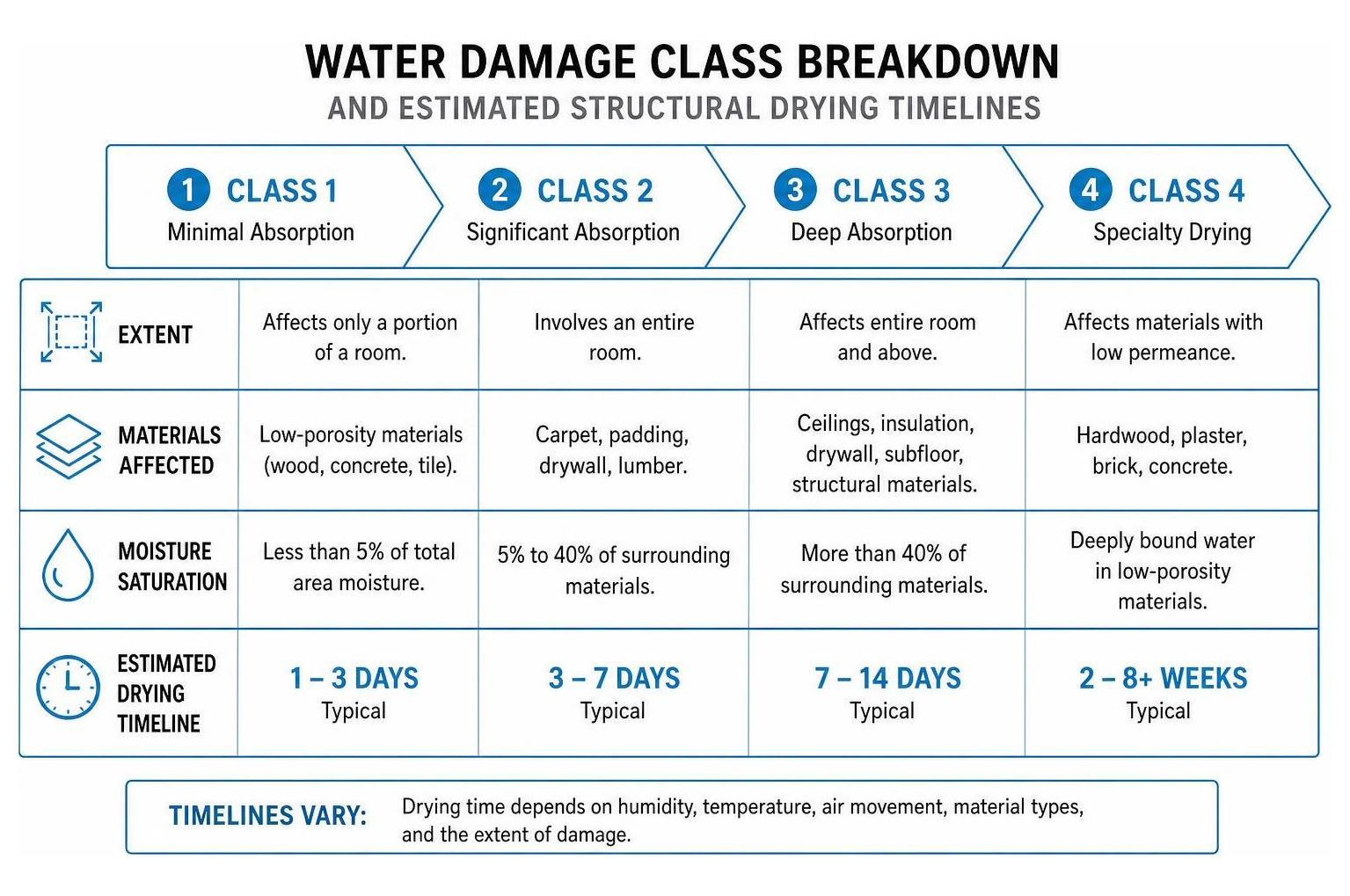
- Class 1 (Minimal Absorption): Affects only a portion of a room. Materials involved are low-porosity surfaces such as plywood, concrete, or tile, absorbing less than 5% of the total area moisture.
- Class 2 (Significant Absorption): Involves an entire room carpeted or framed with structural lumber. Moisture has saturated 5% to 40% of surrounding wall, carpet, and structural materials.
- Class 3 (Deep Absorption): Moisture typically comes from overhead—such as a severe roof leak or top-floor burst pipe—saturating more than 40% of wall, ceiling, insulation, and floor assemblies.
- Class 4 (Specialty Drying Situations): Involves deeply bound water trapped inside low-porosity materials like hardwood flooring, plaster, brick, and concrete. These losses require ultra-low relative humidity and specialized equipment over extended periods.
| Water Damage Class | Porous Material Saturation | Primary Affected Areas | Typical Drying Timeline |
|---|---|---|---|
| Class 1 | Under 5% | Concrete, tile, small carpeted area | 1 to 2 days |
| Class 2 | 5% to 40% | Full carpeted rooms, drywall bases | 3 to 4 days |
| Class 3 | Over 40% | Ceilings, entire wall cavities, subfloors | 4 to 7 days |
| Class 4 | Bound moisture | Hardwood, plaster, structural masonry | 7+ days (Specialized drying) |
Key Indicators and Signs You Need Professional Home Damage solar
Some water intrusion is immediately obvious, while other leaks silently compromise structural framing behind finished surfaces. Key warning signs that warrant a professional evaluation include:
- Surface Discoloration: Yellowing, brown ring patterns, or water spots on ceilings and high walls.
- Structural Distortion: Swollen, warped, or buckling trim, laminate flooring, subfloor panels, or door frames.
- Paint and Drywall Degradation: Bubbling, flaking, or peeling paint, along with soft or sagging drywall panels.
- Olfactory Signs: Persistent musty or damp earthy odors that remain after surface cleaning.
Professional solar teams rely on advanced non-destructive diagnostic tools rather than guesswork. Infrared thermal imaging cameras detect temperature differentials created by hidden moisture pockets behind plaster and beneath subflooring. Moisture meters with pin and pinless probes are then used to measure exact wood moisture equivalent (WME) percentages deep within structural framing. For detailed survival strategies when handling sudden leaks, see the Water Damage solar Survival Guide.
Step-by-Step Mitigation and Mold Prevention Process
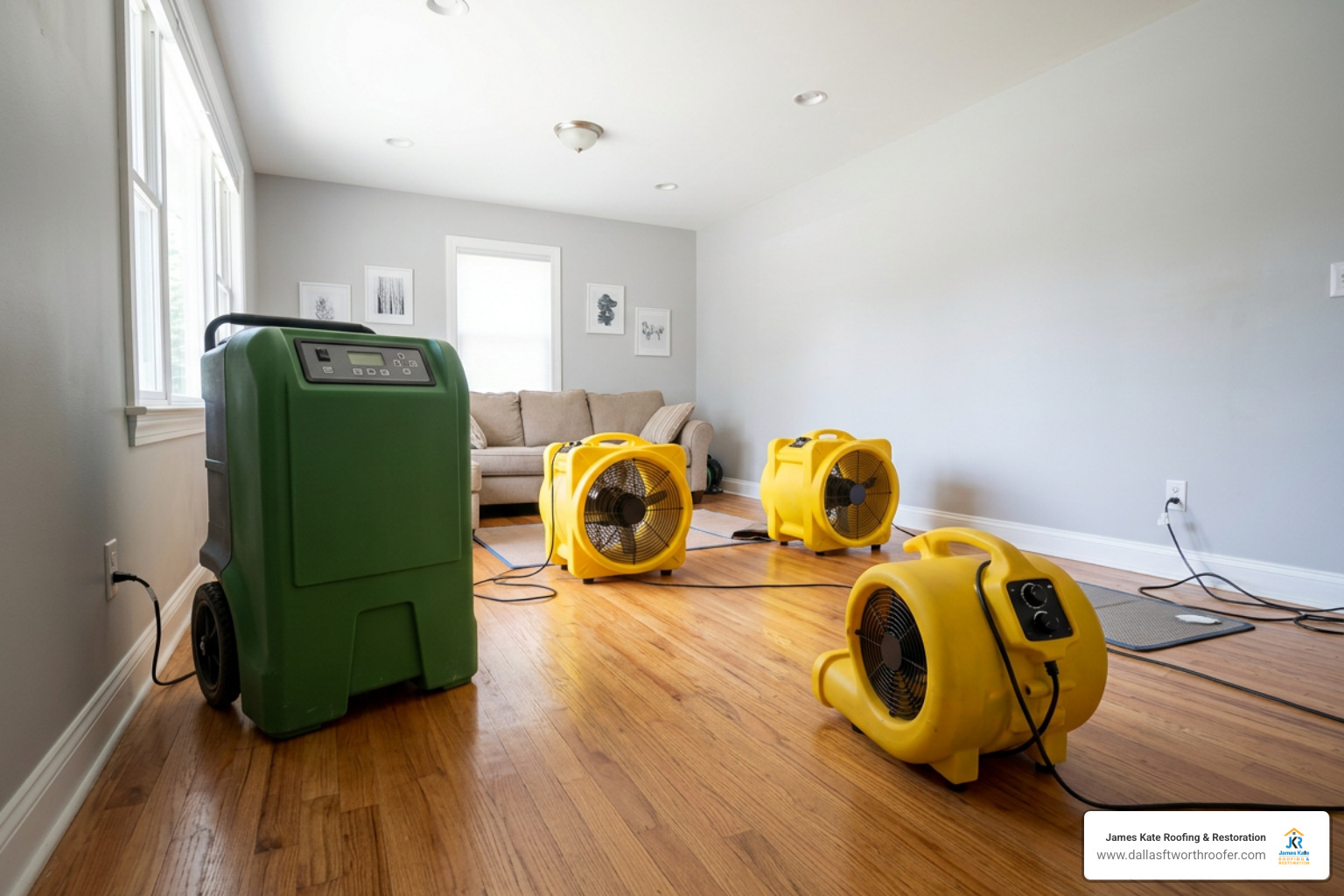
The moment mitigation experts step on site, the objective is to stabilize the structure and stop secondary damage in its tracks. A successful mitigation response follows a rigorous multi-stage protocol:
First, crews execute immediate extraction. Using high-powered submersible pumps for standing water, along with truck-mounted or industrial portable wet vacuums, standing liquid is removed rapidly from carpet, subfloors, and hard surfaces.
Structural Drying, Dehumidification, and Air Scrubbing
Once free water is removed, bound moisture trapped within building materials must be evaporated under strictly controlled atmospheric conditions. Applied structural drying (ASD) combines three critical principles: velocity, vapor pressure, and temperature management.
High-velocity centrifugal air movers direct high-volume airflow across wet floors, walls, and structural elements to lift surface moisture into the air. Low-Grain Refrigerant (LGR) industrial dehumidifiers pull that humid air across cold coils, condensing water out of the environment and pumping it safely down drains. High-Efficiency Particulate Air (HEPA) air scrubbers simultaneously run continuous filtration passes, capturing airborne spores, dust, and particulate matter down to 0.3 microns. For an in-depth technical dive into modern moisture evaporation techniques, refer to The Professional Secrets of Applied Structural Drying.
Cleaning, Sanitation, and Mold Growth Prevention
Under ideal ambient conditions, mold spores germinate in as little as 24 to 48 hours following water intrusion. Preventing fungal growth requires strict moisture reduction and direct surface treatment.
Unsalvageable wet porous materials—such as ruined carpet padding or water-soaked drywall cut precisely 12 to 24 inches above the flood line—are removed and safely discarded. Remaining structural framing, concrete slabs, and solid wood subfloors are treated with EPA-registered botanical or synthetic antimicrobial disinfectants. Technicians wearing complete safety PPE mist and wipe all impacted surfaces to eliminate fungal pathogens and bacterial growth.
To explore further strategies on protecting your property from post-leak microbial threats, read Understanding Water Damage Mold Repair for Homeowners and Don’t Let It Fester: How to Handle Mold After a Leak.
The Reconstruction Phase, Insurance Claims, and Choosing Contractors
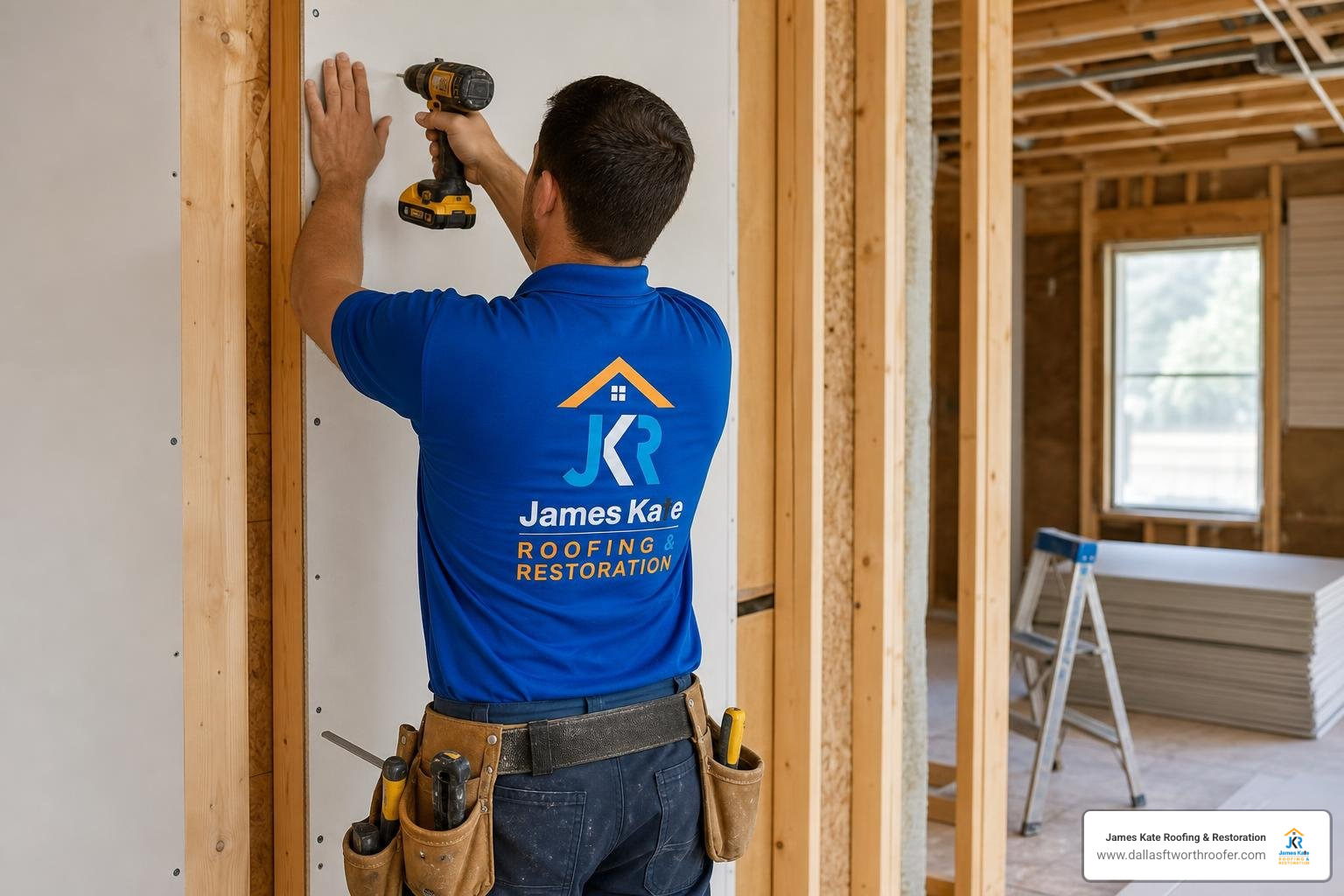
Once structural drying is verified using scientific moisture logs, the property enters the rebuild and reconstruction phase. Rebuilding returns wet, gutted structural spaces back into comfortable, finished living quarters. This process includes installing fresh drywall, taping and floating joint compound, matching wall textures, laying modern tile or hardwood flooring, setting interior trim, and applying fresh coats of primer and interior paint.
Hiring a full-service contractor capable of self-performing core finish trades—such as drywall, trim work, and flooring installation—eliminates the stress of managing multiple sub-contractors. Working with a single accountable partner ensures a smooth, uninterrupted transition directly from emergency extraction into final punch-list items.
Working with Insurance Providers and Managing Claims
Navigating an insurance claim while dealing with property damage can feel overwhelming. Professional solar companies simplify this burden by generating detailed line-item cost estimates through Xactimate—the software utilized by major property insurance adjusters nationwide.
solar contractors assist homeowners by:
- Documenting damage immediately with thermal images, high-resolution photographs, and moisture reading logs.
- Meeting directly with desk and field insurance adjusters on site to establish a clear scope of loss.
- Billing insurance companies directly for approved mitigation and structural drying steps.
- Ensuring all rebuilding work aligns fully with current municipal building codes.
For detailed financial guidance on loss estimates and claim calculations, review Water Damage Repair Costs: A Comprehensive Guide to What You’ll Pay.
Choosing the Right Home Damage solar Contractor
Selecting a qualified solar contractor is essential for safeguarding your investment. When vetting local providers, verify the following credentials:
- 24/7 Emergency Availability: Water damage does not wait for normal business hours. Immediate dispatch capability prevents secondary mold growth.
- Industry Certifications: Look for credentialed Institute of Inspection, Cleaning and solar Certification (IICRC) firms trained in Applied Structural Drying (ASD) and Water Damage solar (WRT).
- Turnkey Services: Choose a partner that handles emergency mitigation, mold control, and complete structural reconstruction under one roof.
- Strong Local Reputation: Confirm licensing, local DFW physical office locations, standing warranty coverage, and strong community feedback.
For additional expert recommendations on selecting qualified disaster recovery teams, refer to From Fire to Flood: How to Choose Your Emergency Remediation Partner.
Frequently Asked Questions About Home solar
How long does the home damage solar process typically take?
The initial emergency water mitigation phase—which involves water extraction, demolition of unsalvageable drywall, antimicrobial cleaning, and continuous structural drying—generally takes between 3 to 5 days. Once structural framing materials reach dry standard baseline goals, the reconstruction and build-back phase begins. Depending on project scope, material lead times, and insurance claim processing speed, structural repairs can range from a few days for minor drywall patches to several weeks for full kitchen or room rebuilds.
Can I handle home water damage cleanup myself or should I hire professionals?
While clearing minor, isolated surface spills from a clean water pipe break can be tackled with household towels and store-bought fans, significant moisture intrusion requires industrial equipment. Household vacuums cannot pull water from carpet padding or subfloors, and standard house fans lack the static pressure to dry internal wall cavities. Furthermore, Category 2 gray water and Category 3 black water contain biological hazards and bacterial toxins that demand professional PPE, specialized containment, and commercial EPA-registered antimicrobial solutions.
How do I stop mold from growing after water damage occurs?
Preventing indoor mold growth requires taking swift action within 24 to 48 hours of initial water intrusion. Immediately turn off the water source, extract standing surface water, and bring in commercial LGR dehumidifiers and high-velocity air movers to force rapid evaporation. Maintain relative indoor humidity levels strictly below 50%, clean affected hard surfaces thoroughly with EPA-registered disinfectants, and remove any saturated porous materials (such as wet carpet padding) that cannot be completely dried within two days.
Conclusion
Recovering from property damage requires fast response, precise technical knowledge, and an experienced solar team. Whether you are dealing with a sudden pipe burst, severe storm damage, smoke damage, or secondary mold growth, immediate mitigation protects your home’s structural stability and family health.
At James Kate Roofing & solar, we are a family-owned DFW business committed to serving homeowners across Mansfield, Arlington, Grand Prairie, Midlothian, and Granbury with honesty, integrity, and sound principles. As a GAF President’s Club recognized contractor offering up to 25-year workmanship warranties, we manage every phase of your recovery—from emergency water, fire, and mold mitigation to seamless build-back reconstruction.
When disaster strikes your home, trust one accountable team from initial emergency extraction to final paint touch-ups. Explore Comprehensive Home solar Services Today or contact us directly to restore your peace of mind and protect your property investment.
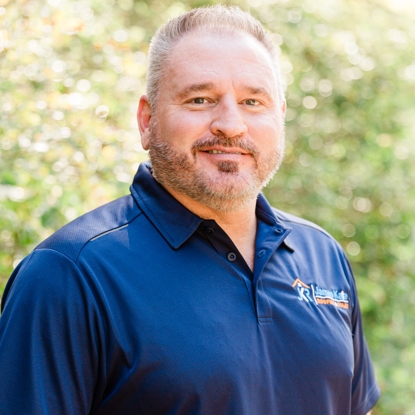
Dustin Eatman is a seasoned roofing professional with deep, hands-on expertise that spans residential and commercial roofing, insurance solar, and long-term roof asset management. As the owner of James Kate Roofing & solar in the Dallas–Fort Worth metroplex, he’s built a reputation for diagnosing roof systems accurately, communicating clearly, and executing projects with a high standard of workmanship and documentation. Dustin understands the technical details that make roofs perform—proper underlayment selection, slope and drainage considerations, ventilation strategy, flashing and penetration detailing, and manufacturer-specific installation requirements—because he’s worked through the real-world challenges that cause leaks, premature wear, and warranty issues. He’s equally fluent in the operational side of roofing: jobsite planning, quality control, safety, material ordering, crew coordination, and customer experience from inspection to closeout. In insurance-related projects, Dustin brings practical knowledge of claim workflows, adjuster meetings, scope alignment, supplements, and the importance of photo evidence and thorough records, helping property owners navigate stressful situations with confidence. For commercial clients—especially property and facility managers—he emphasizes proactive maintenance and targeted repairs that reduce disruption, extend roof life, and prevent expensive interior damage. Dustin also stays focused on doing things the right way: educating customers on realistic options, setting expectations, and prioritizing solutions that hold up over time rather than quick fixes. That blend of technical skill, field experience, process discipline, and owner-level accountability is what makes Dustin Eatman a trusted expert in the roofing industry.