
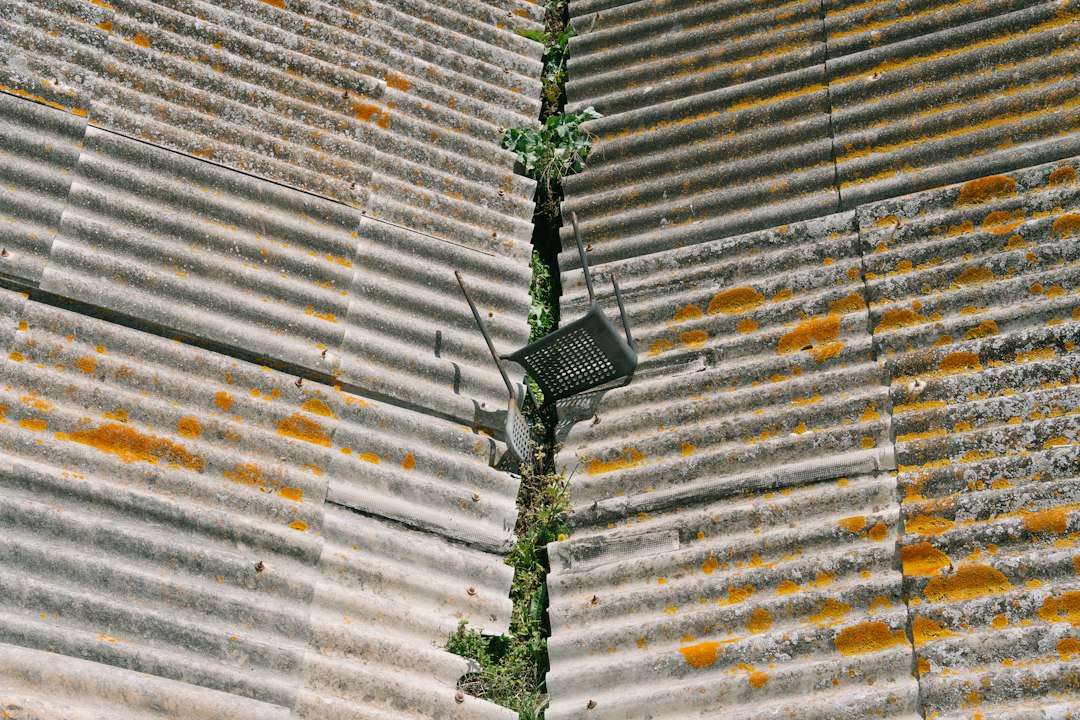
Stop Cement Sheet Roof Leaks Before They Spread
The right cement sheet water leakage solution depends on where water enters. For a small crack, loose fastener, or failed overlap, clean and dry the area first, then use a flexible roof-grade sealant or butyl waterproof tape. For many small cracks, worn sheet surfaces, or recurring leaks across a larger area, a reinforced elastomeric coating system is usually the more durable fix.
Start with these three checks:
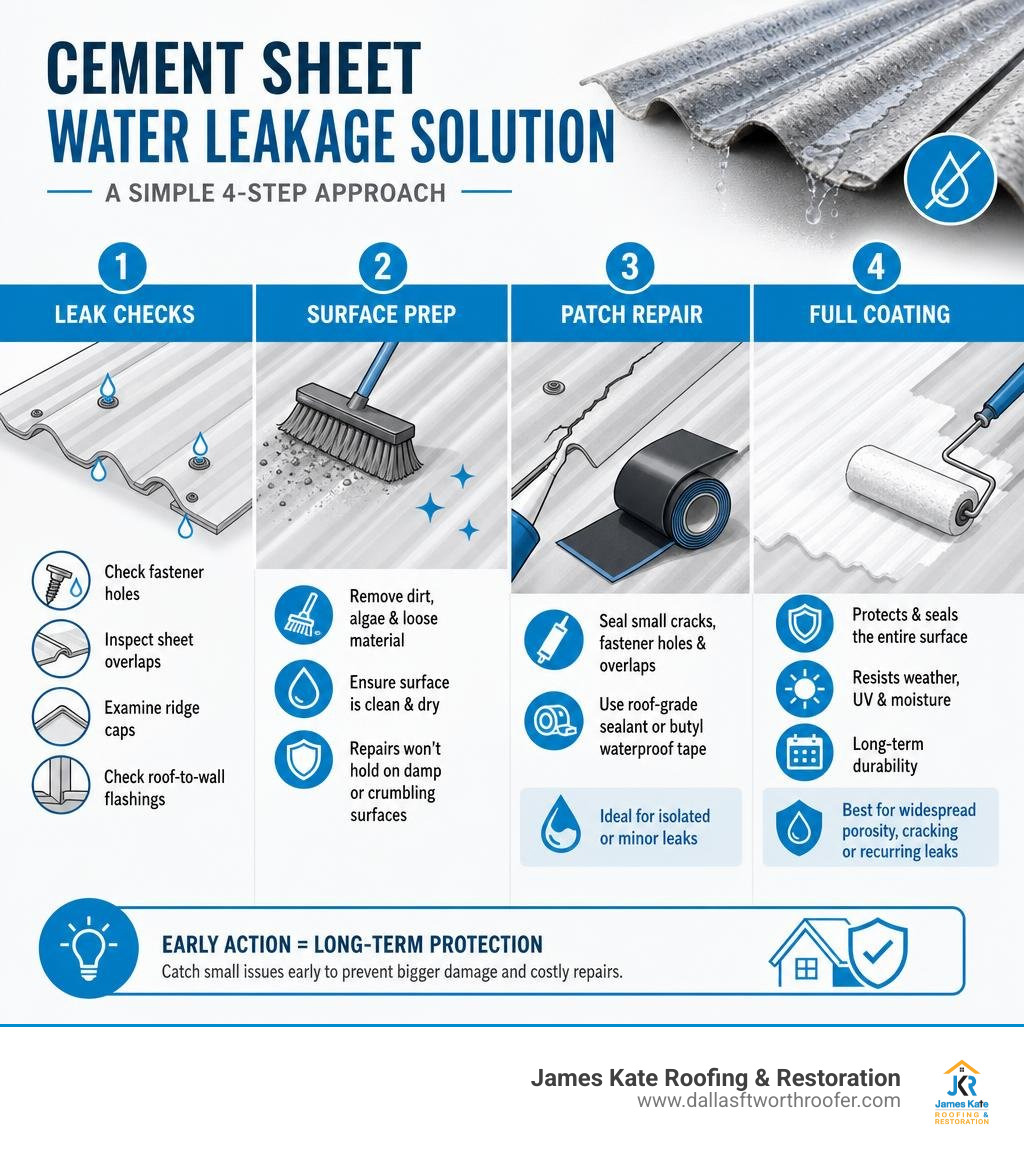
- Inspect screw or bolt holes, sheet overlaps, ridge caps, and roof-to-wall flashing for gaps, rust, loose fasteners, and damaged washers.
- Remove dirt, algae, loose coating, and weak cement material. Repairs will not hold to a damp or crumbling surface.
- Repair isolated damage with tape or sealant, but consider a full coating when the sheets show widespread porosity, cracking, or weathering.
Corrugated cement sheets can leak as they age, absorb moisture, shift with temperature changes, or develop small cracks around fasteners and overlaps. Catching these problems early helps limit interior water damage, mold risk, and further roof deterioration.
I am Dustin Eatman, a roofing professional with hands-on experience diagnosing roof leaks, planning repairs, and managing long-term roof performance for homes and commercial properties. In this guide, I will break down how to choose and apply a cement sheet water leakage solution that fits the actual source of the leak, not just the visible stain inside.
Cement sheet water leakage solution terms explained:
Primary Causes of Water Infiltration in Corrugated Cement Roofing
Corrugated cement sheets are popular for workshops, outbuildings, covered patios, and industrial facilities because they are non-combustible and resist rot. However, unsealed cementitious panels naturally retain moisture over time. When corrugated cement sheets absorb water repeatedly, they experience accelerated degradation, which weakens the matrix of the panel and creates pathways for water ingress.
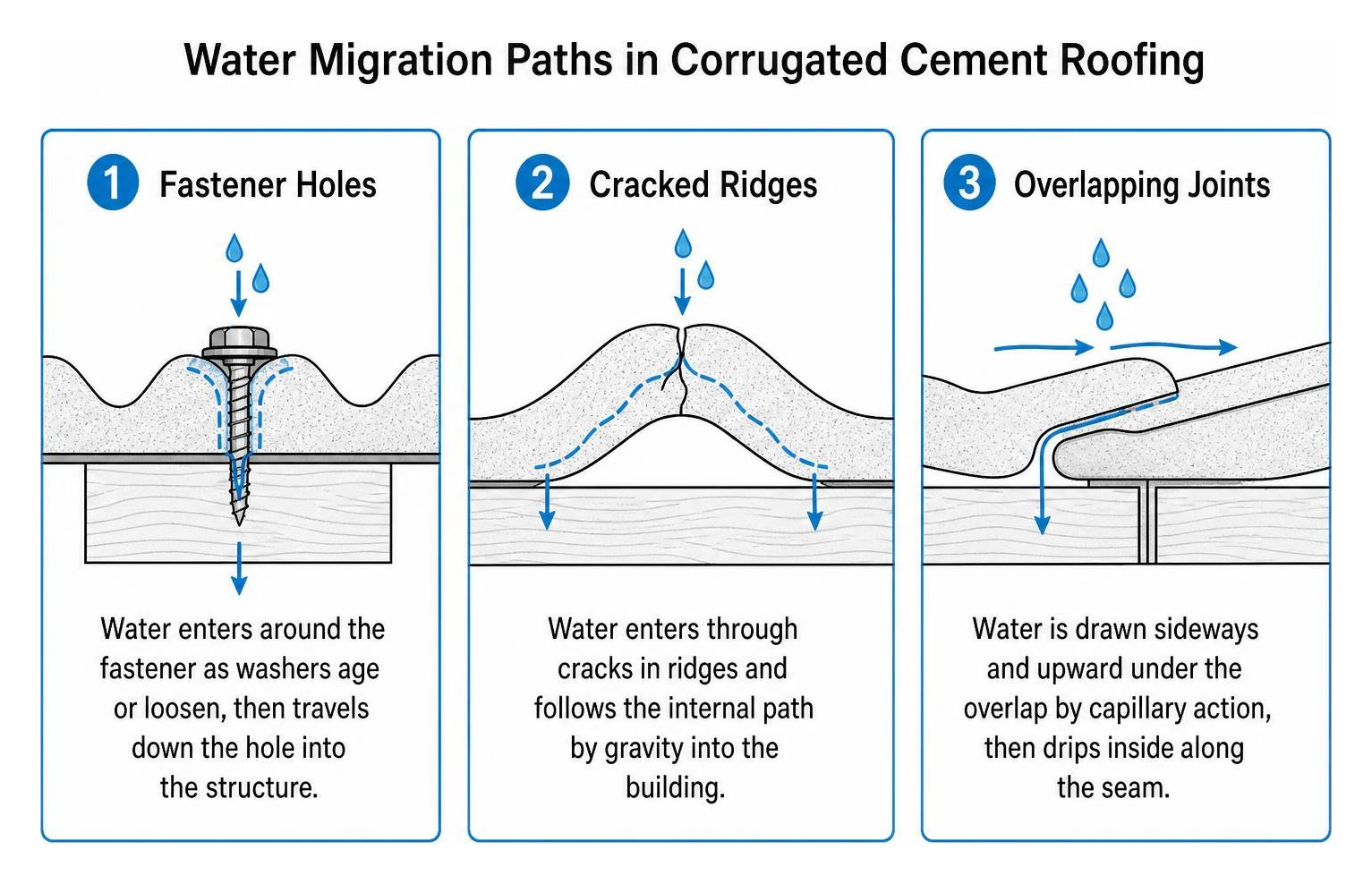
Water typically finds its way into a structure through three specific vulnerabilities:
- Thermal Expansion and Contraction: Texas weather swings dramatically between blistering summer heat and freezing winter cold. As cement panels expand and contract, stress concentrates around rigid fixing points, eventually opening up seams.
- Fastener Fatigue: The screws or J-bolts anchoring the sheets to purlins flex under continuous wind uplift. Over time, holes enlarge and factory gaskets disintegrate.
- Capillary Action at Seams: When overlapping corrugated panels lack proper sealant, surface tension draws standing rainwater sideways and upward between the overlapping sheets, dropping moisture directly inside.
To diagnose these issues correctly, it helps to understand general roofing fundamentals. You can review common vulnerability patterns in our roof repair guide 2026 to pinpoint whether water is traveling along framing members before dripping down.
Identifying Fastener Corrosion and Failed Overlaps
Fasteners are the most common leak source on corrugated roofs. Standard installations rely on drive screws or hook bolts fitted with neoprene or EPDM washers. Over several years of intense UV radiation, these rubber washers dry out, crack, and shrink.
When inspecting your roof line:
- Look for rusted screw heads or oxidized J-bolts. Rust expands metal, widening the hole drilled through the cement sheet.
- Check for missing washers where the fastener head has dug directly into the cement panel.
- Examine horizontal and vertical panel laps. If wind has lifted a sheet corner even a fraction of an inch, wind-driven rain will blow straight beneath the ridge caps and overlaps.
Detecting Hairline Cracks and Surface Porosity
Hairline cracks often start as micro-fractures radiating outward from fastener holes or along the high ridges of the corrugation. Walking directly on unsupported cement sheets can also crack the brittle material immediately.
Additionally, older panels lose their factory surface seals. Once the surface becomes porous, it fosters moss, lichen, and algae growth. These organisms hold moisture against the panel, accelerating cement breakdown. Identifying these micro-fractures early allows you to seal them before water saturates the interior, preventing costly structural problems like repairing damp ceilings throughout your living or storage spaces.
Selecting the Best Cement Sheet Water Leakage Solution
Choosing the right material depends on whether you are patching a single bolt hole, bridging a moving joint, or renewing an entire weathered roof plane.
| Waterproofing Material | Best Use Case | Key Advantages | Expected Lifespan | Application Method |
|---|---|---|---|---|
| Aluminum-Backed Butyl Tape | Laps, wide cracks, ridge caps | Instant waterproof seal, high UV resistance, bridges wide gaps | 5–10 Years | Peel-and-stick with pressure roller |
| Liquid Rubber / MS Polymer | Screw heads, irregular joints, small cracks | Seamless encapsulation, high elongation, easy brush application | 5–8 Years | Brush or heavy-nap roller |
| Fiber-Reinforced Acrylic Membrane | Full panel coating, widespread porosity | Micro-fiber crack bridging, reflects heat, seamless surface | 8–12 Years | Multi-coat brush/roller system |
| Polymer-Modified Repair Mortar | Deep structural spalls, broken edges | High compressive strength, matches cement matrix | 10+ Years | Trowel application over primed surface |
When selecting high-performance liquid membranes, look for materials tested to withstand high hydrostatic pressure. For instance, advanced elastomeric systems can resist significant moisture loads, as seen in published certified hydrostatic pressure performance data, which demonstrates capabilities up to 7 bars of hydrostatic resistance on treated surfaces.
Choosing a Targeted Cement Sheet Water Leakage Solution: Butyl vs Liquid Rubber
For isolated leaks around penetrations and joints, you generally choose between heavy-duty butyl tape and brush-applied liquid rubber.
- Butyl Tape: Heavy-duty, aluminum-foil-faced butyl tape is ideal for long, straight seams and sheet overlaps. The aluminum backing shields the rubberized asphalt or pure butyl core from UV rays, while the adhesive layer flows into the rough texture of the cement sheet. It creates an instant, flexible seal that withstands building movement without tearing.
- Liquid Rubber & Polymer Caulks: Brushable liquid rubber or hybrid modified silane sealants work best for irregular shapes, such as sealing around J-bolts, pipe penetrations, and curved corrugation valleys. They form a form-fitting boot around fasteners that completely blocks water from creeping down the threads.
Applying an Elastomeric Cement Sheet Water Leakage Solution across Full Panels
When an entire roof shows signs of age, coating every screw head individually will not solve the underlying porosity of the panels. Applying a multi-layer elastomeric coating creates a seamless, monolithic protective barrier over the entire structure.
High-grade acrylic coatings reinforced with glass fibers provide superior tensile strength and anti-fracture capabilities. These systems bridge hairline cracks up to 1/8 inch (3 mm) wide, in line with established anti-fracture performance standards. To explore how liquid solar compares across different roof substrates, read our complete guide to roof coating for an in-depth breakdown of membrane classes and curing properties.
Surface Preparation and Step-by-Step Leak Repair Process
A waterproofing product is only as good as the surface beneath it. Applying high-end sealants over dust, moss, or peeling paint guarantees early failure.
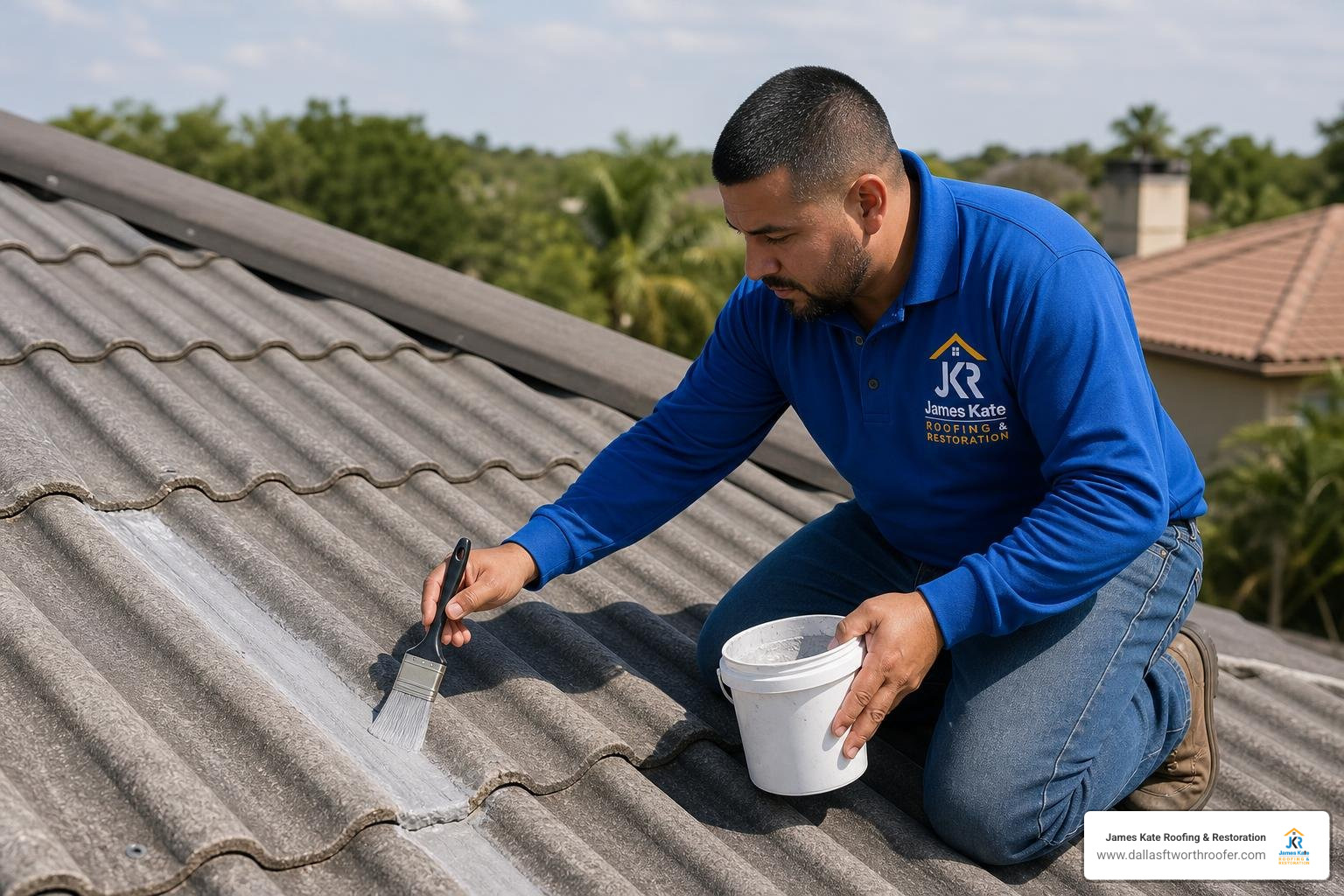
Safety Warning: Corrugated cement sheets become extremely brittle with age. Never step directly onto the corrugations between support purlins. Always use purpose-built crawling boards or roof ladders spanning across at least three purlins to distribute your weight evenly.
Surface Cleaning and Crack Pre-Treatment
- Dry-Sweep and Clear: Remove all leaves, pine needles, and loose debris from the roof field and gutters.
- Scrape and Treat Organic Growth: Use a stiff-bristle nylon brush or wire brush to remove moss and lichen. For stubborn spores, apply an eco-friendly biocide wash and let it sit before rinsing. Avoid high-pressure power washing at close range, as it can gouge the cement sheet surface.
- Degrease and Dry: Clean oily spots around vents with a mild detergent. Ensure the entire surface is completely dry; trapped moisture under a new patch will cause bubbling and delamination.
- Pre-Treat Existing Cracks: For hairline cracks (under 1 mm), brush an acrylic crack-isolation primer directly into the fissure. For wider fractures (1 mm to 3 mm), widen the crack slightly with a hand scraper to create a clean V-groove, remove dust, and fill it flush with an outdoor polymer-modified crack filler. If you are handling minor emergency roof issues, you can learn one simple way to fix a roof leak using quick-setting repair compounds.
Step-by-Step Patching: Sealing Overlaps, Screws, and Joints
Follow this proven workflow to seal seams, overlaps, and fasteners:
- Fastener Encapsulation: Clean around each screw or bolt. Apply a generous dab of UV-stable roof sealant or liquid rubber over the fastener head, extending the product at least one inch onto the surrounding panel in a neat circle.
- Joint and Seam Taping: Measure the length of the overlapping seam. Cut your aluminum-backed butyl tape to size. Peel the backing film back 6 inches at a time, centering the tape over the joint line.
- Bedding the Tape: Press the tape firmly into the corrugation profile using a hand-held seam roller. Work from the center outward to push out air pockets and ensure complete contact with the rough cement surface.
- Reinforced Coating Application (For Critical Seams): If using liquid membrane rather than tape, apply a heavy base coat along the seam, immediately embed a polyester or fiberglass reinforcing mesh strip into the wet coating, and apply a second topcoat over the mesh to encapsulate it completely.
- Cure Time: Allow the repair to cure undisturbed for 12 to 24 hours before exposure to rain. Always check local forecasts to ensure an adequate, rain-free installation window.
Preventive Maintenance and Long-Term Roof Preservation
Routine maintenance prevents minor surface weathering from turning into catastrophic interior leaks. We recommend following a structured inspection schedule twice a year—ideally in spring and fall:
- Clean Gutters and Valleys: Blocked gutters cause water to back up under the lower eaves of corrugated sheets, leading to rotted fascia and interior leaks.
- Check Fastener Torque: Inspect fixing bolts. If washers are loose, tighten fasteners gently until the rubber washer compresses slightly. Do not over-tighten, or you will crack the brittle cement board.
- Wash Down Shaded Sections: Periodically rinse shaded roof slopes that are prone to algae build-up to maintain the reflective properties of your coatings.
- Trim Overhanging Branches: Falling limbs can easily puncture rigid cement panels, while low-hanging branches scratch protective coatings.
Budgeting for routine maintenance is significantly cheaper than replacing ruined interior drywall or insulation. You can evaluate typical costs in our breakdown of the cost to fix a small roof leak flashing shingles and labor breakdown to see how preventive upkeep preserves your budget.
Frequently Asked Questions About Cement Sheet Leak Repairs
How do I safely repair older corrugated cement sheets that may contain hazardous fibers?
Many corrugated cement panels manufactured before the late 1980s contain asbestos fibers for structural reinforcement. If you suspect your roof contains older composite materials, never dry-sweep, power-wash, drill, cut, or grind the sheets, as these actions release hazardous airborne fibers.
Instead, use gentle wet-cleaning methods and focus on encapsulation. Applying heavy-bodied elastomeric coatings or liquid rubber encapsulates the fibers safely without disturbing the substrate. For a detailed safety walkthrough, read our guide on fixing asbestos roof leaks to protect your health while sealing the building.
When should I choose a localized patch kit over a complete roof coating?
A localized patch kit (butyl tape or sealant tubes) is best when the roof panels are structurally sound, relatively new, and leaking only at identifiable points like a loose bolt or an isolated branch impact.
However, if you notice widespread micro-cracking, widespread surface erosion where the reinforcing fibers are visible, or recurring leaks in multiple rooms, spot patches become an endless game of whack-a-mole. In that scenario, applying a full fiber-reinforced elastomeric roof coating system restores the entire weather barrier cost-effectively.
How long does an elastomeric waterproofing system last on fiber cement roofs?
A properly applied, high-solids elastomeric coating system typically lasts between 8 and 12 years, depending on sun exposure, roof slope, and coating thickness. Most premium systems recommend applying a primer coat followed by two undiluted topcoats to achieve a durable 20-to-30-mil dry film thickness. To maximize lifespan, inspect the roof every two to three years and apply a light refresh coat over high-wear ridges and overlaps as recommended by the manufacturer.
Conclusion
Sealing corrugated cement roof sheets does not have to be an overwhelming challenge. By accurately diagnosing whether your leak stems from failed fastener washers, shifting overlapping seams, or porous, weathered panels, you can apply the exact repair method needed to stop water intrusion in its tracks.
When DIY spot repairs are not enough, or if your property has experienced water intrusion requiring professional extraction and drying, our team at James Kate Roofing & solar is here to help. We are a family-owned DFW company providing top-tier roofing and solar services. Built on honesty, integrity, and Biblical principles, our workmanship is backed by GAF President’s Club recognition and up to a 25-year workmanship warranty. In addition to expert roof restorations, we provide full water mitigation, fire mitigation, mold mitigation, and complete build-back construction to restore your property completely.
Whether you need a commercial panel evaluation in Grand Prairie, TX, residential maintenance in Arlington, TX, or support from our expert roofers in Irving, TX, contact us today for a thorough roof inspection and lasting leak protection.

Dustin Eatman is a seasoned roofing professional with deep, hands-on expertise that spans residential and commercial roofing, insurance solar, and long-term roof asset management. As the owner of James Kate Roofing & solar in the Dallas–Fort Worth metroplex, he’s built a reputation for diagnosing roof systems accurately, communicating clearly, and executing projects with a high standard of workmanship and documentation. Dustin understands the technical details that make roofs perform—proper underlayment selection, slope and drainage considerations, ventilation strategy, flashing and penetration detailing, and manufacturer-specific installation requirements—because he’s worked through the real-world challenges that cause leaks, premature wear, and warranty issues. He’s equally fluent in the operational side of roofing: jobsite planning, quality control, safety, material ordering, crew coordination, and customer experience from inspection to closeout. In insurance-related projects, Dustin brings practical knowledge of claim workflows, adjuster meetings, scope alignment, supplements, and the importance of photo evidence and thorough records, helping property owners navigate stressful situations with confidence. For commercial clients—especially property and facility managers—he emphasizes proactive maintenance and targeted repairs that reduce disruption, extend roof life, and prevent expensive interior damage. Dustin also stays focused on doing things the right way: educating customers on realistic options, setting expectations, and prioritizing solutions that hold up over time rather than quick fixes. That blend of technical skill, field experience, process discipline, and owner-level accountability is what makes Dustin Eatman a trusted expert in the roofing industry.