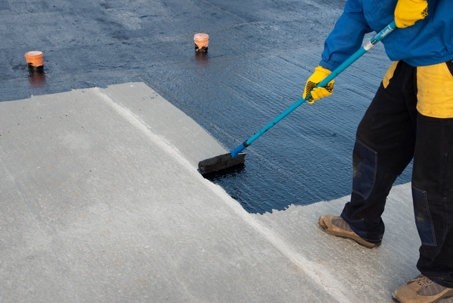
Built-up roofing systems were once a popular solution for commercial and other flat or low sloped roofs. However, these have now been replaced by modified bitumen. Modified bitumen roofing was introduced to the US roofing market in the 1970s, and it quickly caught on.
What is Modified Bitumen?
The meaning is in its name. These roofs involve modifying asphalt with certain other materials. This makes asphalt roofing more durable and long-lasting.
The superior weathering qualities and ease of handling is made possible with the use of a modifier combined with high-quality asphalt. Depending on the modifier added to the material, it is given plastic or rubber properties.
Simply put, it uses modified bitumen membrane roofing sheets made from asphalt. These are either modified with rubber (SBS) or with plastic (APP). This ensures far greater flexibility than traditional BUR roofing systems.
Advantages of Modified Bitumen
These days buildings are made from incredibly light-weight structural materials. That’s why it is becoming increasingly important for contemporary roofing systems to be able to withstand substrate deflections and micro-movements. Modified bitumen roofing, with the right planning and installation expertise might just be the right solution for you.
As detailed by the National Roofing Contractors Association (NCRA), other benefits of the roofing material include:
- Uniformity – Manufactured in controlled environment, modified bitumen sheets are consistent in quality and thickness.
- Huge temperature range – Extremely high or very low temperatures, modified bitumen roofing performs spectacularly in every case.
- Affordability – And finally, to top it all off, it is also one of the more affordable roofing options.
Exploring APP & SBS Modified Bitumen Roofs
The two most commonly added modifiers are APP and SBS. There are notable differences between the two materials and their application methods:
- Atactic polypropylene (APP) is a plastic which when used with asphalt, gives what’s commonly called ‘plastic asphalt’.
- On the other hand, styrene-butadiene-styrene (SBS) is a synthetic rubber, creating the ‘elastic asphalt’.
These modified bitumen systems continue to be popular for a variety of reasons. For anyone looking for long lasting roofing solutions with excellent weathering and fire-resistant capabilities, modified bitumen roofs are a great idea.
The Last Word: Professional Installation Makes All the Difference!
Conventional built-up roofs (BUR) are known to require a heavy gravel cover significantly adding to the roofing job. This is not a requirement at all for modified bitumen roofing systems. And roofers can pick from three commonly-accepted methods of application—hot asphalt, heat and cold adhesive roofing installations. This is another reason modified bitumen is popular as a roofing material.
Our roofing contractors in Mansfield, TX have years of experience with these roofing materials and know the right methods for installation of modified bitumen roofs. Call James Kate Roofing today at (972) 284-1655 for information and service requests. We offer durable solutions for both residential and commercial roofs.
