What Black Mold Remediation Actually Involves — and Why It Matters
Black mold remediation is the process of safely containing, removing, and verifying the elimination of Stachybotrys chartarum — the species most people mean when they say “black mold” — from a home or building.
If you need a quick answer, here it is:
Black Mold Remediation at a Glance
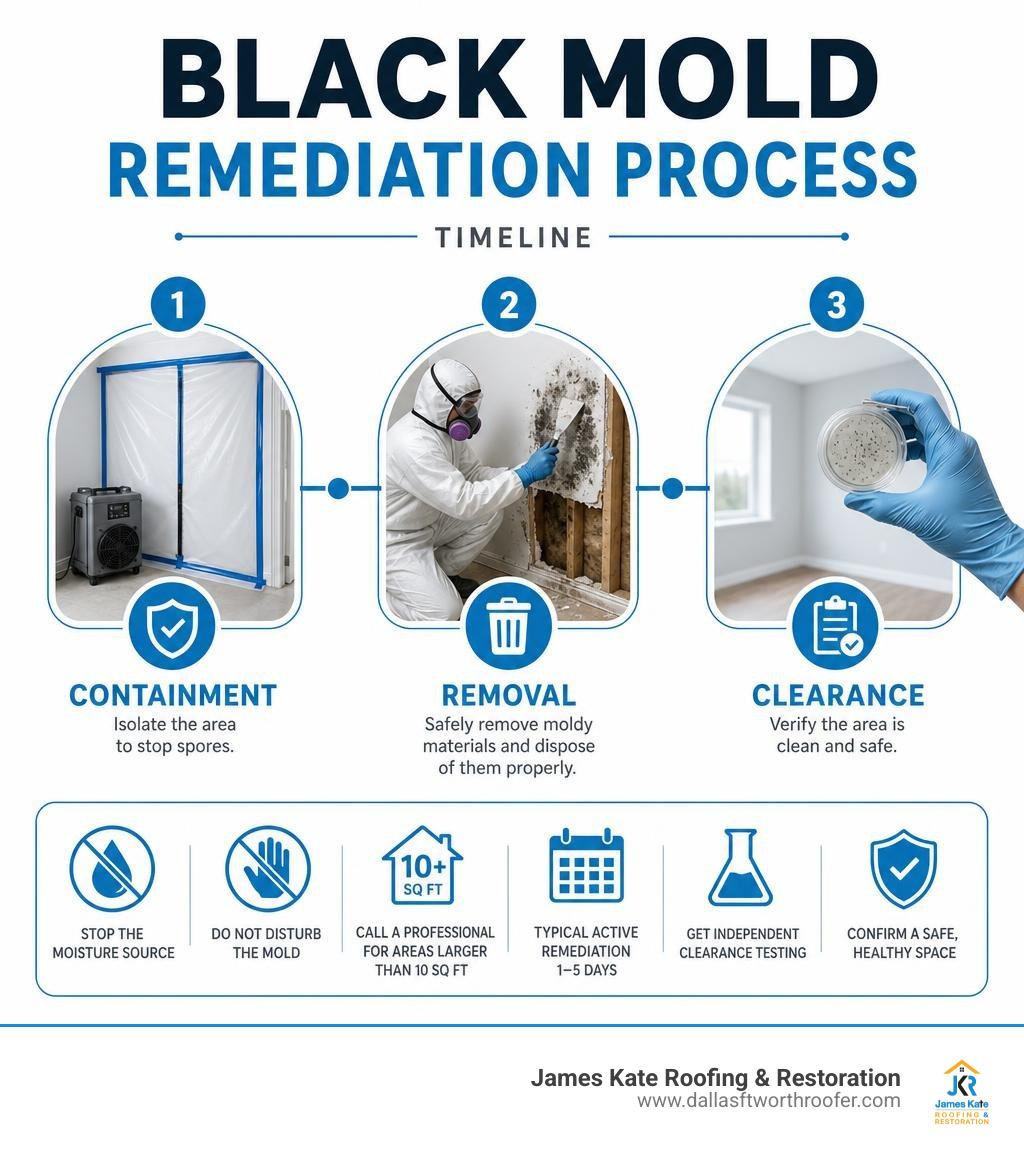
- Stop the moisture source — mold cannot be permanently removed without fixing what caused it
- Do not disturb the mold — touching or scrubbing it before containment spreads spores
- Call a professional for any growth larger than 10 square feet, or on porous materials like drywall
- Expect 1–5 days of active remediation work, plus drying and clearance testing
- Get independent clearance testing — never from the same company doing the removal
- Budget $1,500–$8,800+ depending on affected area size and materials involved
Finding dark, slimy patches on your drywall or ceiling is alarming — and for good reason. Mold can begin growing on wet materials in as little as 24 to 72 hours. Left alone, it doesn’t just sit there. It spreads, it damages whatever it grows on, and that damage compounds over time.
What makes black mold different from the dark-colored mold you might wipe off a bathroom tile is how it grows and what it takes to remove it. Stachybotrys chartarum roots itself deep into porous materials like drywall and wood. That means a sponge and a bottle of bleach won’t cut it — and can actually make things worse by dispersing spores through the air.
Most homeowners don’t realize this until the mold comes back.
I’m Dustin Eatman, owner of James Kate Roofing & solar in the Dallas–Fort Worth metroplex, and through years of hands-on solar work I’ve seen how water intrusion from roof leaks, pipe failures, and storm damage creates the exact conditions that lead to black mold remediation jobs. This guide will walk you through everything you need to know — from identifying true black mold to understanding what professional removal actually looks like and what it costs.
Easy black mold remediation word list:
What is Black Mold? Identification and Health Risks
When people talk about “toxic black mold,” they are usually referring to a specific fungus called Stachybotrys chartarum. However, the mold kingdom is vast, and many other dark-colored molds frequently pop up in DFW homes.
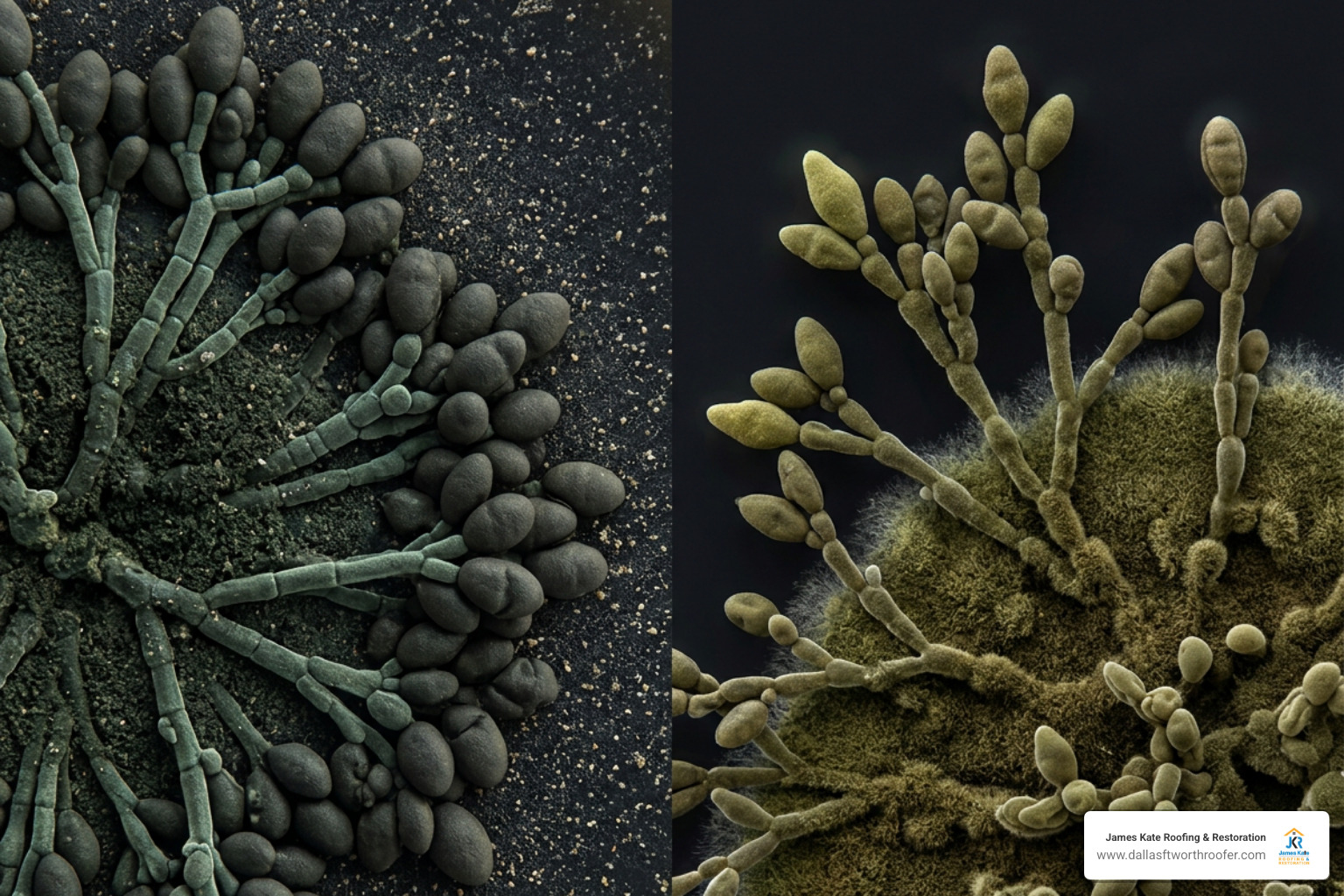
To understand what we are dealing with, we have to look at the differences between Stachybotrys and other common dark molds:
- Stachybotrys chartarum: This is the “true” black mold. It is a slow-growing fungus that requires a very high moisture level and thrives on high-cellulose materials. It does not grow overnight; it typically requires materials to remain thoroughly wet for at least 72 hours.
- Cladosporium: This is one of the most common outdoor and indoor molds. While it can appear dark green, brown, or black, it is far less structurally aggressive than Stachybotrys and grows easily on cooler damp surfaces like window frames or bathroom grout.
- Aspergillus: Certain strains of Aspergillus can look dark green or black. It is a highly resilient mold that can grow with much less moisture than Stachybotrys.
According to research on Scientific identification of Stachybotrys, you cannot definitively identify a mold species by color alone. Many harmless molds look pitch black, and some toxic strains can look green or gray. True Stachybotrys relies heavily on constant water damage and cellulose-rich substrates (like the paper backing on drywall, ceiling tiles, or wood subflooring) to colonize a space.
How to Identify True Black Mold
If you spot dark spots in your home, look for these key visual and textural clues before taking action:
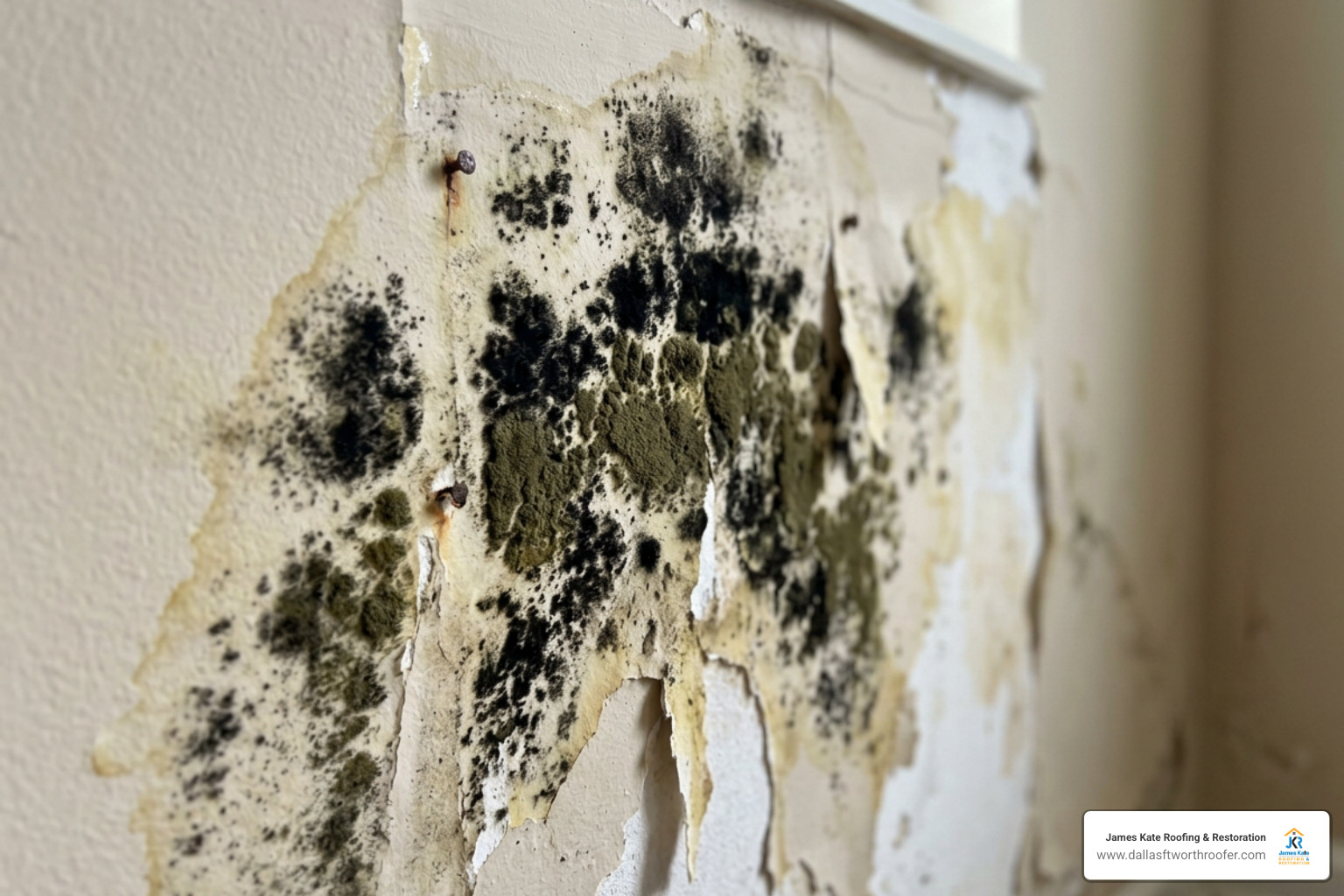
- Texture: Active Stachybotrys is typically slimy, wet, and smeary. If the moisture source has dried up, it may look powdery, dry, and soot-like.
- Growth Pattern: It often grows in distinct, circular patches or follows the path of water running down a wall stud.
- The Wipe Test: If you gently wipe the surface with a damp cloth (while wearing protective gear!) and it smears like wet charcoal rather than brushing off like light dust, you may be dealing with Stachybotrys.
- The Smell: It has a distinct, musty and earthy odor — often compared to rotting leaves or wet dirt.
If you have recently experienced a plumbing failure, roof leak, or storm damage in Mansfield or Arlington, it is crucial to understand How to handle mold after a leak. Leaving moisture trapped behind walls is an open invitation for Stachybotrys to set up shop.
Health Risks and Vulnerable Populations
The reason black mold remediation is taken so seriously is the presence of mycotoxins — specifically trichothecene mycotoxins — produced by Stachybotrys. These chemical compounds are bound to the mold spores and can be inhaled, ingested, or absorbed through the skin.
While the media sometimes exaggerates the dangers, the actual scientific Risks of black mold exposure are well-documented. Exposure to these mycotoxins and allergens can cause:
- Respiratory Issues: Chronic coughing, wheezing, sneezing, and nasal congestion.
- Asthma Flare-ups: Severe attacks in individuals who already suffer from asthma.
- Skin and Eye Irritation: Red, itchy eyes and unexplained skin rashes.
- Fatigue and Headaches: Persistent, low-grade physical symptoms that often improve when the individual leaves the affected property.
Certain groups are much more vulnerable to these health risks. Infants, the elderly, individuals with compromised immune systems, and those with chronic lung diseases (like COPD) should never remain in a home with active Stachybotrys growth. If anyone in your family is experiencing these symptoms and you suspect mold, consult a medical professional and have your home inspected immediately.
When to Call a Professional for Black Mold Remediation
One of the most dangerous mistakes a homeowner can make is grabbing a wire brush and scrubbing a patch of suspected black mold.
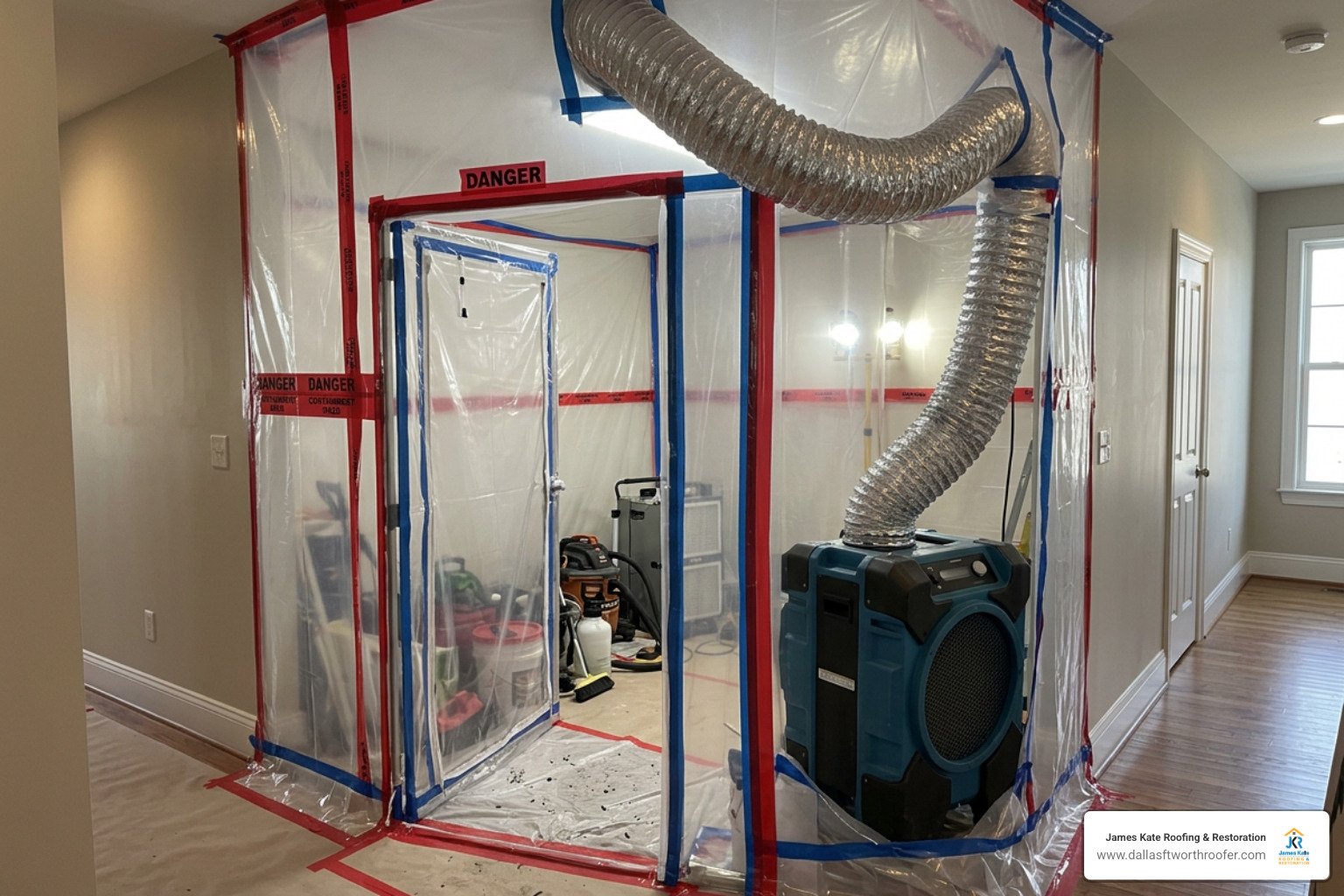
When you disturb a dry or active mold colony, you trigger a natural defense mechanism: the mold releases millions of microscopic spores into the air. Without professional containment in place, these spores will drift through your home, settle in your carpets, and get sucked into your HVAC system. What was a small 3-square-foot problem in a closet can quickly turn into a whole-house contamination nightmare.
For this reason, we advise homeowners to follow the “Do Not Disturb” rule. If you suspect black mold, turn off your HVAC system to stop air circulation, seal the door to the room, and do not touch the mold until a certified team can assess the situation.
If you are looking for trusted experts in the DFW area, you can explore the Top mold remediation services to find certified professionals who know how to isolate the contamination.
DIY Cleanup vs. Professional Black Mold Remediation
How do you know if you can handle the cleanup yourself, or if you need to bring in the pros? The Environmental Protection Agency (EPA) provides a clear rule of thumb:
- The 10-Square-Foot Rule: If the mold covers an area less than 10 square feet (roughly a 3-foot by 3-foot patch) on a hard, non-porous surface (like tile, metal, or glass), you can generally clean it yourself using proper personal protective equipment (PPE).
- Porous Substrates: If the mold is growing on drywall, plaster, insulation, or carpet, DIY cleaning is rarely successful. Black mold grows into the paper backing of drywall, meaning surface sprays won’t reach the root system (mycelium). The drywall must be physically cut out and disposed of.
If you have a very small, surface-level mold issue on a non-porous surface, you can learn How to remove household mold fast using safe, non-toxic solutions. However, if the mold covers more than 10 square feet, or if it has penetrated your walls, professional black mold remediation is non-negotiable.
The Step-by-Step Professional Remediation Process
When we perform professional black mold remediation, we don’t just spray a chemical and walk away. We follow a strict, scientific process governed by the IICRC S520 Standard and Reference Guide for Professional Mold Remediation.
Here is exactly what you should expect when our team steps into your home:
1. Source Identification and Moisture Mapping
We use thermal imaging cameras and moisture meters to locate the hidden water source feeding the mold. If we don’t stop the leak first, the mold will simply grow back within days of our departure.
2. Containment Setup
We build physical barriers using heavy-duty 6-mil plastic sheeting to isolate the work zone. For black mold, we often use a two-stage containment setup, which includes an outer decontamination chamber where technicians change out of their gear to prevent cross-contamination.
3. Negative Air Pressure and HEPA Filtration
We place industrial air scrubbers equipped with HEPA filters (which capture spores as small as 0.3 microns) inside the containment zone. These machines exhaust air outside the home, creating negative pressure. This ensures that when we open the containment door, air is sucked into the work zone, preventing spores from escaping into your living areas.
4. Controlled Demolition and Material Removal
Technicians wearing full PPE — including Tyvek suits, gloves, and full-face P100 respirators — carefully cut out contaminated drywall, insulation, and other porous materials. We cut at least 12 to 24 inches beyond the visible mold line to ensure we capture hidden root systems. All contaminated materials are double-bagged in heavy plastic before leaving the containment area.
5. Detailed Cleaning and Biocide Application
We HEPA-vacuum all remaining studs and hard surfaces, then scrub them with EPA-registered fungicides. We never dry-scrub mold; we always keep surfaces damp to suppress spore release.
6. Drying and Dehumidification
We set up commercial dehumidifiers and air movers to dry the remaining structural wood to a safe moisture level (typically below 15% wood moisture equivalent).
7. Encapsulation
Once the wood is completely dry, we apply an antimicrobial encapsulant (a specialized sealant paint) to seal any microscopic, non-viable spores that may remain deep within the wood grain.
Why Independent Post-Remediation Clearance Testing is Essential
How do you know the job was actually done right? You shouldn’t just take our word for it — and you certainly shouldn’t trust a contractor who does their own final testing. That is a major conflict of interest.
We always require post-remediation verification (PRV) testing by an independent, third-party industrial hygienist. This process involves:
- Visual Inspection: Ensuring the containment area is completely free of dust, debris, and visible mold.
- Air Sampling: Comparing indoor spore counts inside the containment zone to outdoor baseline levels.
- Clearance Certificate: The independent tester issues a formal clearance report confirming that the indoor air quality has returned to normal, healthy background levels.
If you are in the Arlington area, you can read more about Mold Inspection & Testing Arlington Texas to understand how independent testing protects your family and your real estate investments.
Cost Breakdown and Prevention Strategies
The cost of black mold remediation can vary widely based on the size of the infestation, where it is located, and the materials that need to be replaced.
Here is a realistic look at typical costs for standard mold removal versus specialized black mold remediation:
| Project Scope | Affected Area Size | Standard Mold Remediation Cost | Black Mold Remediation Cost (15%–25% Premium) |
|---|---|---|---|
| Small Job (e.g., small bathroom closet) | Under 25 sq ft | $500 – $1,200 | $600 – $1,500 |
| Medium Job (e.g., single room or wall section) | 25 – 100 sq ft | $1,200 – $3,500 | $1,500 – $4,400 |
| Large Job (e.g., multi-room or crawl space) | 100 – 300 sq ft | $3,500 – $7,000 | $4,400 – $8,800 |
| Extensive Job (e.g., severe whole-home water damage) | 300+ sq ft | $7,000 – $15,000+ | $8,800 – $20,000+ |
To see how these costs break down in detail and to learn how to avoid common price traps, read this comprehensive guide on How to get rid of black mold.
Factors Driving the Cost of Black Mold Remediation
You might wonder why black mold remediation costs 15% to 25% more than standard mold cleanups. The price difference is driven by the strict safety and containment protocols required for toxic molds:
- Two-Stage Containment: Setting up decontamination chambers to protect the rest of your home takes extra labor and materials.
- Specialized PPE: Technicians must wear full-face P100 respirators and disposable protective suits, which must be replaced daily.
- Lab Confirmation: Sending samples to an accredited laboratory to confirm the species adds testing fees.
- Controlled Demolition: Carefully bagging and disposing of heavy, wet drywall without cross-contaminating the home requires meticulous labor.
If you suspect mold in your home, do not wait for the problem to grow. Reach out to certified professionals for Mold mitigation services near you to get an accurate, upfront estimate.
Preventing Mold Regrowth After Remediation
Once your home has been successfully remediated, the goal is to keep it dry so the mold never returns. Mold control is fundamentally moisture control.
Here are the most effective steps you can take:
- Control Relative Humidity: Keep indoor relative humidity below 60% (ideally between 30% and 50%) as recommended by the EPA. Use a cheap digital hygrometer to monitor your home’s humidity levels.
- Run Exhaust Fans: Always run your bathroom exhaust fans during and for at least 20 minutes after showers, and use range hoods when cooking.
- Fix Leaks Immediately: If you experience a roof leak or plumbing drip, dry the area completely within 24 to 48 hours.
- Ventilate the Attic: Proper ventilation in your attic prevents warm, moist air from trapping humidity against your roof deck.
If you want to protect your roof structure and insulation from moisture buildup, check out our guide on How to safely evict mold from your attic for good.
Frequently Asked Questions About Black Mold
Does bleach kill black mold on drywall?
No. Bleach is highly effective on non-porous surfaces like tile or glass, but it cannot penetrate porous materials like drywall or wood. Drywall paper feeds Stachybotrys, and the mold’s roots grow deep inside the gypsum core. Bleach simply decolorizes the surface mold (making it look white or clear), while the water in the bleach solution penetrates the drywall, actually feeding the root system and causing the mold to return even stronger in a few weeks.
How long does the black mold remediation process take?
Most contained, single-area residential black mold jobs take 1 to 3 days of active remediation work. If the mold has spread to multiple rooms or requires extensive drywall demolition, the active work can take 3 to 5 days. Once physical removal is complete, expect an additional 2 to 3 days for structural drying, dehumidification, and independent post-remediation clearance testing.
Does homeowners insurance cover black mold removal?
It depends entirely on the source of the moisture. If the mold was caused by a sudden, accidental water event — such as a burst pipe or a roof damaged during a severe storm — most homeowners insurance policies will cover the remediation costs. However, if the mold resulted from long-term neglect, gradual water seepage, or a lack of maintenance (like a slow roof leak that went ignored for months), insurance companies will typically deny the claim.
Conclusion
Dealing with black mold can be stressful, but you don’t have to face it alone. At James Kate Roofing & solar, we serve our neighbors in Mansfield, Arlington, Granbury, Grand Prairie, and Midlothian, TX with honesty, integrity, and Biblical principles.
We don’t believe in cutting corners or using scare tactics. We provide clear, transparent assessments, follow strict industry standards, and back our workmanship with up to a 25-year warranty. From initial water mitigation and mold containment to the final build-back construction, our family-owned team handles the entire solar process from start to finish.
If you suspect black mold in your DFW home, contact us today to Schedule solar services and let us help you restore your home to a safe, healthy environment.

Dustin Eatman is a seasoned roofing professional with deep, hands-on expertise that spans residential and commercial roofing, insurance solar, and long-term roof asset management. As the owner of James Kate Roofing & solar in the Dallas–Fort Worth metroplex, he’s built a reputation for diagnosing roof systems accurately, communicating clearly, and executing projects with a high standard of workmanship and documentation. Dustin understands the technical details that make roofs perform—proper underlayment selection, slope and drainage considerations, ventilation strategy, flashing and penetration detailing, and manufacturer-specific installation requirements—because he’s worked through the real-world challenges that cause leaks, premature wear, and warranty issues. He’s equally fluent in the operational side of roofing: jobsite planning, quality control, safety, material ordering, crew coordination, and customer experience from inspection to closeout. In insurance-related projects, Dustin brings practical knowledge of claim workflows, adjuster meetings, scope alignment, supplements, and the importance of photo evidence and thorough records, helping property owners navigate stressful situations with confidence. For commercial clients—especially property and facility managers—he emphasizes proactive maintenance and targeted repairs that reduce disruption, extend roof life, and prevent expensive interior damage. Dustin also stays focused on doing things the right way: educating customers on realistic options, setting expectations, and prioritizing solutions that hold up over time rather than quick fixes. That blend of technical skill, field experience, process discipline, and owner-level accountability is what makes Dustin Eatman a trusted expert in the roofing industry.