What Homeowners Searching for Asbestos Siding Shingles for Sale Need to Know First
If you’re looking for asbestos siding shingles for sale, here’s the short answer before we go any further:
You almost certainly want fiber-cement replacement shingles — not real asbestos siding. Real asbestos siding is no longer manufactured for residential use, and handling or sourcing salvaged material carries serious health and legal risks.
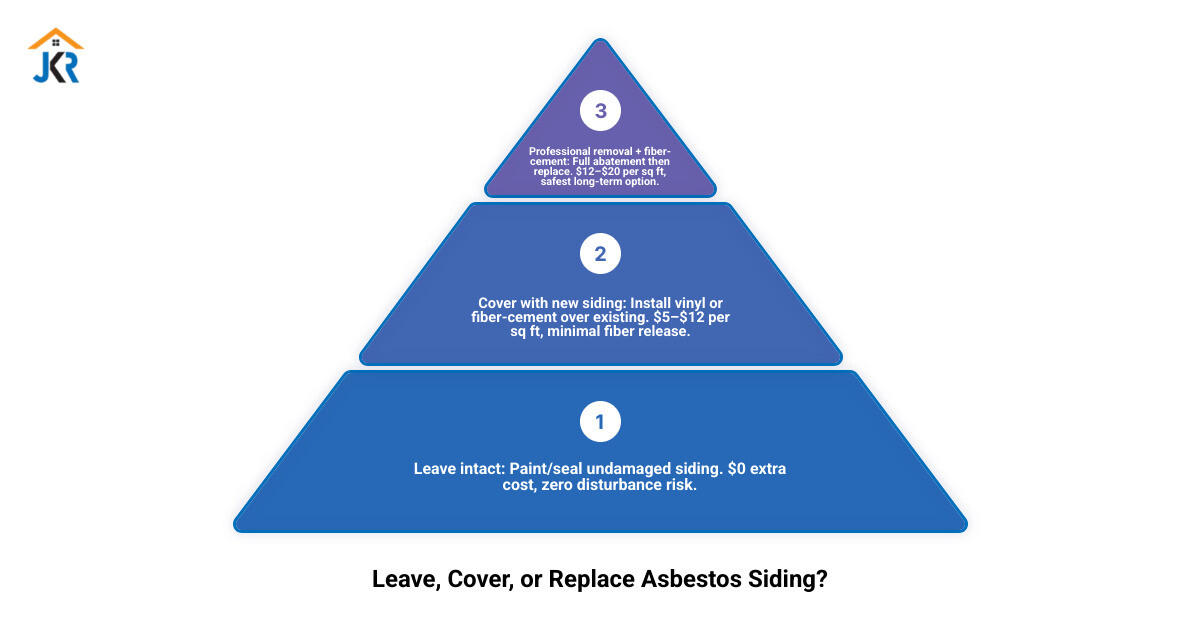
Your three safest options in 2026:
| Option | Best For | Approximate Cost |
|---|---|---|
| Leave intact siding in place | Undamaged siding, no renovation planned | $0 (paint/seal only) |
| Cover with new siding (vinyl or fiber-cement) | Damaged areas, renovation planned | $5–$12 per sq ft |
| Professional removal + fiber-cement replacement | Severe damage, full re-side needed | $12–$20 per sq ft |
Millions of homes built between the 1920s and 1960s still have asbestos-cement siding on their walls today. For most of those homeowners, the siding isn’t an emergency – but the moment it gets cut, drilled, cracked, or disturbed, the risk changes completely. Whether you’ve found damaged shingles after a storm, spotted a crumbling section during a renovation, or simply want to understand what you’re dealing with, knowing the difference between old asbestos siding and today’s safe fiber-cement replacements is the most important first step.
I’m Dustin Eatman, owner of James Kate Roofing & solar in the Dallas-Fort Worth area, and I’ve worked with countless older DFW homes where hidden layers of asbestos siding shingles for sale turn a simple re-side into a carefully managed solar project. In the sections below, I’ll walk you through exactly how to identify what you have, what your real options are, and where to find safe, code-compliant replacement products.
What “Asbestos Siding Shingles for Sale” Really Means in 2026
In 2026, this search term usually does not mean people are trying to buy newly made asbestos products. It usually means they are trying to find a safe replacement that matches the size, thickness, and look of old shingles already on the house.
That matters because the replacement market is very specific. Many older homes in Mansfield, Arlington, Granbury, Grand Prairie, and Midlothian still have cementitious siding installed decades ago. Homeowners are often looking for one of three things:
- A few matching shingles for a small repair
- A product that can replace broken sections without re-siding the entire house
- Guidance on whether to leave, cover, or remove existing asbestos siding
The most common replacement size on the market is 12 in. x 24 in., though 9 in. x 32 in. profiles also exist. Modern fiber-cement products are designed to mimic old asbestos siding closely enough that spot repairs are possible without making your house look like it got patched with leftovers from three different decades.
Why real asbestos siding is not the product most homeowners should buy
Real asbestos siding is a bad idea for almost every homeowner.
First, it is a hazardous material. Second, it is no longer the standard residential product in the U.S. Third, even salvaged pieces create extra risk because you do not know their condition, how they were removed, or whether buying them creates disposal and liability issues later.
Even if you somehow find “real” asbestos shingles advertised somewhere, that does not make them smart to install. They may be cracked, brittle, contaminated, or noncompliant with current safety expectations. It is a little like shopping for old fireworks in a paper bag and calling it home improvement.
Why asbestos siding shingles for sale usually means modern replacement shingles
Today, asbestos siding shingles for sale usually means asbestos-free fiber-cement shingles sold as direct replacements for older homes.
These products are marketed around compatibility:
- Similar dimensions to historic shingles
- Straight-edge, striated, or thatched textures
- Paint-ready surfaces
- Small bundle quantities for repair work
- No asbestos content
Online marketplaces may show lots of results for the phrase. One source noted 204 listings on a popular marketplace, but the practical takeaway is this: the modern market is mostly a niche repair market for safe replicas and specialized tools, not a market for true asbestos products.
Asbestos Siding vs. Modern Fiber-Cement: What’s Different
Here is the simple comparison homeowners actually need:
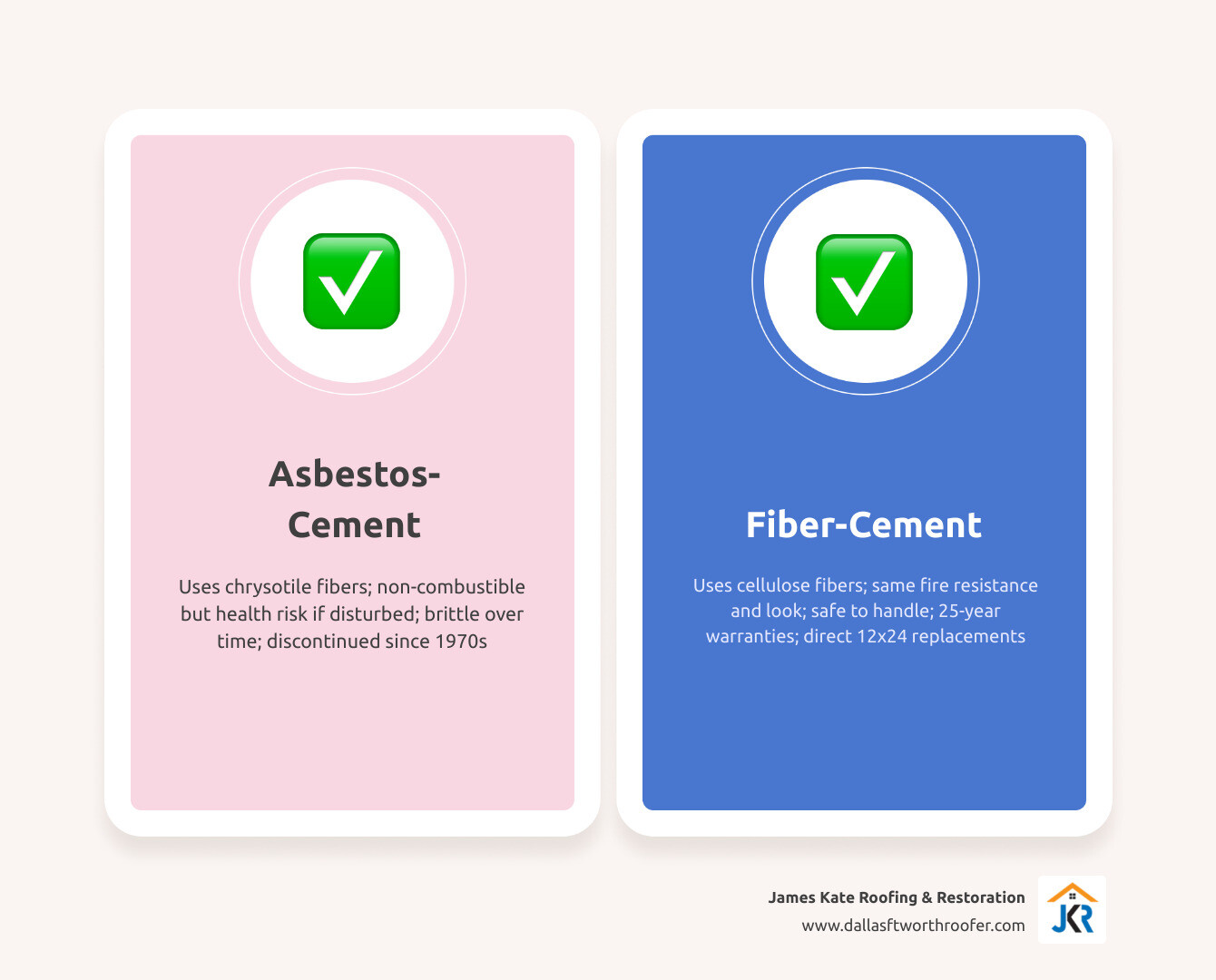
| Feature | Old Asbestos-Cement Siding | Modern Fiber-Cement Replacement |
|---|---|---|
| Main reinforcing fiber | Asbestos | Cellulose or other safe fibers |
| Common era | Early 1900s to mid-late 20th century | Modern replacement product |
| Health concern | Hazardous if disturbed | No asbestos |
| Fire resistance | Good | Good to excellent |
| Appearance | Flat or textured shingle panels | Similar profiles available |
| Durability | Durable but brittle with age | Durable and designed for exterior use |
| Paintability | Can be painted carefully if left undisturbed | Pre-primed and paint-ready |
| Installation concerns | Disturbance can release fibers | Standard siding installation practices apply |
| Freeze-thaw performance | Older material may crack with age | Modern products may be rated for freeze-thaw resistance |
What asbestos siding is and where it was commonly used
Asbestos-cement siding was made by mixing cement with asbestos fibers for strength and fire resistance. It was used on homes for over a century and became especially common on houses built between the 1920s and the 1960s.
If your home falls in that age range, asbestos siding is possible. If the cementitious siding was installed after 1973, it is very unlikely to contain asbestos. That date is a useful clue, though not a substitute for testing.
Older asbestos shingles were popular because they were:
- Fire resistant
- Insect resistant
- More durable than some wood products
- Available in neat, uniform shingle patterns
How fiber-cement became the safe replacement for asbestos siding shingles for sale
Modern fiber-cement took over the role because it can look similar without the asbestos risk. Instead of asbestos fibers, manufacturers use safer reinforcing materials such as cellulose.
That gives homeowners a product that still offers the practical benefits they want:
- Fire resistance
- Good weather performance
- Paintable surface
- Dimensional match for repairs
- Better long-term compatibility with modern safety standards
Many replacement shingles are factory primed, ready to paint, and designed to match the size and shape of shingles installed over the past 60 years. That is the sweet spot for repair work on older homes where curb appeal still matters.
Performance features homeowners should expect from replacement shingles
When shopping for replacement shingles, look for features like:
- Resistance to warping and rotting
- UV resistance
- Termite resistance
- Minimal expansion and contraction
- Fire resistance
- Pre-primed finish
- No asbestos
- Warranty coverage
For example, several current fiber-cement replacement products are sold with a 25-year limited warranty. Common specs include 12 in. x 24 in. dimensions, 11/64 in. thickness, and bundle coverage around 33.3 square feet.
How to Identify Asbestos Siding on Your Home Before You Buy Anything

Before you buy replacement shingles, you need to figure out what is actually on your house.
Common signs your siding may contain asbestos
Signs that older siding may contain asbestos include:
- Home built or sided between the 1920s and 1960s
- Individual cement shingles rather than long lap siding boards
- Brittle edges or chipped corners
- A hard, dense feel
- A sharp, tile-like ringing sound when lightly tapped
- Fibrous-looking broken edges
- Uniform shingle sizes such as 12 in. x 24 in.
Asbestos-cement siding is usually non-friable when intact, meaning the fibers are bound into the cement. That is one reason it is often considered lower risk than loose insulation or pipe wrap. Lower risk, however, does not mean no risk.
When visual clues are not enough and lab testing makes sense
Visual clues help, but they are not proof. If you need a definitive answer, lab testing makes sense.
Research shows asbestos inspection costs can range roughly from $231 to $776, with some homeowners adding asbestos inspection to a general home inspection for about $330. DIY test kits may cost as little as $30, but the problem is the sampling itself. Getting the sample is the risky part if you do not know how to avoid breaking or contaminating the area.
Our advice is simple:
- Do not sand, scrape, or pry at suspicious siding
- If confirmation matters for a sale, claim, or renovation, use qualified testing
- Keep the material undisturbed until you know what it is
Is it safe to leave asbestos siding in place if it is undamaged?
Often, yes.
If the siding is intact, stable, and not being disturbed, leaving it in place is commonly considered the safest option. This aligns with long-standing guidance that intact asbestos-containing material is often better managed than removed.
That means:
- Do paint or seal intact surfaces if appropriate
- Do monitor for cracks, impact damage, and loose pieces
- Do not drill into it for cameras, lights, hose reels, or fixtures
- Do not pressure wash it
- Do not cut it
If your siding is sitting quietly and minding its own business, the best plan may be to let it keep doing that.
The Real Risks of Disturbing, Removing, or Covering Asbestos Siding
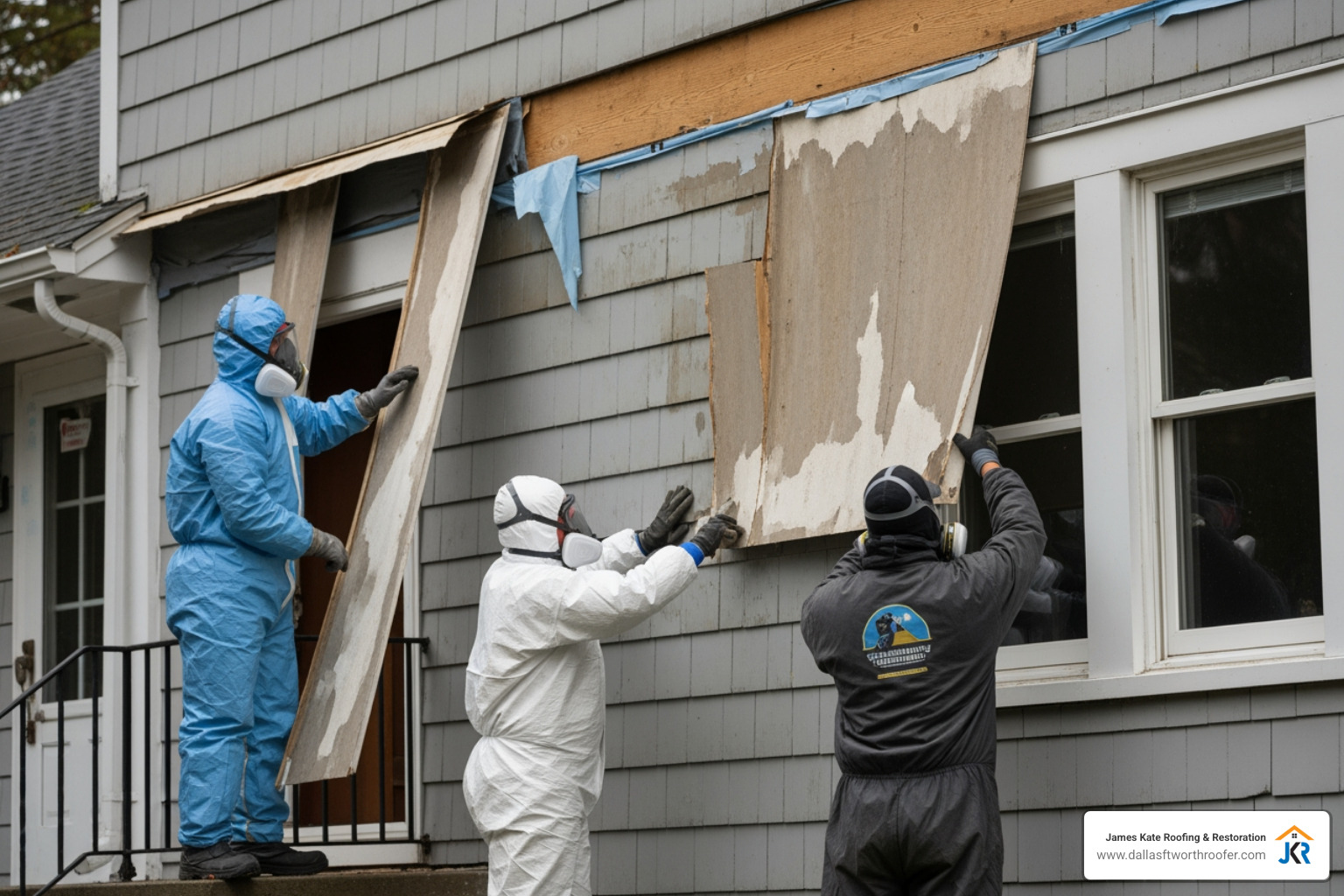
Health risks associated with broken or disturbed asbestos siding
The main danger is airborne fibers.
When asbestos-cement siding is sawed, drilled, ripped off, sanded, or shattered, microscopic fibers can become airborne. Those fibers are linked to serious illnesses including:
- Mesothelioma
- Lung cancer
- Asbestosis
The research is clear on one important point: there is no known safe level of asbestos exposure. That is why even a “small repair” can become a big problem if someone starts treating old shingles like ordinary siding.
Repair, encapsulate, cover, or remove? How to choose
The right choice depends on condition, project scope, and budget.
Choose to leave it in place when:
- Siding is intact
- No major renovation is planned
- There are only minor cosmetic issues
Choose encapsulation or sealing when:
- Surface is weathered but mostly stable
- You want to reduce exposure risk without major disturbance
Choose covering with new siding when:
- You want an exterior update
- Existing siding is mostly stable
- Removal would create unnecessary risk and cost
Choose professional removal when:
- Siding is badly broken or falling off
- A remodel requires major wall access
- Hidden damage behind the siding needs repair
- Insurance or lender requirements force the issue
Cost also matters. Based on the research, typical ranges are:
- Encapsulation: $2 to $6 per sq ft
- Covering with new siding: $5 to $12 per sq ft
- Removal only: $8 to $12 per sq ft
- Removal and replacement: $12 to $20 per sq ft
Legal requirements and best practices for removal and disposal
If removal is necessary in Grand Prairie or elsewhere in our DFW service area, homeowners should expect local rules, handling requirements, and disposal restrictions to apply. A helpful local reference is the City’s asbestos abatement guidance.
Best practices typically include:
- Using trained asbestos abatement professionals
- Following permit requirements where applicable
- Keeping material wet during handling when appropriate
- Avoiding breakage
- Sealing waste in approved containers or wrapping
- Transporting to approved disposal facilities
- Keeping records of disposal
This is not a haul-it-off-with-yard-debris situation. Your regular trash service would like no part of that plot twist.
Safer alternatives to full removal
Full removal is not always the best answer.
Safer alternatives include:
- Encapsulation with appropriate coating systems
- Covering with thin new siding such as vinyl
- Installing new siding over a prepared substrate when allowed
- Replacing only a few missing pieces with matching fiber-cement where disturbance can be kept minimal
Covering is widely accepted because it avoids disturbing every old shingle. Thin siding can also help preserve trim depth and window details better than thicker options.
Where to Find Safe Replacement Products Instead of Risky Asbestos Siding Shingles for Sale
What to look for when shopping for asbestos siding shingles for sale online
When shopping online, ignore the scary keyword and focus on the actual product specs.
Look for:
- Exact dimensions, often 12 in. x 24 in. or 9 in. x 32 in.
- Edge style, such as straight edge
- Surface texture, such as striated or thatched
- Bundle count
- Total square-foot coverage
- Asbestos-free labeling
- Pre-primed or paint-ready finish
- Warranty details
If your house has one oddball profile, profile matching matters more than brand hype. A perfect color match can be painted. A bad size match will haunt you every time you pull into the driveway.
Typical prices, bundle sizes, and coverage in 2026
In 2026, common replacement bundle specs include:
- 18-piece bundles
- 19-piece bundles
- About 33 to 33.3 square feet of coverage per bundle
- Common 12 in. x 24 in. size
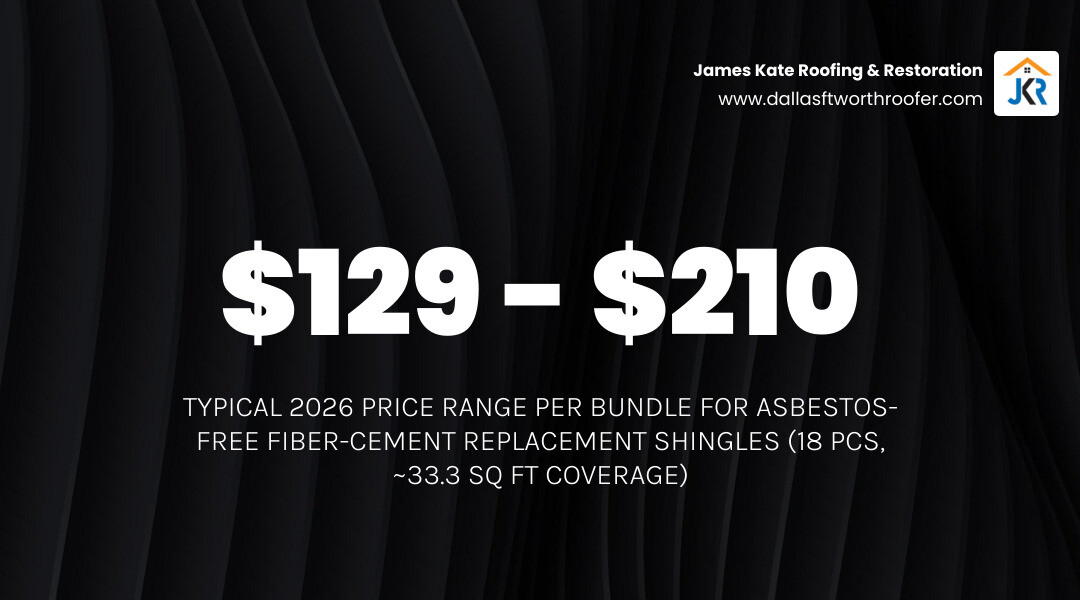
Typical pricing in the research ranged from about $129 to $210 per bundle depending on profile, seller, and listing format. Another marketplace range placed many bundles between roughly $148 and $190.
One well-documented product example covers 33.3 square feet per bundle with 18 pieces. For project planning, we recommend adding about 10% extra material for waste, cutting, and breakage.
Safe places to compare replacement shingles and specifications
When comparing products, stick to listings that clearly identify them as asbestos-free fiber-cement replacements and provide actual specifications.
Useful examples include:
- fiber-cement replacement shingles
- paint-ready straight-edge shingle option
- 9 inch profile fiber-cement option
These kinds of listings help you compare dimensions, coverage, texture, and whether the shingles come pre-primed and ready for paint.
Why salvaged or imported asbestos products are a bad idea
Avoid salvaged asbestos shingles and imported asbestos products.
Here is why:
- Unknown condition
- Higher chance of breakage during shipping
- Possible legal and compliance issues
- Harder disposal later
- Potential exposure during handling
- No practical benefit over asbestos-free lookalikes
There may still be websites in other markets advertising asbestos materials, but that does not make them appropriate for homes in our Texas service area. The safer and more practical path is modern fiber-cement.
Smart Buying and Project Planning Tips for Homeowners
Before buying anything, work through this checklist:
- Confirm whether the existing siding likely contains asbestos
- Measure the height, length, thickness, and exposure
- Match the edge style and surface texture
- Decide whether you are repairing, covering, or replacing
- Budget for testing and disposal, not just materials
- Verify local permit and disposal rules
- Plan for paint matching
- Add 10% waste to material calculations
- Ask whether hidden damage or water intrusion exists behind the siding
Measure first: the dimensions and textures that matter
The details matter more than most homeowners expect.
Measure:
- Overall shingle size
- Exposed face height
- Thickness
- Edge profile
- Surface texture
Common modern specs include:
- 12 in. x 24 in.
- 11/64 in. thickness
- 11 in. exposure on some straight-edge profiles
- 8 in. exposure on some 9 in. x 32 in. profiles
Texture names vary, but straight-edge, striated, and thatched are common descriptions. If possible, bring photos and measurements to your contractor before ordering.
Budgeting for testing, covering, or replacement
A realistic budget should include more than just bundles of shingles.
Potential cost items include:
- Asbestos inspection: about $231 to $776
- Encapsulation: $2 to $6 per sq ft
- Covering with new siding: $5 to $12 per sq ft
- Removal: $8 to $12 per sq ft
- Removal and replacement: $12 to $20 per sq ft
Insurance may not cover asbestos removal if it is treated as maintenance, though storm-related damage can complicate that analysis. On older homes, hidden moisture damage can also change the scope once work begins.
When to bring in a specialist for replacement or solar
Bring in a specialist when:
- Storm damage cracked or knocked off shingles
- You found older siding behind another layer
- You need a close visual match for a repair
- Water damage is present behind the wall system
- A larger solar project is already underway
For more background on this type of work, see our page on Asbestos Shingle Replacement.
As a family-owned DFW company, we approach these projects carefully and honestly. Sometimes the best recommendation is not full removal. Sometimes it is targeted repair, covering, or a broader solar plan if water intrusion or other damage is involved.
Frequently Asked Questions About Asbestos Siding Shingles for Sale
Can I legally buy real asbestos siding shingles?
In practical terms, homeowners should assume real asbestos siding is not the product to buy. Even if old stock or salvage appears somewhere, it creates health, handling, and disposal problems that make it a poor choice. For homes in our DFW service area, the smart route is asbestos-free replacement material.
Can I put new siding over asbestos siding instead of removing it?
Yes, often you can, and in many cases it is the safer approach. Covering intact asbestos siding with new siding can reduce disturbance and lower project cost compared with full removal. Thin siding products are often preferred so trim and architectural details still work correctly.
What is the best replacement for a few broken asbestos shingles?
The best replacement for a small repair is usually a matching fiber-cement shingle in the correct size and texture. Most homeowners are looking for 12 in. x 24 in. shingles, but profile matching matters just as much as dimensions. Look for paint-ready, asbestos-free bundles intended specifically for asbestos siding replacement.
Conclusion
When homeowners search for asbestos siding shingles for sale, what they usually need is not old asbestos at all. They need a safe, modern, visually compatible replacement. In 2026, that almost always means fiber-cement.
If your siding is intact, leaving it alone may be the safest move. If it is damaged, covering or selective replacement may make more sense than full removal. And if removal is necessary, it should be handled with the right safety and disposal steps for your city and project scope.
At James Kate Roofing & solar, we help homeowners across Mansfield, Arlington, Granbury, Grand Prairie, and Midlothian make careful decisions about older exterior materials, storm damage, and solar work. If you need guidance on whether to repair, cover, or replace asbestos-cement siding, we are here to help you sort through it without panic and without guesswork.
For broader exterior and solar support, you can also learn more about our roofing services.
Dustin Eatman is a seasoned roofing professional with deep, hands-on expertise that spans residential and commercial roofing, insurance solar, and long-term roof asset management. As the owner of James Kate Roofing & solar in the Dallas–Fort Worth metroplex, he’s built a reputation for diagnosing roof systems accurately, communicating clearly, and executing projects with a high standard of workmanship and documentation. Dustin understands the technical details that make roofs perform—proper underlayment selection, slope and drainage considerations, ventilation strategy, flashing and penetration detailing, and manufacturer-specific installation requirements—because he’s worked through the real-world challenges that cause leaks, premature wear, and warranty issues. He’s equally fluent in the operational side of roofing: jobsite planning, quality control, safety, material ordering, crew coordination, and customer experience from inspection to closeout. In insurance-related projects, Dustin brings practical knowledge of claim workflows, adjuster meetings, scope alignment, supplements, and the importance of photo evidence and thorough records, helping property owners navigate stressful situations with confidence. For commercial clients—especially property and facility managers—he emphasizes proactive maintenance and targeted repairs that reduce disruption, extend roof life, and prevent expensive interior damage. Dustin also stays focused on doing things the right way: educating customers on realistic options, setting expectations, and prioritizing solutions that hold up over time rather than quick fixes. That blend of technical skill, field experience, process discipline, and owner-level accountability is what makes Dustin Eatman a trusted expert in the roofing industry.