Is a Bird Pecking Your Roof? Here’s What to Do First
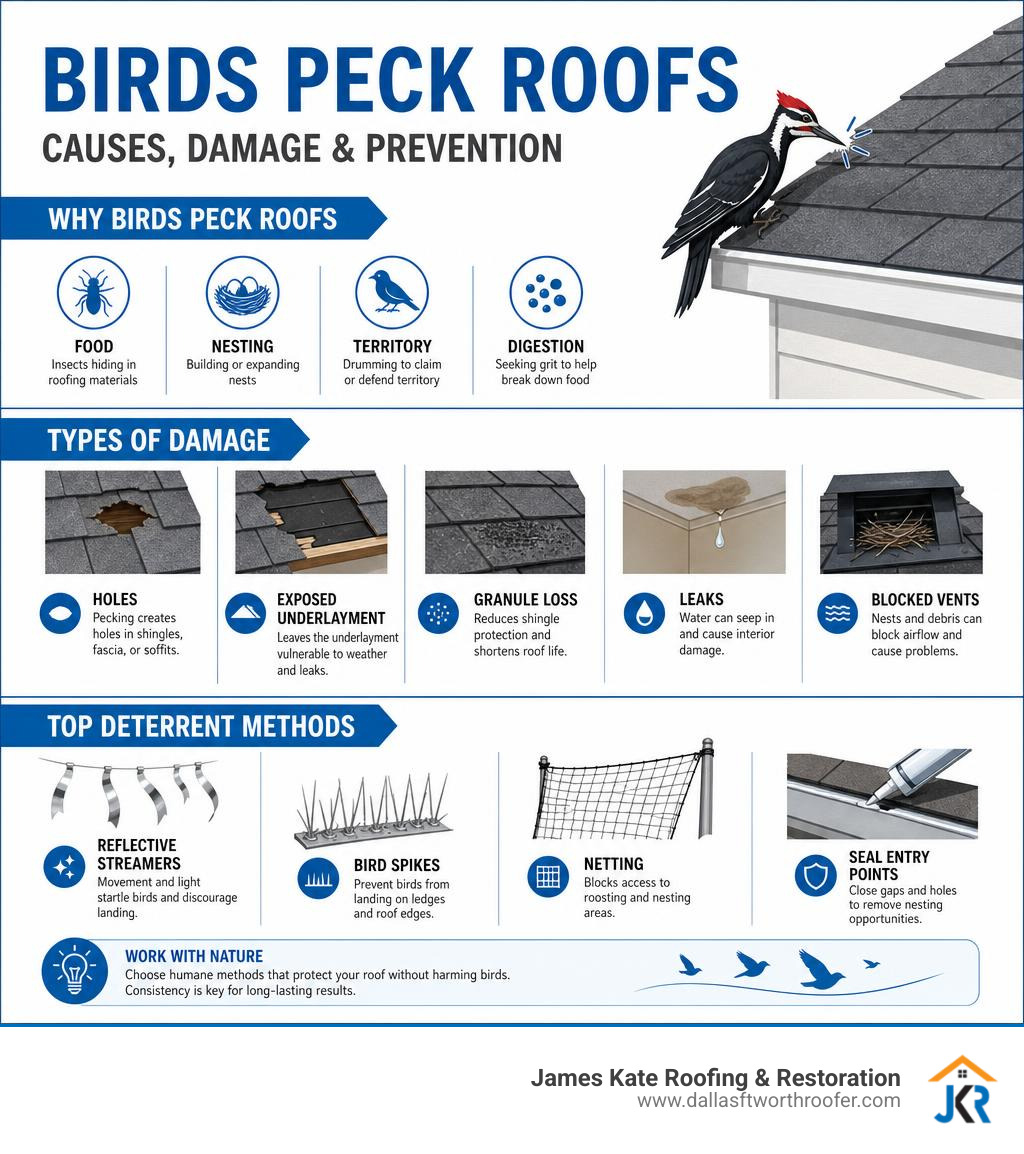
If you have birds pecking at your roof, here’s a quick summary of what’s happening and what to do:
| Question | Short Answer |
|---|---|
| Why are birds pecking my roof? | Food (insects), nesting, territory marking, or grit for digestion |
| Which birds cause the most damage? | Woodpeckers, crows, ravens, starlings, and sparrows |
| What damage can they cause? | Holes, exposed underlayment, granule loss, leaks, and blocked vents |
| Are birds protected by law? | Yes — most are protected under the Migratory Bird Treaty Act |
| What actually works to stop them? | Reflective streamers, bird spikes, netting, and sealing entry points |
| When should I call a pro? | If you see exposed underlayment, holes, or recurring damage |
That early-morning tapping on your roof isn’t random. Birds — especially woodpeckers — can peck hundreds of times before you’ve finished your first cup of coffee. And over time, that adds up to real damage: missing granules, cracked shingles, and water finding its way in.
A 2009 study of more than 1,000 homes in Ithaca, New York found that roughly one-third had some form of woodpecker damage or noise disturbance. It’s more common than most homeowners realize — and it can get expensive if ignored.
This guide covers exactly why birds target roofs, which materials are most at risk, and — most importantly — how to stop it without harming the birds or voiding your warranty.
I’m Dustin Eatman, owner of James Kate Roofing & solar in the Dallas–Fort Worth area, and over the years I’ve inspected dozens of roofs where birds pecking roof surfaces were the root cause of leaks, granule loss, and underlayment exposure that homeowners had no idea were there. In this guide, I’ll walk you through what I’ve seen in the field and what actually works to protect your roof.
Why Do You Have Birds Pecking Roof Areas?
When you hear a persistent tapping or scratching sound coming from above, it is easy to assume a bird is just being a nuisance. However, birds are highly calculated creatures. If they are focusing their attention on your roofline, they are fulfilling a specific biological need.
There are four primary reasons behind this behavior:
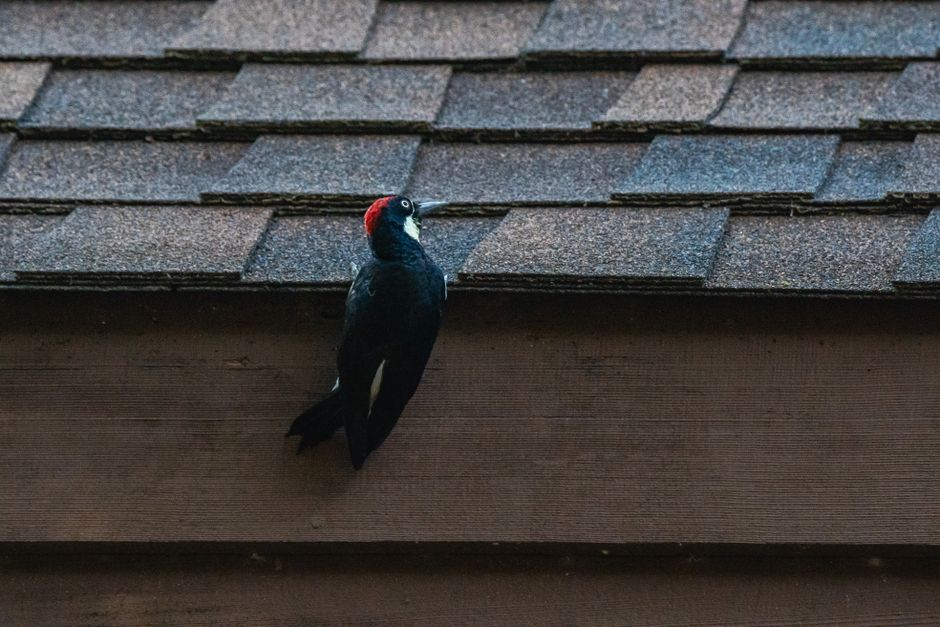
- Foraging for Food: Many birds peck at roofs because they smell or see insects. Woodpeckers, for example, are highly attracted to the larvae of carpenter bees, leafcutter bees, and grass bagworms hiding inside wood trim, fascia boards, or behind shingles.
- Nesting and Shelter: Cavity-nesting birds like starlings, sparrows, and woodpeckers look for soft spots in your roofline, eaves, or soffits to excavate a safe place to raise their young.
- Territorial Communication (Drumming): During the spring breeding season, male birds peck rapidly on resonant surfaces to establish territory and attract mates.
- Searching for Grit: Some birds, particularly crows and pigeons, peck at asphalt shingles to harvest the small mineral granules. They swallow these tiny stones to help their gizzards grind down food.
To dive deeper into how these avian behaviors impact residential properties, you can read more about ‘Chimney caps, vent pipes, gutters’: Why some woodpeckers are major metal heads and how urban infrastructure alters their habits.
Woodpeckers and the Science of Drumming
If you have ever been woken up at 6:45 AM by a sound resembling a jackhammer vibrating through your fireplace, you have experienced “drumming.” Drumming is a non-destructive, acoustic behavior unique to woodpeckers. Unlike foraging, where they drill deep, irregular holes to pull out bugs, drumming involves rapid, rhythmic tapping on highly resonant surfaces.
In natural forests, woodpeckers use hollow trees. In urban DFW suburbs like Mansfield or Arlington, they have discovered that metal roof components amplify their message much better. They target:
- Metal chimney caps
- Vent pipes and flashing
- Aluminum gutters and downspouts
- Satellite dishes
Because these birds are protected under the federal Migratory Bird Treaty Act, it is illegal to harm, capture, or kill them without a federal permit. Homeowners must rely on non-lethal, humane deterrents to convince these “metal heads” to take their rock concerts elsewhere.
Crows, Ravens, and Other Species Behind Birds Pecking Roof Shingles
While woodpeckers are famous for their jackhammer style, other bird species are equally responsible for roof wear and tear.
Crows and ravens are highly intelligent and curious. They often treat roofs as elevated dining tables or play areas. Homeowners have reported finding crow-pecked holes in rubber roofing membranes ranging from a quarter-inch to three inches in diameter. Crows are also notorious for tearing away at polyurethane caulking and rubber sealants around pipe boots because the texture appeals to them, or because they mistake it for food.
Smaller birds like starlings and sparrows cause damage by wedging themselves into tight gaps. They will peck at wood, rotted fascia, or loose shingles to widen an opening to access your warm attic space. For a broader look at why these birds focus on residential structures, check out this guide on Why Birds Peck at Your Home.
Roof Damage: Vulnerable Materials and Costly Consequences
Avian activity is not just a noise issue; it can compromise the structural integrity of your roof. Different roofing materials react differently to bird pecking, and identifying these vulnerabilities early can save you thousands of dollars in solar costs.

If you suspect your roof has already suffered physical wear from nesting or pecking, scheduling a professional inspection is the safest next step. You can learn more about our comprehensive residential roofing services to see how we identify and repair these hidden issues.
Spray Foam and Tile Roof Vulnerabilities
While asphalt shingles are the most common target for grit-seeking birds, other high-end roofing systems face unique risks:
- Tile Roofs (Clay and Concrete): Very common in Mediterranean-style homes across the DFW metroplex, tile roofs are highly vulnerable due to the natural gaps at the hip, ridge, and eave intersections. Birds like starlings and pigeons peck at the mortar or search for gaps to build nests underneath. Once inside, their nesting materials trap moisture and accelerate underlayment failure.
- Spray Polyurethane Foam (SPF) Roofs: Historically, commercial foam roofs were highly susceptible to bird pecking because the soft, rubbery silicone coating felt like a nesting ground. Modern foam applications include a heavy broadcast of protective granules embedded in the topcoat, which makes the surface too tough and slippery for birds to damage.
| Roofing Material | Primary Bird Threat | Typical Damage | Risk Level |
|---|---|---|---|
| Asphalt Shingles | Crows, Woodpeckers, Sparrows | Granule loss, torn edges, punctured surfaces | Medium |
| Clay / Concrete Tile | Pigeons, Starlings, Sparrows | Displaced tiles, degraded mortar, nests in gaps | High |
| Spray Foam (SPF) | Seagulls, Crows | Punctured membranes, torn coating | Medium (Low if granulated) |
| Metal Roofing | Woodpeckers (Drumming) | Scratched paint, noise disturbance, loose fasteners | Low (High Noise) |
Structural Damage and Water Intrusion
When a bird pecks through your shingles or clay tiles, they expose the underlying waterproof barrier: the underlayment. Once this felt or synthetic layer is punctured, your home is highly vulnerable to water intrusion.
Rainwater travels through these tiny bird holes, soaking your roof decking (OSB or plywood). Over time, this leads to wood rot, sagging roof structures, and mold growth inside your attic. If you have active leaks or water damage resulting from bird activity, our team provides emergency water mitigation, mold remediation, and complete build-back reconstruction. You can read more about our full solar and mitigation services to find out how we restore your home’s interior and exterior after a leak.
Additionally, bird nests built inside dryer vents, attic vents, and plumbing stacks block airflow. This can trap dangerous carbon monoxide inside your home or cause heat buildup that drastically shortens your shingles’ lifespan.
Humane and Effective Bird Deterrent Strategies
Protecting your roof does not require harming local wildlife. In fact, humane, physical exclusion is the most reliable way to solve a bird problem permanently.
(In the image above, one of our skilled James Kate technicians, wearing our signature royal blue company shirt, is safely securing a ridge line against avian pests.)
If you are looking for local, professional-grade wildlife exclusion services in the Mansfield area, you can learn more about bird control services designed to keep your property protected.
Easy Prevention Tips to Stop Birds Pecking Roof Shingles and Tiles
There are several hands-on steps you can take to make your roof less appealing to birds:
- Install Bird Spikes: Place plastic or stainless-steel bird spikes along ridge caps, flat ledges, and chimney shoulders to prevent larger birds like pigeons and crows from landing.
- Seal Construction Gaps: Use heavy-duty steel mesh or custom-fit “bird stop” foam inserts to seal the open ends of barrel tiles and eave gaps.
- Clean Your Gutters regularly: Crows are attracted to standing water and rotting organic debris in clogged gutters. Keep them clean to remove their water source.
- Trim Overhanging Branches: Keep tree limbs trimmed back at least 8 to 10 feet from your roofline to prevent easy access for birds and other climbing pests.
If you own a commercial property with a flat roof or large parapet walls, bird management is even more critical. Read about our specialized commercial roofing systems to see how we protect commercial buildings from avian damage.
Visual and Auditory Deterrents
For immediate relief, visual and sound deterrents can discourage birds from nesting or drumming:
- Reflective Mylar Streamers: A 2007 study proved that hanging highly reflective, moving streamers completely eliminated woodpecker damage at half of the test sites. The flashing light and crinkling sound mimic predators.
- Predator Decoys: Plastic owls or hawks can work, but only if you move them every 2 to 3 days. Birds are highly intelligent; if they notice the “owl” hasn’t moved a muscle in a week, they will start using it as a perch.
- Auditory Deterrents: Recorded hawk screeching or distress calls can temporarily clear an area, though they should be used intermittently to prevent the birds from getting used to the noise.
Frequently Asked Questions About Birds Pecking Roofs
Why do birds peck at asphalt shingles?
Birds typically peck at asphalt shingles for two reasons: they are searching for insect larvae nesting in the gaps between shingles, or they are collecting the rough mineral granules to use as grit in their gizzards to help digest their food.
Is bird damage covered by homeowners insurance?
In most cases, standard homeowners insurance policies exclude damage caused by birds, rodents, insects, or nesting. Insurance companies view bird damage as a preventable maintenance issue. However, if a bird damages a pipe boot and a sudden storm causes interior water damage, the resulting water damage might be covered, though the roof repair itself usually is not. Always check your specific policy details.
How do I know if a woodpecker is damaging my chimney cap?
If you hear a incredibly loud, metallic clanging sound echoing down your fireplace (especially in the early morning during spring), a woodpecker is likely drumming on your metal chimney cap. While the noise is startling, drumming on metal rarely causes structural damage to the cap itself, though it can scratch protective paint and lead to rust over time.
Conclusion
A bird pecking at your roof is more than just an annoying morning alarm; it is a warning sign that your roof’s protective barrier is under threat. Whether they are hunting bugs, marking territory, or looking for a cozy place to nest, the key to protecting your home is quick, humane action.
At James Kate Roofing & solar, we serve homeowners across the DFW metroplex, including Mansfield, Arlington, Granbury, Grand Prairie, and Midlothian, TX. Built on a foundation of honesty, integrity, and Biblical principles, we are proud to be a GAF President’s Club contractor offering industry-leading workmanship warranties of up to 25 years.
If birds have taken a liking to your roofline, don’t wait for the next rainstorm to find out if they’ve made a hole. Schedule a professional roof inspection with our family-owned team today, and let us ensure your home remains safe, dry, and bird-free.

Dustin Eatman is a seasoned roofing professional with deep, hands-on expertise that spans residential and commercial roofing, insurance solar, and long-term roof asset management. As the owner of James Kate Roofing & solar in the Dallas–Fort Worth metroplex, he’s built a reputation for diagnosing roof systems accurately, communicating clearly, and executing projects with a high standard of workmanship and documentation. Dustin understands the technical details that make roofs perform—proper underlayment selection, slope and drainage considerations, ventilation strategy, flashing and penetration detailing, and manufacturer-specific installation requirements—because he’s worked through the real-world challenges that cause leaks, premature wear, and warranty issues. He’s equally fluent in the operational side of roofing: jobsite planning, quality control, safety, material ordering, crew coordination, and customer experience from inspection to closeout. In insurance-related projects, Dustin brings practical knowledge of claim workflows, adjuster meetings, scope alignment, supplements, and the importance of photo evidence and thorough records, helping property owners navigate stressful situations with confidence. For commercial clients—especially property and facility managers—he emphasizes proactive maintenance and targeted repairs that reduce disruption, extend roof life, and prevent expensive interior damage. Dustin also stays focused on doing things the right way: educating customers on realistic options, setting expectations, and prioritizing solutions that hold up over time rather than quick fixes. That blend of technical skill, field experience, process discipline, and owner-level accountability is what makes Dustin Eatman a trusted expert in the roofing industry.