A Quick Look at the Average Cost to Coat a Roof for Commercial and Water Damage Prevention
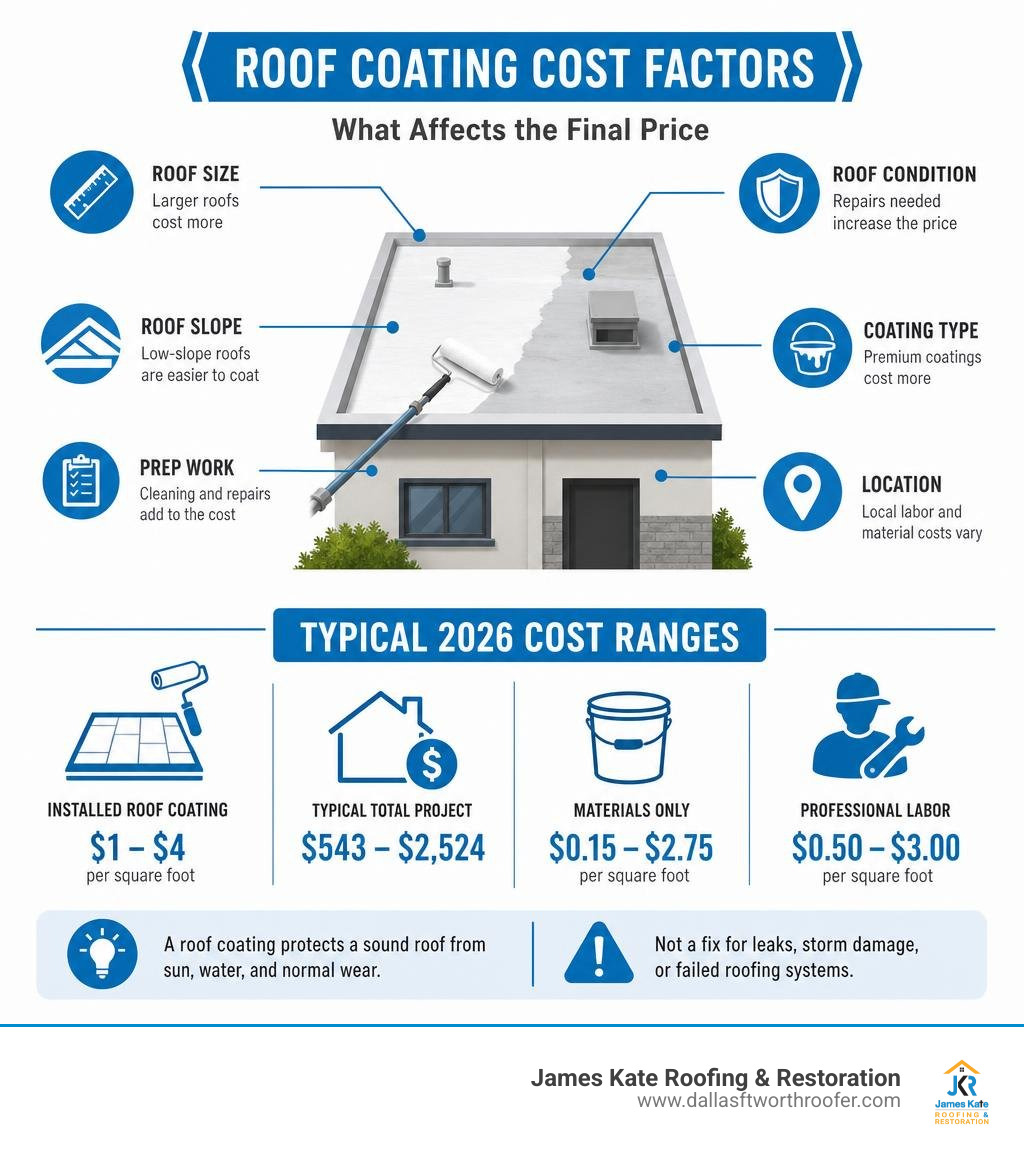
The average cost to coat a roof is about $1 to $4 per square foot installed for standard applications, or roughly $500 to $2,000 for smaller residential projects. For commercial roofing systems, installed costs commonly reach $4 to $14 per square foot depending on building size, substrate type, access requirements, moisture surveys, seam reinforcement, and warranty specifications. National estimates place the typical project near $1,473, but the real price depends on the roof’s size, condition, slope, coating type, and prep needs.
| Cost snapshot | Typical 2026 range |
|---|---|
| Installed roof coating | $1-$4 per square foot |
| Commercial roof coating | $4-$14 per square foot |
| Typical total project | $543-$2,524 |
| Materials only | $0.15-$2.75 per square foot |
| Professional labor | $0.50-$3.00 per square foot |
For commercial property managers, a properly applied coating system is one of the most effective defenses against water intrusion on flat and low-slope roofing assemblies. When a commercial roof membrane fails, the resulting water damage can saturate insulation, compromise structural decking, and lead to interior damage affecting ceilings, walls, flooring, and inventory. At that point, the issue moves beyond roofing into water damage mitigation, which involves emergency water extraction, structural drying, moisture mapping, mold prevention, and full build-back construction to restore the property to pre-loss condition.
Roof coatings are a smart way to protect a sound flat, low-slope, or metal commercial roof from sun, water, and normal wear. But a coating is not a shortcut around failed flashing, wet materials, storm damage, or an active leak that needs repair first. If roof water intrusion has already soaked insulation, ceilings, walls, or flooring, that is a water damage mitigation issue that should be addressed with professional drying, cleanup, mold remediation, and build-back planning before a coating system is installed. Delaying mitigation allows secondary damage such as mold growth, structural rot, and electrical hazards to escalate repair costs significantly.
I’m Dustin Eatman, owner of James Kate Roofing & solar in DFW. My experience inspecting commercial and residential roof systems, documenting damage, coordinating water mitigation and solar services, and helping property owners prevent water intrusion helps customers understand the average cost to coat a roof before they commit to a solar project.
Average cost to coat a roof terms at a glance:
What Is the Average Cost to Coat a Roof?
When property owners evaluate roof maintenance, knowing the average cost to coat a roof helps prevent budget surprises. Across the United States, the total project cost for an average residential property generally ranges from $543 to $2,524, with the overall national baseline settling right around $1,473. On a square-footage scale, total installed prices fall between $1.00 and $4.00 per square foot for standard residential applications, while larger commercial structures or high-end coating systems may reach $4.00 to $14.00 per square foot depending on structural specifications.
The total bill comes down to two major elements: raw material pricing and professional application labor. Material expenses alone typically run between $0.15 and $2.75 per square foot for base product lines, though specialty high-solids formulations can push material costs higher. Professional labor accounts for $0.50 to $3.00 per square foot (or $50 to $80 per hourly technician rate), which often represents 50% to 70% of your total invoice.
If you are trying to benchmark your project’s financial commitment, utilizing a trusted online Roof Coating Cost Calculator can help generate localized material and square-footage estimates based on your building’s footprint.
Calculating the Average Cost to Coat a Roof per Square Foot
Calculating your precise project estimate involves multiplying your roof’s total surface area by the combined material and labor cost per square foot. To get an accurate measurement, roof area is rarely identical to your home’s square footage on the ground; roof overhangs, pitch multipliers, and parapet walls add measurable surface area.
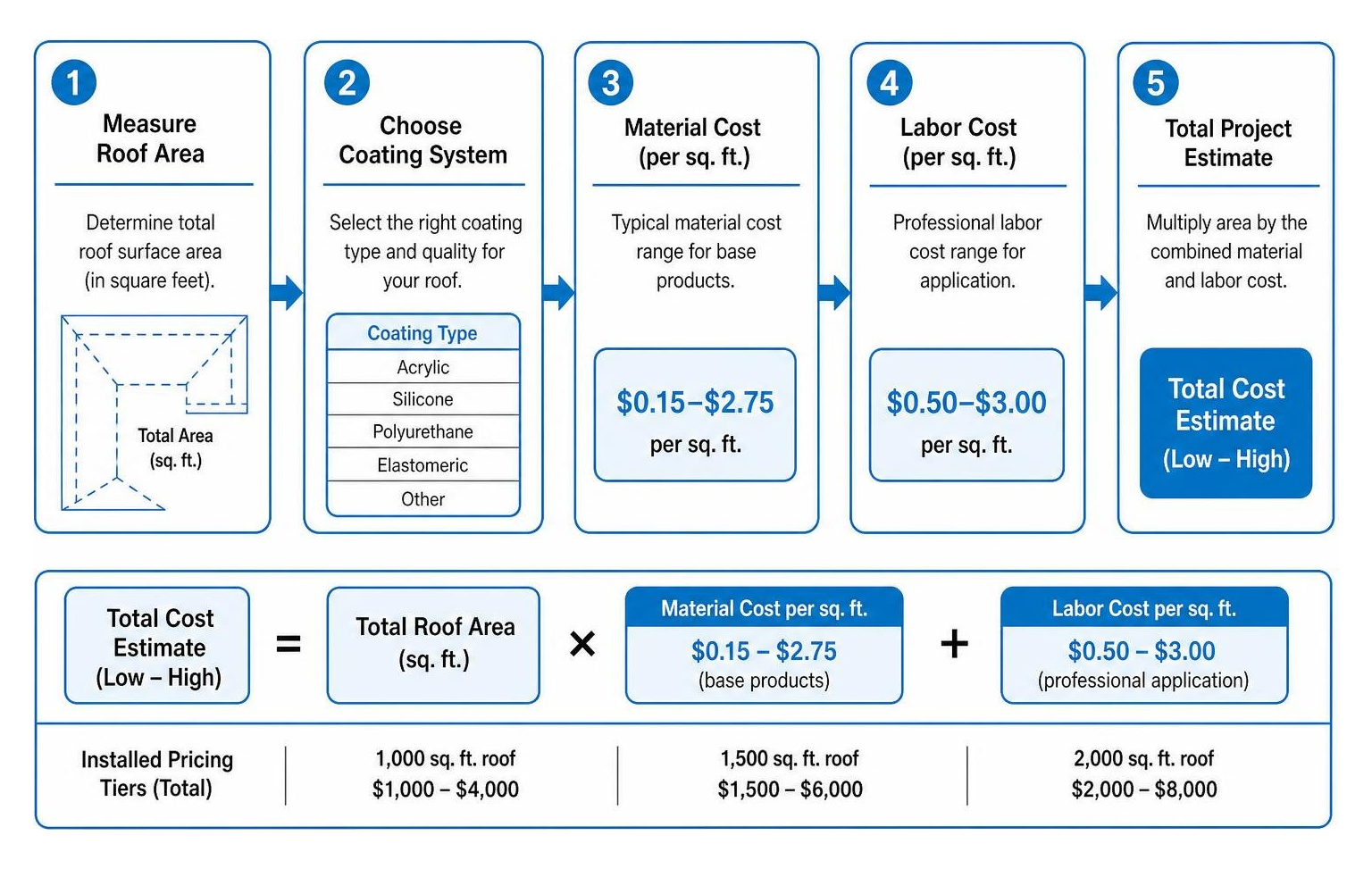
Here is how the installed pricing tiers generally map out across typical property sizes:
- 1,000 sq. ft. roof: $1,000 – $4,000 total installed
- 1,500 sq. ft. roof: $1,500 – $6,000 total installed
- 2,000 sq. ft. roof: $2,000 – $8,000 total installed
- 2,500 sq. ft. roof: $2,500 – $10,000 total installed
Beyond basic arithmetic, material efficiency plays a critical role. Most commercial-grade roof coatings cover between 50 and 100 square feet per gallon per coat. Because long-term performance usually requires at least two separate coats to achieve a baseline dry film thickness (DFT) of 20 to 28 mils, product consumption doubles during execution. You can explore The Complete Guide to Roof Coating to learn more about thickness requirements and surface preparation steps.
National Averages vs Regional Cost Variations
While national statistics provide a helpful starting point, local market dynamics dramatically influence what you actually pay. Regional pricing multipliers shift total costs up or down by 15% to 25% based on local labor rates, climate conditions, and municipal permitting standards.
In North Texas cities like Mansfield, Arlington, Grand Prairie, Midlothian, and Granbury, roof coatings must withstand aggressive climatic swings—ranging from intense UV radiation and severe summer heat to sudden spring hail storms and winter freeze-thaw events. Local labor billing rates reflect regional cost-of-living indices and contractor insurance burdens, making local contractor quotes specific to your market. In comparison, high-cost urban regions in the Northeast face labor rates 15% to 25% above national baselines, whereas rural areas across the Southwest often trade lower labor rates for higher material freight fees.
Roof Coating Costs Breakdown by Material and Sealant Type
The chemical makeup of your chosen liquid membrane is the single largest price driver on the material invoice. Selecting the right liquid chemistry ensures your roof receives proper waterproofing, flexibility, and heat reflectance for its specific substrate.
| Coating Material | Installed Cost per Sq. Ft. | Lifespan Expectancy | Best Suitable Substrate | Key Advantage |
|---|---|---|---|---|
| Acrylic / Elastomeric | $0.50 – $3.00 | 7 – 20 Years | Sloped metal, concrete, aged bitumen | Excellent UV reflection, budget-friendly |
| Silicone | $1.50 – $4.50 | 10 – 15+ Years | Flat roofs, low-slope EPDM, TPO | Superior ponding water resistance |
| Polyurethane / Polyurea | $1.50 – $5.00 | 30 – 50 Years | High-traffic roofs, heavy equipment zones | Maximum impact and chemical resistance |
| Bitumen / Asphalt Emulsion | $1.00 – $2.50 | 5 – 10 Years | Modified bitumen, built-up roofing (BUR) | Low initial cost, localized patch repairs |
| EPDM Liquid Synthetic | $1.75 – $3.50 | 10 – 15 Years | Rubber roofs, mobile home single-plys | Flexible thermal expansion recovery |
Silicone Coating Systems
Silicone roof coatings cost between $1.50 and $4.50 per square foot installed ($45 to $75 per retail gallon). Silicone is a moisture-cured chemistry, meaning it hardens reliably even under humid atmospheric conditions.
The primary superpower of silicone is its permanent tolerance to standing or ponding water. Unlike water-based coatings that break down when submerged, silicone will not re-emulsify or lose adhesion when water sits on flat surfaces. This makes it the absolute gold standard for flat residential extensions and low-slope commercial roofs. It repels up to 85% to 90% of sunlight and heat, preserving the underlying substrate against premature thermal degradation. To understand how silicone coatings protect flat architectures against heavy rains, consult our guide on Don’t Get Drenched: The Best Waterproof Paint for Flat Roofs.
Acrylic and Elastomeric Coatings
Acrylic roof sealants are among the most budget-friendly options available, running $0.50 to $3.00 per square foot installed ($28 to $42 per retail gallon). These 100% acrylic water-based formulations deliver high heat reflectivity, helping lower summer cooling demand.
Because bright white elastomeric coatings bounce radiant heat away from the building envelope, property owners frequently experience a 10% to 35% reduction in annual air conditioning expenses. They expand and contract fluidly alongside seasonal temperature shifts. However, acrylics are susceptible to standing water; prolonged ponding will cause the film to soften and wash away over time. They perform best on sloped metal roofs or well-draining low-slope roofs. Read more on the thermal benefits of reflective membranes in Energy-Saving Roof Coating: Why White is the New Green.
Polyurethane and Polyurea Coatings
Polyurethane coatings range from $1.50 to $5.00 per square foot installed ($50 to $80 per retail gallon). Recognized for exceptional tensile strength and puncture resistance, aromatic and aliphatic polyurethanes excel in environments subject to foot traffic, mechanical equipment access, or tree limb friction.
Polyurethane systems are frequently specified for heavy-duty commercial installations or roofs carrying HVAC units. While aliphatic polyurethane topcoats offer high UV resistance, polyurea and polyurethane applications often require a mandatory two-step base-and-topcoat installation process, pushing total labor costs into higher brackets. However, their 30 to 50-year service potential yields impressive long-term value.
Bitumen and Liquid Rubber Coatings
Bitumen (asphalt emulsion) coatings cost $1.00 to $2.50 per square foot installed, while liquid synthetic rubber coatings range from $1.75 to $3.50 per square foot installed. Asphaltic emulsions are black or dark brown coatings ideal for restoring weathered built-up roofs (BUR) or smooth modified bitumen systems.
Liquid rubber provides excellent flexibility, making it an ideal choice for sealing joints, flashes, and seams on EPDM single-ply membranes. Rather than coating an entire roof, contractors often utilize bitumen and liquid rubber sealants for localized emergency patching around flashings, chimneys, and skylights. Discover optimal repair strategies for rubber membranes in Don’t Let It Leak: Best Liquid Coatings for EPDM Roofs.
Key Factors Influencing Roof Coating Prices
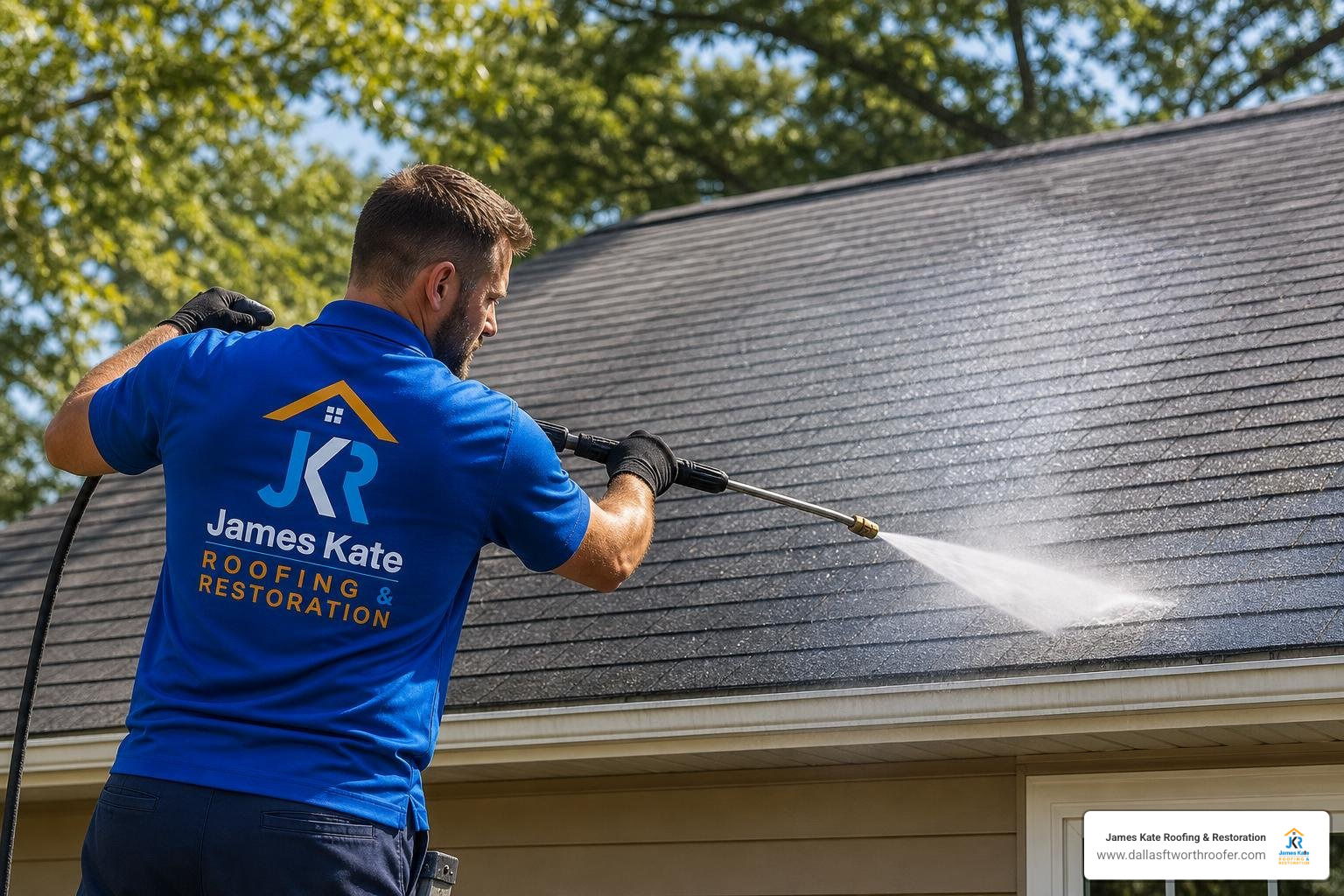
No two roof solar projects cost the exact same amount. Even when two homes share identical square footage, differences in roof design, surface pitch, physical height, and site accessibility can create substantial variance in final contractor pricing.
Safety regulations set by OSHA mandate strict fall protection standards on sloped or elevated structures. Pitched or steep roofs cost 35% to 50% more in application labor than flat surfaces because workers must rig harnesses, staging, and safety equipment. Multi-story buildings also incur height surcharges—typically adding 10% for two stories and 25% to 35% for three stories or higher—to account for hoisting equipment and material safety management.
Impact of Roof Substrate on the Average Cost to Coat a Roof
The physical material underlying the liquid membrane dictates the preparation intensity, priming needs, and overall coating adhesion strategy required for long-term success.
- Flat Roofs: Sealing a flat roof generally costs $500 to $2,000 ($1.00 to $4.00 per sq. ft.). Flat surfaces offer easy equipment staging, but they require detailed seam inspection and water-tolerant silicone coatings.
- Metal Roofs: Coating corrugated or standing-seam metal roofs averages $0.50 to $4.00 per square foot. Prep work requires power washing, scraping oxidation rust, and spot-priming fasteners. Learn how to refresh metal systems in Top Paint for Corrugated Roof Options: Protect Your Metal in Style.
- Asphalt Shingles: Complete roof coating on traditional composite asphalt shingles is strongly discouraged by the National Roofing Contractors Association (NRCA). Painting asphalt shingles traps internal moisture, prevents proper shingle drainage, and voids manufacturer warranties. Asphaltic coatings should strictly be restricted to spot repairs near flashing.
- Mobile Home Roofs: Coating a mobile home roof generally costs between $0.50 and $4.50 per square foot, providing an economical way to fix minor seam weeping and reflect intense sun heat without incurring total roof replacement costs.
DIY vs Professional Application Costs
Homeowners aiming to minimize expenses often evaluate applying roof coatings as a do-it-yourself weekend project. DIY material purchasing limits expenses to raw supplies ($0.15 to $2.75 per sq. ft.), paint rollers, sprayers, and cleaning agents.
However, DIY application carries considerable hidden risks. Attempting work on steep or slick flat surfaces poses severe fall hazards. Improper prep work—such as applying acrylic sealants over uncleaned oil stains, moss, or damp substrates—inevitably leads to premature peeling, bubbling, and total system adhesion failure. Furthermore, improper application can void existing roof manufacturer warranties and complicate future home inspections during property sales. Hiring certified professionals ensures correct mil-thickness application, valid material warranties, and adherence to safe installation standards, as outlined in the 2026 Roof Coating Cost Guide.
Additional Costs to Budget for Before Coating Your Roof

A high-performance liquid coating is only as durable as the surface underneath it. You cannot simply roll a fresh coat of silicone over accumulated dirt, wet insulation, or open seams and expect a watertight seal. Budgeting for critical prep tasks prevents unexpected change orders midway through your project.

Essential pre-coating expenses include:
- Roof Cleaning and Power Washing: $170 – $625 ($0.20 – $0.60 per sq. ft.). High-pressure cleaning removes dirt, chalking paint, grease, and biological growth to guarantee full chemical adhesion.
- Professional Roof Inspection: $125 – $370. A certified technician evaluates structural integrity, seam soundness, and membrane adhesion.
- Pre-Coating Moisture Survey: $600 – $1,200. Infrared thermal imaging or probe testing detects trapped moisture under the membrane. Coating over wet insulation creates destructive vapor blisters that destroy new coatings during summer heat.
- Flashing and Seam Repairs: $0.50 – $3.00 per sq. ft. All open seams, loose flashing, fasteners, and penetrations must be reinforced with mesh fabric and mastic prior to field-coating.
- Permits and Local Municipal Fees: $100 – $500. Depending on local building codes in Arlington, Grand Prairie, or Midlothian, municipal permits may be required before starting major roofing work.
To understand how pre-coating repair budgets fit into broader property management planning, check our detailed A-Z Guide to Roof Replacement Cost Estimation.
Frequently Asked Questions About Roof Coating
How often should a roof be recoated?
A professionally applied roof coating system lasts between 10 and 20 years, but routine maintenance re-coating should occur every 4 to 10 years depending on chemical choice, climate severity, and roof type. Flat roofs exposed to high heat and heavy rain across Texas usually benefit from inspection and recoating every 3 to 5 years. For actionable advice on preserving your building envelope, explore our Expert Tips for Affordable Roof Maintenance and Longevity.
Can roof coating stop active roof leaks?
Roof coatings are designed as protective, preventative solar systems rather than structural repair solutions. While high-solids silicone or liquid rubber can seal microscopic hairline cracks and small seam weepage, coatings cannot stop active structural leaks, sagging decks, or widespread flashing failures. Active leaks must be mechanically repaired, sealed, and fully dried before applying any coating system.
Is roof coating cheaper than replacing a roof?
Yes, coating a roof is significantly cheaper than a total tear-off and replacement. Complete roof replacements generally range from $5.00 to $12.00+ per square foot, whereas professional roof coatings average $1.00 to $4.00 per square foot. Restoring a sound substrate with a elastomeric or silicone membrane typically saves property owners 50% to 70% compared to full replacement costs. Additionally, the IRS categorizes roof coatings as a maintenance repair expense, allowing commercial property owners to deduct the investment immediately in the current tax year rather than amortizing it over 39 years.
Conclusion
Understanding the average cost to coat a roof gives property owners the clarity needed to make smart investment decisions. With installed costs averaging $1.00 to $4.00 per square foot ($500 to $2,000 for standard residential projects), liquid roof solar represents an extraordinarily cost-effective method to seal out weather, enhance thermal reflection, and extend roof lifespan by 7 to 10+ years without the financial burden of total replacement.
At James Kate Roofing & solar, our team serves homeowners and commercial property managers across Mansfield, Arlington, Grand Prairie, Midlothian, and Granbury. Grounded in honesty, integrity, and Biblical principles, we deliver accurate inspections, honest pricing, and industry-leading workmanship warranties to protect your property investment for the long haul.
Ready to restore your roof’s protective layer and maximize energy savings? Contact our expert team today to schedule an in-person roof inspection and receive a detailed, custom solar estimate through our Professional DFW Roofing Services.

Dustin Eatman is a seasoned roofing professional with deep, hands-on expertise that spans residential and commercial roofing, insurance solar, and long-term roof asset management. As the owner of James Kate Roofing & solar in the Dallas–Fort Worth metroplex, he’s built a reputation for diagnosing roof systems accurately, communicating clearly, and executing projects with a high standard of workmanship and documentation. Dustin understands the technical details that make roofs perform—proper underlayment selection, slope and drainage considerations, ventilation strategy, flashing and penetration detailing, and manufacturer-specific installation requirements—because he’s worked through the real-world challenges that cause leaks, premature wear, and warranty issues. He’s equally fluent in the operational side of roofing: jobsite planning, quality control, safety, material ordering, crew coordination, and customer experience from inspection to closeout. In insurance-related projects, Dustin brings practical knowledge of claim workflows, adjuster meetings, scope alignment, supplements, and the importance of photo evidence and thorough records, helping property owners navigate stressful situations with confidence. For commercial clients—especially property and facility managers—he emphasizes proactive maintenance and targeted repairs that reduce disruption, extend roof life, and prevent expensive interior damage. Dustin also stays focused on doing things the right way: educating customers on realistic options, setting expectations, and prioritizing solutions that hold up over time rather than quick fixes. That blend of technical skill, field experience, process discipline, and owner-level accountability is what makes Dustin Eatman a trusted expert in the roofing industry.