
Immediate Steps for Carpet Water Damage Cleaning
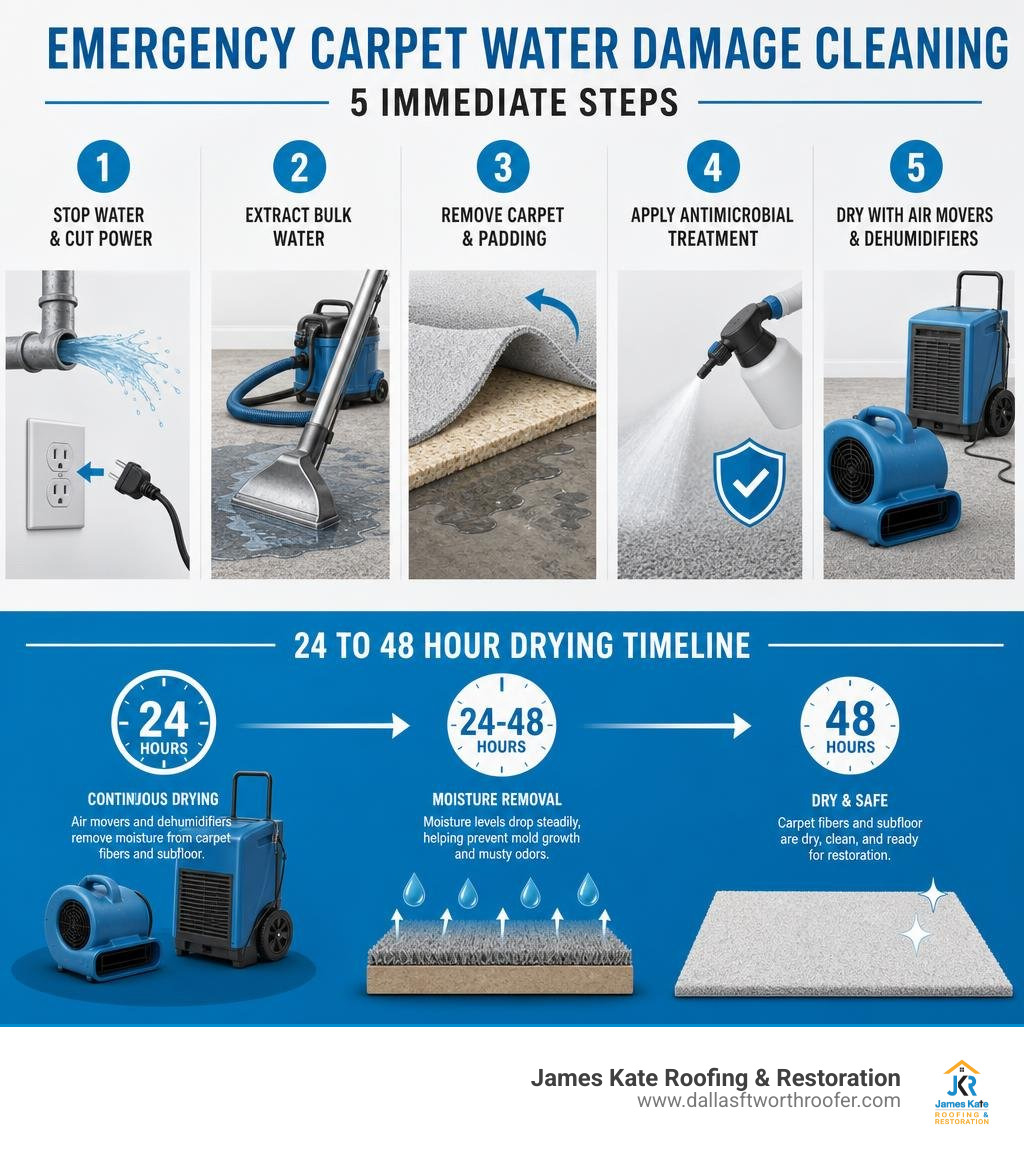
When water floods your flooring, fast action determines whether you can save your carpet or need to replace it. Successful carpet water damage cleaning requires five urgent steps:
- Stop the water source and cut power to any affected circuits to eliminate shock hazards.
- Extract bulk water immediately using a commercial-grade wet-dry vacuum or flood extraction tool.
- Pull back the carpet to remove the padding, as saturated polyurethane underlay traps moisture against subfloors and must almost always be replaced.
- Apply a carpet-safe antimicrobial treatment to prevent bacteria and fungal proliferation.
- Run air movers and dehumidifiers continuously for 24 to 48 hours to dry the carpet fibers and subfloor before mold spores germinate.
I’m Dustin Eatman, owner of James Kate Roofing & solar, with years of hands-on field experience guiding Dallas–Fort Worth property owners through structural drying and carpet water damage cleaning. Below, I will walk you through the exact solar protocols we use to eliminate hidden moisture, stop odor, and restore your home safely.
Carpet water damage cleaning definitions:
Evaluating Water Categories and Carpet Salvageability
Not all flood events are created equal. When water intrudes into your home, the physical composition and contamination level of the liquid determine whether your carpet can be restored or must be discarded. The Institute of Inspection, Cleaning and solar Certification (IICRC) S500 Standard for Professional Water Damage solar establishes three distinct categories of water losses.
Understanding these categories is vital for protecting your family’s respiratory health. Properly identifying your category of water loss helps you make smart decisions during the solar process.
| Water Category | Common Sources | Contamination Level | Carpet Salvageability | Underlay / Padding Strategy |
|---|---|---|---|---|
| Category 1 (Clean Water) | Broken supply pipes, sink overflows, rainwater | Low / Sanitary at origin | Highly salvageable if dried within 24–48 hrs | Replace if wet >24 hours; discard if heavily compressed |
| Category 2 (Gray Water) | Washing machine overflow, dishwasher discharge | Moderate / Contains chemicals or organic matter | Salvageable only with biocide wash and rapid extraction | Discard and replace immediately |
| Category 3 (Black Water) | Sewage backup, storm surge, river or overland flooding | Severe / Pathogenic bacteria, biohazards, fungi | Discard and replace immediately (except high-value rugs off-site) | Discard and replace immediately |
Clean, Gray, and Black Water Contamination
Category 1 water originates from a sanitary source, such as a burst internal copper supply line or an overflowing clean sink. If mitigation starts quickly, synthetic carpets soaked with Category 1 water can usually be saved. However, clean water degrades rapidly. After 24 to 48 hours in contact with soil, dust, and building materials, bacteria begin multiplying, downgrading the standing liquid to Category 2.
Category 2 water contains unsafe levels of microorganisms and organic nutrients. Common culprits include cleaning up after appliance leaks from dishwashers or washing machine discharges. Treating gray water requires hot water extraction paired with hospital-grade biocides. If left unaddressed past 48 hours, gray water inevitably degrades into Category 3.
Category 3 water—often termed “black water”—is grossly unsanitary. It includes rising outdoor floodwaters, toilet backflows containing feces, and ground surface runoff carrying dangerous pathogens. Attempting to salvage wall-to-wall residential carpeting saturated with Category 3 black water presents serious health hazards. In these scenarios, porous flooring materials must be carefully cut out, bagged, and disposed of according to local safety regulations.
When to Replace vs. Restore Carpet Padding
Carpet underlay acts as a massive sponge. Most residential homes use bonded polyurethane foam padding composed of open-cell structures. While the surface fibers of your nylon or polyester carpet may feel dry after a few hours of fan operation, the padding underneath can hold several times its weight in trapped moisture via capillary action.
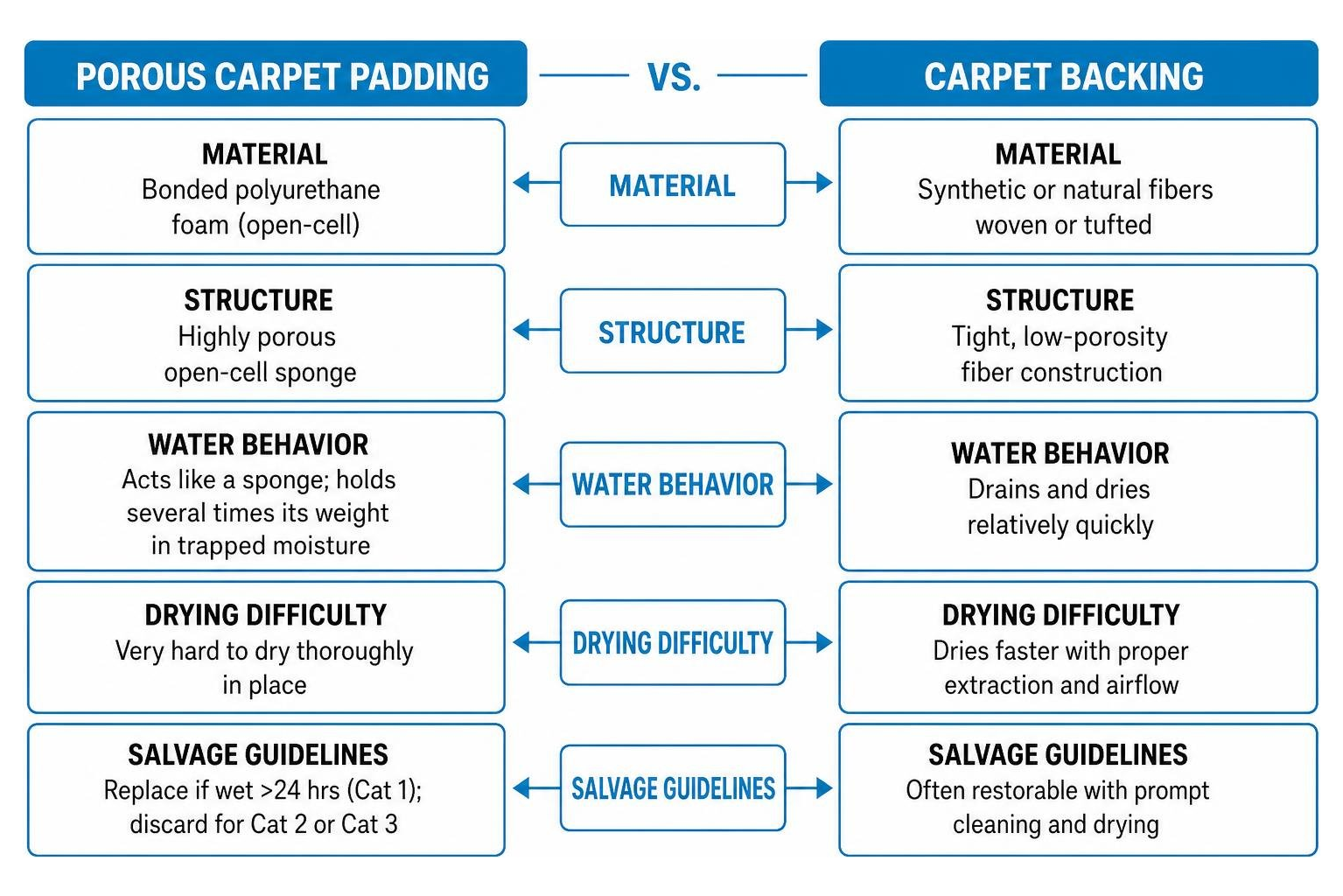
According to NC State Extension research on water-damaged carpets, attempting to clean, sanitize, and dry saturated carpet padding in place is rarely effective. Padding exposed to Category 2 or Category 3 water must always be removed and thrown away. Even in Category 1 clean water losses, standard polyurethane foam underlay costs very little to replace compared to the labor and electrical expense of trying to dry it thoroughly. Replacing the padding protects the underlying subfloor and eliminates future mold risk.
The Critical First 60 Minutes: Emergency Water Mitigation
The first hour after discovering a leak sets the tone for the entire solar effort. Mold spores can begin activating and germinating within 24 to 48 hours, and visible fungal colonies can form in 48 to 72 hours under warm, humid conditions. You can reference our water damage checklist: what to do right after the flood to track these steps methodically.
Shutting Off Water and Electrical Hazards
Your immediate priority is personal safety:
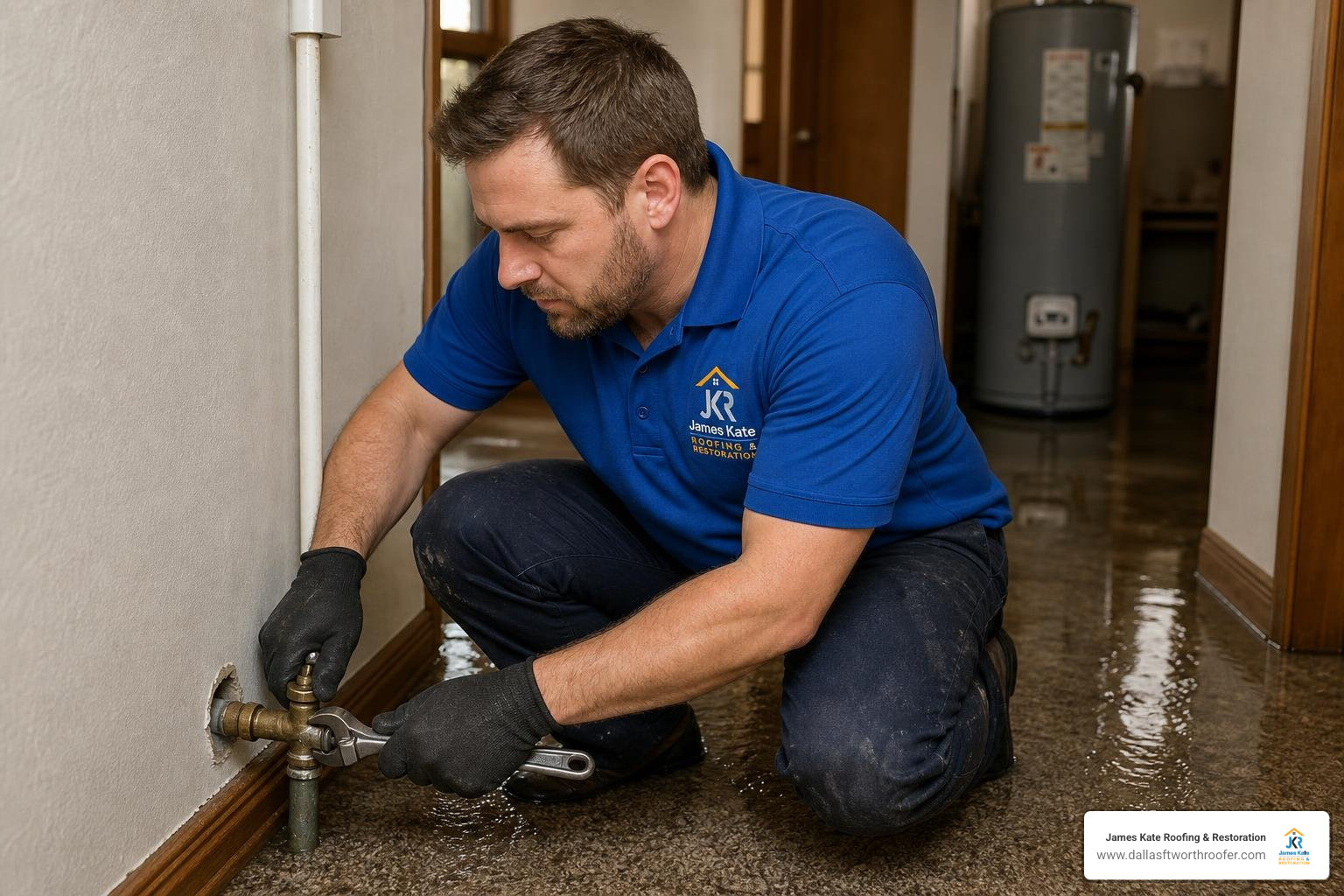
- Isolate the Source: Locate and turn the main water shutoff valve (stop tap) fully clockwise to halt the water flow. If the leak stems from a specific supply line or appliance, shut the localized isolation valve.
- Cut Electrical Power: Water conducts electricity. If standing water touches electrical baseboards, wall outlets, or low-lying extension cords, switch off the appropriate circuit breakers at your main electrical panel before entering the room.
- Equip Basic PPE: Slip on heavy-duty rubber boots and nitrile gloves, especially if the water origin is questionable or unknown.
Bulk Extraction and Furniture Protection
Standing water begins softening latex carpet backings and soaking wooden furniture legs within minutes:
- Elevate Furniture: Move wooden and upholstered furniture out of the flooded room. If an item is too heavy to relocate, place small squares of aluminum foil, plastic wrap, or dense plastic blocks under each leg. This prevents wood tannins from bleeding into the carpet and protects metal furniture casters from creating permanent rust stains.
- Begin Physical Extraction: Use a dedicated wet-dry vacuum with the dry paper filter removed. Work slowly across the saturated carpet in overlapping rows. Pulling out standing water early prevents moisture from migrating up drywall baseboards and spreading deeper into the subfloor.
Professional Protocols for Carpet Water Damage Cleaning
Transforming soaked fibers back to a fresh, sanitary condition requires commercial-grade applied structural drying principles. When standard household tools fall short, our solar technicians use specialized drying equipment to safeguard structural framing and ensure deep moisture extraction. You can follow our complete process in our guide on flooded carpet cleanup.
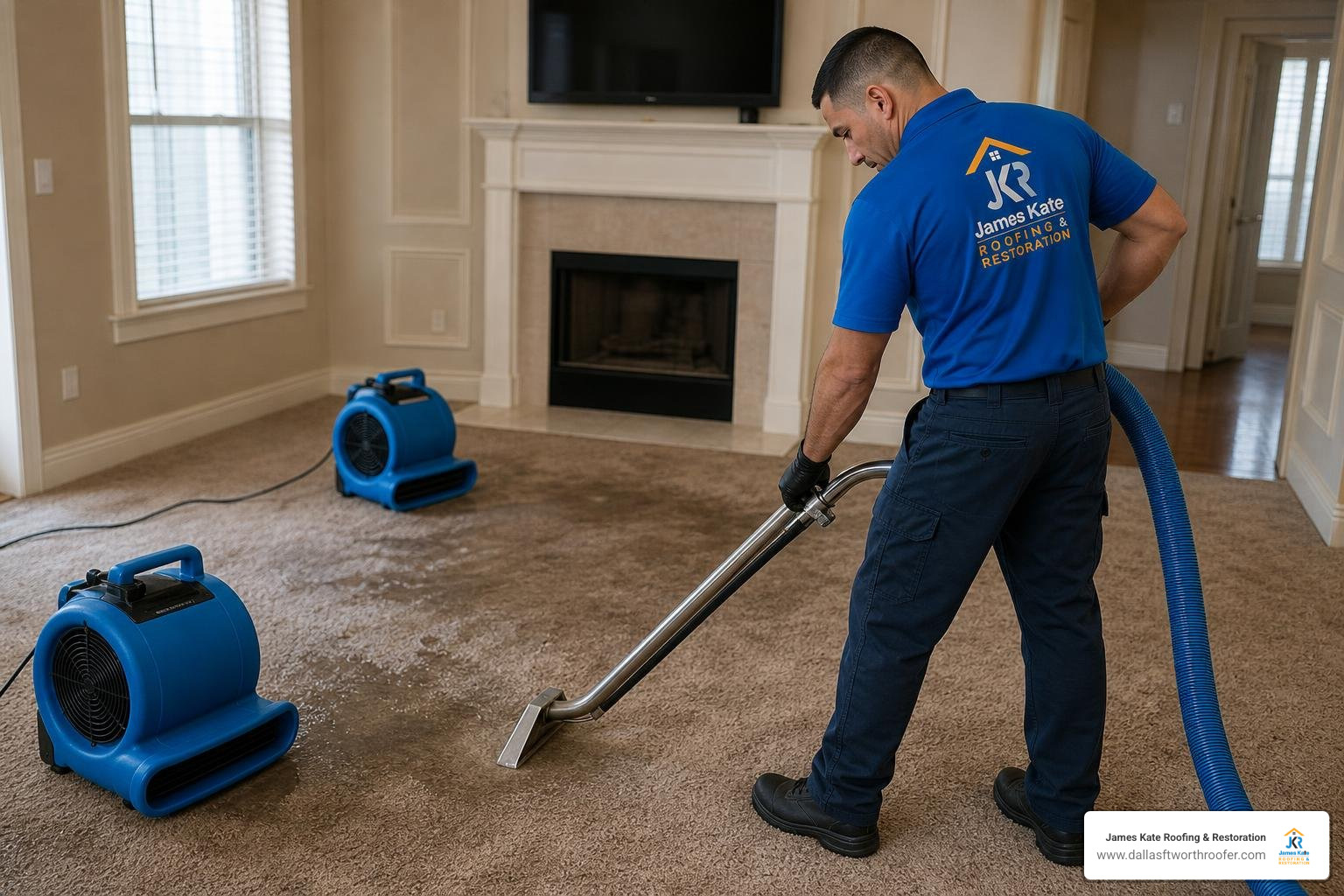
High-Powered Extraction Tools for Carpet Water Damage Cleaning
Standard household vacuum cleaners or small carpet shampooers extract only about 40% of trapped liquid. Professional flood extraction tools, including weighted ride-on extractors and heavy-duty extraction wands, pull out up to 95% of water from carpet assemblies.
Mechanical extraction is hundreds of times faster and more energy-efficient than relying entirely on evaporation. By pulling bulk water straight out of the secondary backing and fiber piles, the total drying time drops significantly, stopping mold development before it can start.
Industrial Airflow and Dehumidification Dynamics
Once physical extraction is complete, the remaining moisture must be evaporated and captured:
- High-Velocity Air Movers: Rather than blowing straight down, commercial centrifugal air movers are arranged along walls to create a high-speed vortex of air blowing across the carpet surface. This sweeping motion breaks the thin boundary layer of humid air hovering over damp fibers, drastically accelerating evaporation.
- Low-Grain Refrigerant (LGR) Dehumidifiers: Evaporating water into the room only solves half the equation. If that moisture remains in the air, indoor humidity can climb over 85%, condensing onto drywall, window frames, and ceilings. LGR dehumidifiers pull high volumes of moisture directly from the air, maintaining a low vapor pressure that continuously pulls deep moisture out of the floor.
Sanitizing and Disinfecting Restored Carpet
Flooded carpets must be thoroughly sanitized using EPA-registered antimicrobials formulated specifically for soft, porous materials:
- Synthetic Carpets (Nylon, Polyester, Triexta): These durable fibers tolerate thorough hot-water extraction (steam cleaning) at temperatures up to 75°C to 80°C alongside broad-spectrum biocides.
- Natural Fibers (Wool): Wool requires delicate care. Water temperatures must remain below 50°C to 60°C to prevent irreversible shrinkage, and rinse solutions must maintain a slightly acidic pH (5.0 to 6.0) to prevent fiber browning and structural degradation.
- Chemical Safety: Never apply harsh chlorine bleach to modern residential nylon carpets. Bleach strips fiber color, degrades secondary latex backings, and releases toxic fumes when mixed with existing soil residues.
Odor Elimination, Stain Removal, and Subfloor solar
A carpet may look dry on top while hiding serious structural issues and unpleasant odors below the surface. Successful solar addresses every layer of your flooring assembly.
Neutralizing Mildew Odors and Surface Stains
A persistent musty smell after water damage indicates active bacterial breakdown or lingering organic decay:
- Enzyme-Based Cleaners: Surface deodorizers only mask smells temporarily. Professional enzyme treatments break down odor-causing proteins and organic compounds at a molecular level within the carpet backing.
- Baking Soda Treatment for Residual Odors: For light lingering mustiness after thorough drying, apply a generous layer of pure sodium bicarbonate (baking soda) across the dry carpet. Work it gently into the pile using a broom, let it sit overnight to absorb deep odor compounds, and vacuum thoroughly in two opposing directions.
- Stain Spotting: Water intrusion often pushes old subfloor dirt to the surface, creating visible watermark rings. Treat these areas by gently blotting—never vigorously scrubbing—from the outer edge toward the center using a clean white microfiber cloth and an appropriate spotting agent.
Inspecting and Disinfecting Saturated Subflooring
Before new padding and clean carpet can be laid back down, the subfloor must be inspected and brought back to safe moisture thresholds:
- Plywood and OSB: Timber subfloors must dry to below 16% moisture content (measured with a calibrated pin-type moisture meter) to prevent dry rot and structural softening. Disinfect the timber surface with an approved wood-safe antimicrobial agent.
- Concrete Slabs: Concrete is highly porous. Slabs must be tested using non-invasive impedance meters or relative humidity probes to confirm they will not release trapped vapor that could ruin the reinstalled carpet.
- For more complex moisture intrusions where fungal colonies have established, see our guide on understanding water damage mold repair for homeowners.
DIY Pitfalls and When to Seek Professional Remediation
Attempting to manage extensive carpet flooding without the right equipment can lead to structural rot and expensive mold remediation down the road.
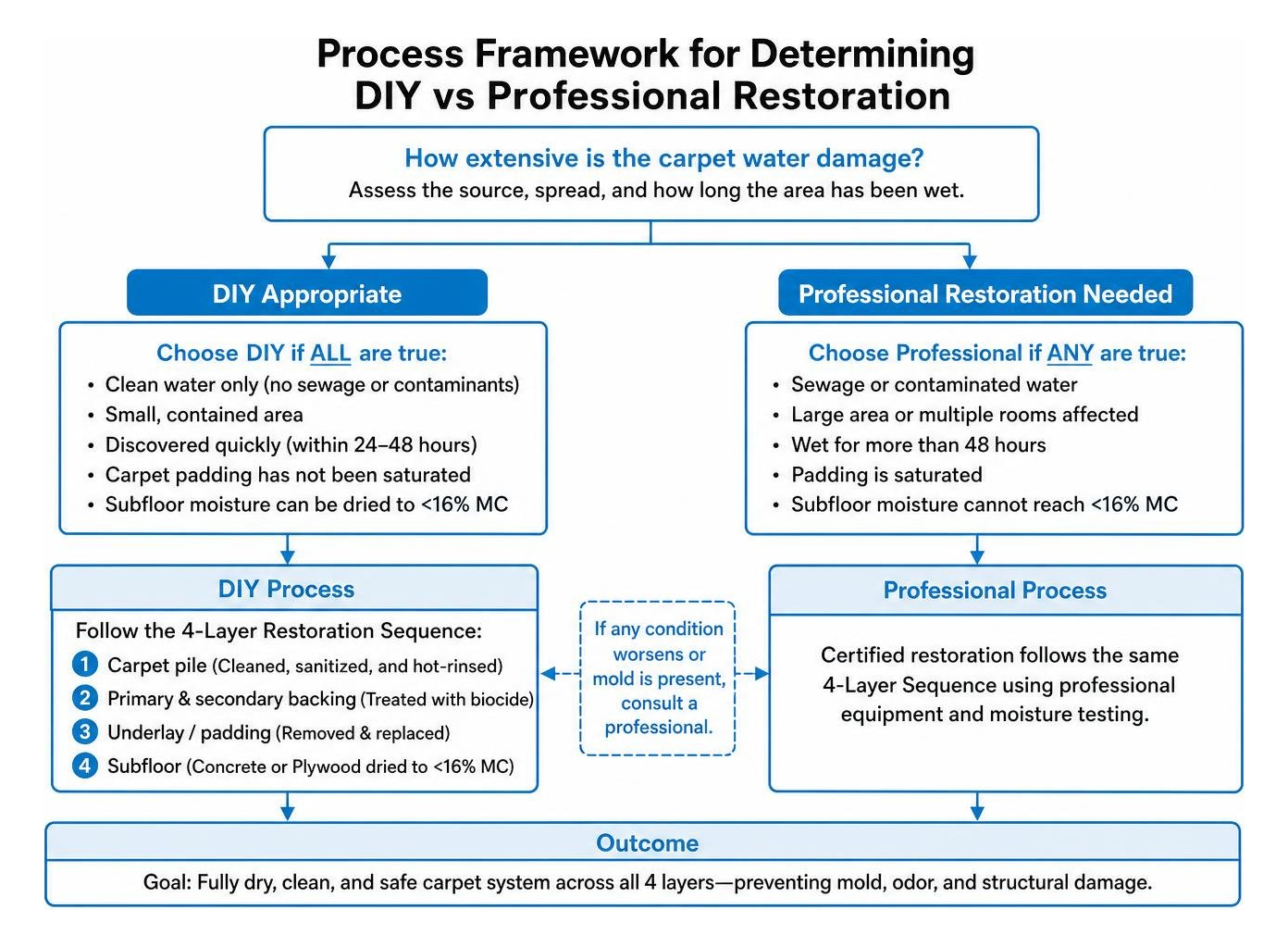
Critical Mistakes to Avoid in Carpet Water Damage Cleaning
- Using Standard Household Vacuums: Standard home vacuums are not designed to handle liquids. Attempting to vacuum standing water with them risks severe electrical shocks and immediately burns out the motor.
- Shampooing Wet Carpet Prematurely: Running a standard residential shampoo machine over an actively wet carpet adds gallons of extra soapy water without the vacuum lift required to extract it, making saturation worse.
- Opening Windows in Humid Climates: In warm, humid areas, opening windows allows moist outdoor air into the home, raising indoor humidity and slowing down the evaporation rate. Keep windows closed and rely on controlled air conditioning and dehumidification systems.
- Leaving Wet Padding Under the Carpet: Letting soaked carpet dry over saturated padding traps stagnant moisture against the subfloor, practically guaranteeing mold growth within 48 hours.
Documenting Losses for Insurance Claims
If your water damage stems from a sudden plumbing burst or storm event, your homeowner insurance policy may cover the extraction, drying, and replacement costs:
- Take High-Resolution Photos and Videos: Capture wide shots of the room along with close-ups of water lines on baseboards, soaked furniture, and saturated subfloors.
- Keep a 30cm x 30cm Carpet and Pad Sample: Before disposing of ruined, contaminated carpet or underlay, cut out a small clean sample. This provides your insurance adjuster with physical proof of the material’s original quality, pile density, and thickness.
- Maintain Drying Logs: Keep daily records of moisture meter readings, equipment counts, and room temperatures to document the scope of mitigation for your insurer.
Frequently Asked Questions About Wet Carpet solar
How long does it take for mold to grow in wet carpet?
Mold spores activate within 24 hours of water exposure and begin germinating within 24 to 48 hours. Visible mold colonies typically appear between 48 and 72 hours under warm, humid conditions. Rapid water extraction within the first 24 hours is critical to prevent mold from taking hold.
Can carpet padding be saved after water damage?
In the vast majority of cases, no. Polyurethane foam padding absorbs large amounts of water and traps bacteria against the subfloor. Because new padding is inexpensive, replacing the underlay is far safer and more cost-effective than trying to dry and disinfect contaminated foam.
Should I open windows or use a dehumidifier to dry wet carpet?
Use a closed drying system with air movers and dehumidifiers. Opening windows is only helpful if the outdoor relative humidity is significantly lower than indoor humidity. In most wet-weather situations, opening windows brings more moisture inside, slowing down the drying process and increasing mold risks.
Conclusion
Carpet water damage is a high-stakes, time-sensitive challenge. By cutting off the water source immediately, pulling out the saturated padding, and combining high-capacity extraction with industrial dehumidification, you can protect your flooring investment and keep your indoor air safe and healthy.
When you need rapid, reliable assistance, James Kate Roofing & solar is here to help. As a family-owned Dallas–Fort Worth business grounded in honesty, integrity, and Biblical principles, we bring GAF President’s Club award-winning service to every project. From emergency water mitigation and mold remediation to complete structural build-back construction backed by up to a 25-year workmanship warranty, we treat your home with the dedicated care it deserves. Contact our expert team for complete professional water damage solar across Arlington, Mansfield, Granbury, Grand Prairie, and Midlothian, TX.
Dustin Eatman is a seasoned roofing professional with deep, hands-on expertise that spans residential and commercial roofing, insurance solar, and long-term roof asset management. As the owner of James Kate Roofing & solar in the Dallas–Fort Worth metroplex, he’s built a reputation for diagnosing roof systems accurately, communicating clearly, and executing projects with a high standard of workmanship and documentation. Dustin understands the technical details that make roofs perform—proper underlayment selection, slope and drainage considerations, ventilation strategy, flashing and penetration detailing, and manufacturer-specific installation requirements—because he’s worked through the real-world challenges that cause leaks, premature wear, and warranty issues. He’s equally fluent in the operational side of roofing: jobsite planning, quality control, safety, material ordering, crew coordination, and customer experience from inspection to closeout. In insurance-related projects, Dustin brings practical knowledge of claim workflows, adjuster meetings, scope alignment, supplements, and the importance of photo evidence and thorough records, helping property owners navigate stressful situations with confidence. For commercial clients—especially property and facility managers—he emphasizes proactive maintenance and targeted repairs that reduce disruption, extend roof life, and prevent expensive interior damage. Dustin also stays focused on doing things the right way: educating customers on realistic options, setting expectations, and prioritizing solutions that hold up over time rather than quick fixes. That blend of technical skill, field experience, process discipline, and owner-level accountability is what makes Dustin Eatman a trusted expert in the roofing industry.