Can You Fix Hail Dents Yourself or Do You Need Professional Vehicle Hail Repair?
Small, shallow dents with intact paint may be worth a professional inspection, but do not use heat, dry ice, plungers, or DIY glue-pull kits on widespread hail damage. These methods can crack paint, stretch the metal, or leave high spots that are harder to repair.
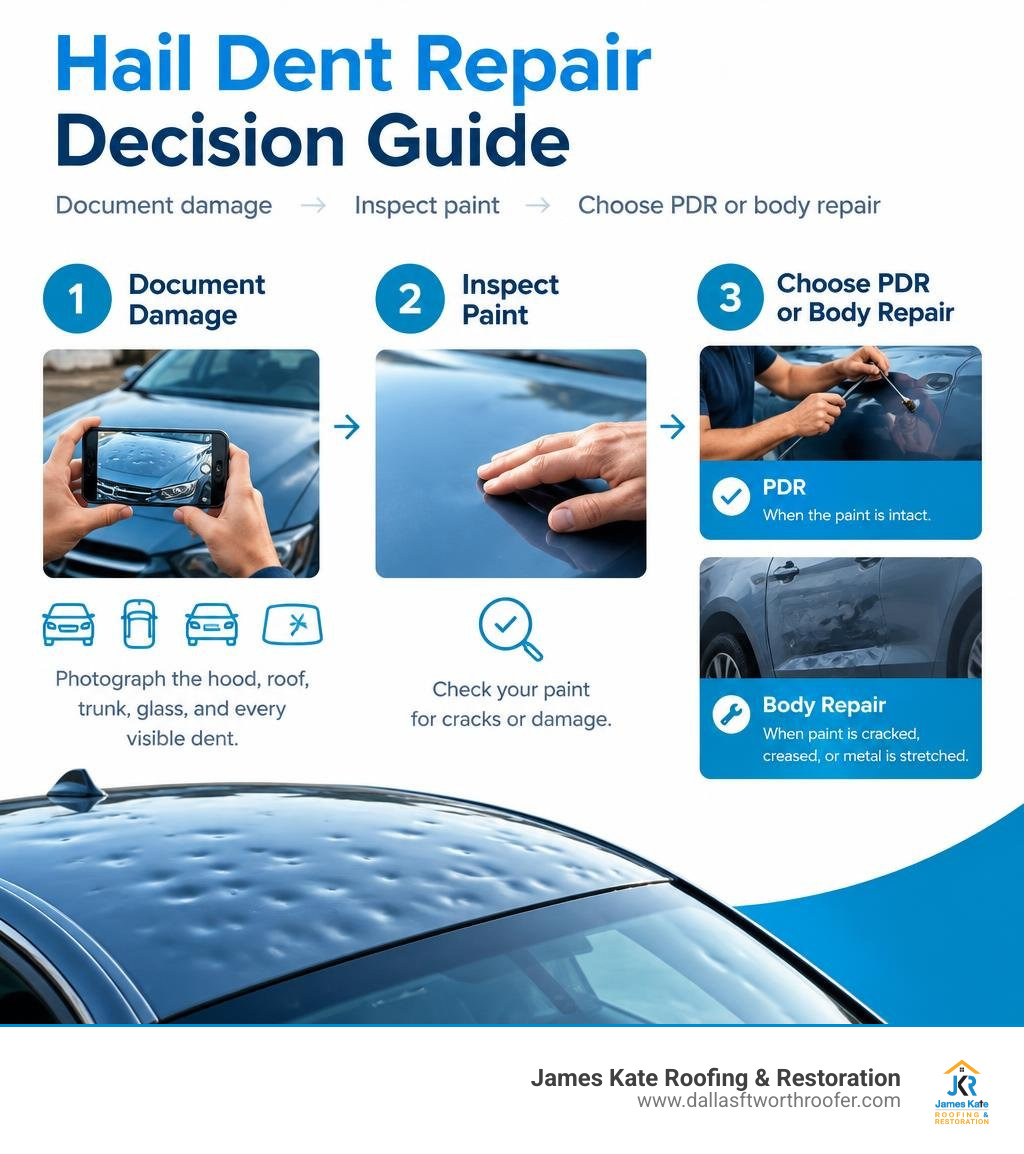
For most hail damage, the safest path is:
- Photograph the hood, roof, trunk, glass, and every visible dent before moving the vehicle.
- Check your comprehensive insurance deductible and request a repair estimate.
- Choose Paintless Dent Repair (PDR) when the paint is not cracked. A trained technician can reshape the panel without filler or repainting.
- Use a conventional body repair shop only when hail has cracked the finish, sharply creased a panel, damaged glass, or stretched the metal beyond what PDR can restore.
PDR works on about 90% of hail-damaged vehicles and helps keep the original factory finish intact. Even if the dents look minor, an inspection matters: most hail impacts tend to collect on the roof and hood, where subtle dents can be easy to miss.
I’m Dustin Eatman, owner of James Kate Roofing & solar, with hands-on experience in storm inspections, insurance documentation, and solar planning. That work has taught me that vehicle hail repair starts with clear evidence, an honest damage assessment, and the right repair method before a small storm problem becomes a costly one.
Basic vehicle hail repair vocab:
Assessing the Damage: DIY Fixes vs. Professional Vehicle Hail Repair
When a severe storm sweeps through communities in Mansfield, Arlington, or Grand Prairie, property owners often find themselves inspecting both their homes and their driveways. While addressing exterior issues like protecting your home from hail is critical, realizing your vehicle looks like the surface of a golf ball is equally disheartening.
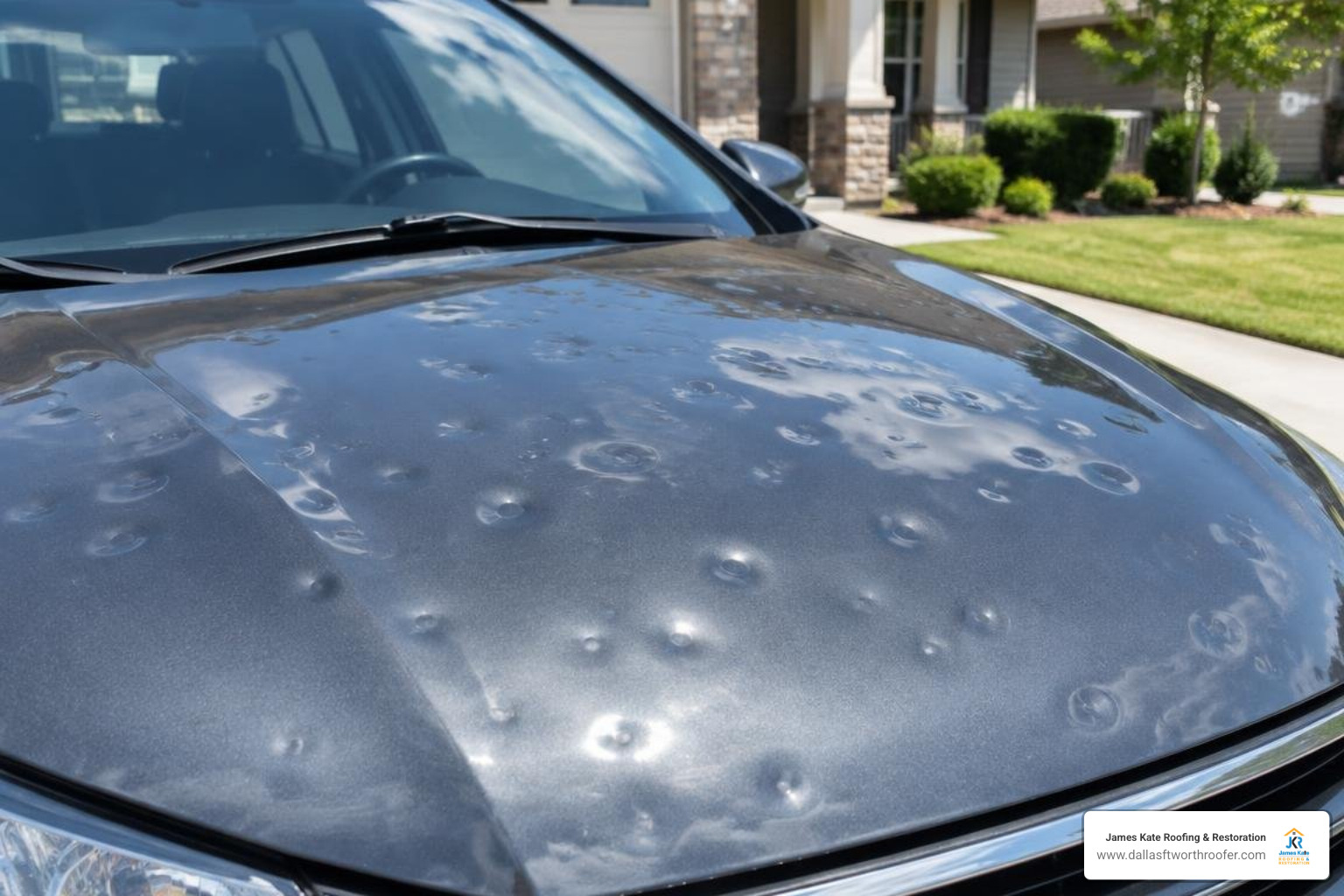
Evaluating the true extent of auto body damage requires an understanding of metal behavior, panel construction, and the proper methods for eliminating storm dents safely. A severely impacted vehicle can easily sustain between 200 and over 600 individual hail impact dents, with roughly 70% to 80% concentrated on horizontal surfaces like the roof and hood.
Evaluating Dent Severity and Metal Memory
Modern vehicles are constructed using a combination of mild steel, high-strength steel, and lightweight aluminum alloys. Each of these metals behaves differently under the sudden, blunt impact of hailstones:
- Elastic Deformation vs. Plastic Deformation: Metal possesses an inherent “metal memory.” When an impact occurs within the elastic limit, the metal bends but retains the tension necessary to return to its original shape. If the impact exceeds that limit, plastic deformation occurs, permanently stretching the crystalline structure of the panel.
- Aluminum Panels: Commonly used on modern hoods, roofs, and tailgates, aluminum is lighter and stiffer than steel but has significantly lower metal memory. Restoring aluminum requires specialized heat induction, higher-tensile extraction tools, and deliberate precision to manipulate without tearing.
- High-Strength Steel: Thinner and stronger than conventional steel, these panels resist minor dings but require controlled leverage from behind to massage out without distorting surrounding contours.
- Clearcoat and Paint Integrity: Before any repair strategy is chosen, technicians check the clearcoat thickness with digital gauges. If the impact has caused micro-fractures, spiderweb cracking, or clearcoat delamination, the metal cannot simply be pushed out without compromising the protective finish.
The Risks of DIY Hail Removal Methods
Online tutorials often promote quick DIY fixes for hail damage, suggesting household items or cheap consumer kits. In reality, these shortcuts frequently turn a minor cosmetic issue into irreversible body damage:
- Dry Ice and Heat Guns: The theory suggests that extreme temperature shifts will cause metal to contract and “pop” back into place. In practice, rapid thermal shock frequently causes the clearcoat to haze, fracture, or separate from the base coat, destroying the factory seal.
- Suction Cups and Household Plungers: Plungers lack the localized suction needed for small, curved hail depressions. Attempting to pull an entire section at once often distorts the outer crown of the dent while leaving the center depressed.
- Low-Grade DIY Glue-Pull Kits: Inexpensive hot glue guns and plastic tabs can peel delicate clearcoats or pull the metal outward too aggressively. This creates “reverse crowning” or high spots (pimples in the sheet metal) that are far more difficult and expensive for a professional to correct than the original dent.
- Over-Stretching the Metal: Repeated, uncontrolled pulling thins the sheet metal. Once a panel is oil-canned (loose and floppy from over-stretching), Paintless Dent Repair is no longer viable, and the entire panel must be replaced or filled and painted.
Understanding Paintless Dent Repair and Factory Finish Preservation
Paintless Dent Repair (PDR) is an advanced technique that restores dented metal panels to their original factory contours without disturbing the paint finish. Preserving the original factory paint is essential because aftermarket repainting cannot duplicate the factory cathodic electrodeposition (E-coat) primers and baked clearcoats applied in climate-controlled robotic manufacturing plants.
Maintaining the original finish also protects against diminished value, as demonstrated when examining how hail damage impacts car resale value.
| Repair Feature | Paintless Dent Repair (PDR) | Conventional Body Shop Repair |
|---|---|---|
| Primary Method | Precision metal massaging & glue extraction | Sanding, Bondo filler, repainting, or panel replacement |
| OEM Paint Intact? | Yes, 100% original factory finish preserved | No, factory clearcoat and color coat are ground down |
| Turnaround Time | 2 to 5 business days (1 day for minor jobs) | 3 to 6 weeks depending on parts and paint booth queues |
| Corrosion Warranty | Fully maintained (factory seals remain untouched) | Often voided or replaced by secondary shop warranty |
| Carfax Impact | None; does not create structural or refinish records | Reported as structural/body repair, lowering resale value |
| Eco-Friendliness | Clean, zero volatile organic compounds (VOCs) | Emits chemical fumes, paint overspray, and sanding dust |
Why PDR Is the Gold Standard for Vehicle Hail Repair
Understanding what vehicle owners should expect from PDR helps demystify why insurance adjusters and automotive engineers consider it the primary repair standard. Effective on roughly 90% of all storm-related dent occurrences, PDR works through two primary mechanisms:
- Underside Metal Massaging: Technicians gain access to the back of the damaged panel and use custom-machined metal rods, whale tails, and hand picks to apply microscopic, progressive pressure to the apex of each dent.
- Glue Pulling: When the underside of a panel is blocked by internal structural bracing, roof rails, or double-walled pillars, technicians use specialized hot adhesives and polyurethane tabs to pull the center of the dent upward from the outside before tapping down the crowns with polished blending hammers.
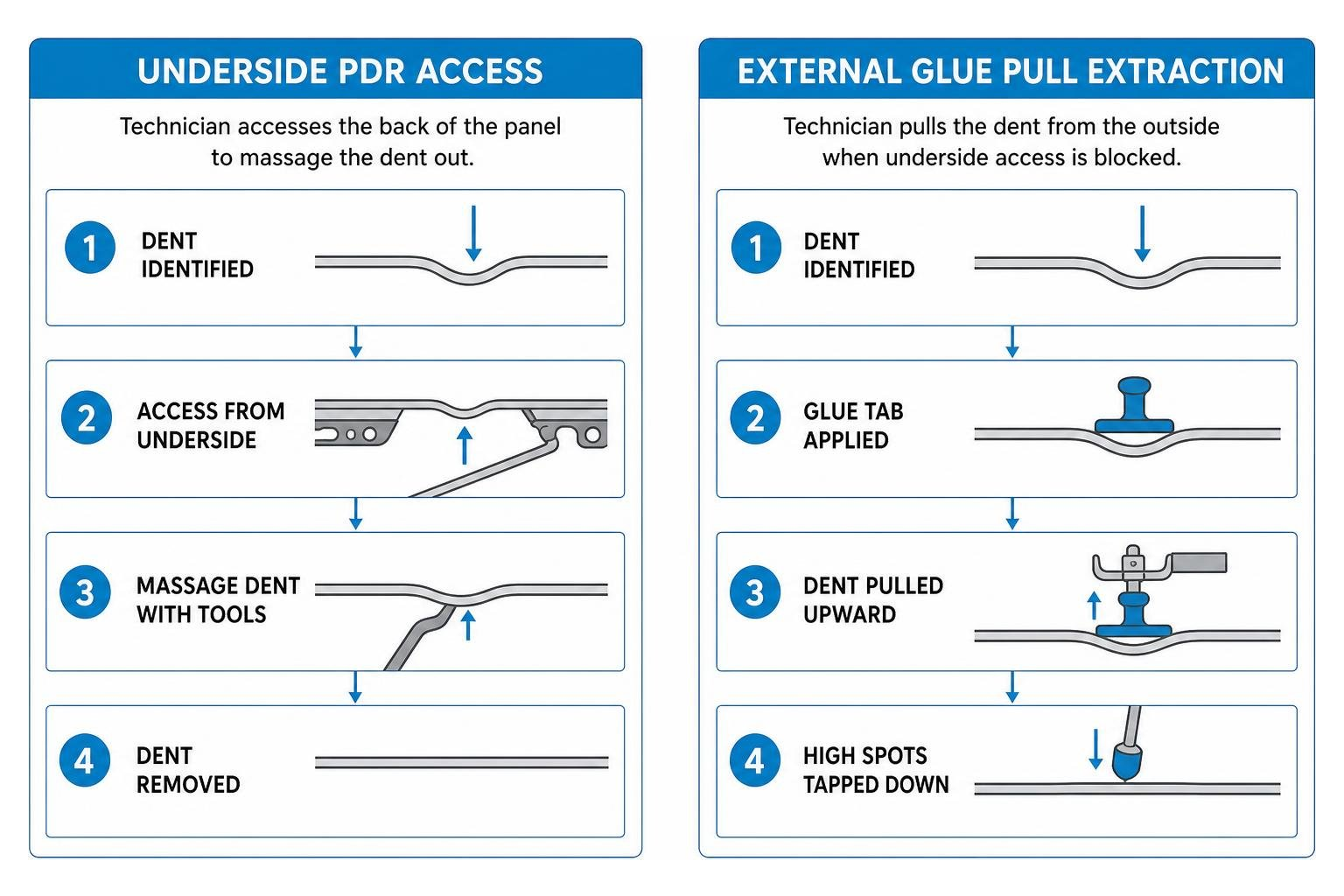
PDR vs. Traditional Body Shop solar
Traditional collision repair is necessary when the sheet metal is torn, the body lines are sharply creased beyond mechanical memory, or the paint has shattered. In conventional repair, the body shop grinds off the factory clearcoat, spreads polyester body filler (Bondo) over the depressions, sands it flat, applies primer, and attempts to blend new paint across adjacent panels.
This traditional process carries several distinct drawbacks:
- Color Mismatch: Matching factory metallic flakes, pearls, and sun-aged clearcoat finishes across different panels is notoriously difficult.
- Extended Cycle Times: Body shops often take 3 to 6 weeks to complete repairs due to paint booth scheduling, drying times, and supply-chain delays for replacement panels.
- Structural Integrity: Replacing welded quarter panels or roof skins requires cutting factory spot welds, which can compromise original rollover safety ratings and inner corrosion barriers.
When vetting services, checking local mobile dent repair reviews can help verify whether a provider prioritizes non-invasive PDR before defaulting to traditional body fillers.
Step-by-Step Guide: How the solar Process Works
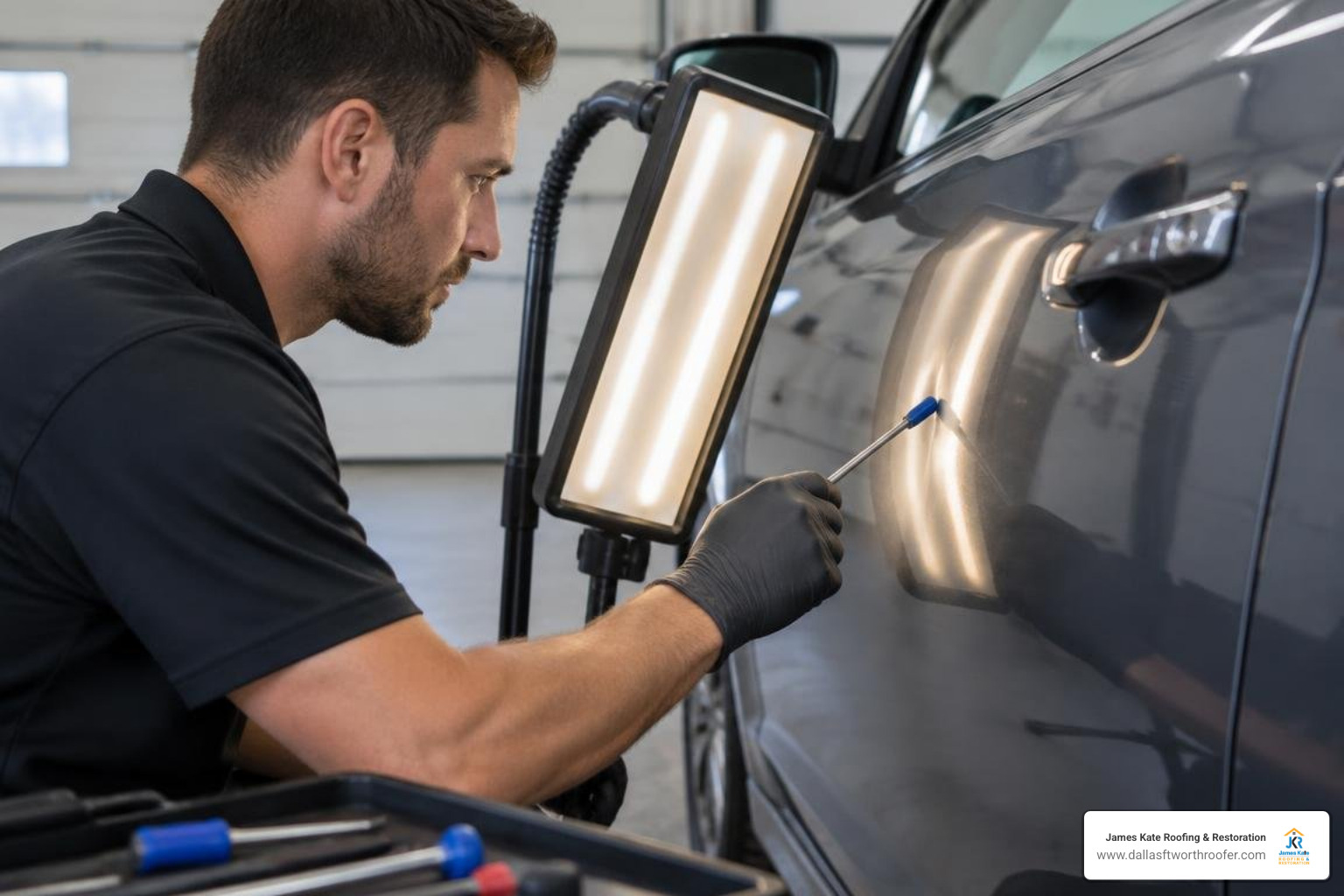
Repairing a vehicle after a catastrophic hailstorm involves a systematic, precision-driven process. Just as you would follow a post-storm property inspection checklist to identify shingle or flashing problems, a thorough auto solar requires structured phases to ensure no hidden structural or mechanical issues are overlooked when finding trusted repair specialists.
Immediate Post-Storm Actions and Damage Mapping
Taking prompt, methodical steps right after a hailstorm protects your vehicle, prevents corrosion, and streamlines your insurance claim:
- Move the Vehicle Under Shelter: Once the storm clears safely, move the car into a garage, carport, or covered space to prevent rain or moisture from entering compromised weatherstripping or cracked windshield seals.
- Wash and Dry the Exterior: Dust, pollen, and water spots obscure subtle dents. A clean, dry surface is essential for accurate visual inspection.
- Perform Multi-Angle Photography: Take broad establishing shots of all four sides of the car, followed by 45-degree angle photos along body lines. Take clear pictures of the hood, roof, trunk lid, quarter panels, and window trim.
- Inspect High-Probability Impact Zones: Carefully inspect horizontal areas where 70% to 80% of dents collect (hood, roof, cowl, and trunk). Check window mouldings, rubber seals, side mirrors, and tail lamps for hairline cracks.
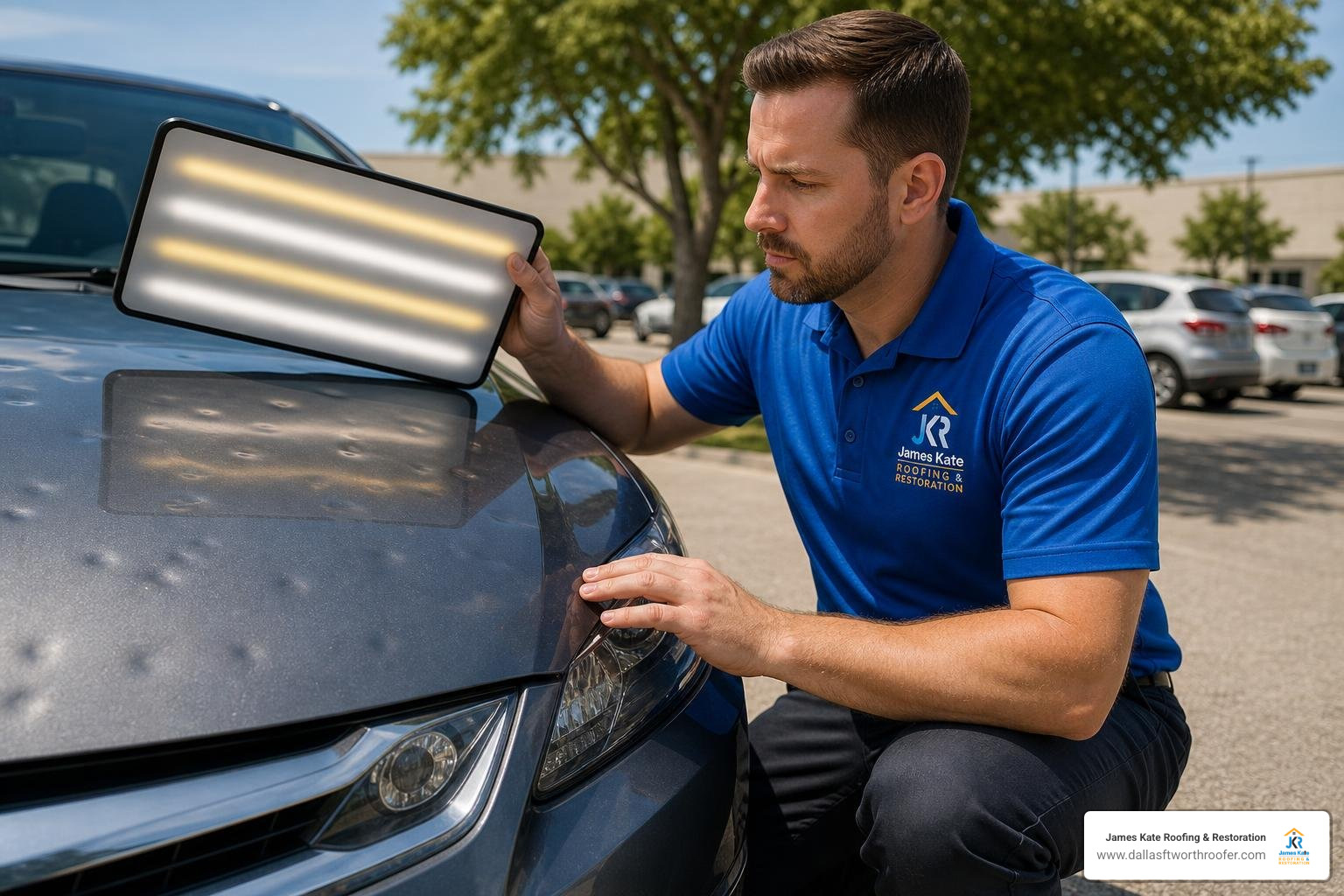
- Utilize High-CRI LED Reflection Mapping: Professional facilities position the vehicle inside an LED light tunnel. These specialized high-CRI (Color Rendering Index) raking lights cast straight reference lines across the body panels. Any dent distorts the reflection, allowing technicians to mark and map every single impact with water-soluble markers. You can check local resources through regional storm repair directories to locate certified scanning centers.
Step-by-Step Vehicle Hail Repair from Inspection to Delivery
Once the dent map is generated and approved, the hands-on solar begins:
- Step 1: Access and Component Removal (R&I): Technicians carefully remove interior trim, lower the headliner, or remove taillights and hood insulation pads to gain clear mechanical access to the underside of the sheet metal.
- Step 2: Panel-by-Panel Metal Manipulation: Working systematically panel by panel, the technician uses specialized light reflection boards to align their tools behind the dent. Applying micro-pressure in a spiral pattern from the outer edge inward, they massage the metal back into its factory plane.
- Step 3: Crown and Texture Blending: As the low center of the dent rises, the surrounding high tension rings (crowns) are gently tapped down using hand-polished synthetic or wood knockdown tools, restoring OEM orange-peel texture.
- Step 4: Reassembly and Mechanical Re-Torquing: Interior liners, roof consoles, wiring harnesses, and exterior trim are reinstalled to factory torque specifications.
- Step 5: Final Quality Audit and Detailing: The car undergoes a raking-light quality control audit from multiple viewing angles. The vehicle receives a hand wash, surface decontamination, and wipe-down before delivery back to the owner.
Managing Insurance Claims, Costs, and Deductible Assistance
Navigating storm claims can feel overwhelming, whether you are sorting out what to do after property storm damage or evaluating budgeting tips for hood hail repairs. Fortunately, auto hail damage falls under specific insurance categories designed to protect policyholders from personal liability.
Filing Comprehensive Claims Without Premium Penalties
Hail damage is classified under the Comprehensive Coverage (Other Than Collision) section of your auto insurance policy, rather than Collision coverage.
- Act of Nature / Non-Fault Status: Because severe weather is an unavoidable Act of Nature, insurance carriers cannot assign fault to the driver. Consequently, filing a comprehensive hail claim will not result in a direct surcharge or increase your personal base insurance rate in the way an at-fault accident would.
- The Insurance Supplement Process: Initial field adjusters frequently write quick parking lot estimates that capture only 40% to 60% of the true dent volume due to poor outdoor visibility conditions. Reputable repair facilities coordinate directly with the insurance carrier, submitting digital LED matrix photo scans and supplemental line-item estimates to ensure every single impact is approved and covered.
- ADAS Recalibration: Modern vehicles feature Advanced Driver Assistance Systems (cameras, radar, and lane-departure sensors) mounted behind windshields and roof panels. If hail cracks glass or distorts mounting surfaces, the insurance claim must include electronic recalibration to ensure safety features operate correctly.
Out-of-Pocket Costs, Deductibles, and Timelines
Your primary financial responsibility under a comprehensive claim is your selected policy deductible (typically $250, $500, or $1,000).
- Deductible Assistance Programs: Many premier repair centers offer deductible assistance credits on comprehensive claims, discounting internal repair margins where allowable by state regulations to reduce or completely eliminate your out-of-pocket expense.
- Turnaround Times: While conventional body shops often take 3 to 6 weeks, full-vehicle PDR jobs are typically completed in 2 to 5 business days. Light damage (under 50 dents) is often finished in a single day, moderate damage (80 to 200 dents) takes 2 to 3 days, and severe multi-panel damage (300+ dents) takes 4 to 5 days.
- Rental Car Coordination: If your policy includes rental reimbursement coverage, repair facilities assist in direct billing with rental agencies, ensuring you maintain reliable transportation while your vehicle is being restored.
- Warranty Protection: Professional PDR repairs should always be backed by a written Lifetime Workmanship Warranty, guaranteeing that repaired dents will never pop back or deform for as long as you own the vehicle.
Frequently Asked Questions About Storm Dent Removal
Will filing a hail claim increase my auto insurance premiums?
No, filing a hail damage claim under your comprehensive coverage will not raise your individual insurance rates because weather damage is classified as an “Act of Nature” and a non-fault incident. However, if a massive hailstorm impacts an entire geographic zip code, insurance carriers may adjust broad regional risk baselines across that region during future policy renewals.
How long does standard paintless dent repair take?
A typical comprehensive PDR repair takes between 2 and 5 business days. Minor repairs involving fewer than 50 dents on a single panel can frequently be completed within a single day. Moderate storm damage (80 to 200 impacts) usually takes 2 to 3 days, while complex repairs on aluminum panels or vehicles requiring complete headliner disassembly take closer to 4 or 5 business days.
Can hail damage be fully repaired without repainting the vehicle?
Yes. As long as the vehicle’s paint has not been fractured, chipped, or severely creased, Paintless Dent Repair can completely restore the panel to its original showroom finish without repainting. PDR successfully resolves approximately 90% of all storm-related auto body damage while preserving the original OEM clearcoat, factory corrosion barriers, and vehicle resale value.
Conclusion
Restoring your vehicle after a severe hailstorm requires the right combination of technical expertise, precision tools, and honest assessment. While DIY methods like heat guns, dry ice, and consumer pull kits pose serious risks of stretching metal and cracking clearcoats, professional Paintless Dent Repair offers a non-invasive, insurance-backed path to restoring your vehicle’s factory beauty and value.
At James Kate Roofing & solar, we understand how stressful post-storm recovery can be for families and business owners across Arlington, Mansfield, Granbury, Grand Prairie, and Midlothian. Built on honesty, integrity, and Biblical principles, we are dedicated to helping our neighbors navigate storm recovery with complete peace of mind. Whether your property has experienced roof damage, broken exterior elements, or broad storm wear, you can trust our GAF President’s Club recognized team to provide honest assessments and top-tier craftsmanship backed by industry-leading warranties.
If severe weather has recently swept through your neighborhood, visit James Kate Roofing & solar today to schedule a comprehensive property inspection and ensure your home is fully protected.
Dustin Eatman is a seasoned roofing professional with deep, hands-on expertise that spans residential and commercial roofing, insurance solar, and long-term roof asset management. As the owner of James Kate Roofing & solar in the Dallas–Fort Worth metroplex, he’s built a reputation for diagnosing roof systems accurately, communicating clearly, and executing projects with a high standard of workmanship and documentation. Dustin understands the technical details that make roofs perform—proper underlayment selection, slope and drainage considerations, ventilation strategy, flashing and penetration detailing, and manufacturer-specific installation requirements—because he’s worked through the real-world challenges that cause leaks, premature wear, and warranty issues. He’s equally fluent in the operational side of roofing: jobsite planning, quality control, safety, material ordering, crew coordination, and customer experience from inspection to closeout. In insurance-related projects, Dustin brings practical knowledge of claim workflows, adjuster meetings, scope alignment, supplements, and the importance of photo evidence and thorough records, helping property owners navigate stressful situations with confidence. For commercial clients—especially property and facility managers—he emphasizes proactive maintenance and targeted repairs that reduce disruption, extend roof life, and prevent expensive interior damage. Dustin also stays focused on doing things the right way: educating customers on realistic options, setting expectations, and prioritizing solutions that hold up over time rather than quick fixes. That blend of technical skill, field experience, process discipline, and owner-level accountability is what makes Dustin Eatman a trusted expert in the roofing industry.