
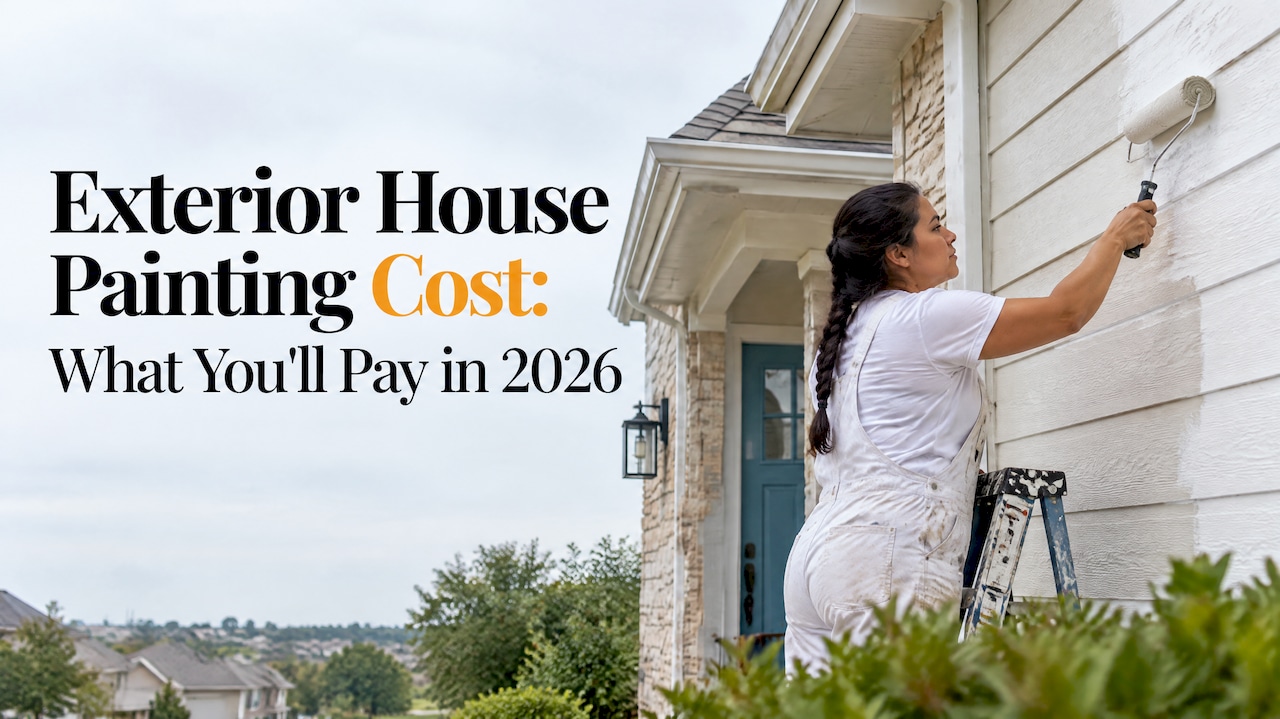
Most homeowners in the U.S. pay between $1,819 and $4,551 to have a house exterior painted professionally, and the national average is about $3,178, according to Angi’s 2026 cost data. That is roughly $1.50 to $4.00 per square foot. Your own number depends on how much surface you have, how many stories it climbs, what the siding is made of, and how much prep it needs before a brush or sprayer touches it.
Below, you’ll find the ranges by home size, the factors that move a bid up or down, what a fair quote contains, and when repainting is the wrong first move. If your roof, gutters or siding are also due for work, the order of the jobs matters, and we cover that too.
TL;DR
- The national average for a professional exterior paint job is about $3,178, with most homes landing between $1,819 and $4,551.
- A 2,000-square-foot paintable area typically runs $3,000 to $8,000. Two-story homes can cost up to 50% more than single-story ones because of scaffolding and extra labor.
- Prep (scraping, repairs, caulking, priming) is where bids differ most. Compare scope line by line, not just the total.
- Fix the roof, gutters and rotted wood first. Painting over a leak or damaged trim wastes the whole job.
Table of Contents
- Exterior house painting cost by home size
- What drives the price up or down
- Why exterior jobs cost more than interior ones
- DIY versus hiring a professional
- How to read an exterior paint bid
- Order of work: roof, gutters, siding, then paint
- How often you’ll repaint, and what that means for cost
- Get the roof checked before you paint
- Ways to keep the cost down without cutting corners
- FAQ
- Sources
Exterior house painting cost by home size
Painting is priced by the surface that gets paint, not the square footage printed on your listing. Siding, trim, soffits, fascia, doors and garage doors all count. A 2,000-square-foot house can have far more or far less paintable area depending on its shape and stories.
Here are the published ranges worth anchoring on:
| Scenario | Typical cost | Source |
|---|---|---|
| National average, whole exterior | $3,178 (most pay $1,819 to $4,551) | Angi |
| Price per square foot | $1.50 to $4.00 | Angi |
| 1,800 sq ft paintable area | $4,000 to $7,900 | This Old House |
| 2,000 sq ft paintable area | $3,000 to $8,000 | Angi |
| 2,000 sq ft across three stories | $8,300 to $15,200 | This Old House |
Notice how wide the ranges are. Two sources can both be right about a 2,000-square-foot home and still differ by thousands of dollars, because one assumes a simple ranch with sound siding and the other assumes a tall house with repairs. Treat any single “average” as a starting point for your budget conversation, not a quote.
How to estimate your own number
- Walk the house and note the number of stories, the siding material and any obvious damage: peeling, bare wood, cracked caulk, soft trim.
- Estimate paintable square footage, or ask a contractor to measure. A rough method is the perimeter of the house times the wall height, minus large openings.
- Multiply by the $1.50 to $4.00 per-square-foot range to get a low and high figure.
- Add a cushion for repairs. Rotted trim and failing caulk are found during prep far more often than homeowners expect.
- Get at least two written bids and compare what each one includes.
Say your paintable area is 2,000 square feet. At $1.50 you land at $3,000 and at $4.00 you land at $8,000, which matches the published range for that size. Where you fall inside it comes down to the factors below.
What drives the price up or down
Angi lists home size, siding material, accessibility, paint selection and siding condition as the major cost factors, with preparation, labor and repairs on top. Here is how each one plays out.
Stories and access
A two-story home can cost up to 50% more to paint than a single-story home. The reason is practical: scaffolding, taller ladders and more labor time to work safely at height. Painter and contractor commentary in Architectural Digest also points to difficult access, such as tall vertical surfaces, that may call for lift rentals. Steep lots, tight side yards and landscaping against the walls add time too.
The three-story figure in the table above, $8,300 to $15,200 for the same 2,000 square feet, shows how fast height compounds cost.
Siding material
Highly porous surfaces such as wood and stucco soak up more paint and need specialized preparation, which raises the overall cost, as Houzz’s cost guide explains. Brick, fiber cement, vinyl and aluminum each have their own prep and primer requirements. Ask any bidder which primer and paint system they would use on your specific siding, and why.
Condition of the surface
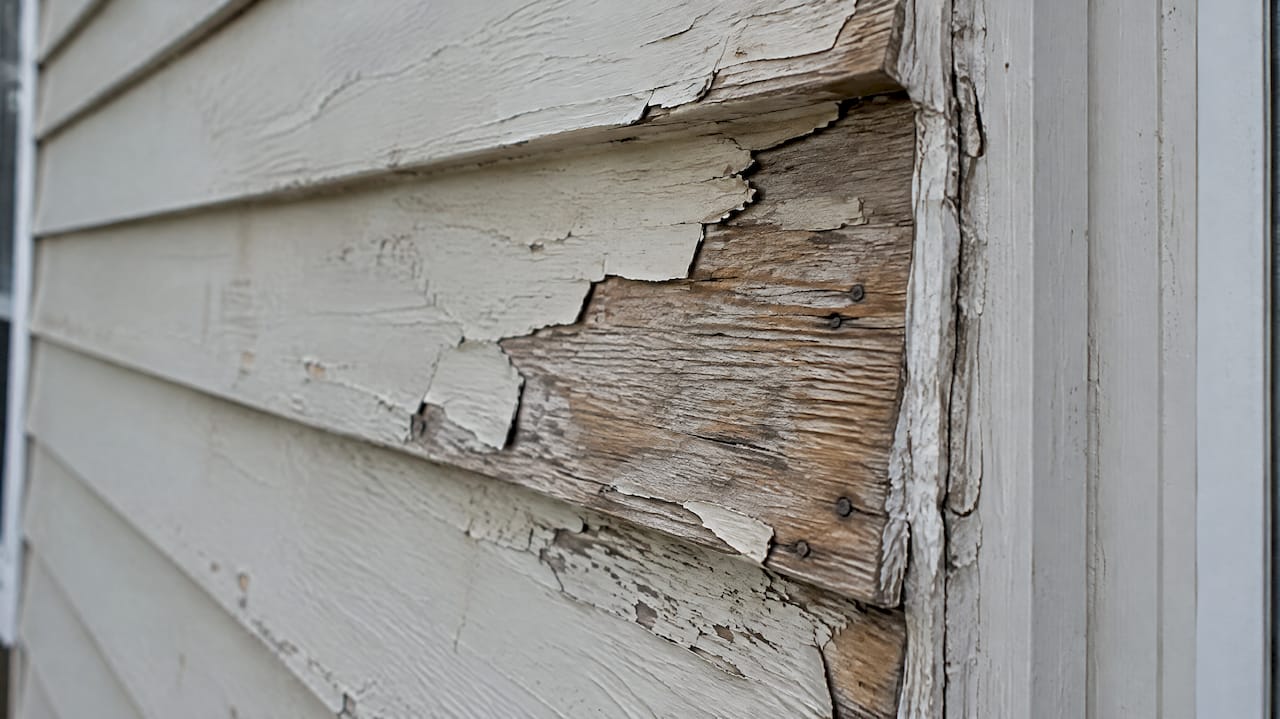
A house with sound paint that just looks faded needs a wash, light prep and two coats. A house with peeling, bare wood and failed caulk needs scraping, sanding, spot priming, wood repair and sometimes full priming. Prep labor is the part of a bid that varies most, and it is also the part that decides how long your new paint lasts.
Labor rates
Painting contractors charge between $25 and $100 per hour per painter, according to Angi. That spread reflects region, crew experience, insurance and whether you are hiring a one-person operation or an established company with crews. A rock-bottom hourly number is not a bargain if the crew skips prep.
Paint quality and quantity
Contractors often have access to trade discounts on paint, which House Beautiful notes can offset some material costs for homeowners. Quality exterior paint costs more per gallon but typically needs fewer touch-ups and holds color longer. The number of coats matters too: Architectural Digest reports that, for a 2,000 to 3,000-square-foot two-story home, a one-coat repaint costs less than a two-coat job, and a two-coat job costs more. A one-coat quote only makes sense over a sound, similar-color surface.
Climate and season
Houzz notes that regions with extreme weather may need more labor or specialty products for durability. In North Texas, that means UV, heat, hail and heavy rain swings. Season matters as well: Taskrabbit reports that high spring and summer demand can push labor estimates up and limit painter availability. Booking in the shoulder season can give you more scheduling choice.
Changes after the bid
Painter Mike Sandness, quoted by The Spruce, warns that totals can climb past the original estimate when homeowners change the work order or add areas to be painted. Decide on the trim, doors, garage, fence and shutters before you sign, and get them in the written scope.
Why exterior jobs cost more than interior ones
Architectural Digest’s reporting notes that exterior work often costs more than interior because it usually needs more intense surface preparation and equipment rentals. Pressure washing, scraping, masking windows, ladders, lifts and weather delays all add labor. Your house also takes the beating that interior walls never see, so the prep has to be thorough for the paint to bond.
DIY versus hiring a professional
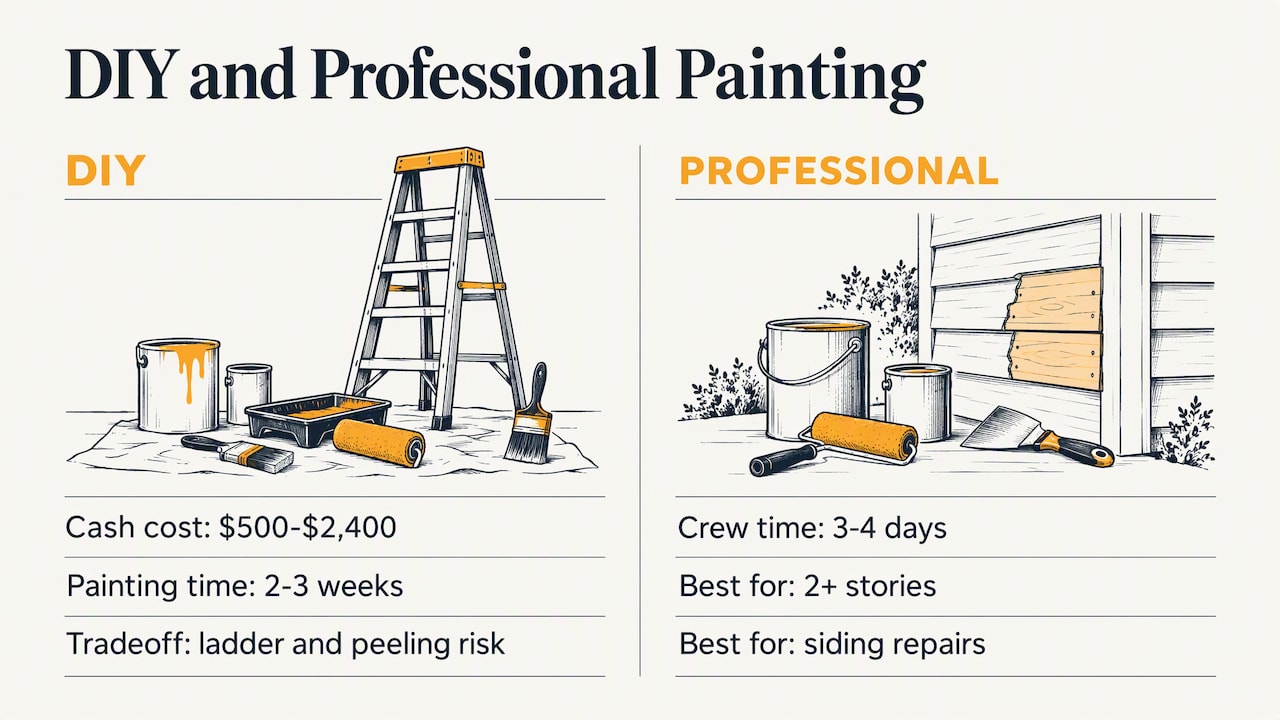
DIY exterior painting costs about $500 to $2,400 for tools, supplies and paint, and may take two to three weeks, compared with three to four days for a professional crew, per The Spruce. The cash saving is real. So are the tradeoffs: ladder work at height, weeks of weekend labor, and the risk that thin prep leads to peeling in a couple of years.
Hiring out makes the most sense when your home has two or more stories, when the siding needs repairs, or when you do not want to spend a month on a ladder. Whichever way you go, the lead rule below applies to older homes.
A safety note for homes built before 1978
If your house was built before 1978, the paint may contain lead. Under the EPA’s Renovation, Repair and Painting Rule, anyone paid to disturb painted surfaces in pre-1978 homes must be certified, and their workers trained in lead-safe work practices. In general, the rule does not apply to homeowners working on their own pre-1978 home, but it does apply if you rent out all or part of the house. Ask any painter you hire for their lead-safe certification up front. Lead-safe prep (containment, wet scraping, cleanup) adds labor, so expect it in the bid. If you plan to scrape and sand your own older house, read the EPA page first and talk to your local health department about safe practice.
How to read an exterior paint bid
A good bid is specific. When two quotes differ by $2,000, the gap is almost always in scope, not in the price of paint. Check each one for:
- Prep: pressure washing, scraping, sanding, caulking, spot priming, and who handles wood repair.
- Materials: the paint brand, product line and sheen, plus the primer, written out by name.
- Coats: how many coats on siding and on trim.
- Surfaces included: siding, trim, fascia, soffits, doors, garage door, shutters, porch ceilings.
- Protection: how landscaping, windows and fixtures will be covered.
- Lead-safe compliance for pre-1978 homes.
- Warranty: what is covered and for how long, in writing.
- Payment terms and schedule: deposit, milestones, and a realistic start and finish.
Be wary of a quote that is far below the others with a vague scope. Ask what is left out.
Order of work: roof, gutters, siding, then paint
Paint is the finishing layer, so it should go on last. A leaking roof, a failed flashing or a gutter that overflows onto the fascia will stain and rot the surfaces you just painted. Water behind the siding also lifts new paint from the inside.
Before you commit to a painting budget, look up and around:
- Check the roof edge, valleys and flashings for damage. Our checklist for assessing roof damage severity walks you through what to look for.
- Look at the fascia and soffits for dark streaks or soft spots, which often signal a leak or overflowing gutters.
- After a hail season in North Texas, check whether your roof and siding took hits. Storm damage may change what needs repair and replacement before you paint. Our guide to types of roof storm damage explains what to expect.
- If a roof replacement is coming within a few years, schedule it before the paint job so ladders, shingle tear-off and debris do not scuff and stain fresh paint.
Doing this in the right order can save you from paying for the same wall twice.
How often you’ll repaint, and what that means for cost
Most homes need repainting every 5 to 10 years, depending on paint type, the surface and the quality of the job, according to Architectural Digest. Spread across that window, a $5,000 job that lasts 10 years costs about $500 a year, while a cheap job that fails in 4 years costs more in the long run. Thorough prep and good paint are where the extra upfront money pays you back.
Sun-facing sides usually fade and chalk first. If one wall is failing while the rest looks fine, ask whether a partial repaint makes sense, though matching existing color on weathered siding can be difficult.
Our perspective
We spend our days on roofs and exteriors, and the pattern is consistent: the homes that need paint redone early are almost always the ones where water got in first. A clogged gutter, a failed flashing, a few missing shingles. The paint was never the problem. The leak was.
That is why we treat the exterior as one system. We are a GAF Master Elite® contractor, and our approach to storm-damage assessments and roof inspections is data-driven: look at what the weather has done to the property, then recommend work in the order that protects your investment. Our inspections and estimates are free, so you can find out what shape the roof, gutters and siding are in before you spend on paint.
If you are heading toward a roof replacement, we back residential replacements with a transferable 15-year workmanship warranty. We would rather you finish the roof and drainage first, then put your paint budget on surfaces that will stay dry and last. We also handle exterior home improvement work such as siding, paint and gutters, so the whole sequence can be planned in one conversation.
the author
Get the roof checked before you paint
If your paint is peeling near the roofline, streaking below the gutters or bubbling under the eaves, it is worth finding out why before you pay a painter. We offer free inspections and estimates on residential roofs across the Dallas-Fort Worth area, including hail and wind damage inspections, leak diagnosis and repair, and roof replacement.

See our roof inspection, repair and replacement services, or start with our instant roofing quote tool, which checks your roof against historical weather data to see whether storms may have affected it. If you will need to finance a replacement, our guide to roof financing options covers what is available at different credit levels.
Ways to keep the cost down without cutting corners
- Pay for prep, not for a cheaper paint. Good prep stretches the life of the job more than any other choice.
- Book off-peak. Spring and summer demand raises labor estimates and limits availability, so ask about slower months.
- Lock the scope in writing. Changes mid-job are where totals drift above the quote.
- Bundle related exterior work. Gutters, trim repairs and siding repairs done in one mobilization save setup time.
- Choose paint for your siding. Porous surfaces like stucco and wood need the right primer and coating, and the wrong match shortens the life of the job.
- Get two or three written bids. Compare scope, not only the bottom line.
FAQ
How much should it cost to paint a 2,000-square-foot house exterior?
For a 2,000-square-foot paintable area, typical costs run from $3,000 to $8,000, according to Angi. If the same square footage is spread across three stories, This Old House puts it at $8,300 to $15,200. Condition, siding and access explain most of the gap.
Is it cheaper to paint a house exterior yourself?
In cash terms, yes. DIY typically costs $500 to $2,400 for tools, supplies and paint, but it can take two to three weeks versus three to four days for a professional crew, per The Spruce. Factor in ladder safety, your time, and for pre-1978 homes the lead-safe rules that apply to rental properties and paid work.
How often should a house be repainted?
Most homes need a fresh coat every 5 to 10 years. Paint type, the siding material and the quality of prep and application all shift that timeline. Peeling, chalking, cracked caulk and bare spots are signs not to wait.
Why is a two-story house more expensive to paint?
A two-story home can cost up to 50% more than a single-story one. The extra comes from scaffolding, taller ladders and the added labor needed to work safely at height.
Sources
- Angi: How Much Does It Cost to Paint the Exterior of a House?
- This Old House: How Much Does It Cost To Paint a House Exterior?
- Houzz: Cost for an Exterior Paint Job
- Architectural Digest: Cost to Paint a House
- The Spruce: How Much Does It Cost to Paint a House Exterior?
- House Beautiful: How Much Does It Cost To Paint a House?
- Taskrabbit: How Much Does Outdoor Painting Cost?
- EPA: Lead Renovation, Repair and Painting Program
Recommended
Created with BabyLoveGrowth’s AI tools

Dustin Eatman is a seasoned roofing professional with deep, hands-on expertise that spans residential and commercial roofing, insurance solar, and long-term roof asset management. As the owner of James Kate Roofing & solar in the Dallas–Fort Worth metroplex, he’s built a reputation for diagnosing roof systems accurately, communicating clearly, and executing projects with a high standard of workmanship and documentation. Dustin understands the technical details that make roofs perform—proper underlayment selection, slope and drainage considerations, ventilation strategy, flashing and penetration detailing, and manufacturer-specific installation requirements—because he’s worked through the real-world challenges that cause leaks, premature wear, and warranty issues. He’s equally fluent in the operational side of roofing: jobsite planning, quality control, safety, material ordering, crew coordination, and customer experience from inspection to closeout. In insurance-related projects, Dustin brings practical knowledge of claim workflows, adjuster meetings, scope alignment, supplements, and the importance of photo evidence and thorough records, helping property owners navigate stressful situations with confidence. For commercial clients—especially property and facility managers—he emphasizes proactive maintenance and targeted repairs that reduce disruption, extend roof life, and prevent expensive interior damage. Dustin also stays focused on doing things the right way: educating customers on realistic options, setting expectations, and prioritizing solutions that hold up over time rather than quick fixes. That blend of technical skill, field experience, process discipline, and owner-level accountability is what makes Dustin Eatman a trusted expert in the roofing industry.