When Flooding Strikes: What DFW Homeowners Need to Know First
If you need flood clean up services fast, here’s what matters most right now:
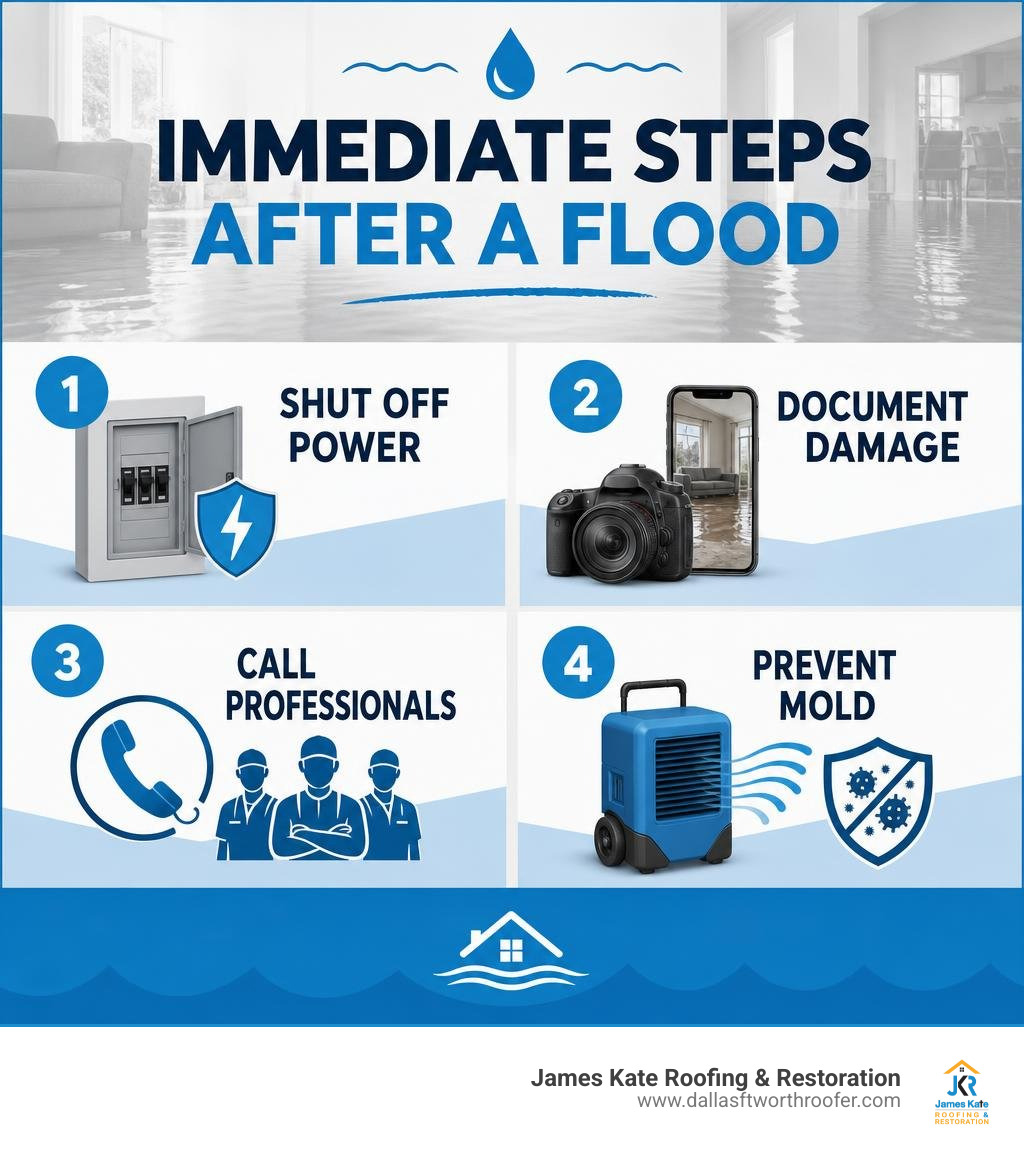
What to do immediately after a flood:
- Shut off electricity and gas to any flooded areas before entering
- Stop the water source if it’s an internal plumbing failure
- Call a professional solar company — do not wait
- Document everything with photos before any cleanup begins
- Do not return to flooded areas until a professional confirms it is safe
Mold can begin growing within 24–48 hours after flooding. The faster you act, the less damage you face.
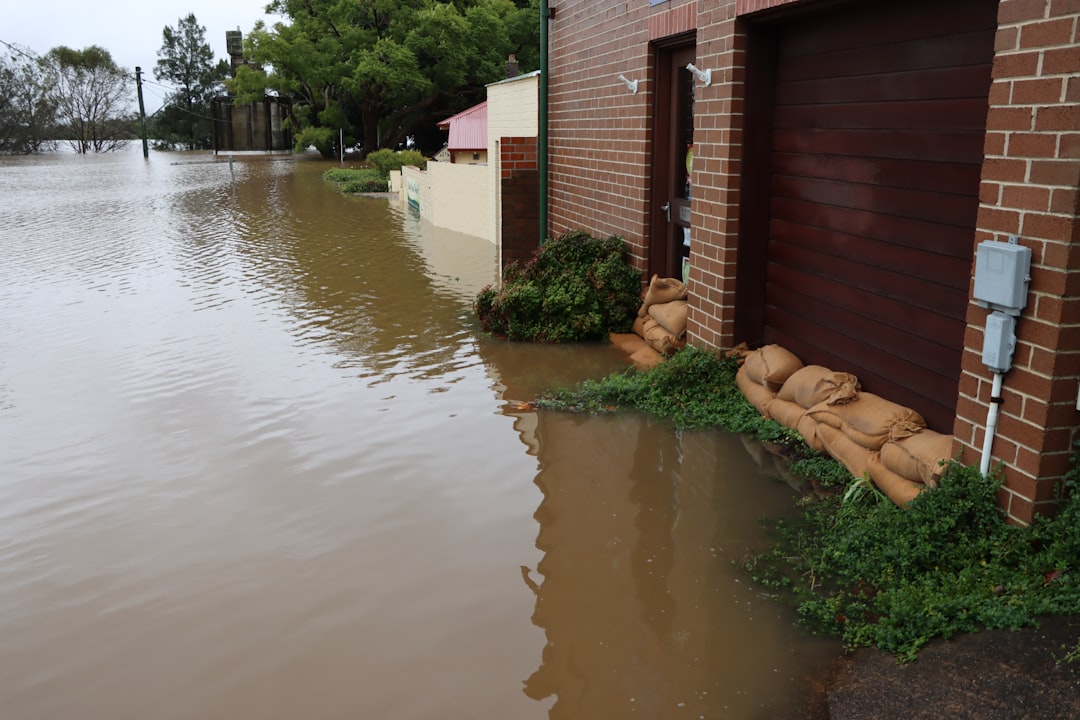
Flooding can happen in minutes — and the damage it leaves behind can take days or weeks to fully resolve. Whether it’s a storm surge rolling through the DFW area, a backed-up sewer line, or a burst pipe soaking through your floors and walls, the aftermath is overwhelming. Water doesn’t just damage surfaces. It seeps into insulation, wicks up drywall, warps wood framing, and creates the perfect conditions for mold to take hold.
The good news is that fast, professional action dramatically limits long-term damage. Knowing what to look for in a solar company — and understanding what the cleanup process actually involves — puts you in control during one of the most stressful situations a homeowner can face.
I’m Dustin Eatman, owner of James Kate Roofing & solar in the Dallas–Fort Worth area, and I’ve worked alongside property owners navigating the full spectrum of flood clean up services — from emergency water extraction through complete structural build-back. In the sections below, I’ll walk you through everything you need to choose the right solar partner and get your property back to normal as quickly as possible.
Flood clean up services terms you need:
Understanding Flood Damage: Causes, Risks, and Insurance Realities
To handle a flood effectively, you first have to understand what you are dealing with. In our line of work across North Texas—from Mansfield and Arlington to Granbury, Grand Prairie, and Midlothian—we see two primary types of water disasters: external flooding and internal plumbing failures.
While they both leave you with a soggy, stressful mess, the insurance industry and solar professionals treat them very differently.
External Flooding vs. Internal Plumbing Failures
External flooding occurs when water from the outside forces its way into your home. This is often caused by heavy rainfall, overflowing creeks, storm surges, or overwhelmed municipal storm drains. In North Texas, sudden spring and summer thunderstorms can dump inches of rain in under an hour, leading to rapid water accumulation around slab foundations.
Internal water damage, on the other hand, stems from within the property’s envelope. This includes burst pipes, failing water heaters, overflowed toilets, or appliance supply line leaks.
This distinction is critical for your wallet. Standard homeowners insurance policies generally cover sudden, accidental internal water damage (like a burst pipe). However, they almost never cover external flood damage. To be protected against rising outdoor water, you must have a separate flood insurance policy, typically backed by the National Flood Insurance Program (NFIP).
The Three Categories of Water Loss
When we assess a home for flood clean up services, we classify the water into one of three categories based on its level of contamination. Understanding these categories is vital for your family’s health and safety. You can read more in The Essential Guide to Identifying Your Category of Water Loss.
- Category 1 (Clean Water): This water originates from a clean source, such as a broken water supply line or a malfunctioning faucet. While it is safe initially, Category 1 water can quickly degrade into Category 2 or 3 if left standing.
- Category 2 (Gray Water): This water contains significant contamination and has the potential to cause discomfort or sickness if consumed or contacted. Examples include discharge from washing machines, dishwasher overflow, or urine-only toilet water.
- Category 3 (Black Water): This is highly contaminated water that contains pathogenic, toxigenic, or other harmful agents. External floodwater is always treated as Category 3 because it mixes with street runoff, soil, fertilizers, and animal waste before entering your home. Sewage backups also fall into this category. For an in-depth look, see Everything You Need to Know About Category 3 Water Loss and our guide on Black Water Blues: Understanding and Remediating Category 3 Water Damage.
Immediate Safety Steps and Emergency Water Cleanup
When you discover standing water in your home, your survival instincts might tell you to grab a mop and start sloshing around. Stop right there. Before you touch a single drop of water, you must ensure the environment is safe.
If you are dealing with a sudden crisis, we highly recommend reading How to Handle a Sudden Flood Without Losing Your Cool and establishing When the Levee Breaks: Your Emergency Water Cleanup Plan.
- Shut Off the Power: Water and electricity are a deadly combination. If there is standing water near outlets, appliances, or extension cords, do not enter the room. Shut off the main breaker to the affected areas if you can safely reach the electrical panel without stepping through water.
- Locate the Water Source: If the flooding is caused by an internal plumbing failure, shut off the main water valve immediately. If it is caused by external weather, focus entirely on safety and evacuation.
- Wear Protective Gear: If you must walk through Category 2 or Category 3 water, wear rubber boots, gloves, and a mask to protect yourself from waterborne pathogens.
- Avoid Standing Water Near Structural Hazards: Waterlogged drywall can collapse from ceilings without warning, and saturated floors may lose their structural integrity.
Key Factors to Consider When Choosing Flood Clean Up Services
When your home is flooded, time is your greatest enemy. Mold spores can begin to colonize damp organic materials within 24 to 48 hours. This means you cannot afford to spend days researching solar crews. However, making a rushed, uneducated choice can result in poor drying, hidden mold, and denied insurance claims.
To protect your property, your health, and your finances, look for the following key indicators when hiring a company for flood clean up services:
- IICRC Certification: The Institute of Inspection, Cleaning and solar Certification (IICRC) sets the global standards for the inspection, cleaning, and solar industries. A reputable company should employ technicians certified in Water Damage solar (WRT) and Applied Structural Drying (ASD).
- 24/7 Emergency Availability: Water damage doesn’t wait for business hours. A reliable partner should offer round-the-clock dispatch to start water extraction and mitigation immediately.
- Local Presence and Reputation: Choose a company with deep roots in the DFW community. Local teams understand the unique construction styles of North Texas homes and can navigate local building codes efficiently.
- Comprehensive Services: Some contractors only extract water, leaving you to find another crew to rebuild. Look for a full-service team that handles water mitigation, mold remediation, and complete build-back construction. Learn how to evaluate your options in From Fire to Flood: How to Choose Your Emergency Remediation Partner.
The Role of Certified Flood Clean Up Services
Professional flood cleanup is a highly scientific process that goes far beyond simply vacuuming up visible puddles. Certified technicians use advanced technology to locate and track hidden moisture that is completely invisible to the naked eye.
During the initial inspection, technicians use thermal imaging cameras to detect temperature differences in walls and ceilings. Because wet materials are cooler than dry materials due to evaporative cooling, infrared cameras allow us to map the exact path of the water intrusion behind drywall without tearing it open first.
We also use penetrating and non-penetrating moisture meters to measure the exact moisture content of wood, plaster, and concrete. This allows us to establish a “dry standard” based on unaffected areas of your home and monitor our progress daily until those levels are reached.
Comparing Costs of Professional Flood Clean Up Services
The cost of restoring a flooded home depends heavily on the category of water, the extent of the migration, and how quickly mitigation begins. Generally, the process is split into two phases: mitigation (extracting water, drying the structure, and sanitizing) and reconstruction (rebuilding drywall, flooring, and trim).
| Service Phase | Typical Scope of Work | Primary Cost Factors |
|---|---|---|
| Mitigation (Phase 1) | Water extraction, thermal mapping, structural drying, antimicrobial application, and trash-out of unsalvageable materials. | Number of air movers/dehumidifiers needed, hours of labor, and category of water loss. |
| Reconstruction (Phase 2) | Hanging new drywall, painting, installing new flooring (carpet, tile, wood), and replacing baseboards. | Material selections, square footage of damaged area, and structural repairs. |
For a detailed breakdown of what you can expect to pay, read our comprehensive Water Damage Repair Costs: A Comprehensive Guide to What Youll Pay.
Working directly with an experienced solar contractor who coordinates with your insurance adjuster can significantly streamline this process, ensuring all damaged areas are documented correctly so your claim is paid out fully.
The Professional Flood solar Process: What to Expect
When our team arrives at your home in Mansfield, Arlington, or Midlothian, we execute a structured, step-by-step solar plan designed to stabilize the environment and prevent secondary damage.
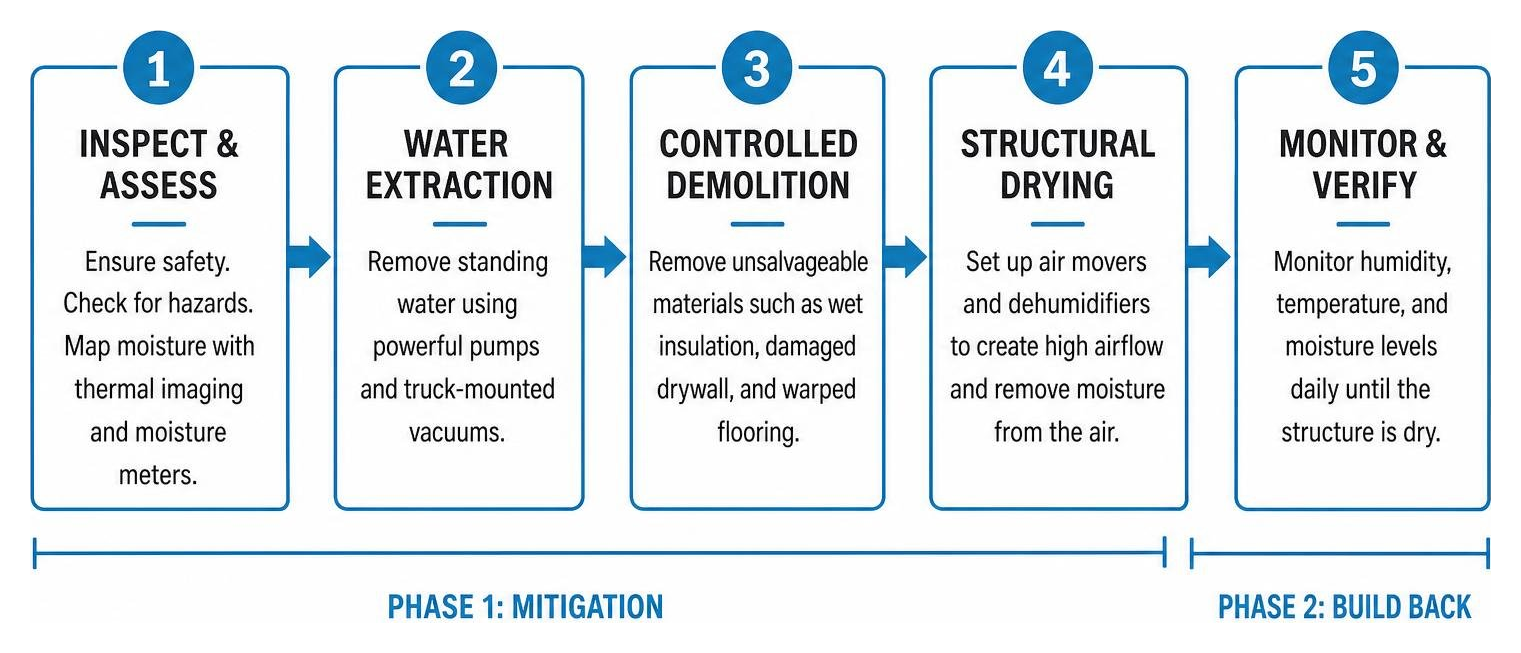
- Safety Assessment and Inspection: We perform safety checks for gas leaks, electrical hazards, and structural weaknesses. Then, we map the moisture using thermal imaging.
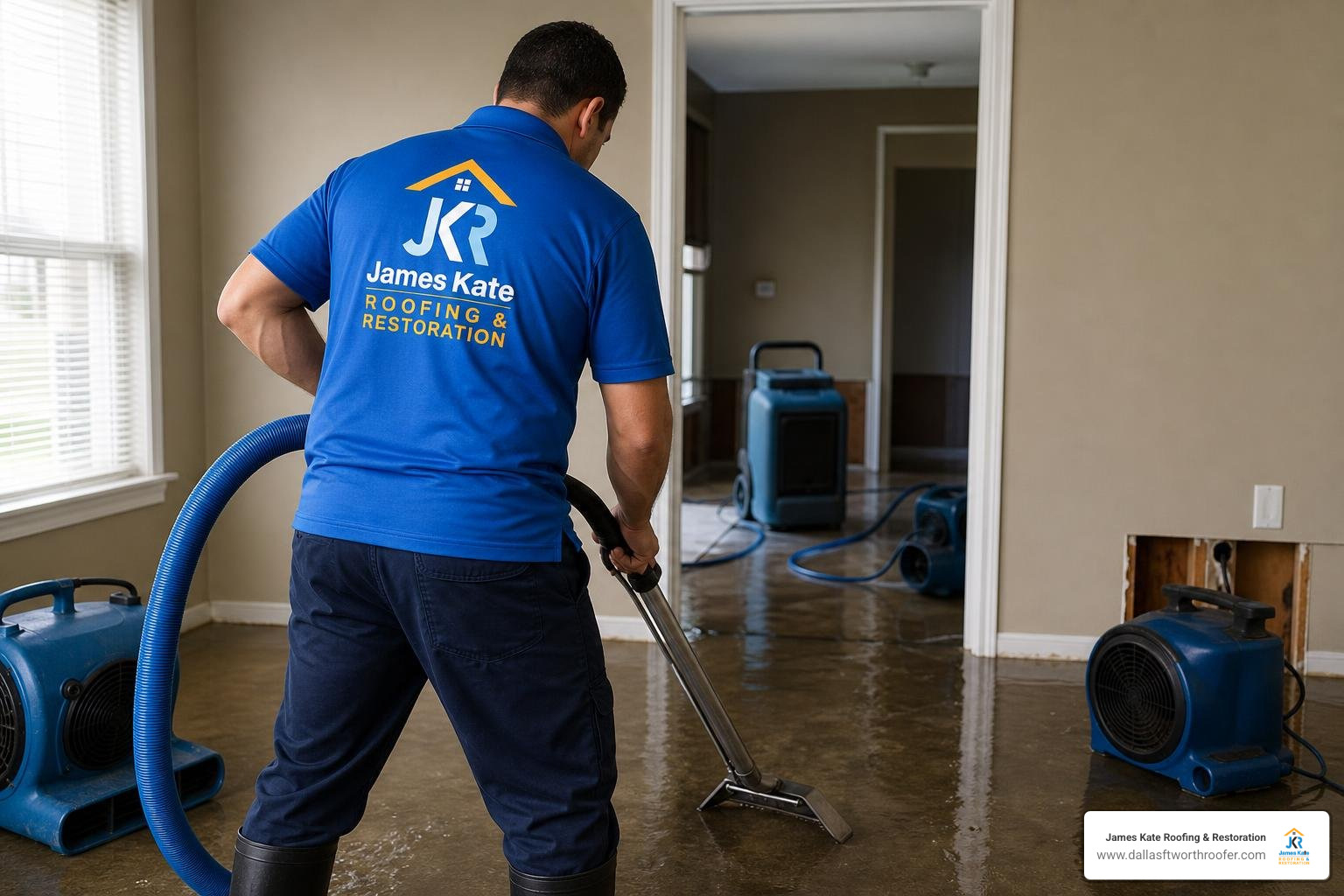
- Water Extraction: Using powerful truck-mounted vacuum systems and submersible pumps, we remove thousands of gallons of standing water quickly.
- Controlled Demolition (If Necessary): Saturated materials that cannot be dried in place—such as wet insulation, severely warped laminate flooring, or compromised drywall—are carefully removed.
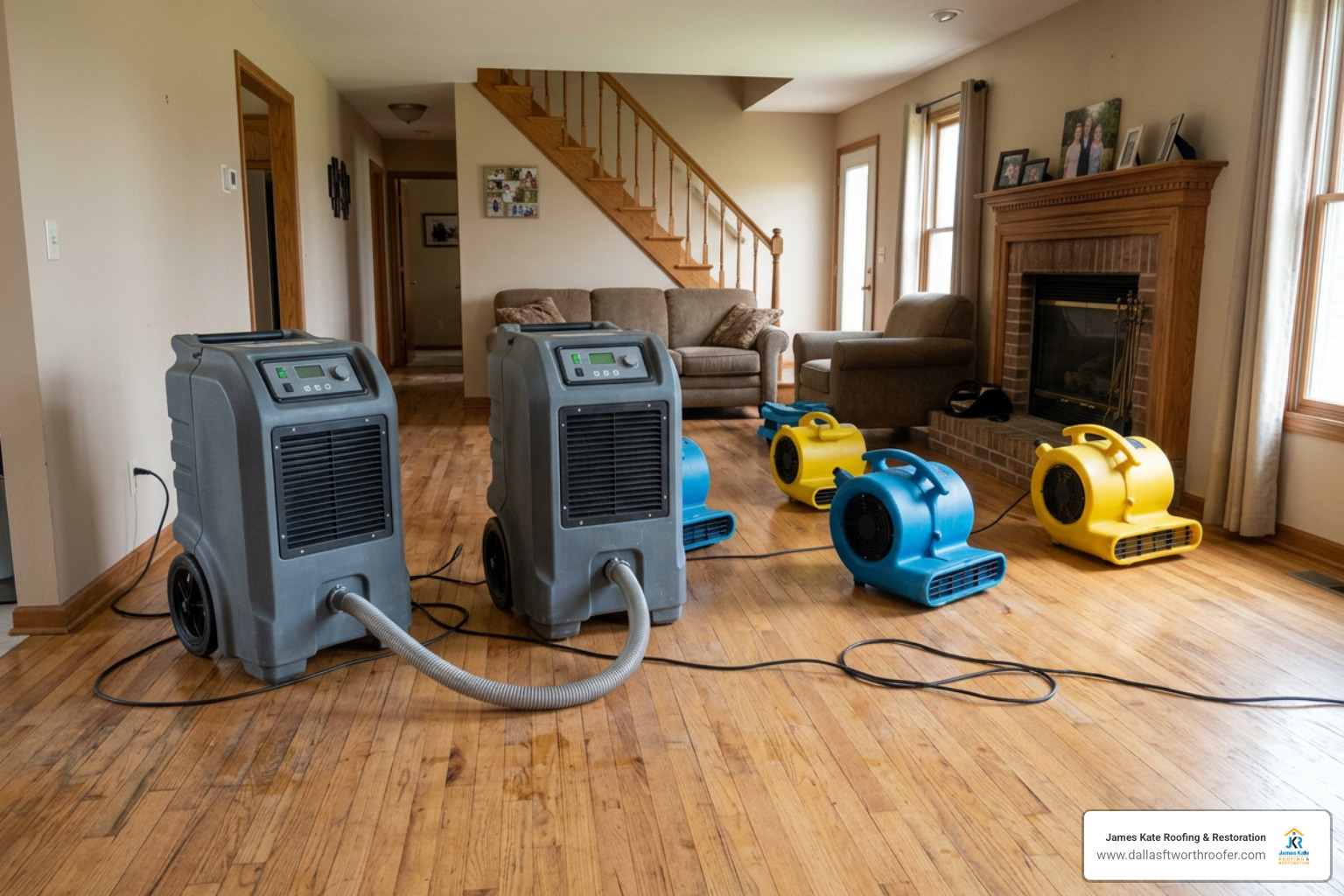
- Structural Drying: We position industrial-grade low-grain refrigerant (LGR) dehumidifiers and high-velocity axial air movers. These machines create high-speed airflow across wet surfaces, accelerating evaporation, while the dehumidifiers pull the moisture out of the air.
- Psychrometric Monitoring: We track the temperature, relative humidity, and grains per pound (GPP) of moisture in the air daily. This scientific monitoring ensures the structure is drying efficiently.
- Sanitization and Deodorization: We apply hospital-grade, EPA-registered disinfectants to eliminate bacteria, viruses, and mold spores.
- Reconstruction: Once the structure is certified dry, our construction crews step in to replace the removed materials, returning your home to its pre-loss condition—or better.
Mold Prevention and Sewage Remediation Protocols
Mold can colonize a wet home in under 48 hours. To prevent this, professional flood clean up services apply specialized antimicrobial treatments to all structural framing during the drying process.
If the flood involved sewage (Category 3 water), the cleanup protocol is much stricter. Technicians establish negative air pressure zones using HEPA-filtered air scrubbers to prevent airborne contaminants and odors from migrating to clean parts of the house.
All porous items that come into contact with sewage must be safely disposed of. For an exhaustive look at how we handle these high-risk situations, refer to our Down and Dirty Guide to Emergency Sewage Remediation.
Contents Cleaning and Flooded Carpet Recovery
A flood doesn’t just damage your walls and floors; it threatens your personal belongings, furniture, and family keepsakes. A professional solar company offers pack-out services, where your salvageable contents are carefully inventoried, packed, and transported to a secure, climate-controlled facility for specialized cleaning and drying.
When it comes to carpets, whether they can be saved depends almost entirely on the category of water:
- Category 1 Water: Carpets and pads can often be dried in place or salvaged if cleaned and sanitized quickly.
- Category 2 Water: The carpet pad must be discarded, but the carpet itself can sometimes be saved with professional washing and sanitizing.
- Category 3 Water: Both the carpet and the pad must be discarded immediately due to extreme contamination risks.
To learn more about saving your flooring, check out From Puddle to Plush: A Guide to Flooded Carpet Cleanup and our advice on The Ultimate Guide to Cleaning Up After Appliance Leaks.
Frequently Asked Questions About Flood solar
Navigating a water disaster raises many urgent questions. Here are the most common things DFW homeowners ask us during a solar project:
How long does the flood cleanup and drying process typically take?
On average, the structural drying phase takes 3 to 5 days. The exact timeline depends on the materials affected (concrete and plaster take longer to dry than drywall and wood), the severity of the water intrusion, and the indoor humidity levels. Once the structure is dry, the reconstruction phase can take anywhere from a few days to several weeks, depending on the scope of the rebuild.
Does standard homeowners insurance cover flood damage cleanup?
No. Standard homeowners policies cover internal, accidental water damage (such as pipe bursts or water heater leaks). They do not cover external flooding caused by natural weather events. For external flood protection, you must have an active policy with the National Flood Insurance Program (NFIP) or a private flood insurance provider.
If you own a business in the area, we recommend reviewing our guide on Commercial Water Damage: Swift Action for Business Recovery to understand how commercial policies handle water events.
Can carpet and personal belongings be saved after a flood?
It depends on the contamination level of the water and the material of the item. Non-porous items (like glass, metal, and hard plastics) can almost always be sanitized and saved. Porous items (like upholstered furniture, mattresses, and stuffed animals) that have been exposed to Category 3 floodwater or sewage must be discarded for safety. Carpets exposed to clean water can often be salvaged if professional extraction and drying begin immediately.
Conclusion
Dealing with water in your home is incredibly stressful, but you don’t have to navigate the recovery process alone. Selecting a professional team for flood clean up services is the most important decision you will make to protect your home’s structure and your family’s health.
At James Kate Roofing & solar, we serve our neighbors in Mansfield, Arlington, Granbury, Grand Prairie, and Midlothian with a deep commitment to honesty, integrity, and Biblical principles. As a family-owned DFW company recognized in the GAF President’s Club, we stand behind our work with up to a 25-year workmanship warranty.
We don’t just dry out your home and leave you with bare studs; we handle the entire process from emergency water mitigation and mold remediation to complete, high-quality build-back construction.
If you are ready to reclaim your home and your peace of mind, we invite you to read Restoring Your Sanity and Your Home After Damage or review The CEO Guide to Handling Property Damage for professional leadership during a home crisis.
When you need a partner you can trust to do the job right the first time, Get Professional solar Help from the team at James Kate Roofing & solar. We are here to help you rebuild, restore, and move forward.
Understanding how local building codes and regional climate factors influence the drying and reconstruction process in your specific neighborhood is key to a successful recovery. Whether you are in Mansfield, Arlington, Granbury, Grand Prairie, or Midlothian, our team is fully equipped to handle the unique challenges of North Texas weather and construction standards.
Dustin Eatman is a seasoned roofing professional with deep, hands-on expertise that spans residential and commercial roofing, insurance solar, and long-term roof asset management. As the owner of James Kate Roofing & solar in the Dallas–Fort Worth metroplex, he’s built a reputation for diagnosing roof systems accurately, communicating clearly, and executing projects with a high standard of workmanship and documentation. Dustin understands the technical details that make roofs perform—proper underlayment selection, slope and drainage considerations, ventilation strategy, flashing and penetration detailing, and manufacturer-specific installation requirements—because he’s worked through the real-world challenges that cause leaks, premature wear, and warranty issues. He’s equally fluent in the operational side of roofing: jobsite planning, quality control, safety, material ordering, crew coordination, and customer experience from inspection to closeout. In insurance-related projects, Dustin brings practical knowledge of claim workflows, adjuster meetings, scope alignment, supplements, and the importance of photo evidence and thorough records, helping property owners navigate stressful situations with confidence. For commercial clients—especially property and facility managers—he emphasizes proactive maintenance and targeted repairs that reduce disruption, extend roof life, and prevent expensive interior damage. Dustin also stays focused on doing things the right way: educating customers on realistic options, setting expectations, and prioritizing solutions that hold up over time rather than quick fixes. That blend of technical skill, field experience, process discipline, and owner-level accountability is what makes Dustin Eatman a trusted expert in the roofing industry.