
What Flood Damage solar Actually Costs — And What Drives the Bill
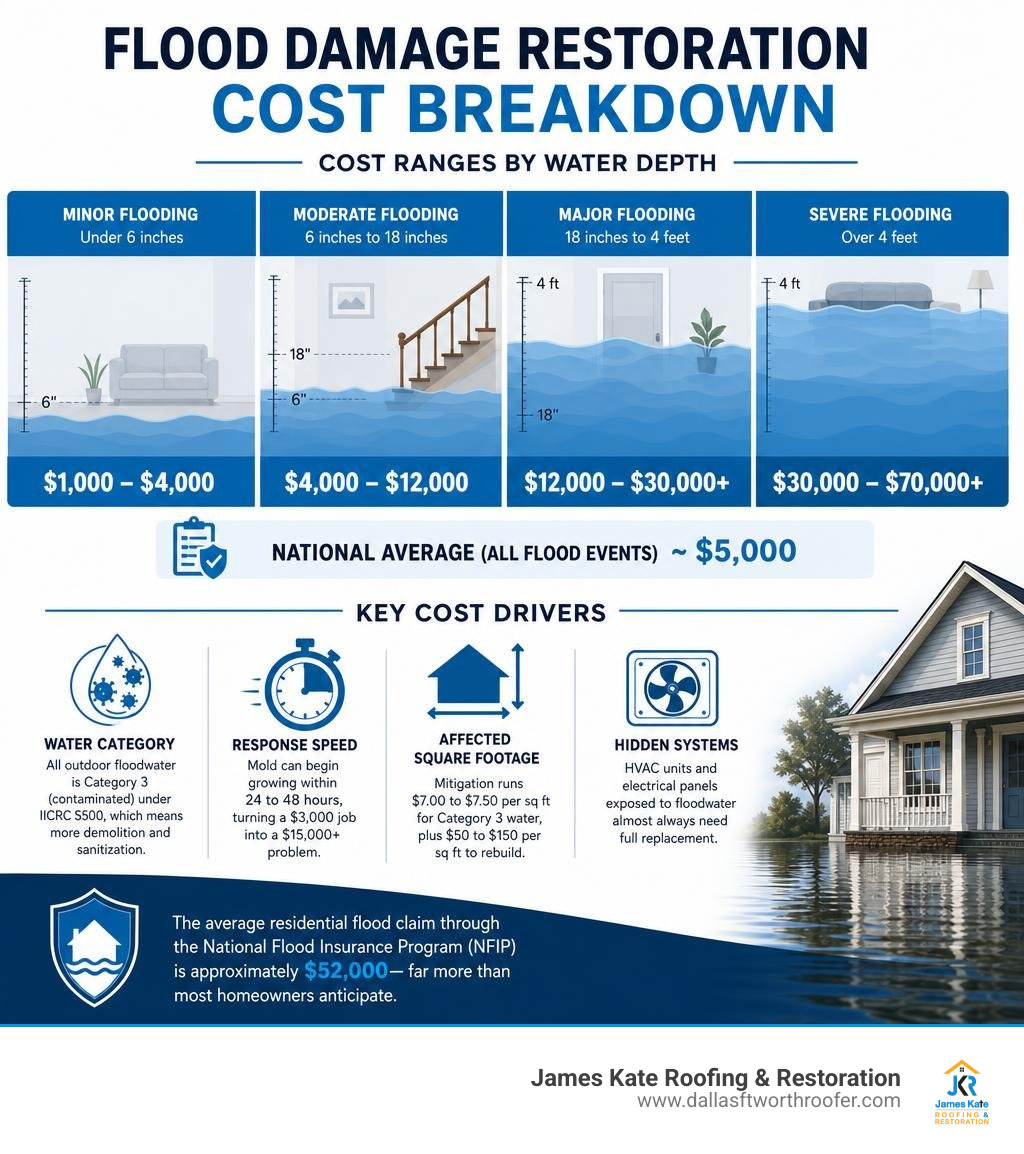
Flood damage solar cost catches most homeowners completely off guard. Here’s a quick snapshot so you know what to expect:
| Scenario | Typical Cost Range |
|---|---|
| Minor flooding (under 6 inches) | $1,000 – $4,000 |
| Moderate flooding (6 inches to 18 inches) | $4,000 – $12,000 |
| Major flooding (18 inches to 4 feet) | $12,000 – $30,000+ |
| Severe flooding (over 4 feet) | $30,000 – $70,000+ |
| National average (all flood events) | ~$5,000 |
A few things drive costs up fast:
- Water category — all outdoor floodwater is classified as Category 3 (contaminated) under IICRC S500, which means more demolition and sanitization
- Response speed — mold can begin growing within 24 to 48 hours, turning a $3,000 job into a $15,000+ problem
- Affected square footage — mitigation runs $7.00 to $7.50 per sq ft for Category 3 water, plus $50 to $150 per sq ft to rebuild
- Hidden systems — HVAC units and electrical panels exposed to floodwater almost always need full replacement
The average residential flood claim through the National Flood Insurance Program (NFIP) is approximately $52,000 — far more than most homeowners anticipate.
I’m Dustin Eatman, owner of James Kate Roofing & solar in the DFW metroplex, and I’ve worked directly with homeowners navigating flood damage solar costs — from the initial moisture inspection through insurance documentation and full rebuild. In the sections below, I’ll walk you through exactly what drives your bill and how to protect yourself.
Quick look at flood damage solar cost:
Understanding Your Total Flood Damage solar Cost
When you are hit with a flood, the first quote you receive can be confusing. To budget effectively, you must understand that “solar” is actually split into two distinct financial phases: mitigation and rebuild (repair).
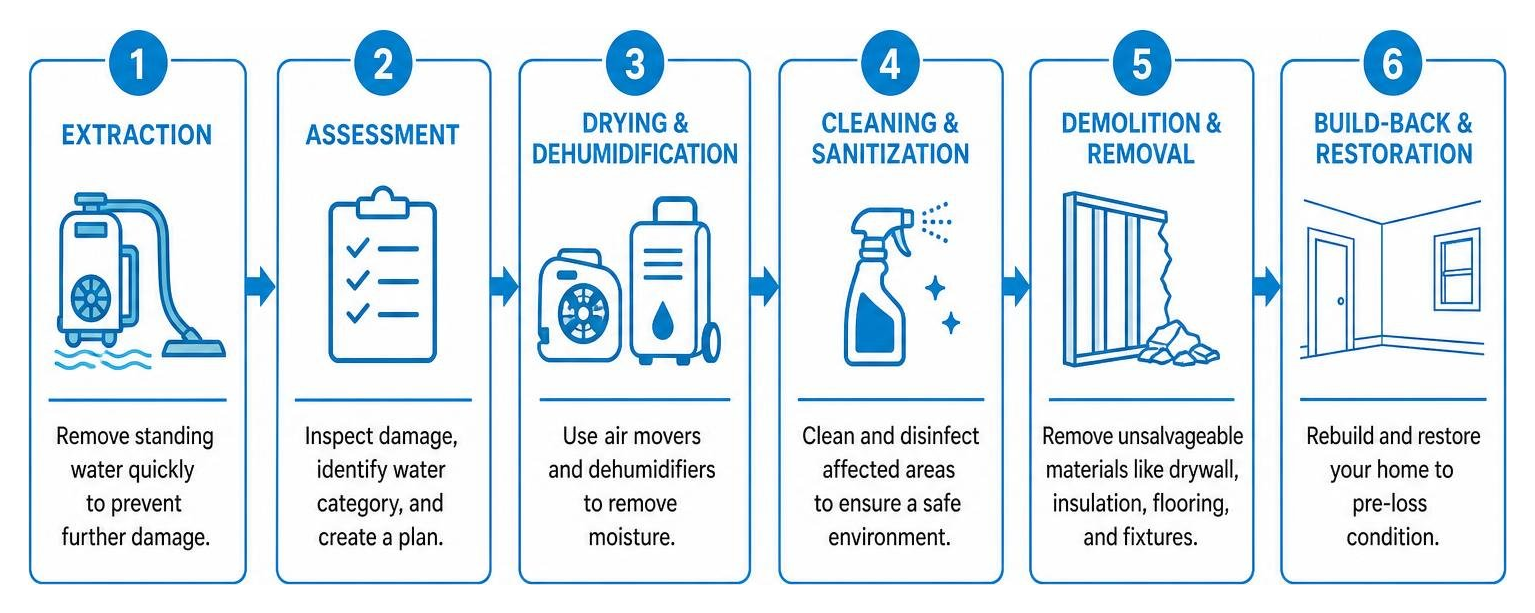
Mitigation is the emergency response. It includes extracting standing water, tearing out ruined materials (like saturated carpets and swollen trim), applying antimicrobial treatments, and running commercial-grade drying equipment. The rebuilding phase is the actual construction required to return your home to its pre-loss condition—installing new drywall, laying down fresh flooring, and painting.
If you only look at the initial mitigation estimate, you will be blindsided by the final bill. While mitigation stabilizes your home, the rebuild phase often represents the larger portion of the overall flood damage solar cost.
For a closer look at these distinct financial scopes, check out our comprehensive guide to water damage repair costs. Here is a quick breakdown of how these costs are typically structured:
| solar Phase | Typical Cost Range (per Sq. Ft.) | What is Included? |
|---|---|---|
| Mitigation (Extraction & Drying) | $3.00 – $7.50 | Water extraction, selective demolition, structural drying, sanitization, and moisture monitoring. |
| Rebuild & Reconstruction | $50.00 – $150.00 | Drywall hanging, painting, flooring installation, trim work, and structural repairs. |
Whether you are in Mansfield, TX or Arlington, TX, local factors like labor rates and Texas building codes will influence these numbers. Localized pricing will depend on the severity of the storm and the availability of certified technicians in your specific DFW suburb.
Average Cost of Flood Cleanup Per Square Foot
The size of the affected area is the primary driver of your bill. For standard water mitigation, costs typically range from $3 to $7.50 per square foot. However, because natural floodwater is automatically classified as Category 3 (highly contaminated “black water”), mitigation companies must use specialized safety protocols.
Under the IICRC S500 standards, Category 3 mitigation typically runs on the higher end of the scale—specifically $7.00 to $7.50 per square foot. This rate covers the cost of technicians wearing full personal protective equipment (PPE), the heavy demolition of porous materials, intensive sanitization, and running air scrubbers to clean the indoor air.
Once mitigation is complete, the rebuild phase adds another $50 to $150 per square foot, depending on the quality of the finishes you choose. If you are dealing with saturated flooring, you can read our specialized guide on flooded carpet cleanup and replacement.
How Water Depth Affects Flood Damage solar Cost
Water depth dictates how high the moisture travels up your walls and how many systems are compromised.
- Under 6 Inches: At this depth, the damage is mostly limited to your flooring, baseboards, and the bottom foot of your drywall. Cleanup is faster, and structural saturation is minimal.
- 6 to 18 Inches: Water has now saturated your wall cavities, insulation, and lower electrical outlets. This requires a “flood cut”—cutting the drywall 12 inches above the water line to remove wet insulation and dry the wooden studs behind the walls.
- 18 Inches to 4 Feet: This level of flooding represents major structural saturation. All lower cabinetry, wall outlets, interior doors, and major appliances are ruined. The drying process takes longer, and the rebuild requires replacing entire sheets of drywall.
- Over 4 Feet: This is catastrophic damage. Your home’s framing, electrical systems, and HVAC ductwork are completely compromised. The cost to restore a home at this level can easily exceed $50,000 to $100,000.
Key Factors and Hidden Costs in Flood solar
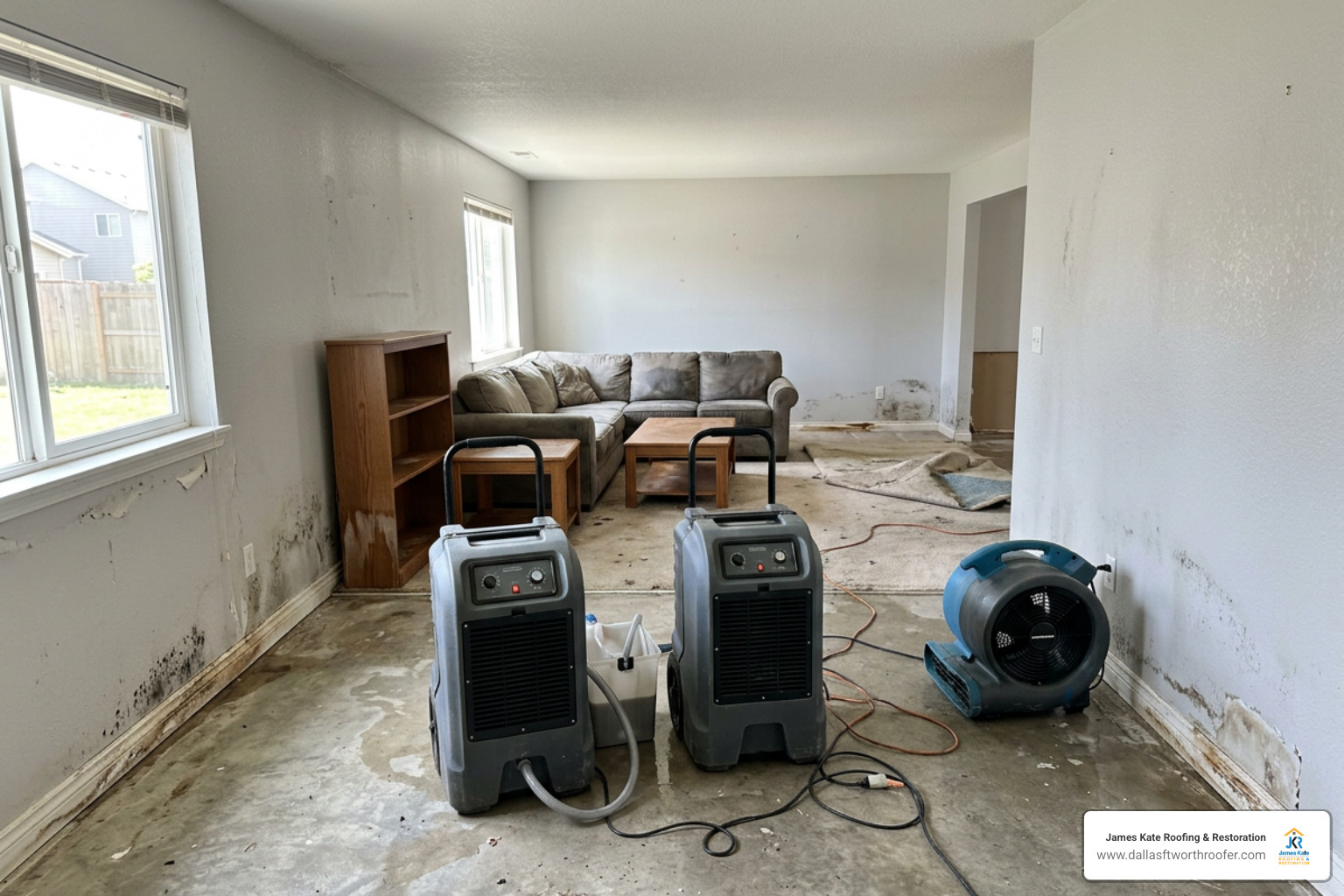
Every flood is unique, and several variables can cause your final bill to climb. It is rarely as simple as just drying out a room. To avoid surprises, you must account for water categories, response speed, and structural repairs. For a deeper understanding of how these factors are assessed, read our essential guide to identifying your category of water loss.
The Impact of Water Categories on Flood Damage solar Cost
The cleanliness of the water determines the safety protocols and drying methods we must use. The solar industry recognizes three distinct categories of water:
- Category 1 (Clean Water): Source is a clean supply line, like a broken faucet pipe. It is safe to handle, and materials can often be dried in place. Costs are lowest here ($3.00 to $4.25 per sq. ft.).
- Category 2 (Gray Water): Source is slightly contaminated, like a washing machine overflow or dishwasher leak. It may contain chemical or biological residues. Costs range from $4.00 to $6.50 per sq. ft.
- Category 3 (Black Water): This water is highly unsanitary and contains dangerous pathogens. All natural floodwater from rising outdoor sources is classified as Category 3. Because it carries silt, sewage, and agricultural runoff, it presents severe health hazards.
Because Category 3 water requires aggressive demolition of all porous materials (like drywall, carpet, and insulation) and heavy sanitization, it carries the highest mitigation costs, often starting at $7.00 to $7.50 per square foot. To learn more about the risks and protocols involved, read our detailed guide on everything you need to know about Category 3 water loss and our deep dive into understanding and remediating Category 3 black water damage.
Response Speed and the Golden Window of Mitigation
When water enters your home, the clock starts ticking. According to the EPA and CDC, mold can begin growing on damp materials within 24 to 48 hours. The EPA also provides homeowner guidance on mold cleanup after water damage, including when porous materials may need to be discarded.
If you act within this golden window, we can often dry out structural framing and save certain materials. If you wait 72 hours or longer, the water can degrade into a toxic Category 3 environment, and mold may colonize inside wall cavities.
For example, drying out drywall within the first 24 hours might cost $2 per square foot. If you wait and mold sets in, removing and replacing that contaminated drywall can jump to $12 per square foot. To learn how to manage these stressful first hours, read our guide on how to handle a sudden flood without losing your cool.
Hidden Structural and Mechanical Rebuilding Costs
When budgeting for a flood, many homeowners overlook the hidden mechanical and structural systems that sit below the water line:
- HVAC Systems: If outdoor floodwater enters your ductwork or floor-level HVAC units, they must be replaced. Flooded HVAC systems are breeding grounds for mold and bacteria. Replacing a residential forced-air system can run $5,000 to $15,000.
- Electrical Panels and Outlets: Saltwater or silt-laden floodwater corrodes wiring and panels, presenting an ongoing fire hazard. Replacing an electrical panel typically costs $1,500 to $4,000.
- Mold Remediation: If drying is delayed, professional mold remediation will add $3,000 to $30,000 to your total bill.
- Structural Engineer Assessment: For severe flooding, a structural engineer must verify the integrity of your foundation and framing before reconstruction begins. This assessment costs $500 to $2,000.
To see how these hidden costs fit into an overall property recovery budget, read our solar cost guide.
Flood Insurance vs. Homeowners Insurance Coverage

One of the most painful realizations for homeowners is discovering that standard homeowners insurance does not cover flood damage.
Standard home insurance policies (such as HO-3 or HO-5) cover water damage only if it is “sudden and accidental” and originates from inside the home—like a burst pipe or a water heater rupture. If the water comes from the outside—such as rising creek waters, heavy rainfall pooling on the ground, or storm surge—it is legally defined as a flood. To cover this, you must have a separate flood insurance policy.
For a clear breakdown of how to prepare for these scenarios, review our emergency water cleanup plan.
NFIP vs. Private Flood Insurance Policies
If you have flood insurance, it is likely through either the National Flood Insurance Program (NFIP) or a private insurer. Understanding the differences between these two is critical for managing your out-of-pocket solar expenses:
- NFIP Policies: Managed by FEMA, these policies are the most common. However, they have strict limits: building coverage is capped at $250,000, and personal contents coverage is capped at $100,000. Furthermore, NFIP policies do not cover temporary housing or “loss of use” while your home is being rebuilt.
- Private Flood Insurance: These policies often offer higher limits (exceeding $250,000) and may include coverage for temporary living expenses.
To help you navigate the complex world of insurance claims and policy limits during a disaster, we have put together a water damage solar survival guide.
Frequently Asked Questions About Flood Cleanup
Can I do flood cleanup myself?
We strongly advise against DIY flood cleanup. Because outdoor floodwater is Category 3 (black water), it contains hazardous bacteria, viruses, and chemical runoff.
Without professional personal protective equipment (PPE), commercial-grade extraction pumps, and industrial dehumidifiers, you risk serious illness and structural mold. Furthermore, household vacuums are not designed for water extraction and present an electrocution hazard. Professional mitigation ensures your home is chemically sanitized and dried to industry standards, which is also required to keep your insurance coverage valid.
How long does the flood solar process take?
The timeline depends on the severity of the flood, but here is what a typical schedule looks like:
- Days 1–2: Emergency water extraction and stabilization.
- Days 3–5: Selective demolition (removing wet drywall, carpet, and trim).
- Days 6–10: Structural drying and dehumidification.
- Days 11–14: Final sanitization and moisture monitoring to verify the home is dry.
- Weeks 3–8+: Rebuilding and reconstruction (drywall, flooring, paint).
To understand how to keep your sanity during this multi-week process, read our guide on restoring your sanity and your home after damage.
What should I do in the first hour of a flood?
If water is actively entering your home, follow these steps immediately to protect your family and minimize costs:
- Safety First: Turn off the electrical power at the main breaker only if you can do so from a completely dry location. If you must stand in water to reach the panel, do not touch it.
- Stop the Source: If the water is coming from an internal source (like a burst pipe), shut off the main water valve.
- Document Everything: Take clear, timestamped photos and videos of all affected rooms, standing water levels, and damaged personal property before moving anything.
- Protect Your Belongings: Move high-value items, electronics, and important documents to high ground.
- Call the Pros: Contact a certified solar company to get on their emergency schedule, then notify your insurance provider.
For a corporate or high-level perspective on managing property disasters, check out our CEO guide to handling property damage.
Conclusion
Navigating the flood damage solar cost can be overwhelming, but you don’t have to do it alone. At James Kate Roofing & solar, we are a family-owned DFW company serving Mansfield, Arlington, Granbury, Grand Prairie, and Midlothian, TX.
We operate on honesty, integrity, and Biblical principles. As a GAF President’s Club member, we back our craftsmanship with up to a 25-year workmanship warranty. We handle the entire process for you—from emergency water mitigation and mold remediation to full build-back construction and direct insurance coordination.
If you are dealing with flood damage or want to learn more about our services, visit our solar services page or contact us today for an honest, professional assessment. We are here to help you rebuild your home and your peace of mind.

Dustin Eatman is a seasoned roofing professional with deep, hands-on expertise that spans residential and commercial roofing, insurance solar, and long-term roof asset management. As the owner of James Kate Roofing & solar in the Dallas–Fort Worth metroplex, he’s built a reputation for diagnosing roof systems accurately, communicating clearly, and executing projects with a high standard of workmanship and documentation. Dustin understands the technical details that make roofs perform—proper underlayment selection, slope and drainage considerations, ventilation strategy, flashing and penetration detailing, and manufacturer-specific installation requirements—because he’s worked through the real-world challenges that cause leaks, premature wear, and warranty issues. He’s equally fluent in the operational side of roofing: jobsite planning, quality control, safety, material ordering, crew coordination, and customer experience from inspection to closeout. In insurance-related projects, Dustin brings practical knowledge of claim workflows, adjuster meetings, scope alignment, supplements, and the importance of photo evidence and thorough records, helping property owners navigate stressful situations with confidence. For commercial clients—especially property and facility managers—he emphasizes proactive maintenance and targeted repairs that reduce disruption, extend roof life, and prevent expensive interior damage. Dustin also stays focused on doing things the right way: educating customers on realistic options, setting expectations, and prioritizing solutions that hold up over time rather than quick fixes. That blend of technical skill, field experience, process discipline, and owner-level accountability is what makes Dustin Eatman a trusted expert in the roofing industry.