Why the Right Paint for Corrugated Roof Surfaces Makes All the Difference
Choosing the right paint for a corrugated roof can mean the difference between a roof that lasts decades and one that rusts, peels, and leaks within a few years. Here’s a quick look at the best options:
| Paint Type | Best For | Key Benefit |
|---|---|---|
| 100% Acrylic Latex | Most corrugated metal roofs | UV resistance, flexibility, easy cleanup |
| Elastomeric Coating | Roofs needing waterproofing | Stretches with thermal expansion, seals seams |
| Oil-Based / Alkyd | Heavy rust and weathered metal | Deep penetration, superior adhesion |
| Acrylic Urethane | Commercial or industrial roofs | Color retention, low VOC, corrosion resistance |
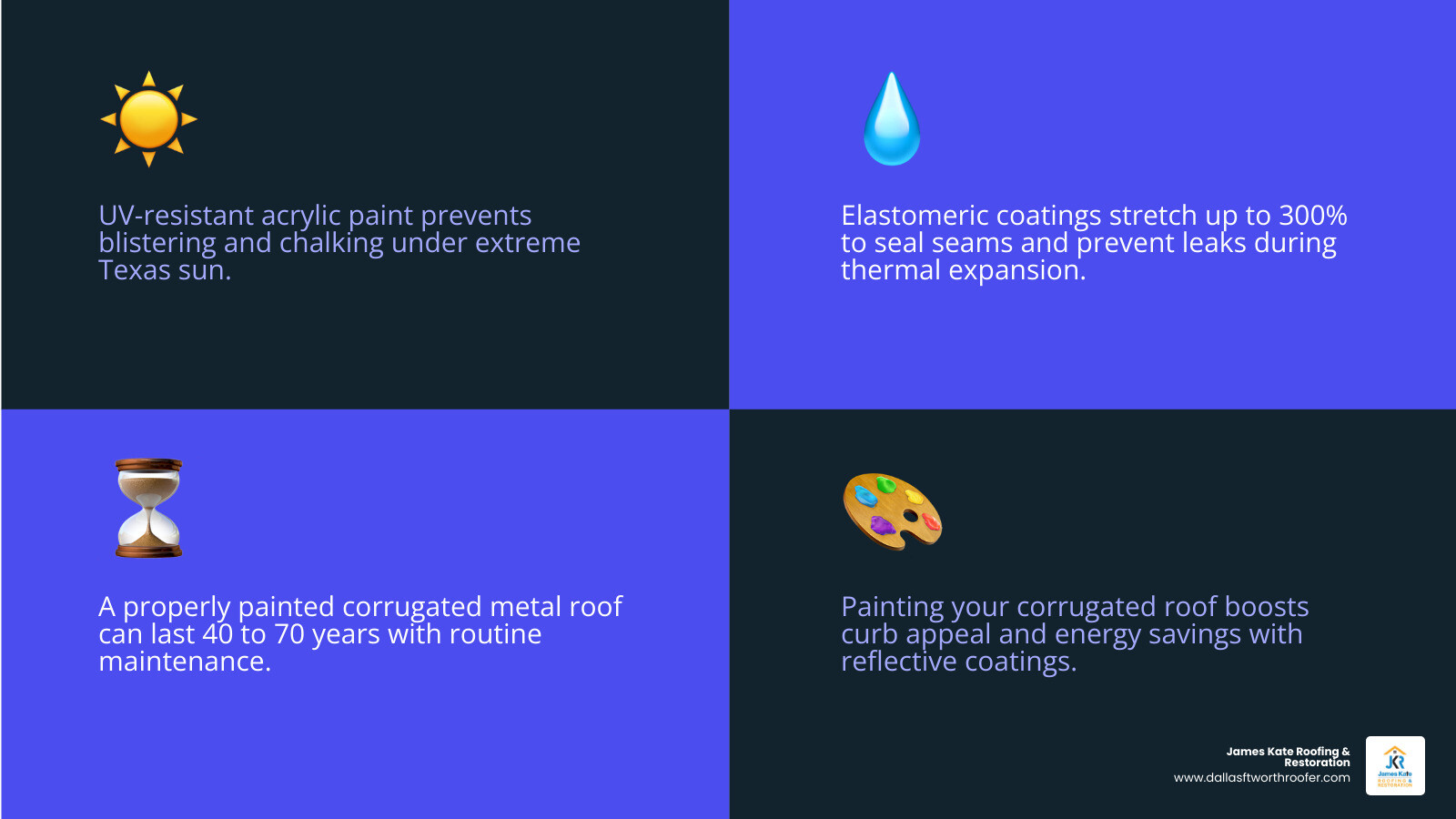
The right choice depends on your roof’s condition, your local climate, and whether you’re going for aesthetics, waterproofing, or both. In the DFW area, extreme heat and intense UV exposure make paint selection even more critical — the wrong product can blister, chalk, or fail within a single Texas summer.
A metal roof can last 40 to 70 years with proper maintenance — and painting is one of the most cost-effective ways to protect that investment.
I’m Dustin Eatman, owner of James Kate Roofing & solar, and I’ve worked on corrugated metal roofs across the DFW metroplex — from rust treatment and surface prep to selecting the right paint for a corrugated roof that holds up against Texas heat, hail, and humidity. In this guide, I’ll walk you through everything you need to know to get it done right.
Terms related to paint for corrugated roof:
Understanding Your Options: The Best Paint for Corrugated Roof Projects
When selecting a paint for a corrugated roof, we have to look past simple color choices. Metal roofs expand and contract significantly as temperatures swing from blistering summer afternoons in Arlington to chilly winter nights in Granbury. This thermal movement requires a coating that can stretch without cracking, peeling, or losing its bond to the metal substrate.
Understanding the chemical differences between acrylic, elastomeric, and oil-based coatings is the first step in ensuring your paint job survives the elements. For an in-depth look at how these coatings protect your property, check out the complete guide to roof coating.
Acrylic Paint for Corrugated Roof Applications
For most residential and light commercial metal roofs, 100% acrylic waterborne paint is an exceptional choice. Water-reducible acrylic formulas dry quickly, clean up with soap and water, and offer outstanding resistance to UV-induced fading and chalking.
Premium options like Synotex RoofPaint provide UV resistance and non-fading, semi-gloss performance for over 15 years. Similarly, products like A-Plus PowerRoof® Acrylic Roofing Paint – Aplus Paints offer high-gloss, durable protection designed to reduce indoor heat.
Because acrylics are highly breathable, they allow moisture vapor to escape while remaining water-resistant from the outside. When applied in white or light colors, these coatings serve as an energy-saving roof coating why white is the new green, reflecting solar radiation to lower your cooling costs during hot Texas summers in Midlothian or Grand Prairie.
Elastomeric Paint for Corrugated Roof Systems
If your primary goal is waterproofing and leak prevention rather than just a cosmetic upgrade, elastomeric coatings are the gold standard. Unlike standard paints, elastomeric coatings are applied at a much higher wet film thickness (typically 12 to 16 mils per coat) to form a thick, rubber-like membrane over the corrugated panels.
These coatings are engineered to meet strict performance standards, such as Solargard® 6083 | Tremco, which complies with ASTM D 6083 for liquid-applied acrylic roofing coatings. This certification guarantees superior low-temperature flexibility, weather resistance, and dirt pick-up resistance.
Elastomeric systems stretch and contract seamlessly with the metal’s thermal movement, making them perfect for sealing small cracks, joints, and fastener heads. While they are highly effective on sloped corrugated systems, we also utilize specialized variations of these liquid membranes when executing projects that require dont get drenched the best waterproof paint for flat roofs.
Oil-Based and Polyurethane Coatings
For older, heavily weathered, or moderately rusted corrugated iron roofs, traditional water-based paints sometimes struggle to adhere. In these scenarios, oil-based or specialized alkyd coatings are highly effective.
Products like NOVEX | Flakaproof Roof Paint combine an acrylic binder with linseed oil. Linseed oil has a long history of deep penetration, allowing the paint to soak into weathered, porous metal and tightly bond to the substrate while providing built-in anti-corrosive protection.
For commercial and industrial corrugated roofs where high durability and extreme chemical resistance are required, water-based acrylic urethanes like Solargard® Acrythane | Tremco are widely used. These single-component, low-odor coatings provide industrial-grade corrosion resistance, salt-spray protection, and long-term semi-gloss color retention without disrupting sensitive facilities like schools or hospitals with harsh chemical fumes.
Preparing and Repairing Your Corrugated Metal Roof
You can buy the most expensive paint for a corrugated roof on the market, but if your surface preparation is lacking, the paint will fail. Metal roofs accumulate dirt, atmospheric oils, pollen, and chalky residue from old paint layers over time.
Before opening a single paint can, the roof must undergo a thorough inspection and preparation process. To understand the full scope of keeping your roof in top shape, refer to our roof maintenance services complete guide.
First, we pressure wash the entire roof surface at a minimum of 1500 PSI. For roofs with heavy biological growth, we use a water and chlorine mixture to completely kill and eliminate mold, algae, and mildew. If you are dealing with stubborn mildew, scrub the area with a solution of one quart liquid bleach to three quarts of water, let it sit for 10 minutes, and rinse thoroughly.
All chalking and powdery residue must be completely removed—using a non-residue TSP (trisodium phosphate) cleaner is highly effective for stripping away these brittle surface layers.
How to Fix Leaks and Replace Fasteners
Corrugated metal roofs expand and contract constantly. This thermal movement puts immense stress on the fasteners, often causing screws to back out, rubber washers to dry rot, or overlapping seams to separate.
Before applying any paint for a corrugated roof, we must address these structural and waterproofing weak points. If the underlying wood purlins are slightly rotted or the original screw holes have stripped, we replace the backed-out fasteners with oversized screws featuring fresh, UV-resistant EPDM rubber washers.
For seams, valleys, and overlaps, we apply a high-solids elastomeric sealant or a heavy-duty, self-adhesive butyl seam tape. Standard acrylic “pap en lap” liquid membrane kits should be avoided on zinc or galvanized roofs, as they can trap moisture underneath and accelerate corrosion.
Instead, we seal joints with a 75mm wide self-adhesive flashing tape or a specialized rubber sealant. If your corrugated metal roof is on an outbuilding, garage, or shed and has sustained severe structural damage, it may be time to consider a corrugated garage roof replacement before proceeding with cosmetic coatings.
Can You Paint a Rusty Corrugated Metal Roof?
Yes, you can absolutely paint a rusty corrugated metal roof, but you cannot paint directly over loose, flaking rust. Doing so guarantees the paint will peel off within months.
The correct process for treating a rusty metal roof includes:
- Mechanical Scraping & Wire Brushing: Use a wire brush, scraper, or power sander to remove all loose, scaling rust down to a sound, bare metal surface.
- Rust Conversion: Apply a high-quality rust converter to any remaining tightly bound surface rust. This chemical treatment converts iron oxide (rust) into a stable, paintable black protective layer.
- Anti-Corrosive Priming: Apply a dedicated anti-corrosive primer, such as a water-based red iron oxide primer or a zinc-rich metal primer. This step creates a chemical barrier that prevents moisture and oxygen from reaching the steel and restarting the oxidation process.
Step-by-Step Application Process for Metal Roofs
Once your corrugated roof is clean, repaired, and primed, it is time for the application phase. While brushes and rollers (specifically a 3/8” to 1/2” nap roller cover) are useful for cutting in edges or coating small sections, an airless sprayer is the most efficient and effective tool for large corrugated areas.
Using professional equipment ensures a uniform wet film thickness and allows you to easily coat the complex curves of the corrugation. If you want to see how a professional coating system can revitalize your home’s curb appeal, read our guide on how to make your old roof look brand new again.
When spraying corrugated metal, the angle of application is critical. If you only spray from one direction, you will experience “shadowing,” where one side of the raised corrugated ridges receives a thick coat of paint while the opposite side remains thin or completely bare.
To prevent this, we use a directional spraying technique: apply the first coat across the entire roof, and then spray the second coat from the opposite direction. This ensures 100% coverage on all angles of the raised ridges.
Weather conditions during application are equally important. Never paint in direct, hot sun, when rain is imminent, or late in the afternoon when heavy dew can disrupt the curing process.
The ideal application temperature range for most metal roof paints is between 50°F and 90°F. If you are applying high-solids elastomeric coatings, ensure your airless sprayer is a piston-type capable of delivering at least 1 gallon per minute, and remove all line and gun filters to prevent clogging.
Priming Requirements and Coverage Calculations
Do you need to prime before applying your paint for a corrugated roof? While some modern direct-to-metal (DTM) paints are self-priming on clean, weathered metal, priming is always recommended for maximum adhesion and long-term durability.
New galvanized steel is coated in protective mill oils that must be wiped down with paint thinner and lightly sanded before an etch primer is applied. Old, unpainted weathered metal sheets (exposed to the elements for over six months) may not require specialized chemical wash primers, but they still benefit greatly from a bonding primer.
To calculate how much paint you will need, you must first determine the square footage of your roof. That corrugated sheets have a wavy profile that actually increases the surface area by about 10% to 15% compared to a flat roof of the same footprint.
Standard vinyl acrylic paints, such as KOOL SEAL® ECONOMY ROOF PAINT (which includes a 3-year limited warranty), have a coverage rate of approximately 200 square feet per gallon on metal surfaces. High-solids elastomeric coatings, which are applied much thicker, typically cover between 100 to 150 square feet per gallon. Always plan for at least two coats to achieve the manufacturer’s specified dry film thickness.
Frequently Asked Questions about Corrugated Roof Paint
Do you need a primer for a corrugated metal roof?
Yes, in the vast majority of cases, a primer is highly recommended. For brand-new galvanized steel or Zincalume panels, a specialized vinyl-acrylic etch primer or zinc-phosphate primer is necessary to cut through manufacturing oils and bite into the slick metal surface.
For older, weathered corrugated roofs, a primer acts as a vital bonding agent, securing the topcoat to the substrate and preventing peeling. If there is any active rust present, a dedicated rust-inhibiting red iron oxide primer is mandatory to stop corrosion from spreading beneath your new paint layer.
How long does paint last on a corrugated metal roof?
The lifespan of your paint job depends heavily on the quality of the product used and the thoroughness of the surface preparation. A standard economy roof paint may last 3 to 5 years before showing signs of chalking or fading.
In contrast, premium 100% acrylic paints and elastomeric ceramic coatings can easily last 15 years or more, with many manufacturers offering 15-to-20-year written warranties. To maximize the lifespan of your coated roof, implementing a routine maintenance schedule is key. For practical advice, review our expert tips for affordable roof maintenance and longevity.
What is the minimum slope required for corrugated roofing?
Corrugated metal roofing sheets should not be installed on roof slopes lower than 15 degrees (approximately a 3:12 pitch). On roofs flatter than 15 degrees, heavy rain cannot drain fast enough from the shallow corrugated valleys, leading to water pooling.
Furthermore, strong winds can easily drive water backward under the overlapping seams, causing severe leaks. If you have a low-slope or flat roof section, standard corrugated panels are not suitable; instead, specialized standing seam or clip-lock profiles should be utilized to prevent water penetration.
Conclusion
Restoring your corrugated metal roof with a fresh, high-performance coating is one of the smartest investments you can make for your property. It not only instantly boosts your curb appeal but also seals minor leaks, prevents destructive rust, and can significantly lower your cooling bills during those scorching North Texas summers.
However, achieving a paint job that lasts 15+ years requires professional-grade surface preparation, precise leak repairs, and the correct application of specialized primers and coatings.
At James Kate Roofing & solar, we are proud to serve our neighbors throughout Mansfield, Arlington, Granbury, Grand Prairie, and Midlothian, TX. As a family-owned local business built on honesty, integrity, and Biblical principles, we bring GAF President’s Club recognition and up to a 25-year workmanship warranty to every project we touch.
Whether you need a simple aesthetic refresh, a complete elastomeric waterproofing system, or full build-back solar services after storm damage, our team is here to deliver top-tier results.
Don’t leave your roof’s protection to chance or cheap DIY kits that peel after the first storm. Schedule a professional roof inspection with us today, and let us help you protect your metal roof in style!

Dustin Eatman is a seasoned roofing professional with deep, hands-on expertise that spans residential and commercial roofing, insurance solar, and long-term roof asset management. As the owner of James Kate Roofing & solar in the Dallas–Fort Worth metroplex, he’s built a reputation for diagnosing roof systems accurately, communicating clearly, and executing projects with a high standard of workmanship and documentation. Dustin understands the technical details that make roofs perform—proper underlayment selection, slope and drainage considerations, ventilation strategy, flashing and penetration detailing, and manufacturer-specific installation requirements—because he’s worked through the real-world challenges that cause leaks, premature wear, and warranty issues. He’s equally fluent in the operational side of roofing: jobsite planning, quality control, safety, material ordering, crew coordination, and customer experience from inspection to closeout. In insurance-related projects, Dustin brings practical knowledge of claim workflows, adjuster meetings, scope alignment, supplements, and the importance of photo evidence and thorough records, helping property owners navigate stressful situations with confidence. For commercial clients—especially property and facility managers—he emphasizes proactive maintenance and targeted repairs that reduce disruption, extend roof life, and prevent expensive interior damage. Dustin also stays focused on doing things the right way: educating customers on realistic options, setting expectations, and prioritizing solutions that hold up over time rather than quick fixes. That blend of technical skill, field experience, process discipline, and owner-level accountability is what makes Dustin Eatman a trusted expert in the roofing industry.