Immediate Actions: What to Do When Your Roof Is Actively Leaking
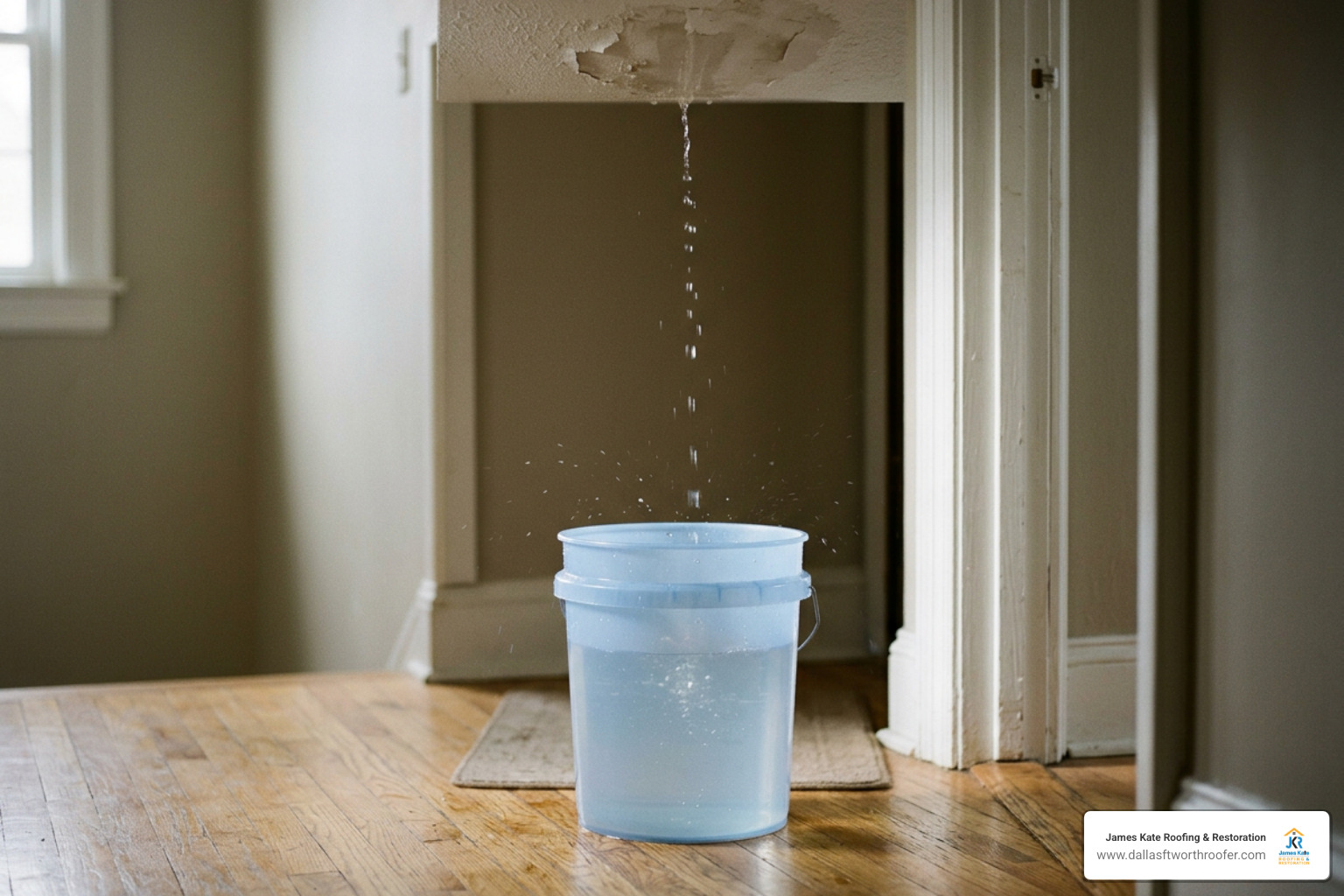
When water starts dripping through your ceiling during a North Texas downpour, staying calm and taking fast action will save thousands of dollars in interior water damage. Before searching online to fix roof leak near me, execute immediate containment steps inside your property.
First, catch the water. Place a wide bucket or container directly beneath the active drip. If water is pooling behind ceiling drywall or paint, creating a swollen water bubble, carefully pop the center with a screwdriver or small nail. Releasing this trapped water relieves structural weight, helping to prevent a sudden ceiling collapse.
Next, protect your property and belongings. Move furniture, electronics, and rugs out of the path of dripping water. If items are too heavy to move, cover them tightly with heavy plastic sheets or tarps.
Document everything before clean-up begins. Take clear photos and videos showing the active leak, floor damage, ruined drywall, and affected personal property. Detailed evidence is invaluable when navigating property insurance claims later. If the leak is severe, explore our specialized Emergency Roof Repair Arlington services for fast local support.
Emergency Steps to Fix Roof Leak Near Me Fast
Stopping water entry during an ongoing storm requires stabilization. Never climb onto a wet, slippery asphalt shingle roof or commercial flat roof during heavy rain or high winds; ladder falls and slip hazards are extremely dangerous. The Occupational Safety and Health Administration (OSHA) warns that roof falls represent one of the most severe hazards during extreme weather conditions.
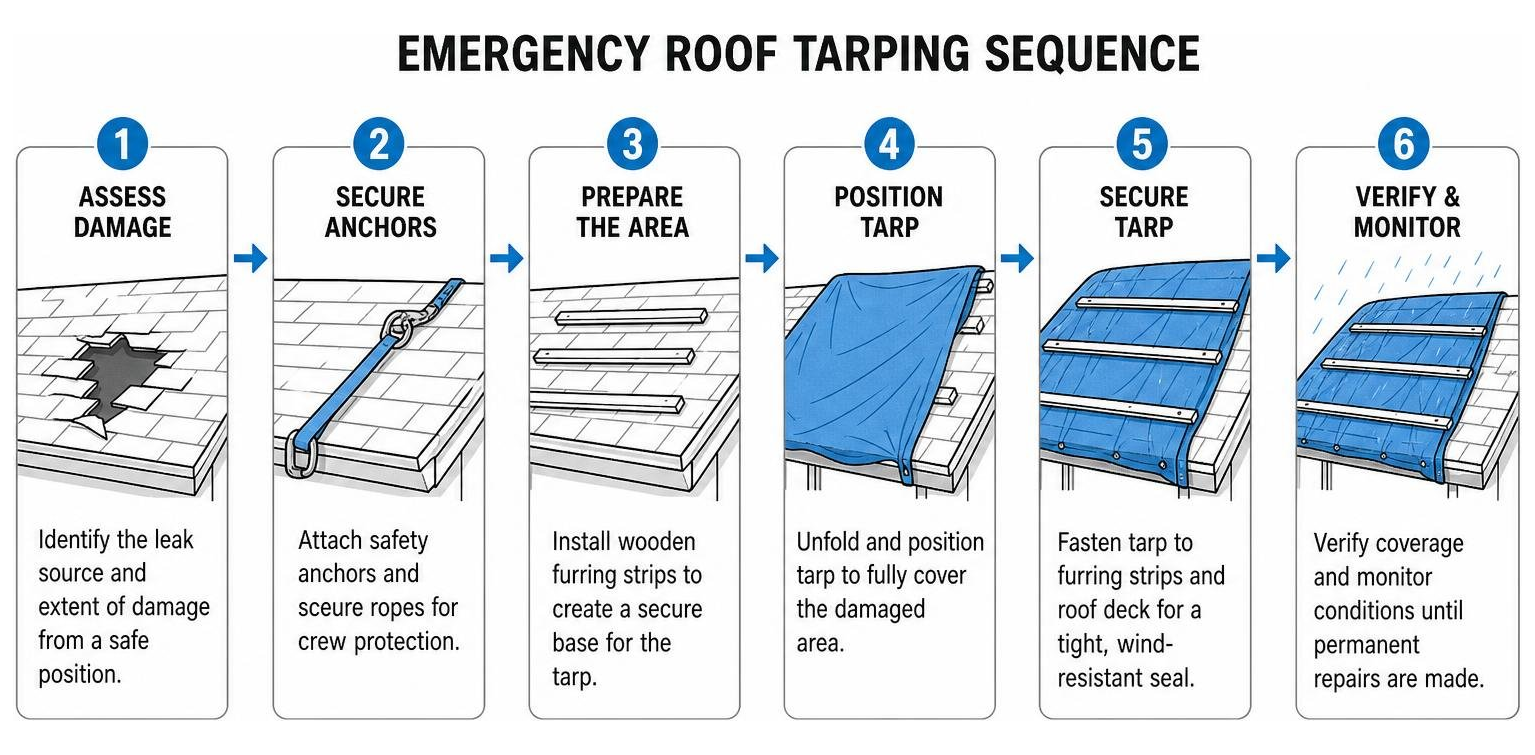
Instead, call a licensed roofing professional immediately for emergency service. Roofing crews use heavy-duty weatherized tarps, specialized wooden furring strips, and emergency anchors to create an impervious temporary barrier over damaged shingles, open flat roof seams, or shattered skylights.
While waiting for professional response, ensure home safety by switching off power at the main circuit breaker to any rooms where water is dripping near light fixtures, smoke detectors, or electrical outlets. For insights on managing emergency response times during severe weather, read our guide Don’t Get Soaked by Waiting for a 24 Hour Roofing Service.
Uncovering Hidden Roof Leaks: Signs and Diagnostics
Not every roof leak announces itself with a dramatic water drip into a bucket. Some of the most destructive moisture intrusion occurs quietly over months, rotting attic decking and fostering structural mold before presenting obvious signs indoors.
Common interior warning signs include:
- Discolored brownish water stains appearing on drywall ceilings or along upper interior walls.
- Peeling wallpaper, bubbling paint, or drywall tape lifting along ceiling corners.
- Persistent musty odors in top-floor rooms, closets, or attic spaces.
- Dark spots or white efflorescence on visible wood framing and roof trusses.
If you observe these symptoms, review our comprehensive Roof Inspection Arlington TX Guide to evaluate early warning signs across your property.
How Professionals Trace Water Paths
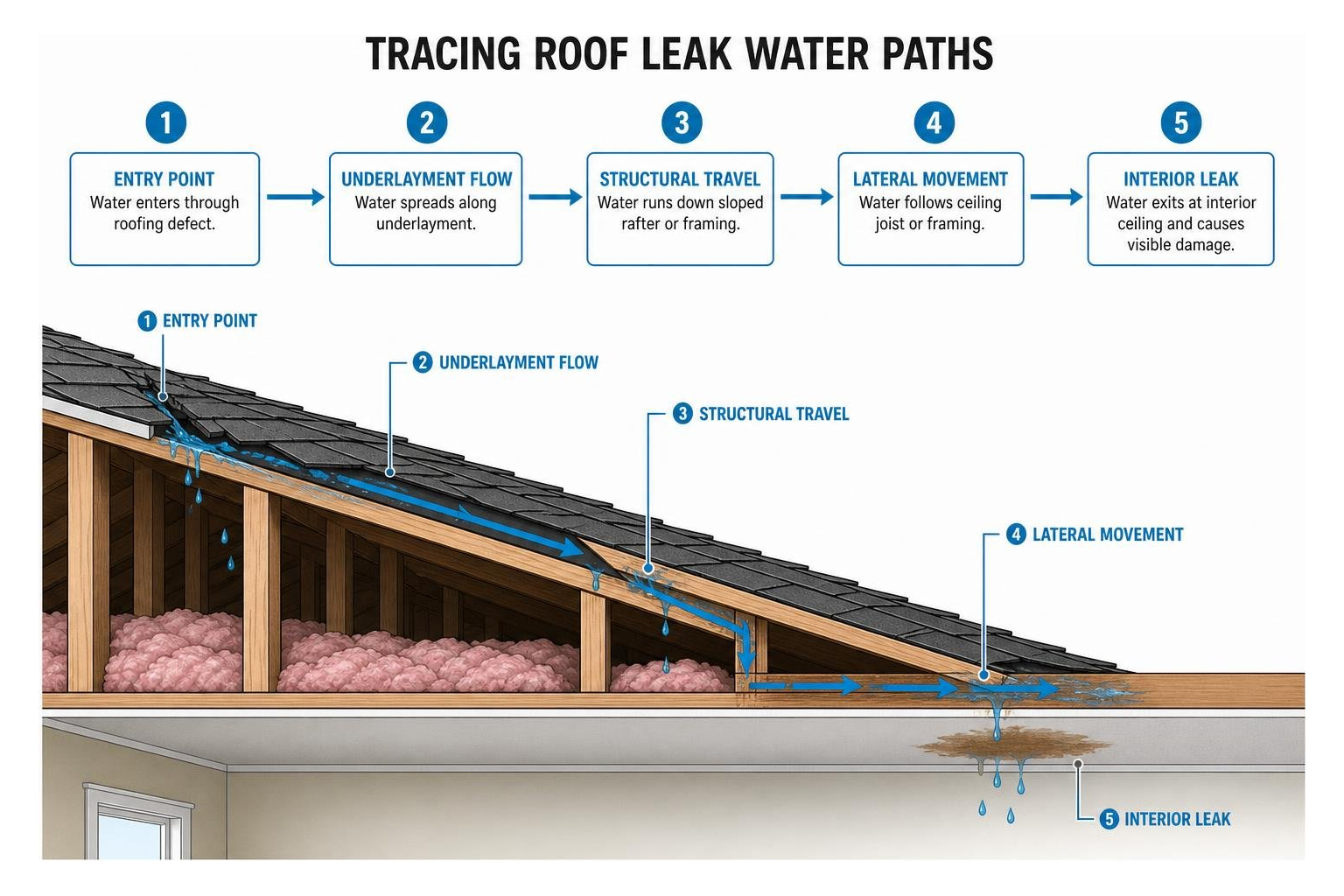
Tracing a leak is like solving a puzzle because water rarely travels straight down. Water commonly enters through a tiny roof gap, runs along underlying felt or synthetic underlayment, travels down a sloped rafter or ceiling joist, and finally drips onto interior drywall 10 to 20 feet away from the initial exterior penetration.
When our teams inspect residential homes in Mansfield, TX, or commercial properties in Grand Prairie, Midlothian, and Arlington, we follow a systematic diagnostic approach:
- Upslope Attic Tracing: Technicians examine attic spaces with high-powered light sources, checking rafters, decking, and insulation upslope from interior ceiling marks.
- Moisture Meters & Thermal Scanners: Digital moisture meters and infrared cameras pinpoint hidden moisture pockets beneath shingle layers or behind finished drywall without invasive tearing.
- Simulated Hose Testing: During dry weather, we systematically spray water over suspected exterior zones—such as step flashings, valley lines, or pipe boot penetrations—while a technician monitors the attic to identify exact water entry points.
For commercial roof decks, including low-slope TPO or modified bitumen systems, diagnostic tracing also checks perimeter edge metal and open membrane seams. Learn more about our commercial diagnostics by reading our Commercial Roofing Services overview.
Common Causes of Roof Leaks Across Different Seasons
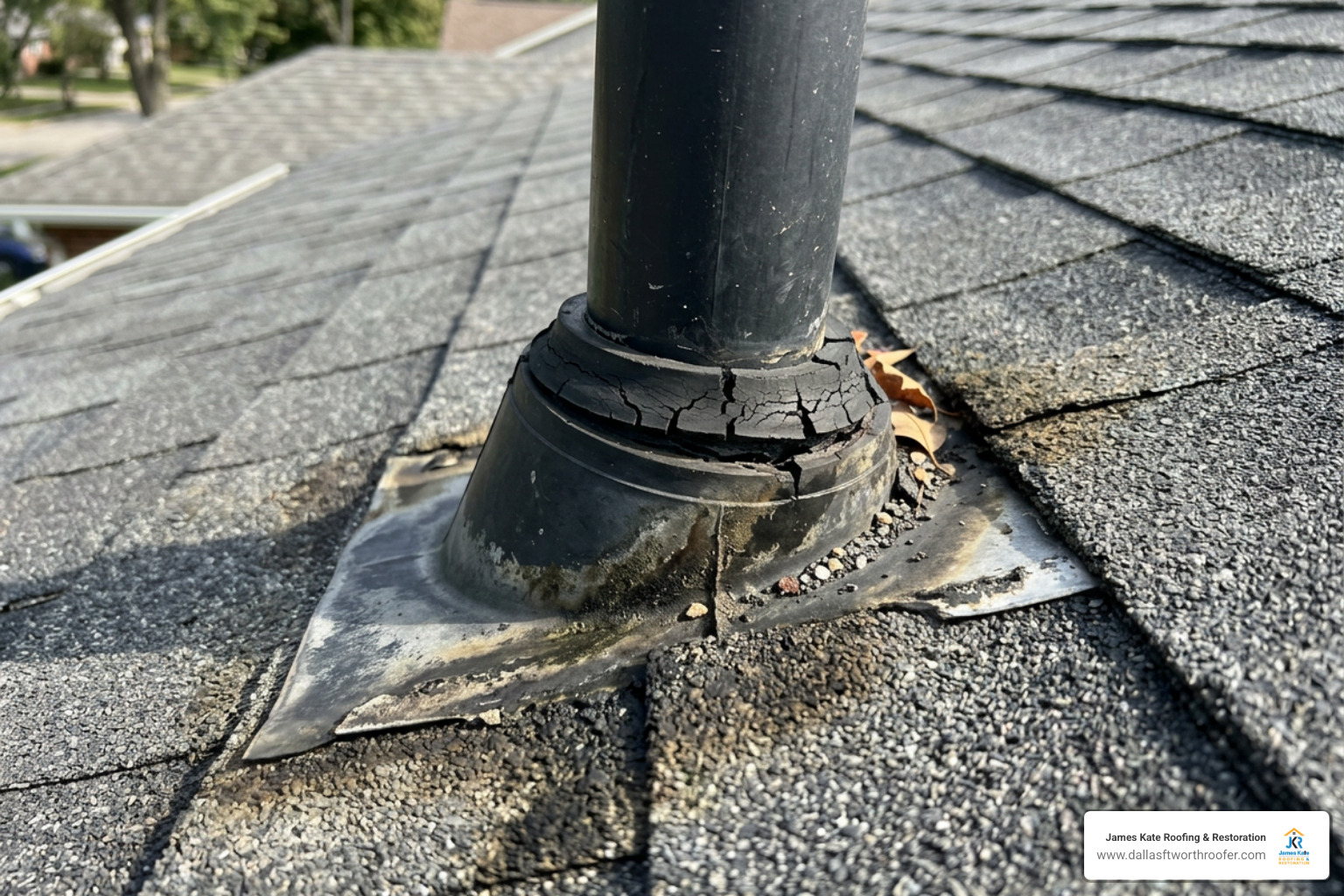
Our North Texas weather places unique strains on roofing systems throughout the year, with specific seasonal factors driving common leak vulnerabilities.
- Spring Weather Crises: Severe spring thunderstorms bring heavy downpours, wind-driven rain, and hail. High winds lift shingle tabs, while hail cracks aging shingles and punctures single-ply commercial flat roof membranes like TPO. Heavy rains easily wash beneath loose flashing around skylights and roof valleys.
- Summer Heat and UV Breakdown: Direct Texas sun bakes roofing materials. Plumbing vent boot gaskets, which seal vertical pipes exiting your roof, typically degrade around year 15 due to UV exposure. As rubber gaskets dry, crack, and split, rain runs straight down vertical pipes into wall cavities. Heat also dries out caulking and sealants around chimneys and skylight curbs over a 10-to-15-year cycle.
- Fall Leaf Buildup: Falling leaves and tree debris fill gutters and roof valleys. Clogged gutters back up water along the eaves, rotting fascia boards and pushing standing water back underneath the first course of shingles.
- Winter Freeze-Thaw Cycles: Although DFW winters are generally mild, winter cold snaps cause freeze-thaw expansion. Water trapped in small masonry cracks or chimney step flashing expands as it freezes, splitting mortar joints and opening gaps for winter rains.
Repair vs. Replacement: When Is It Time to Fix Roof Leak Near Me?
When facing a leak, homeowners often wonder whether a targeted repair will suffice or if a full roof replacement is necessary. The right choice depends on overall roof age, damage scope, and structural integrity.
- When to Repair: If your asphalt shingle or metal roof is relatively young (under 12 to 15 years old) and the damage is localized—such as a single cracked pipe boot, damaged step flashing around a chimney, or wind-blown shingles in an isolated field—a targeted repair makes total financial sense.
- When to Replace: If your roof is past 15 to 20 years old, displays widespread granule loss, has soft or rotted plywood decking across wide sections, or has suffered repeated leaks in multiple areas, patching is only a temporary band-aid. Investing in a full roof system yields better long-term protection and value.
For detailed DIY tips on replacing individual missing or damaged shingle tabs, check out our guide How to Replace Damaged Shingles Like a Pro.
How Experts Fix Roof Leak Near Me Problems
When our crew arrives to execute a permanent leak repair, we follow an exacting, multi-step process rather than relying on quick cosmetic patches:
- Remove Damaged Materials: We clear away old, cracked shingles, decayed underlayment, or deteriorated flashings around the leak site down to the clean roof deck.
- Inspect Substrate Decking: Any water-damaged or rotted plywood deck boards are removed and replaced with new, solid plywood to secure structural integrity.
- Install Weather Barrier Underlayment: We lay down self-adhering ice and water shield memory underlayment over roof valleys, flashing joints, and pipe boots for leak protection.
- Install New Flashing & Materials: We weave new aluminum or galvanized steel step flashing around walls, install heavy-duty lead or synthetic pipe boots over vents, and interlock brand-new matching asphalt shingles seamlessly into the existing field.
- Seal Commercial Membranes: For commercial TPO or modified bitumen flat roofs, we heat-weld targeted membrane patches over open seams, punctures, or damaged curb flashings.
To review repair products and materials before hiring a contractor, read Don’t Get Stuck The Essential Roof Patch Buying Guide.
Comprehensive Breakdown of Roof Leak Repair Costs
Understanding repair pricing helps you evaluate quotes fairly. Minor residential roof leak repairs usually incur basic job minimum charges to cover travel, setup, safety equipment, and skilled labor rates, alongside necessary material costs.
Typical repair service fee structures include base minimum service calls starting around $250 to $350, with dedicated skilled labor calculated on hourly per-man rates (frequently $85/hour per man) plus materials. Minor repairs, such as replacing a dried-out plumbing pipe boot or resealing an isolated flash joint, often range between $275 and $500. Medium to major repairs, including rebuilding chimney flashing, replacing rotted decking, or patching complex roof valleys, can range from $500 to $1,500+.
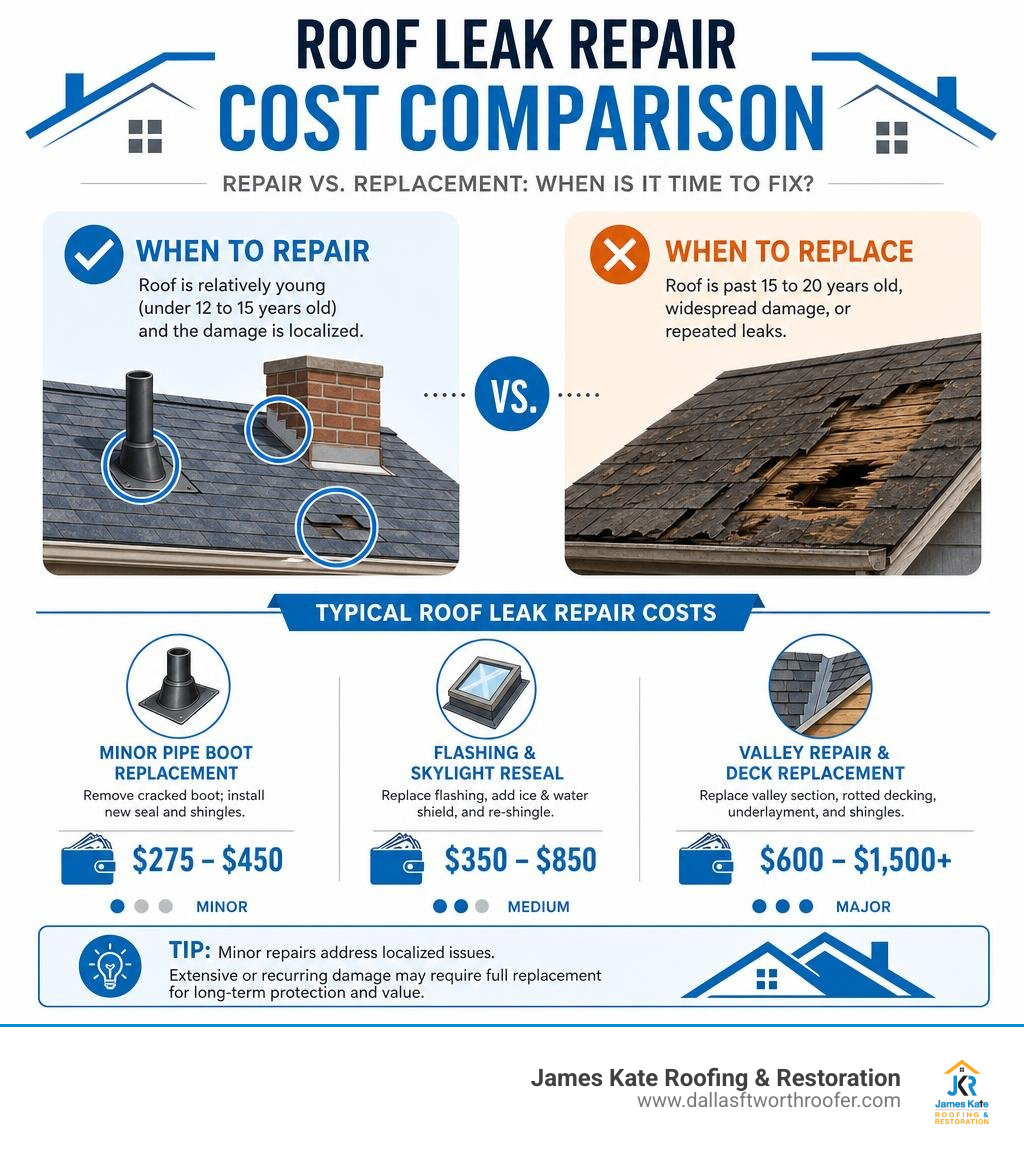
| Repair Type | Scope of Work | Estimated Cost Range |
|---|---|---|
| Minor Pipe Boot Replacement | Remove cracked rubber boot gasket; install new heavy-duty boot seal and underlying shingles. | $275 – $450 |
| Flashing & Skylight Reseal | Remove aged counter-flashing, replace step flashing, install new ice & water shield, and re-shingle perimeter. | $350 – $850 |
| Valley Repair & Deck Replacement | Tear out damaged valley section, replace rotted plywood decking, lay heavy underlayment, weave new shingle courses. | $600 – $1,500+ |
| Commercial TPO Seam Patch | Clean membrane surface, heat-weld targeted single-ply TPO patch over seam split or puncture, inspect roof drains. | $400 – $1,200 |
Understanding Insurance Coverage and Prevention Strategies

A frequent question from property owners searching to fix roof leak near me is whether insurance will cover repair costs.
- Covered Events: Standard homeowners insurance policies generally cover sudden, accidental roof leaks caused by covered perils—such as severe hail puncturing shingles, wind blowing shingle tabs clear off the deck, or a fallen tree branch cracking the roof structure.
- Uncovered Maintenance Issues: Insurance carriers routinely deny claims resulting from long-term neglect, general aging, lack of maintenance, or standard UV wear and tear (such as a 15-year-old pipe boot failing naturally over time).
Proactive Leak Prevention Checklist
Routine preventative care remains the best way to prevent unexpected roof leaks and avoid costly interior water solar:
- Clean Gutters Seasonally: Clear leaves, twigs, and sediment from gutters and downspouts every fall and spring to ensure water drains away from eaves freely.
- Trim Overhanging Tree Branches: Keep tree limbs trimmed back at least 6 to 10 feet from your roofline to prevent branch scrapes and stop squirrels or roof rats from accessing your shingles.
- Perform Annual Roof Audits: Inspect pipe boot rubber seals, chimney flashing mortar, and roof valley debris annually.
- Maintain Attic Ventilation: Proper attic ventilation balances roof deck temperatures, reducing humidity accumulation that can cause ceiling drips that mimic roof leaks.
For long-term property support from trusted local professionals, visit our main page at James Kate Roofing & solar.
Frequently Asked Questions About Roof Leak Repair
How much does a typical roof leak repair cost?
Most basic residential roof leak repairs range between $275 and $500 for isolated fixes like pipe boot gasket replacements or simple flashing seals. More extensive repairs involving rotted wood decking replacement, complex valley rebuilds, or chimney counter-flashing solar generally run between $500 and $1,500 depending on pitch, accessibility, and material costs.
How do I know if my roof leak is an emergency?
A roof leak is considered an active emergency if water is dripping rapidly into living spaces, if ceiling drywall is sagging or forming a large water bubble, or if active water entry threatens electrical boxes or main structural framing during an ongoing storm. In these scenarios, immediate emergency tarping and containment are required.
Are roof leaks covered by homeowners insurance?
Insurance covers roof leak repairs when water damage is caused directly by sudden, unpreventable weather events like hail strikes, windstorms, or tree impacts. Leaks resulting from age, lack of regular maintenance, or worn-out rubber pipe boots are considered owner maintenance responsibilities and are typically not covered.
Conclusion
Discovering a water leak overhead can feel stressful, but taking prompt, structured action stops damage in its tracks. By managing active drips inside your home, documenting water marks, and trusting trained local specialists to trace the water entry point back to its source, you can fix your roof leak efficiently without paying for unnecessary repairs.
Whether you manage a commercial property in Arlington or Grand Prairie, or own a residential home in Mansfield, Midlothian, or Granbury, our team at James Kate Roofing & solar brings honesty, integrity, GAF President’s Club-recognized craftsmanship, and up to 25-year workmanship warranties to every job. When you need water mitigation, mold remediation, or dependable roofing services to fix roof leak near me, contact our team today via our James Kate Roofing & solar page to schedule a professional inspection and secure lasting peace of mind.

Dustin Eatman is a seasoned roofing professional with deep, hands-on expertise that spans residential and commercial roofing, insurance solar, and long-term roof asset management. As the owner of James Kate Roofing & solar in the Dallas–Fort Worth metroplex, he’s built a reputation for diagnosing roof systems accurately, communicating clearly, and executing projects with a high standard of workmanship and documentation. Dustin understands the technical details that make roofs perform—proper underlayment selection, slope and drainage considerations, ventilation strategy, flashing and penetration detailing, and manufacturer-specific installation requirements—because he’s worked through the real-world challenges that cause leaks, premature wear, and warranty issues. He’s equally fluent in the operational side of roofing: jobsite planning, quality control, safety, material ordering, crew coordination, and customer experience from inspection to closeout. In insurance-related projects, Dustin brings practical knowledge of claim workflows, adjuster meetings, scope alignment, supplements, and the importance of photo evidence and thorough records, helping property owners navigate stressful situations with confidence. For commercial clients—especially property and facility managers—he emphasizes proactive maintenance and targeted repairs that reduce disruption, extend roof life, and prevent expensive interior damage. Dustin also stays focused on doing things the right way: educating customers on realistic options, setting expectations, and prioritizing solutions that hold up over time rather than quick fixes. That blend of technical skill, field experience, process discipline, and owner-level accountability is what makes Dustin Eatman a trusted expert in the roofing industry.