
How Long Will Your Composition Shingle Roof Actually Last?
Composition shingles roof life is one of the most important factors to understand before you invest in a new roof — or decide whether to repair the one you have.
Here’s the quick answer:
| Shingle Type | Expected Lifespan |
|---|---|
| 3-Tab Asphalt | 15–25 years |
| Architectural / Dimensional | 25–30+ years |
| Impact-Resistant / Polymer-Modified | 25–40+ years |
| Premium Designer Composition | 30–50 years |
Most composition roofs last 20 to 30 years under normal conditions. Premium products in favorable climates can reach 50 years. But in a place like Dallas-Fort Worth — where hail, intense UV, and thermal swings are routine — many roofs fall short of their warranty terms.
The gap between what a warranty promises and what a roof actually delivers is real. And it’s driven by factors most homeowners don’t think about until something goes wrong: attic ventilation, installation quality, shingle grade, and how quickly minor damage gets addressed.
This guide breaks all of it down so you can make a confident decision about your roof — whether you’re buying, maintaining, or replacing.
I’m Dustin Eatman, owner of James Kate Roofing & solar in the DFW area, and I’ve spent years diagnosing premature failures, guiding homeowners through insurance claims, and installing roofs built to maximize composition shingles roof life in one of the most demanding climates in the country. Everything in this guide comes from that hands-on experience.
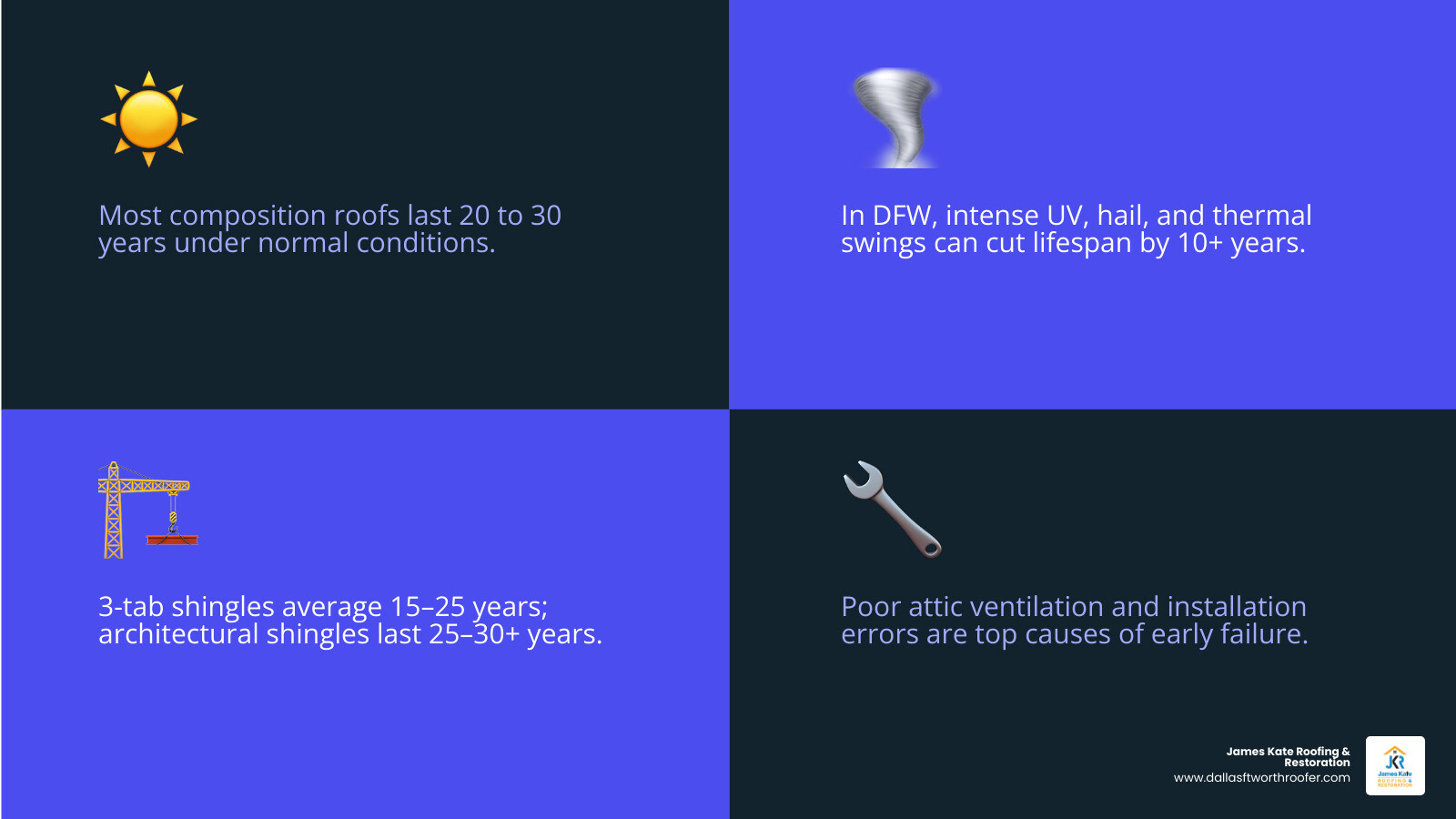
Essential composition shingles roof life terms:
Understanding Your Composition Shingles Roof Life
When we talk about “composition shingles,” we are diving into the most popular roofing material in North America. But what exactly are they composed of?
Despite the fancy industry jargon, composition shingles are what most homeowners simply call asphalt shingles. They get their name because they are built from a combination of several engineered materials rather than a single natural element like wood, clay, or slate.
To understand how they protect your home, it helps to look at their anatomy. A modern composition shingle is constructed of three primary layers:
- The Base Mat: A tough fiberglass baseboard that provides structural strength and holds the other components together.
- The Asphalt Coating: Saturated asphalt coats the fiberglass mat on both sides. This layer provides the essential waterproofing barrier that keeps rain out of your home.
- The Ceramic Granules: Small, mineral-rich granules are embedded into the top layer of asphalt. These granules are the unsung heroes of your roof; they reflect UV radiation, protect the underlying asphalt from breaking down, and provide crucial fire resistance. Some premium shingles even feature built-in zinc or copper deposits that release over time to prevent algae and dark streaks.
Understanding this structure is key to realizing why your composition shingles roof life can vary so drastically. If the granules wear away, the asphalt is exposed to direct sunlight, leading to rapid oxidation, cracking, and eventual leaks.
For a deeper dive into how these materials compare to traditional options, take a look at our guide on The Ultimate Guide to Composition Roof vs Asphalt Shingles.
Shingle Types and Their Expected Lifespans
Not all composition shingles are manufactured equal. The grade of material you select plays the single largest role in determining how many years of service you will get out of your roof.
How Shingle Types Impact Composition Shingles Roof Life
The market is generally split into four distinct categories of composition shingles:
- 3-Tab Asphalt Shingles: These are the traditional, single-layer shingles that lay completely flat. They feature cutouts (tabs) that make them look like three individual pieces. They are the most budget-friendly option but offer the thinnest layer of protection, typically lasting 15 to 25 years under ideal conditions. To learn more about their specific performance, read How Long Do 3 Tab Shingles Last.
- Architectural / Dimensional Shingles: These are double-layered versions of traditional shingles. Because they are laminated with multiple layers of asphalt, they have a thicker, multi-dimensional appearance that mimics wood shake or natural slate. This extra thickness makes them far more resistant to wind blow-offs and extends their expected lifespan to 25 to 30+ years. Discover why so many DFW homeowners choose this upgrade in The Benefits of Laminated Composition Shingles.
- Impact-Resistant / Polymer-Modified Shingles: Specifically engineered for storm-prone regions, these shingles are modified with synthetic polymers (like rubber) to absorb the impact of large hail without cracking. They typically last 25 to 40+ years and can often qualify you for significant discounts on your homeowners insurance.
- Premium Designer Composition Shingles: These are heavy-duty, luxury shingles designed for maximum curb appeal and ultimate durability. They are thick, heavy, and can last anywhere from 30 to 50 years under favorable conditions.
If you are trying to decide which style fits your home’s aesthetic and budget, check out our Composition Shingle Types Ultimate Guide and find out how to choose the perfect match in The Ultimate Guide to Picking Composition Roof Shingles.
Beyond the Warranty: Real-World Performance
When you purchase a new roof, you will often see terms like “30-Year Warranty” or “Lifetime Limited Warranty” stamped on the packaging. However, there is a major difference between a manufacturer’s warranty and the real-world composition shingles roof life.
Most manufacturer warranties cover material defects, but they are often pro-rated over time. This means the manufacturer’s financial responsibility decreases as the roof ages, and these warranties rarely cover the labor costs associated with replacing a failing roof.
More importantly, these warranties do not guarantee that your roof will last that long if it is subjected to severe weather or poor installation. In the real world, a standard “30-year” architectural roof in North Texas often reaches retirement around the 20- to 22-year mark due to our intense climate.
To protect your investment, you need to look beyond the shingle wrapper. A workmanship warranty from your contractor is what truly protects you from installation errors. At James Kate Roofing & solar, we back our installations with up to a 25-year workmanship warranty and hold the prestigious GAF President’s Club status, ensuring your roof is installed to the highest possible standards.
For an honest look at how warranties operate in the real world, read our articles on Beyond the Warranty What to Expect From Your Roofs Lifespan and 25 Year Asphalt Shingles Lifespan vs Warranty Reality Check.
Key Factors That Influence Roof Longevity
While the quality of the shingle itself is a major factor, several external elements dictate whether your roof will live a long, healthy life or head to an early retirement.
Climate Factors That Shorten Composition Shingles Roof Life
Living in Texas means our roofs face some of the most punishing weather in the nation. The climate in our service areas—including Mansfield, Arlington, Granbury, Grand Prairie, and Midlothian—directly impacts how long your shingles will last.
- UV Radiation and Extreme Heat: The relentless Texas summer sun bakes your shingles daily. This intense heat causes the asphalt in the shingles to dry out, lose its flexibility, and become brittle.
- Thermal Shock: In Texas, we can experience a 40-degree temperature drop in a matter of hours. This rapid shift causes your roof structure and shingles to expand and contract quickly, leading to split shingles, cracked sealant lines, and loose nails.
- High Winds and Hail: Strong storms can lift standard shingles right off the deck or pelt them with hail. Hail strikes bruise the shingles, knocking away the protective ceramic granules and leaving the underlying asphalt exposed to the sun.
To combat these local threats, we always recommend investing in materials designed for severe weather. You can explore your options in our guides on The Best Asphalt Shingles for High Winds and Hail and The Ultimate Guide to Shingles That Wont Blow Away.
Attic Ventilation and Installation Quality
Many premature roof failures don’t start from the outside; they start from the inside.
Proper attic ventilation is absolutely essential to maximize your composition shingles roof life. Without balanced intake and exhaust vents, heat and moisture build up in your attic space. During the summer, an unventilated attic can reach temperatures upward of 150°F, literally baking your shingles from the underside. In the winter, trapped moisture can condense on the roof decking, leading to rot, mold, and warped wood.
Additionally, installation quality is paramount. If a contractor cuts corners—using too few nails, placing nails in the wrong positions, or installing shingles over damaged decking—the roof is highly susceptible to premature failure and wind damage.
For a step-by-step look at how a roof progresses from day one to its final years, read Composition Roof Lifespan From Installation to Retirement.
Maintenance and Replacement Decisions
A composition roof is not a “set-it-and-forget-it” system. Just like your car, it requires regular maintenance to reach its maximum potential lifespan.
Basic preventive maintenance can add years to your roof’s life. This includes:
- Keeping gutters clear so water doesn’t back up under the bottom edge of your shingles.
- Trimming overhanging tree branches to prevent them from scraping against the shingles during high winds.
- Removing accumulated leaves and debris from roof valleys, which can trap moisture and cause rot.
- Scheduling regular professional inspections to catch minor issues—like a popped nail or cracked pipe flashing—before they turn into expensive interior leaks.
To keep your roof in top shape, check out our Roof Maintenance Guide 2026 and read our Expert Tips for Affordable Roof Maintenance and Longevity.
When to Repair vs. Replace Your Composition Roof
As your roof ages, you will eventually face a common dilemma: should you pay for repairs or invest in a full replacement?
Here are the key warning signs that your roof is nearing the end of its functional life:
- Widespread Granule Loss: If your gutters are constantly filled with colored sand and you can see dark patches of exposed asphalt mat on your shingles, the protective layer is gone.
- Shingle Deformation: Shingles that are curling at the edges, cupping in the middle, or clawing upward are brittle and no longer shedding water properly.
- Active Leaks and Interior Water Stains: While a single leak can often be repaired, multiple active leaks across different areas of your home indicate systemic failure of the underlayment or shingles.
If your roof is under 15 years old and has localized damage from a recent storm, a targeted repair is usually the most cost-effective path. However, if your roof is approaching 20 years of age and showing widespread wear, continuing to patch it will cost you more in the long run than a timely replacement.
We break down this decision-making process in The Great Roof Debate When to Replace and What to Expect and explain the financial side in The Price of a New Lid Understanding Asphalt Roof Replacement Costs.
Frequently Asked Questions About Composition Roofs
How long do composition shingles last on average?
On average, a standard composition shingle roof lasts 20 years. However, depending on the quality of the shingle, local weather conditions, attic ventilation, and routine maintenance, a composition roof’s lifespan can range anywhere from 20 to 50 years. You can read more about what to expect in our guide on Composite Shingle Lifespan What to Expect From Your Roof.
Do architectural shingles last longer than 3-tab shingles?
Yes, architectural (or dimensional) shingles typically last 5 to 10 years longer than traditional 3-tab shingles. Because they are constructed with a double layer of asphalt-coated fiberglass, they are heavier, thicker, and far more wind-resistant, generally lasting 25 to 30+ years compared to the 15 to 25 years expected of 3-tab options. To compare these styles in detail, see our Composition Shingle Types Ultimate Guide.
How much does it cost to replace a composition shingle roof?
The average cost of installing composition shingles typically ranges from $5 to $9 per square foot, depending on the pitch of your roof, the specific shingle style you select, and the complexity of the installation. For a detailed breakdown of these expenses, explore The Real Cost of Asphalt Shingles for Your Home.
Conclusion
Maximizing your composition shingles roof life comes down to three key decisions: choosing the right materials for your local climate, keeping up with basic preventive maintenance, and partnering with an experienced, honest contractor.
At James Kate Roofing & solar, we serve our neighbors across Mansfield, Arlington, Granbury, Grand Prairie, and Midlothian with pride, integrity, and a commitment to Biblical principles. As a GAF President’s Club contractor, we deliver top-tier craftsmanship backed by industry-leading warranties, so you can rest easy knowing your home is fully protected.
If you want to know exactly how much life is left in your current roof, or if you need an honest assessment of storm damage, we are here to help. Schedule a professional roof inspection with our team today, and let us help you protect your home for decades to come.

Dustin Eatman is a seasoned roofing professional with deep, hands-on expertise that spans residential and commercial roofing, insurance solar, and long-term roof asset management. As the owner of James Kate Roofing & solar in the Dallas–Fort Worth metroplex, he’s built a reputation for diagnosing roof systems accurately, communicating clearly, and executing projects with a high standard of workmanship and documentation. Dustin understands the technical details that make roofs perform—proper underlayment selection, slope and drainage considerations, ventilation strategy, flashing and penetration detailing, and manufacturer-specific installation requirements—because he’s worked through the real-world challenges that cause leaks, premature wear, and warranty issues. He’s equally fluent in the operational side of roofing: jobsite planning, quality control, safety, material ordering, crew coordination, and customer experience from inspection to closeout. In insurance-related projects, Dustin brings practical knowledge of claim workflows, adjuster meetings, scope alignment, supplements, and the importance of photo evidence and thorough records, helping property owners navigate stressful situations with confidence. For commercial clients—especially property and facility managers—he emphasizes proactive maintenance and targeted repairs that reduce disruption, extend roof life, and prevent expensive interior damage. Dustin also stays focused on doing things the right way: educating customers on realistic options, setting expectations, and prioritizing solutions that hold up over time rather than quick fixes. That blend of technical skill, field experience, process discipline, and owner-level accountability is what makes Dustin Eatman a trusted expert in the roofing industry.