Can Deep Hail Dents in an Aluminum Hood Be Removed?
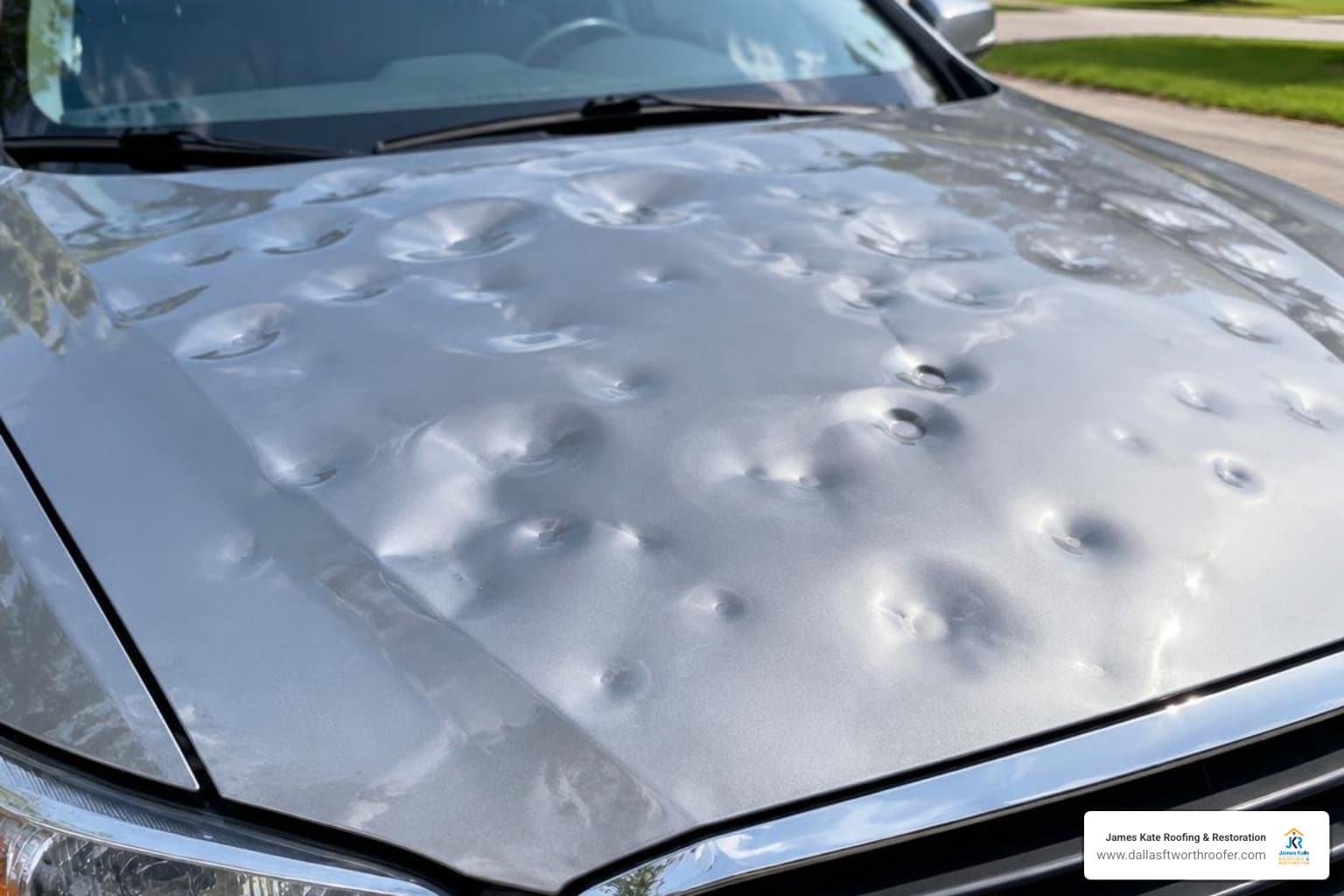
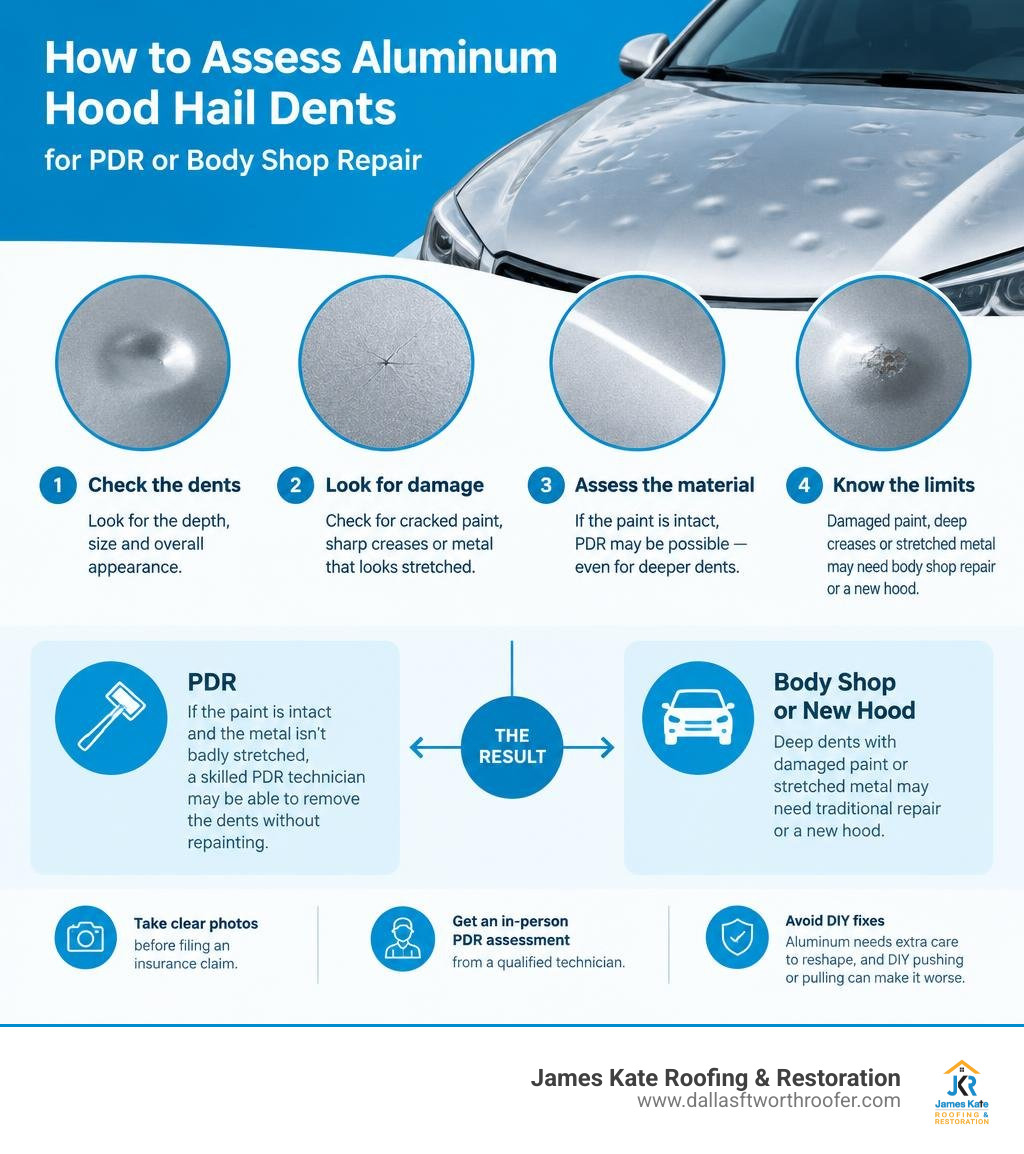
Sometimes. Start by checking for cracked paint, sharp creases, or metal that looks stretched. If the paint is intact, a skilled paintless dent repair (PDR) technician may be able to remove even noticeable dents without repainting. Deep dents with damaged paint or badly stretched metal may need body shop repair or a new hood.
Take clear photos before making an insurance claim, and ask for an in-person PDR assessment. Aluminum takes more care to reshape than steel, so avoid DIY pushing or pulling that could make the damage worse.
I’m Dustin Eatman, owner of James Kate Roofing & solar, with experience documenting storm damage and working through insurance claims. I bring that perspective to this guide, while leaving the repair decision to qualified auto technicians.
Discover more about vehicle storm solar:
Understanding Aluminum vs. Steel in Hail Damage Hood Repairs
When severe weather rolls through North Texas communities like Arlington, Grand Prairie, or Mansfield, vehicle hoods absorb the brunt of the kinetic energy falling from the sky. Hoods and roofs are the largest flat, horizontal panels on your vehicle, meaning they take direct, perpendicular impacts from hailstones falling at speeds up to 100 mph. In 2025 alone, severe convective storm insured losses across the United States reached an astounding $51 billion across more than 6,000 storms. The resulting damage often leaves hoods pocked with dozens or even hundreds of dimples.
However, fixing a dented hood is no longer a one-size-fits-all process. Modern automakers increasingly build hoods out of aluminum alloys rather than traditional mild steel to shed curb weight and improve fuel efficiency. While great for gas mileage, aluminum behaves completely differently when struck by hail.
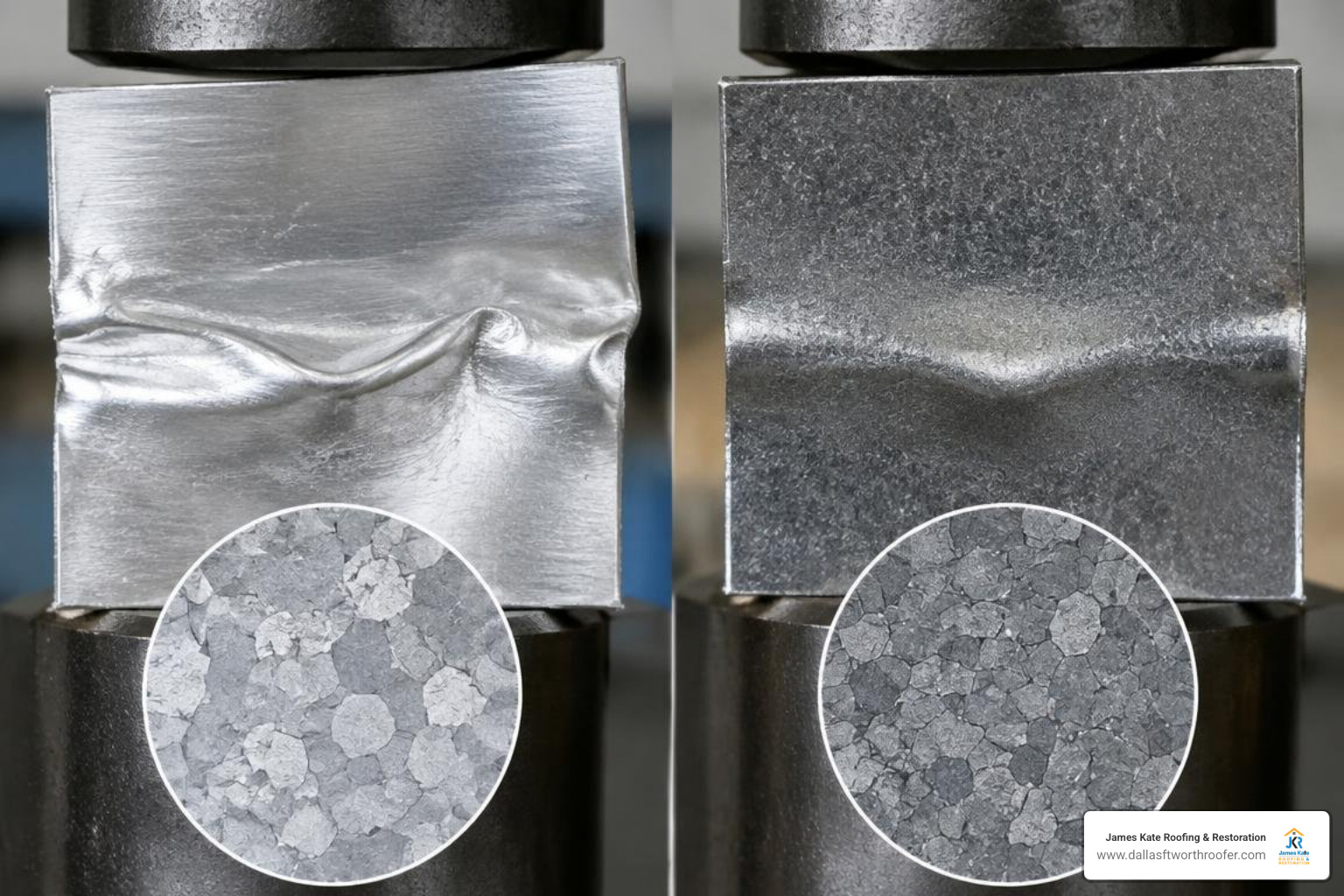
Steel has natural “metal memory.” When a steel panel is dented without paint damage, its crystalline structure retains the original stamped shape. A technician can use specialized leverage to massage the metal back, and the steel willingly snaps back into place.
Aluminum, by contrast, has virtually no metal memory. It is softer upon initial impact but work-hardens rapidly when manipulated. It also has higher tensile strength and lower elasticity, making it stiffer and more resistant to movement.
Understanding how pdr hail damage repair works on these different metals explains why technicians performing hail damage hood repairs might take twice as long on an aluminum panel as on a steel one.
| Characteristic | Mild Automotive Steel | Automotive Aluminum Alloy |
|---|---|---|
| Metal Memory | High (naturally returns to stamped shape) | Low (resists returning to original form) |
| Elasticity | High flexibility under mechanical leverage | Lower elasticity; stiffer resistance |
| Work Hardening | Gradual; forgiving under repeated tooling | Fast; can become brittle if over-worked |
| Tooling Force Needed | Moderate leverage | Significantly higher push force required |
| Thermal Sensitivity | Stable at standard shop temperatures | Requires controlled heat to relax metal bonds |
| Average PDR Time | Standard benchmark | 30% to 50% longer labor time |
Why Aluminum Hoods Require Specialized Heat and Tooling
Because aluminum work-hardens so quickly, pushing on a cold aluminum dent can cause micro-fractures in the metal or split the clear coat. Experienced technicians utilize controlled heat induction or specialized heat guns to warm the panel to a precise temperature window (typically between 120°F and 150°F). Warming the aluminum relaxes the grain structure, allowing the metal to move without tearing.
Technicians also rely on specialized, heavy-duty PDR rods crafted from high-carbon tempered steel or stainless steel. Because aluminum requires significantly more force to reshape, standard steel-working rods will flex or bend before moving the aluminum panel. When underside access is blocked by structural bracing, technicians turn to advanced glue-pulling methods. This involves bonding custom polycarbonate tabs to the exterior dent using high-tensile hot glue, then employing slide hammers or mini-lifters to draw the center of the dent upward with deliberate, measured leverage.
When Deep Aluminum Dents Exceed Paintless Dent Repair Limits
While PDR can perform minor miracles on modern vehicles, deep aluminum dents reach physical limits faster than steel. The primary limitation is metal stretching. When a dense hailstone hits an aluminum hood with extreme force, it displaces the metal downward, creating a deep pocket surrounded by a tight, raised tension crown.
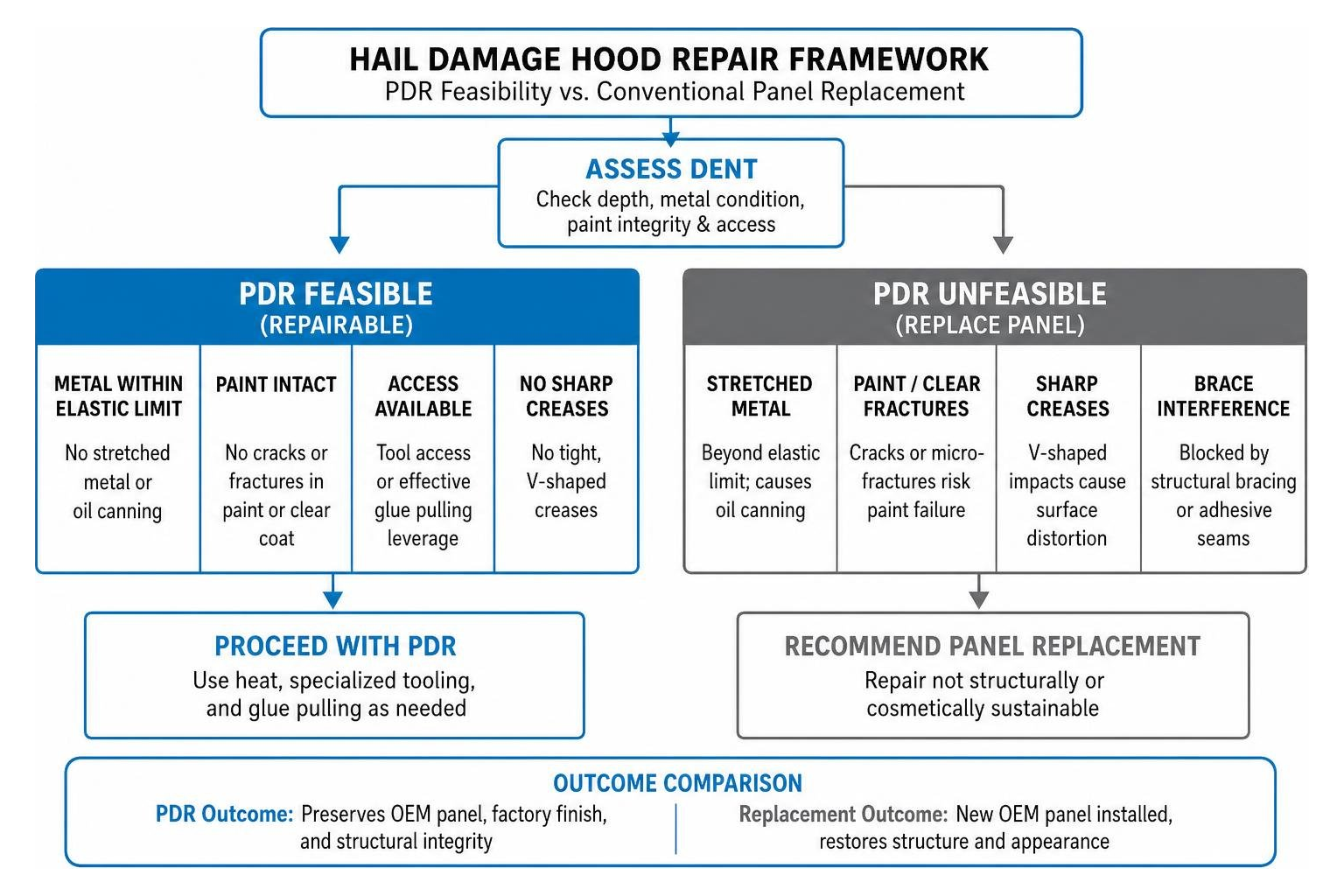
PDR becomes unfeasible under several specific conditions:
- Stretched Metal (“Oil Canning”): When metal is stretched beyond its elastic limit, the excess surface area has nowhere to go. If pushed up, it pops back down like the bottom of an oil can.
- Paint and Clear Coat Fractures: If the impact formed micro-cracks in the clear coat or paint base, glue pulling will rip the paint off, and pushing from behind will cause flaking.
- Sharp Creases: Sharp, V-shaped hail impacts stretch the crystalline structure at the apex of the dent so tightly that pushing it out causes surface distortion.
- Brace Interference: Impacts directly over boxed perimeter bracing or structural adhesive seams where tool access is impossible and glue pulling lacks sufficient leverage.
Step-by-Step Process for Repairing Deep Hail Dents on Aluminum Hoods
Restoring an aluminum hood requires a disciplined, methodical approach. Knowing how hail damage removal works helps vehicle owners understand the skilled craftsmanship involved.
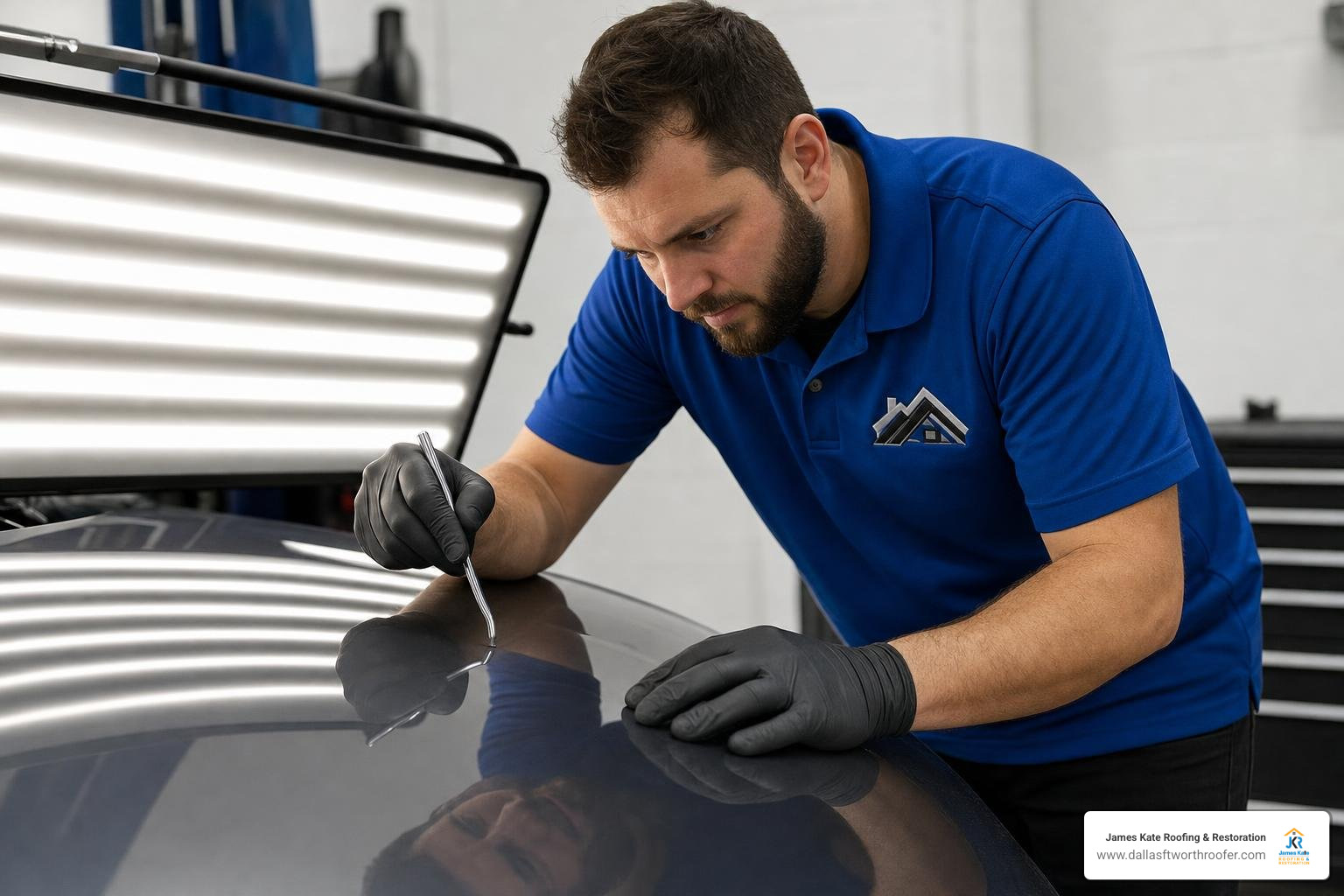
- Detailed Surface Cleaning and Decontamination: The hood is washed, clay-barred, and wiped with alcohol to remove road grime, wax, and ceramic coatings so reflections are sharp and glue tabs adhere properly.
- Removal of Underside Components: The technician carefully removes the hood insulation liner, windshield washer nozzles, and fluid hoses to gain unobstructed access to the inner panel skeleton.
- High-Intensity Reflection Board Setup: Specialized LED reflection boards displaying parallel lines or shadow gradients are positioned over the hood. These boards highlight the exact depth, center, and tension boundaries of every dent.
- Controlled Thermal Softening: Heat is applied evenly across the dent cluster to make the aluminum alloy pliable.
- Relieving the Tension Crown: Using blending hammers with polished, soft-tipped synthetic heads, the technician gently taps down the raised perimeter ridge surrounding the dent to release surface stress.
- Gradual Center Lifting: Working from behind with rigid PDR rods or from the front using glue tabs, the technician raises the low center of the dent microscopic fraction by fraction.
- Final Cross-Check and Polish: The panel is rotated under different light angles to verify a completely flat, ripple-free surface, followed by a fine machine polish.
In situations where severe storms are forecasted, vehicle owners often try to avoid this process altogether using protective barriers, such as patented mobile impact barriers and multi-layer padded vehicle blankets designed to absorb direct hail strikes.
Repairing Hail Damage Hood Panels with Paintless Dent Repair
Preserving your vehicle’s original factory finish is the ultimate objective. Factory paint is applied in cleanroom environments with electrostatically charged immersion baths and baked at temperatures exceeding 300°F. No aftermarket body shop paint booth can replicate the original factory bond, durability, and corrosion resistance.
By choosing PDR to repair hail damage on your hood, you avoid body filler (bondo), aggressive sanding, and mismatched paint shades. Maintaining the factory paint is the single most effective way to safeguard your vehicle’s market value, preventing the steep drops often detailed when analyzing how storm damage impacts vehicle resale pricing.
Conventional Body Shop Repair and Panel Replacement Criteria
When deep hail impacts stretch aluminum past its yield point, conventional repair or replacement becomes necessary.
Body shops face unique hurdles with aluminum. Unlike steel, which can be easily filled with body filler and smoothed, aluminum requires specialized aluminum-compatible fillers, dedicated clean-room bays to prevent galvanic corrosion from steel dust, and specific primer sealers.
If a hood contains more than 150 to 200 severe dents, or multiple dents have fractured the paint across the panel, replacing the entire hood with an OEM (Original Equipment Manufacturer) aluminum panel is often more cost-effective than paying for 20+ hours of painstaking PDR labor.
Panel replacement involves sourcing the unpainted OEM hood, test-fitting it to align body gaps, priming, painting the underside, applying basecoat and clear coat to match the exterior, and blending the color into the adjacent front fenders to ensure a seamless match.
Repair Costs, Insurance Claims, and Prevention Strategies
Repairing hail damage on an aluminum hood varies significantly in price depending on the method, dent count, and severity. Non-structural PDR repairs on hoods with light-to-moderate damage typically range between $300 and $1,500. However, when an aluminum hood suffers heavy hail with hundreds of impacts, labor times multiply, pushing PDR costs between $1,200 and $2,500.
If the hood must be replaced entirely, total costs generally land between $900 and $4,000, depending on vehicle make, whether it is a domestic truck or luxury import, and paint blending requirements. Exploring practical budgeting tips for hood hail damage can help owners manage unexpected out-of-pocket expenses.
Navigating Insurance Claims and Preserving Factory Paint
Hail damage is covered under your auto insurance policy’s comprehensive coverage, not collision. Because hail is an act of nature, filing a hail claim will not count against your driving record or directly increase your individual risk rating.
When an insurance adjuster inspects your vehicle, they write an initial estimate using standardized estimating software. Adjusters frequently write estimates based on standard steel panel rates or write for aftermarket replacement hoods to keep claim costs low.
To ensure a high-quality repair:
- Request an In-Person PDR Supplement: Take your vehicle to a certified PDR specialist who can scan the hood under specialized lights. They will submit a supplement to your insurer showing the true dent count and aluminum labor rates.
- Insist on OEM Replacement if PDR Fails: If the hood cannot be saved with PDR, verify that your policy allows for OEM replacement rather than cheap aftermarket steel or fiberglass alternatives that fit poorly and lower vehicle value.
- Review our guide on estimating hail repair costs before insurance calls to understand your line items.
- Follow our smart vehicle owner storm dent guide to streamline claims processing.
DIY vs. Professional Hail Damage Hood Inspection Mistakes
After a storm passes through Midlothian or Granbury, vehicle owners often head outside with quick fixes in mind. Unfortunately, attempting DIY dent removal on an aluminum hood almost always turns a repairable panel into a scrap part.
Common mistakes include:
- The Dry Ice and Hairdryer Myth: Rapidly cooling heated metal with dry ice or compressed air does not work on modern automotive aluminum alloys. It can shock the clear coat, causing it to craze and peel.
- Using Cheap DIY Suction or Glue Pull Kits: Generic glue pull kits use low-grade adhesives and rigid pulling bridges that concentrate stress on a tiny perimeter ring, creating high spots, stretching the aluminum, or ripping off factory clear coat.
- Over-Pushing from the Underside: Shoving screwdrivers or pry bars through hood access holes creates sharp outward “pimples” that crack the paint and ruin the hood’s body lines.
- Missed Micro-Dents During Inspection: Inspecting a vehicle in direct sunlight or under standard indoor lights hides up to 50% of shallow hail dents. Professional appraisal requires specialized linear shadow boards.
Consulting a comprehensive guide to finding trusted hail damage repair will save you time, protect your investment, and ensure the job is done right the first time.
Frequently Asked Questions About Hail-Damaged Hoods
Can deep hail dents on an aluminum hood crack the paint during repair?
Yes, if proper heating techniques are not used. While modern polyurethane automotive clear coats possess moderate flexibility, deep hail impacts stretch both the metal and the paint film to their limits. During repair, the technician must apply controlled heat to expand the paint along with the aluminum. Pushing or glue-pulling a cold aluminum dent creates micro-fissures in the clear coat, compromising its waterproof seal and leading to future flaking.
How much does it cost to repair a hail-damaged aluminum hood?
The cost depends on dent count, dent diameter, and accessibility. Minor hail damage (10–30 shallow dents) typically costs between $300 and $800. Moderate-to-severe damage (50–150+ deeper dents) ranges from $1,200 to $2,500 for aluminum-rated PDR labor. If the aluminum is stretched beyond repair limits, complete hood replacement with paint blending on adjacent fenders ranges from $1,500 to $4,000.
Does car insurance cover aluminum hood replacement if PDR fails?
Yes. Comprehensive auto insurance covers storm-related hail damage. If a certified PDR technician attempts repair or performs an initial assessment and determines the aluminum is stretched, oil-canned, or has split paint, they will submit a digital supplement with photo documentation to your insurance adjuster. The insurer will then approve conventional body shop repair or a complete OEM hood replacement, minus your comprehensive deductible.
Conclusion
A storm-battered hood covered in deep hail dents can be stressful to look at, but aluminum panels are far from a lost cause. Thanks to modern advancements in paintless dent repair, specialized thermal manipulation, and precision tooling, skilled technicians can completely restore severely dented aluminum hoods while keeping your original factory paint intact.
When severe weather sweeps across North Texas, vehicle hoods are rarely the only horizontal surfaces taking a beating. Just as your vehicle’s hood absorbs direct hail impact, your home’s roof bears the full force of every storm. At James Kate Roofing & solar, we provide residential and commercial roofing solutions across Arlington, Mansfield, Grand Prairie, Granbury, and Midlothian. Backed by GAF President’s Club recognition and a commitment to honesty and integrity, we stand ready to help protect your home. If a recent hailstorm has impacted your property, explore our comprehensive storm solar services to schedule a complete storm damage roof inspection today.
Dustin Eatman is a seasoned roofing professional with deep, hands-on expertise that spans residential and commercial roofing, insurance solar, and long-term roof asset management. As the owner of James Kate Roofing & solar in the Dallas–Fort Worth metroplex, he’s built a reputation for diagnosing roof systems accurately, communicating clearly, and executing projects with a high standard of workmanship and documentation. Dustin understands the technical details that make roofs perform—proper underlayment selection, slope and drainage considerations, ventilation strategy, flashing and penetration detailing, and manufacturer-specific installation requirements—because he’s worked through the real-world challenges that cause leaks, premature wear, and warranty issues. He’s equally fluent in the operational side of roofing: jobsite planning, quality control, safety, material ordering, crew coordination, and customer experience from inspection to closeout. In insurance-related projects, Dustin brings practical knowledge of claim workflows, adjuster meetings, scope alignment, supplements, and the importance of photo evidence and thorough records, helping property owners navigate stressful situations with confidence. For commercial clients—especially property and facility managers—he emphasizes proactive maintenance and targeted repairs that reduce disruption, extend roof life, and prevent expensive interior damage. Dustin also stays focused on doing things the right way: educating customers on realistic options, setting expectations, and prioritizing solutions that hold up over time rather than quick fixes. That blend of technical skill, field experience, process discipline, and owner-level accountability is what makes Dustin Eatman a trusted expert in the roofing industry.