Average Mold Abatement Cost Breakdown in 2026
#
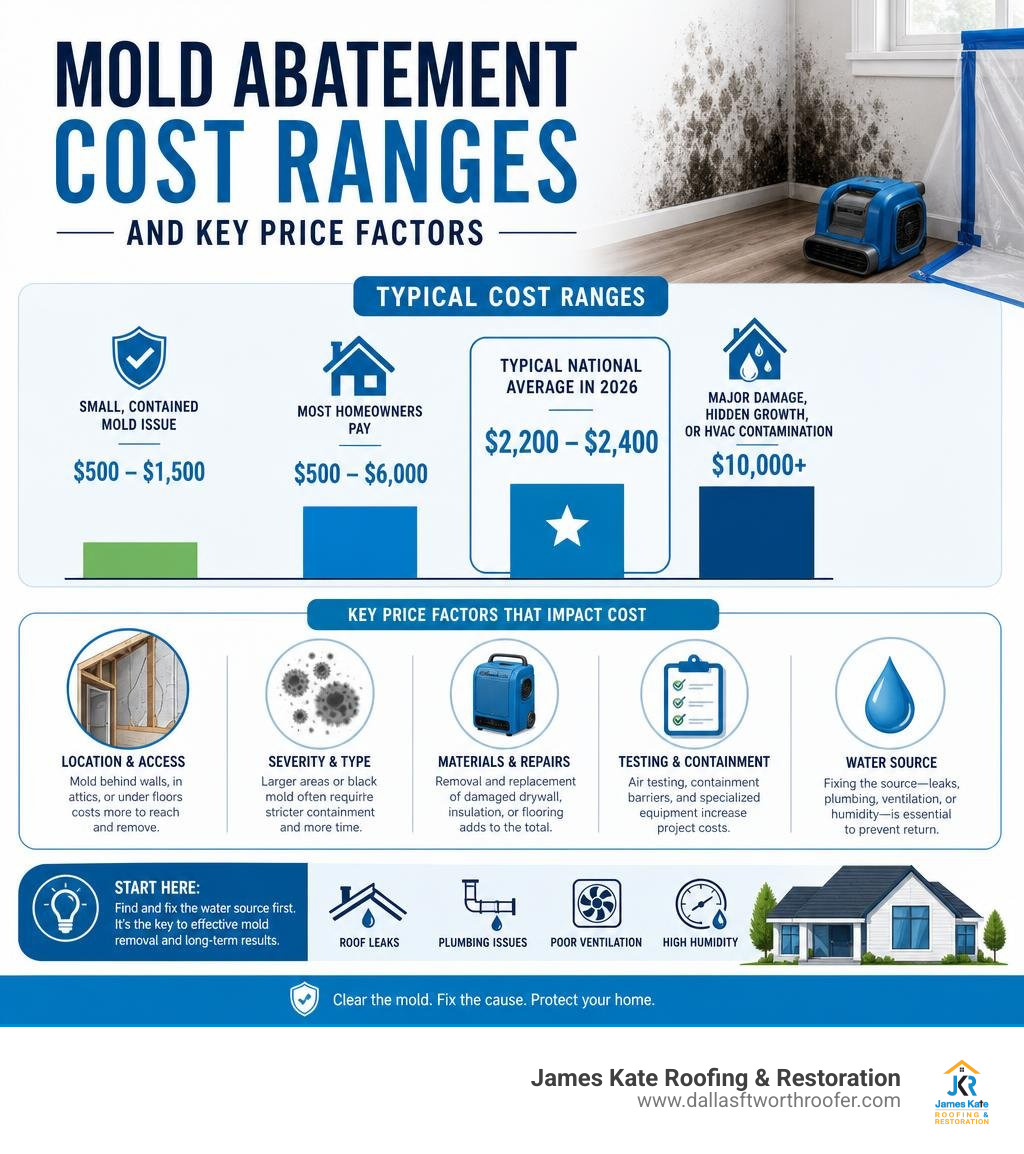
In 2026, the typical mold abatement cost is about $2,200 to $2,400 nationally. Most homeowners pay $500 to $6,000, while a smaller, contained mold issue may cost $500 to $1,500. Major water damage, hidden growth, or contamination involving HVAC equipment can push the total well above $10,000.
A useful starting point is $10 to $25 per square foot for accessible, standard mold contamination. Costs rise when mold is behind walls, in an attic, around damaged insulation, or requires removal and replacement of building materials. Black mold projects often cost 25% to 50% more because they may need stricter containment and testing.
The key is to fix the water source first. A roof leak, plumbing failure, poor ventilation, or trapped humidity can cause mold to return even after a thorough cleanup. This guide breaks down what drives the price, what insurance may cover, and how to compare estimates without paying for work you do not need.
I am Dustin Eatman, owner of James Kate Roofing & solar in DFW. My work in roofing, water-damage solar, inspections, and insurance documentation has shown me that an accurate mold abatement cost starts with finding the moisture problem, defining the scope clearly, and planning repairs that last.
Key terms for mold abatement cost:
When homeowners find microbial growth spreading in their homes, the immediate concern is often the overall expense. Nationally, the average mold remediation bill sits around $2,361, with most residential projects landing squarely in the $1,200 to $3,750 bracket.
Over the past five years, remediation expenses have climbed by roughly 17.7%—up from an average of $1,869 in 2022 to over $2,200 in 2026. This increase is largely driven by higher labor rates, specialized disposal regulations, and advanced HEPA filtration equipment. Homeowners who want a clear breakdown of realistic mold remediation costs should know that projects generally fall into three distinct scope categories. Detailed data in the 2026 Mold Removal Pricing Guide illustrates how project scopes define these cost tiers:
- Small, localized projects ($500 – $1,500): Surface-level growth under a sink, behind a toilet, or on a small section of drywall where no ductwork or structural framing is compromised.
- Medium-scale contamination ($1,500 – $4,500): Multi-wall damage, moderate attic colonies caused by a delayed roof repair, or crawlspace moisture requiring specialized extraction.
- Large-scale and whole-structure projects ($5,000 – $30,000+): Severe infestations where spores have spread through air ducts, invaded wall cavities across multiple living areas, or followed catastrophic interior flooding.
Mold Abatement Cost Per Square Foot
Pricing by square footage provides an accurate benchmark for standard jobs. On average, standard surface abatement ranges from $10 to $25 per square foot. When materials must be completely cut out, disposed of as hazardous waste, or extracted from difficult framing cavities, rates increase to $15 to $30 per square foot.
| Project Severity & Location Type | Typical Cost Per Sq. Ft. | Common Scope Included |
|---|---|---|
| Standard / Accessible Surfaces | $10 – $25 | Surface HEPA vacuuming, antimicrobial wash, basic containment |
| Hidden Wall Cavities & Insulation | $15 – $30 | Controlled demolition, drywall bag-out, stud wire-brushing |
| Toxic Black Mold (Stachybotrys) | $20 – $30 | Full negative-air barriers, high-level PPE, double HEPA scrubbing |
| Confined Crawlspaces & Attics | $25 – $45 | Difficult access setup, structural media blasting, vapor barrier install |
| HVAC & Whole-Duct Systems | $45 – $80 | Duct vacuuming, specialized fogging, coil and blower sanitation |
Fixed overhead items—such as setting up negative air machines, establishing poly containment chambers, and paying disposal site minimums—mean that smaller jobs often carry a higher effective per-square-foot price than massive floor-wide cleanouts.
Total Mold Abatement Cost by Scope and Severity
The total bill depends heavily on how early the contamination is caught. If you catch a damp patch right away, you can prevent major financial headaches later.
- Level 1 (Under 10 sq. ft.): Often treated for $350 to $1,000. These are minor, isolated spots on non-porous or easily replaceable materials.
- Level 2 (10 to 100 sq. ft.): Averaging $1,500 to $3,500. This level involves setting up negative air machines and removing contaminated drywall or trim.
- Level 3 (Over 100 contiguous sq. ft.): Typically running $3,500 to $7,000, requiring strict multi-room containment barriers and extensive surface sanitization.
- Level 4 (Extensive structural contamination): Frequently climbing between $10,000 and $30,000, involving structural framing treatments, complete insulation replacement, and coordinated rebuilds.
Key Factors That Influence the Total Price of Remediation
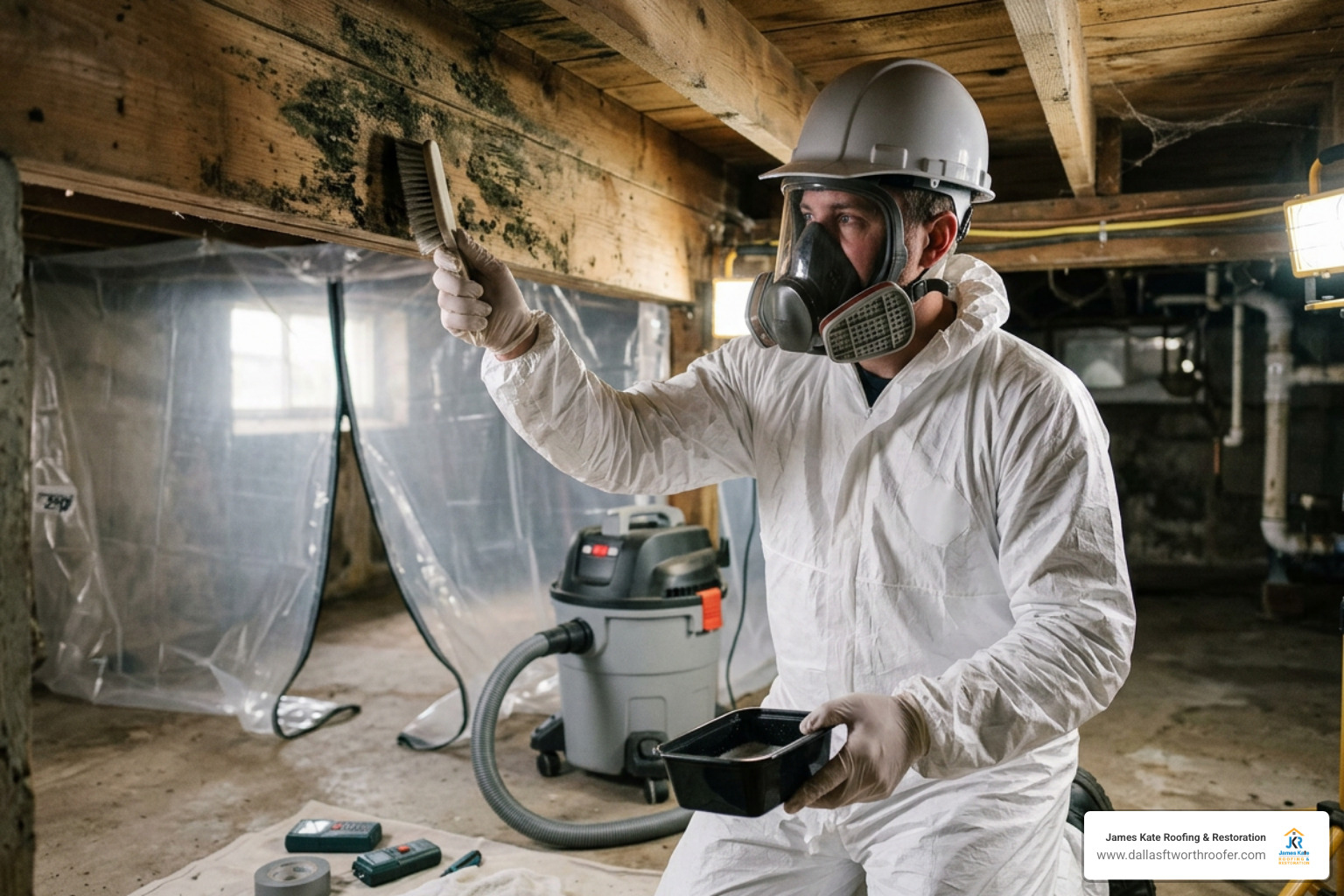
Understanding what to expect during mold abatement helps clear up why two seemingly similar jobs can have drastically different estimates. Remediation involves meticulous engineering controls to stop airborne spores from cross-contaminating your clean rooms.
Labor is the largest cost driver. Crews must maintain continuous containment chambers, operate commercial air scrubbers, remove debris safely, and treat underlying surfaces. If building materials like subflooring or load-bearing studs are structurally decayed, the cost of structural carpentry must be factored in alongside the basic mitigation steps.
Affected Location: Attics, Crawlspaces, Bathrooms, and HVAC Systems
The location of the infestation within your home dramatically impacts labor productivity and equipment needs:
- Bathrooms ($500 – $1,500): Moisture is common here. If the mold is limited to tile, tub surrounds, or vanity cabinets, remediation is fast and straightforward. However, subfloor leaks beneath a shower pan can push costs closer to $2,500.
- Attics ($1,500 – $6,000): Poor ridge ventilation or roof leaks can turn an attic into an incubator for mold. Technicians have to navigate joists, remove contaminated insulation, treat roof decking, and install fresh baffles.
- Crawlspaces ($1,500 – $4,500): Tight physical access, dirt floors, and ground-water vapor require heavy-duty containment, structural framing treatments, and sometimes a 20-mil vapor barrier.
- HVAC Systems ($3,000 – $10,000): If mold enters your air handler or flex ducting, it distributes spores every time the fan kicks on. Remediating mechanical systems requires specialized sanitization, antimicrobial treatments, and occasional ductwork replacement.
Mold Species: Toxic Black Mold vs. Common Molds
While all indoor mold should be remediated promptly, different species require different containment protocols. Common species like Cladosporium, Penicillium, and Aspergillus grow quickly on damp drywall and framing. Standard antimicrobial scrubbing and HEPA capture are usually enough to eliminate them.
By contrast, Stachybotrys chartarum (commonly known as toxic black mold) requires strict safety controls. It produces mycotoxins that can trigger severe respiratory issues. Black mold remediation costs roughly 25% to 50% more—typically $20 to $30 per square foot—due to the extra PPE, stricter containment zones, and extended HEPA air scrubbing needed to protect your home.
Inspection, Air Quality Testing, and Containment Levels
Before any drywall is cut, accurate diagnostics are critical. Professional mold inspections generally cost $300 to $1,000 (averaging $657 nationally). Investing in smarter mold testing and mitigation gives you an objective baseline of the indoor air quality before work begins.
- Visual Assessment & Moisture Mapping ($300 – $500): Technicians use thermal imaging and moisture meters to find hidden water behind walls.
- Spore Trap Air Sampling ($250 – $500): Compares indoor spore counts against outdoor air samples to confirm whether an active amplification source exists.
- Post-Remediation Clearance Testing ($250 – $450): Conducted after cleanup to independently verify that airborne spore counts have returned to normal ecology before rebuild work starts.
DIY Cleanup vs. Professional Mold Remediation
It can be tempting to grab a bucket of household cleaner and tackle a mold patch yourself. However, it helps to understand the practical difference between mold removal and remediation before taking on the job. Surface cleaning only wipes away visible discoloration, whereas comprehensive remediation addresses airborne spore loads, structural roots, and moisture sources.
When DIY Mold Removal Is Safe and Feasible
The Environmental Protection Agency (EPA) notes that homeowners can generally handle small patches of surface mold if the affected area is less than 10 square feet (roughly a 3-foot by 3-foot section).
If you choose to clean small, non-porous patches yourself, follow these safety steps:
- Wear an N95 respirator mask, eye goggles, and nitrile gloves.
- Avoid dry sweeping or aggressive scrubbing without misting first, as this releases millions of spores into the air.
- Clean hard surfaces (like ceramic tile, glass, and metal) with warm water and dedicated detergent or specialized antimicrobial cleaners.
- Bag up and seal any contaminated porous items (like ceiling tiles or small drywall pieces) before carrying them through the house.
When to Hire Certified Mold Mitigation Professionals
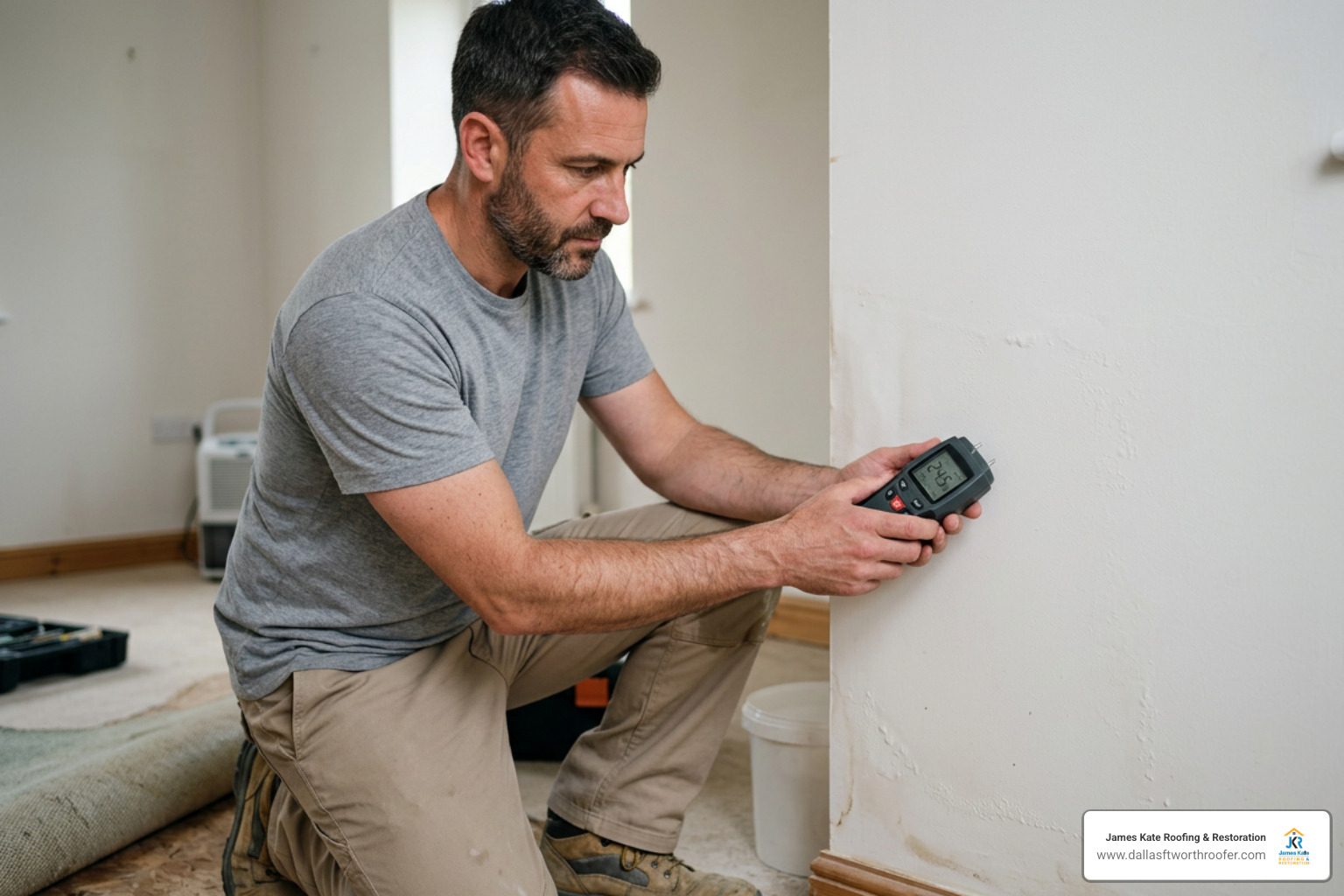
Attempting to handle large-scale infestations without professional gear can easily spread spores to clean parts of your home. You should always reach out to certified mold mitigation services when:
- The contaminated area exceeds 10 square feet.
- Mold is discovered inside HVAC supply vents, return plenums, or air ducts.
- The contamination originates from sewage backups or contaminated floodwaters.
- Building materials have stayed saturated for more than 48 hours following a plumbing or roof failure.
- Family members experience persistent allergy or respiratory flare-ups inside the home.
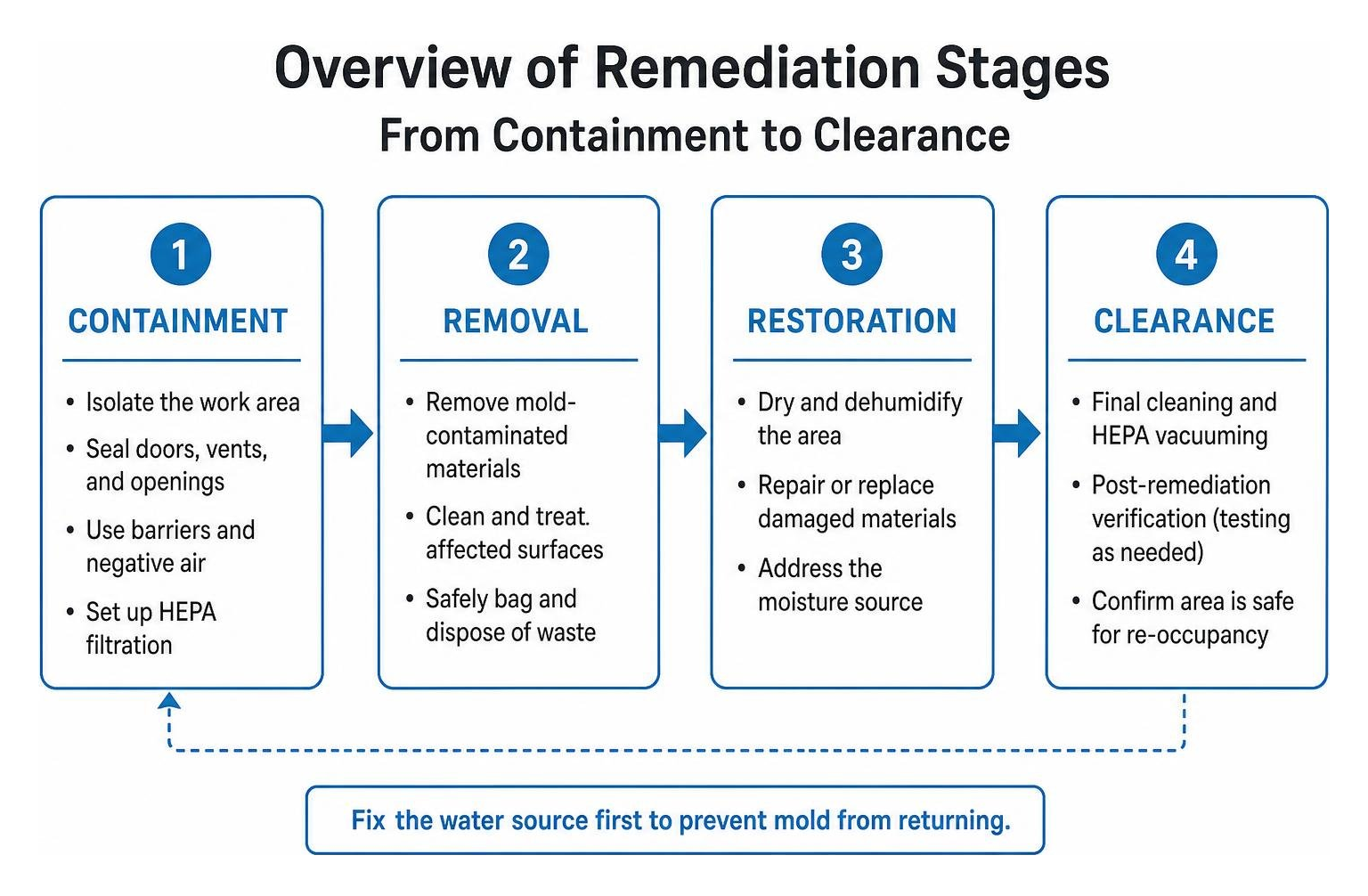
Certified remediators follow strict IICRC S520 guidelines, using negative-air HEPA scrubbers, sealed containment barriers, and EPA-registered antimicrobials to remediate the structure safely.
Navigating Homeowners Insurance and Ways to Save
One of the most common questions homeowners ask is whether their standard policy will cover the costs. The short answer: it depends on the original source of the moisture.
What Insurance Covers and Policy Coverage Limits
Homeowners insurance generally covers remediation only when the growth is directly caused by a sudden and accidental covered peril—such as an unexpected burst pipe, an appliance line failure, or sudden storm-related roof damage.
Insurance usually denies claims if the mold stemmed from:
- Gradual plumbing leaks beneath sinks or behind walls over several months.
- Chronic condensation due to poor home ventilation.
- Deferred roof maintenance, missing flashing, or aged shingles.
- Surface water flooding from the exterior (unless you hold a separate flood insurance policy).
Even when a claim is approved, many carriers place a strict mold sub-limit cap on payouts—often limiting coverage to $5,000 to $10,000 total, regardless of the overall remediation estimate.
How to Avoid Overpaying and Prevent Mold Recurrence
Remediation bills can add up quickly, but there are practical steps you can take to manage costs:
- Fix the Moisture Source Immediately: Remediation is useless if active leaks continue to feed new spores. Fix plumbing and roof penetrations right away.
- Verify the Contractor’s Scope: Make sure your estimate separates mitigation (containment, demolition, cleaning) from rebuild costs (hanging new drywall, painting, trim).
- Use an Independent Clearance Test: For large projects, having an independent third-party inspector run post-remediation air tests ensures you get unbiased results.
- Compare Estimates: Review the tools in our guide on finding quality mold removal without overpaying and benchmark your scope using a Mold Remediation Cost Calculator (2026) to confirm your bids match standard regional pricing.
Frequently Asked Questions About Mold Abatement
How long does the professional mold abatement process take?
Most standard residential remediation projects take 1 to 3 days to complete. Medium to large jobs involving multiple containment zones, extensive structural drying, or HVAC sanitization may require 4 to 7 days. If full reconstruction is needed—such as replacing framing, drywall, and custom millwork—the entire process may take one to two weeks.
Does bleach effectively kill mold on porous surfaces?
No. Bleach is not recommended for porous materials like drywall, untreated lumber, or carpet padding. Chlorine bleach cannot penetrate deeply into porous surfaces; its chemical structure remains on top, while the water carrier soaks in, feeding the fungal roots (hyphae) below. Bleach removes the surface stain, but the mold often returns within weeks. Certified contractors use specialized EPA-registered antimicrobials designed to eliminate spores and deep roots.
Why does mold return after professional remediation?
Mold returns for one primary reason: unresolved moisture. If high humidity (above 60%), concealed pipe drips, poor attic ventilation, or exterior envelope leaks are left unaddressed, new airborne spores will land on the organic building materials and begin colonizing again within 24 to 48 hours.
Conclusion
Dealing with microbial growth in your home is stressful, but understanding the real numbers behind the work helps you make smart, confident choices for your property. While standard projects average between $1,200 and $3,750, the true investment lies in identifying the root water issue, setting up proper containment, and bringing your indoor air quality back to a safe, healthy baseline.
At James Kate Roofing & solar, our family-owned team brings honest communication, certified expertise, and dependable solar services to every project. Whether you need initial moisture mitigation, roofing repairs, or complete build-back construction, we are here to help. Reach out to our team today for professional mold remediation services and get an honest, detailed assessment to protect your home.

Dustin Eatman is a seasoned roofing professional with deep, hands-on expertise that spans residential and commercial roofing, insurance solar, and long-term roof asset management. As the owner of James Kate Roofing & solar in the Dallas–Fort Worth metroplex, he’s built a reputation for diagnosing roof systems accurately, communicating clearly, and executing projects with a high standard of workmanship and documentation. Dustin understands the technical details that make roofs perform—proper underlayment selection, slope and drainage considerations, ventilation strategy, flashing and penetration detailing, and manufacturer-specific installation requirements—because he’s worked through the real-world challenges that cause leaks, premature wear, and warranty issues. He’s equally fluent in the operational side of roofing: jobsite planning, quality control, safety, material ordering, crew coordination, and customer experience from inspection to closeout. In insurance-related projects, Dustin brings practical knowledge of claim workflows, adjuster meetings, scope alignment, supplements, and the importance of photo evidence and thorough records, helping property owners navigate stressful situations with confidence. For commercial clients—especially property and facility managers—he emphasizes proactive maintenance and targeted repairs that reduce disruption, extend roof life, and prevent expensive interior damage. Dustin also stays focused on doing things the right way: educating customers on realistic options, setting expectations, and prioritizing solutions that hold up over time rather than quick fixes. That blend of technical skill, field experience, process discipline, and owner-level accountability is what makes Dustin Eatman a trusted expert in the roofing industry.